|
Leading Change While Honoring Our Historic Legacy
This has been a year of growth and change for the Office of Energy Justice and Equity (EJE). Yet throughout 2024, EJE has also been a beacon of hope, faithfully dedicated to a decades-long goal of providing underserved, low-income communities and families with the ability to take part in America’s energy system by working with colleagues across the Department of Energy (DOE), its National Laboratories, field sites, and the entire federal family.
This past spring, I came aboard as Principal Deputy Director of EJE, joining a team with a legacy almost as old as DOE itself. In 1978, Congress recognized that our energy system was not serving all Americans equitably, with lower income communities more likely to face burdens of pollution, disproportionate costs, and diminished energy service. In response, Congress issued a mandate creating this Office and empowering it to research the extent and causes of those inequities and to advise the Secretary of Energy on the way forward.
Here, I found myself surrounded by a team committed to elevating American communities that have been overburdened, underserved, and left behind with an inability to fully participate in the economic prosperity created by the technological advances within our energy system. Of note, the EJE staff works tirelessly to ensure that all DOE programs and initiatives are accessible to all Americans and fully realize the benefits of the emerging clean energy economy of the 21st century. Their work provides quality jobs, lower pollution, and access to low-cost renewable energy resources that enhance American independence and security. In fact, this year the team’s outstanding efforts have resulted in several noteworthy victories.
Please read on to celebrate EJE's many accomplishments in 2024. From introducing the Regional Energy Democracy Initiative to ensure efficiency and effectiveness of DOE funding; launching a program connecting university faculty with our National Laboratories; to implementing policies to ensure that the DOE workforce resembles the American population; and hosting our third annual Justice Week event, EJE has been impactful across all of DOE with much more work to be done in 2025.
With Gratitude,
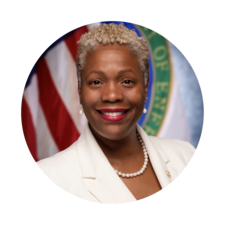
Tamia N. Gordon
Director (acting) and Principal Deputy Director
Office of Energy Justice and Equity
|
|
|
 
Regional Energy Democracy Initiative
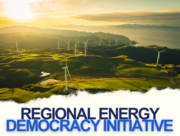
EJE announced the Regional Energy Democracy Initiative (REDI) to be piloted in the U.S. Gulf South. Through REDI, and with a committed $5 million, DOE is collaborating with minority-serving institutions, community-based organizations, and public and private partners to provide capacity building and technical assistance for communities in the region to maximize the benefits derived from the clean energy investments made by DOE. The program supports the development of Community Benefits Plans that address the unique needs and priorities of each community, ensuring that the benefits of clean energy projects are distributed equitably and contribute to the overall well-being of the region.
|

Resilience Hubs for Puerto Rico
EJE established five Resilience Hubs (“Hubs”) to strengthen community energy resilience for Puerto Rico. Through a cooperative agreement, nearly $1 million of dedicated funding supports community-led development of the Hubs that provide reliable electricity during grid events or climate related disasters. The funding supports the development of renewable energy systems such as solar-plus-storage systems at community-serving facilities that have historically lacked access to reliable electricity and experienced prolonged outages.
|

Justice Week 2024: Equity in Action
EJE hosted attendees both online and in person for its third annual Justice Week held on October 22-24, 2024. Justice Week 2024: Equity in Action focused on spotlighting the specific and intentional actions that DOE is doing to advance energy justice and equity by ensuring that investments in the clean energy transition benefit communities that have historically been left behind.
|

Faculty-Applied Clean Energy Sciences
EJE launched the Faculty-Applied Clean Energy Sciences (FACES) Program to provide clean energy research opportunities to Science, Technology, Engineering, and Math (STEM) faculty from Minority-Serving Institutions, including Tribal Colleges and Universities, and Historically Black Colleges and Universities. The FACES program’s goals are to promote diversity and inclusion in the energy sector and help teachers inspire STEM students to pursue careers in clean energy.
|

Low-Income Communities Bonus Credit Program
Under the Inflation Reduction Act, EJE successfully partnered with the IRS to complete the first two years of the Low-Income Communities Bonus Credit Program. DOE supports the IRS in its administration of the program and oversees the program’s application portal. The 2023 program year resulted in $3.5 billion in private and public clean energy investments from more than 49,000 solar facilities in low-income communities or directly benefitting low-income households from across the country, including 48 states and the District of Columbia. The 2024 program year received over 50,000 applications to date. The historic program represents the most significant tax incentive in U.S. history to promote clean energy investments in low-income communities, on Tribal land, and within affordable housing.
|
DOE’s Second Equity Action Plan
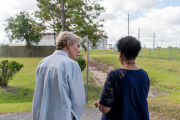
EJE unveiled the release of DOE’s Second Equity Action Plan outlining the progress made by the DOE thus far and its strategies to further advance equity for all Americans. The plan also develops an agency-wide framework to effectively work with Tribal and underserved communities to reimagine its clean energy future through real investments and technical assistance and ensure that community voices and decision-making are integrated into DOE funding, research, and programming.
|

Justice40 Initiative
DOE Justice40-Covered Programs included 24 offices, over 160 programs and more than $100 billion in investments. This includes federal investment categories such as energy efficiency, training and workforce development, and other clean energy technologies. Through Community Benefits Plans, DOE remained committed to ensuring that such investments lead to tangible economic benefits in underserved communities while increasing access to new energy industries, enterprise creation, jobs, energy security, and overall energy affordability in those communities.
|

Environmental Justice Strategic Plan
EJE released the Environmental Justice Strategic Plan to set forth the DOE’s approach to institutionalizing environmental justice within its programs, policies, and activities. Guided by the principles of energy and environmental justice, it aims to establish new goals and objectives that support resilient communities and ensure meaningful public participation in DOE decision-making processes related to human health and the environment.
|
|
|
|
We hope you enjoyed reading our year in review blog. To stay up to date with future events, initiatives, blogs, and more, please visit EJE’s website.

|
|
|
|
|