Office Updates
DOE Selects 10 Innovator Fellows To Support Tribal Entities in Clean Energy Development
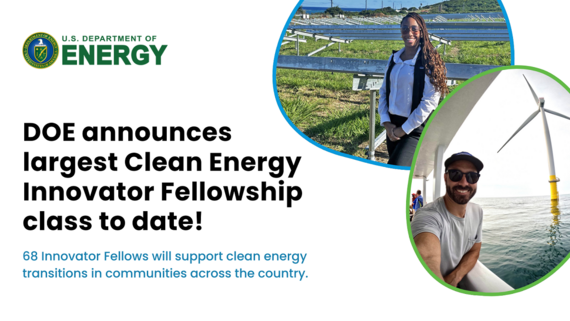 On Aug. 21, the U.S. Department of Energy (DOE) announced that 68 fellows have been selected to spend up to two years at critical energy organizations, including 10 Tribal entities, 6 electric cooperatives, 13 municipal utilities, 12 state utility commissions, 26 state energy offices, and 1 grid operator.
These fellows are the 2024 Class of the Clean Energy Innovator Fellowship (CEIF) program and will be on the frontlines of where federal investment in clean energy is transforming communities, filling gaps in capacity so organizations can get the job done faster.
This year, the Office of Indian Energy funded additional opportunities to place fellows with Tribal entities and supported program promotion and fellow recruitment.
Tribal entities hosting fellows:
- Alaska Native Tribal Health Consortium
- Knik Tribe
- Navajo Nation Government—Minerals Department
- Tule River Indian Tribe of the Tule River Reservation, California
- Coeur d'Alene Tribe
- Nez Perce Tribe
- Cherokee Nation's Office of the Secretary of Natural Resources
- Columbia River Inter-Tribal Fish Commission
- RESCo— Rosebud Sioux Tribe utility
- The Confederated Tribes of the Colville Reservation.
View project and fellow details.
2024 Tribal Energy Webinar Series: Federal Support for Intertribal Organizations
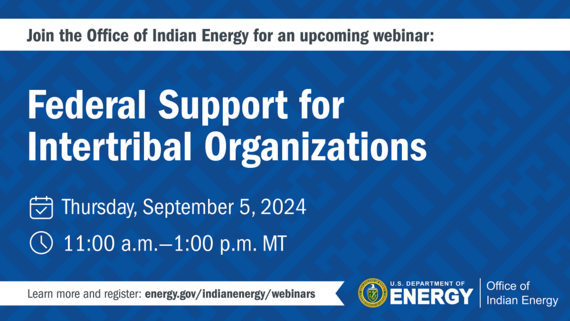 📅 Thursday, Sept. 5 | 11 a.m.–1 p.m. MT
Join the Office of Indian Energy's September webinar to learn about our latest funding opportunities, including Support for Tribal Clean Energy Communication and Engagement, available to eligible intertribal organizations.
Representatives from the Midwest Tribal Energy Resources Association and the Tanana Chiefs Conference will share how similar past DOE funding catalyzed clean energy development for their member Tribes.
Now Hiring: Engineers or Physical Scientists with Tribal Clean Energy Experience
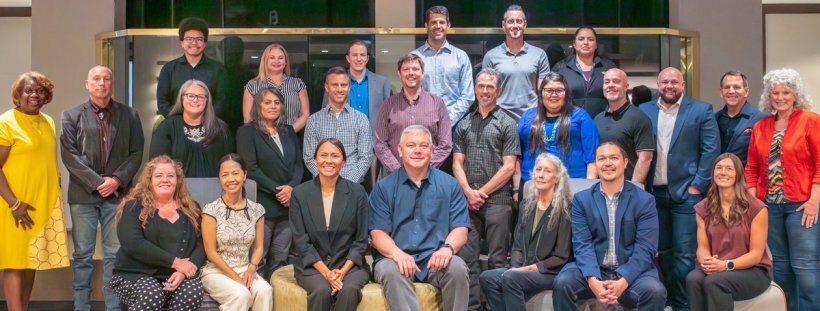 Are you an engineer or physical scientist with experience working with Indian Tribes, Alaska Native Villages, Alaska Native Regional and Village Corporations, and Native communities and entities to develop clean energy?
We are looking for four experienced professionals, two working remotely and two in Alaska, with those specialized skills to apply to join the Office of Indian Energy.
As an engineer or physical scientist working with the Office of Indian Energy, you will oversee a diverse Tribal energy project portfolio or act as a technical expert administering technical assistance on clean energy planning, energy efficiency audits, resource assessments, building codes, and utility formation.
News
DOE Announces $10 Million To Support Climate Resilience Centers Across America
On Aug. 15, DOE announced $10 million in funding for innovative Climate Resilience Centers (CRCs) in 10 different states.
University-led research teams from Minority Serving Institutions and Emerging Research Institutions will leverage the world-class modeling, data and research capabilities from DOE national laboratories customized for their local regions, with a focus on climate prediction of weather hazard risks to better prepare communities.
- The goal of the CRC in Tribal communities along the Missouri River Basin is to build climate resilience capacity for Native American communities. The team effort will be led by the South Dakota School of Mines and Technology, Tribal Nations, U.S. Geological Survey, and Pacific Northwest National Laboratory.
- The CRC for Alaska brings together researchers from the University of Alaska Fairbanks with Los Alamos National Laboratory enhance communication with Alaska communities about existing DOE science, develop meaningful collaborations between communities and the DOE, and incorporate DOE science into educational pathways and opportunities.
DOE Recognizes Indian Community School in Franklin, Wisconsin for Excellence in Integrated Lighting Systems
On Aug. 16, DOE’s 2024 Integrated Lighting Campaign recognized 16 organizations for exemplary commitment to energy efficiency and environmental responsibility in their buildings and outdoor spaces, demonstrating that integrated lighting systems enable deeper energy savings in buildings and create an enhanced user and occupant experience.
Indian Community School in Franklin, Wisconsin
Recognition categories: Advanced Use of Sensors and Controls for Lighting; Integrated Controls for HVAC and Lighting Systems; Energy Justice, Diversity, Equity, and Inclusion in Advanced Lighting
The school upgraded its lighting to tunable-white LED fixtures with digital addressable lighting interface (DALI) controls, which allows for integration with the school’s building automation system and for the ability to detect and diagnose faults.
Register for Home Energy Rebates Tribal Office Hours
 To support Tribes as they begin applying for funding, the DOE Home Energy Rebates team will again hold Tribal office hours monthly starting Aug. 27.
During these sessions, DOE’s Rebates team will provide technical assistance to Tribes and Tribal representatives working on Home Electrification and Appliance Rebates funding applications. The team will be available to answer any questions about the application process, budget templates, project narratives, and PAGE and FedConnect registration.
You can register for one or more of the following sessions:
- Tuesday, Aug. 27 at 4 p.m. ET
- Tuesday, Sept. 24 at 4 p.m. ET
- Tuesday, Oct. 22 at 4 p.m. ET
- Tuesday, Nov. 19 at 4 p.m. ET
- Tuesday, Dec. 17 at 4 p.m. ET.
More Tribal Projects Awarded Phase 1 Funding in Rural or Remote Areas Program
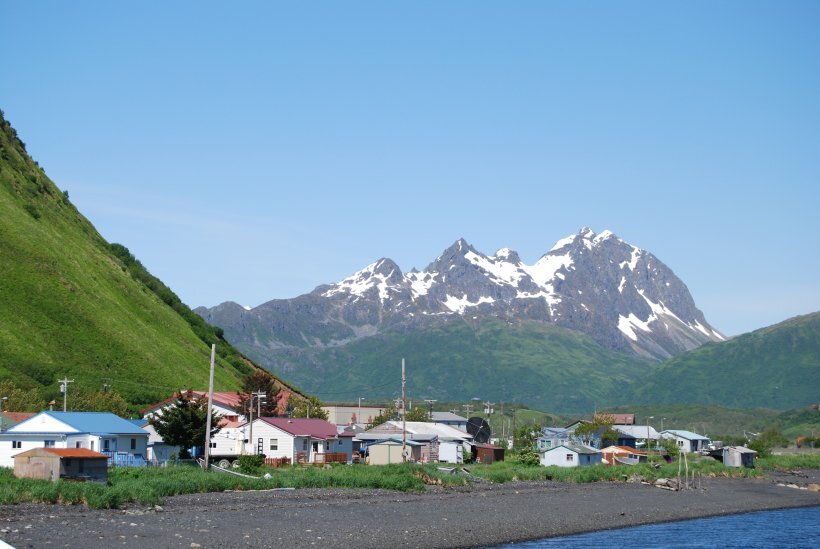 View of Old Harbor, Alaska.
On Aug. 14 and Aug. 21, DOE shared updates on additional Tribal projects that have been awarded Phase 1 funding in the Energy Improvements in Rural or Remote Areas Program.
Additionally, on Aug. 22, DOE announced plans to fund up to an additional $400 million for Rural or Remote Areas projects. See details in the funding section below.
-
Tanana Chiefs Conference—$4.1 million (of the total federal cost share of up to $26 million) to deploy high-penetration solar photovoltaics (PV) and battery storage systems into existing microgrids in eight remote Tribal communities currently relying on diesel for 100% of their electrical production.
-
Choctaw Nation of Oklahoma—$5 million to install approximately 2.1 megawatt-hours (MWh) of battery energy storage systems to create a microgrid and implement energy-efficient upgrades in seven buildings.
-
Kokhanok Village Council—$5 million to install a 1 megawatt (MW) battery energy storage system—as well as solar PV, a new wind turbine, and electric thermal storage heating units—to the local community’s microgrid.
-
Alutiiq Tribe of Old Harbor—$1.5 million (of the total federal cost share of up to nearly $10 million) to construct a run-of-the-river hydroelectric facility in Old Harbor, Alaska, anticipated to be capable of generating about 3,470 MWh of energy annually and offset diesel fuel use at the local power plant by 95%, enabling a year-round reliable energy source.
-
Native Village of Ouzinkie—$2.3 million to construct a 160 kilowatt (kW) solar PV array and 210 kilowatt-hour (kWh) battery energy storage system for a microgrid.
-
Tanana Chiefs Conference—$5 million to install upgrades at the Alaska Power & Telephone power plant in Tok, Alaska, providing the technical requirements to incorporate 1.5 MW of solar PV and a 1.5 MWh battery energy storage system on the grid.
-
Bad River Band of Lake Superior Tribe of Chippewa Indians—$635,881 (of the total federal cost share of up to $14.1 million) to build a 5 MW solar photovoltaic array and an 8 MWh battery energy storage system to connect with existing diesel and natural gas generation.
-
Yakama Power—$610,302 (of the total project federal cost share of up to $32 million) to install solar photovoltaic and micro-hydropower on an irrigation system converted from open canals, demonstrating responsible siting of renewable energy generation using land that does not risk disturbing cultural and ecological resources.
Funding Opportunities
Printable Flyer: Tribal Clean Energy Funding Opportunities
- Notice of Intent: Additional $400 Million for Rural and Remote Areas Program
- Notice of Intent: $30 Million To Support Tribal Clean Energy
- Intertribal Organization Opportunity
- Tribal Climate Resilience Annual Awards Program.
Notice of Intent: Additional $400 Million for Rural or Remote Areas Program
$400 million
Funding anticipated fall of 2024.
The goals of this funding are to deliver measurable and sustained benefits to people who live in rural or remote areas; demonstrate rural or remote energy system approaches; and build clean energy knowledge, capacity, and self-reliance in rural and remote parts of America.
DOE plans to fund anywhere from 16-69 projects across a range of topic areas, offering a range of funding from $2–$50 million each with a 5%–50% minimum non-federal cost share per project.
Eligible applicants include Tribal Nations, state and local governmental entities, non-profit and for-profit entities, rural electric cooperatives, farming associations and cooperatives, institutions of higher education, and both incorporated and unincorporated consortia.
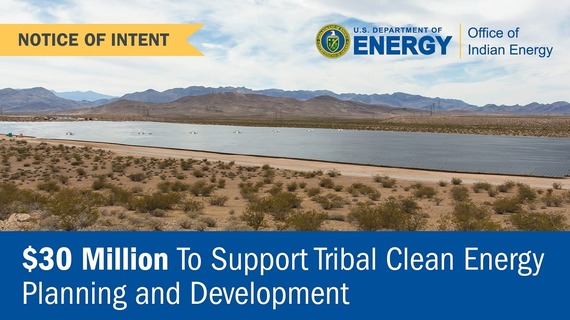
Notice of Intent: $30 Million To Support Tribal Clean Energy
$30 million
Funding anticipated late summer 2024.
On Aug. 5, the Office of Indian Energy issued two Notices of Intent (NOIs) to release a combined $30 million in Funding Opportunity Announcements (FOAs) later this summer.
The first NOI will support Tribal clean energy planning and development, and the second NOI will support Tribal Colleges and Universities planning to transition to clean energy.
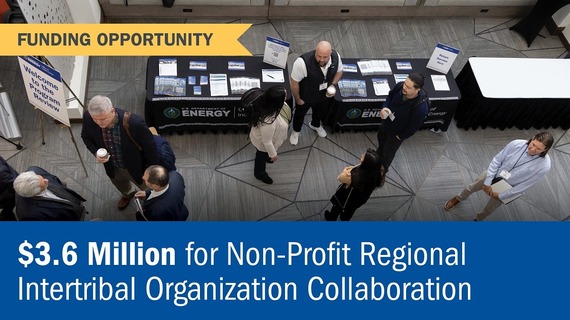
Intertribal Organization Opportunity: Support for Tribal Clean Energy Communication and Engagement
$3.6 Million
Apply by Sept. 24.
This Office of Indian Energy funding opportunity is focused on enhancing outreach and engagement to improve federally recognized Tribes’ navigation and access to DOE clean energy funding and technical assistance.
Eligible nonprofit regional intertribal organizations may request up to $300,000 annually for up to 3 years. Funding will support communication, internal organizational capacity-building, and engagement activities with the goal of building long-lasting effective working relationships between Tribal elected leaders and staff and DOE.
Learn more:
Tribal Climate Resilience Annual Awards Program
$120 million
Apply by Oct. 18.
This funding opportunity provides financial support for federally recognized Tribal Nations and authorized Tribal organizations through a competitive funding opportunity to address current and future climate change impacts on Tribal treaty and trust resources, economies, regenerative agriculture and food sovereignty, conservation practices, infrastructure, and human health and safety.
The Bureau of Indian Affairs will provide technical assistance to support applying for these funds, including an informational webinar, a grant writing webinar, and virtual office hours to help answer questions.
Events
- Webinar: Federal Support for Intertribal Organizations
- National Tribal & Indigenous Climate Conference
- RE+ 2024
- Intertribal Organization Funding Opportunity: Information Office Hours.
2024 Tribal Energy Webinar Series: Federal Support for Intertribal Organizations
📅 Thursday, Sept. 5 | 11 a.m.–1 p.m. MT
Join the Office of Indian Energy to learn about our latest funding opportunities, including Support for Tribal Clean Energy Communication and Engagement, available to eligible intertribal organizations.
National Tribal & Indigenous Climate Conference
📅 Sept. 9–12 | Anchorage, Alaska
The Institute for Tribal Environmental Professionals will convene the third Biennial National Tribal and Indigenous Climate Conference with the theme Shared Responsibility for Indigenous Climate Resilience.
RE+ 2024
📅 Sept. 9–12 | Anaheim, California
RE+ 24 brings the modern energy industry together to foster a cleaner future and marks its twentieth year as the largest and most comprehensive event in North America for the clean energy industry.
Note: Filter the full agenda (using the filter field at top right) by “Department of Energy” to view DOE speakers and sessions.
Intertribal Organization Funding Opportunity: Information Office Hours
📅 Sept. 17 | 3–4 p.m. ET
Join this session to ask questions and to gain a better understanding of program requirements for the Office of Indian Energy Intertribal Organization Opportunity: Support for Tribal Clean Energy Communication and Engagement.
Here's what's catching attention on our social media pages. Follow us on LinkedIn, X and Facebook for the latest updates.
|





