Office Updates
Funding Doubled: $50 Million Now Available for Clean Energy Technology Deployment
On March 22, the U.S. Department of Energy (DOE) announced that the funding available under the Clean Energy Technology Deployment on Tribal Lands – 2024 (DE-FOA-0003298) funding opportunity announcement (FOA) doubled, increasing from $25 million to $50 million.
Through this FOA, the DOE Office of Indian Energy is soliciting applications from Indian Tribes, which include Alaska Native Regional Corporations and Village Corporations, Intertribal Organizations, and Tribal Energy Development Organizations, to install clean energy technology on Tribal lands.
Applications are due May 30, 2024, at 5 p.m. ET.
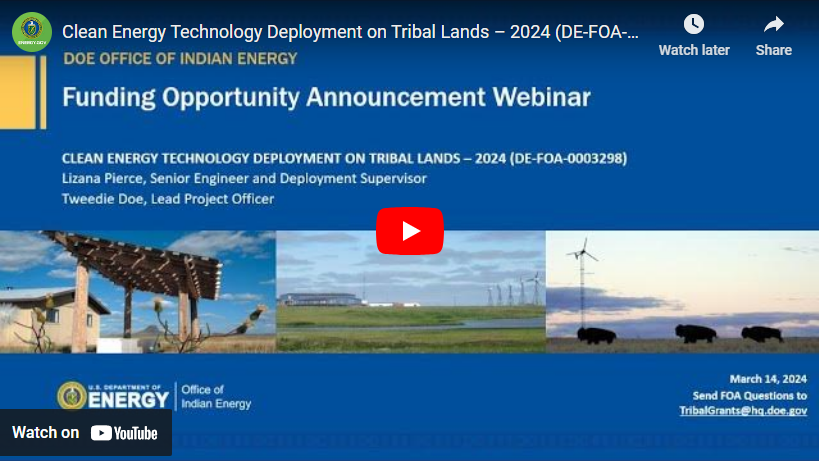 The Office of Indian Energy hosted an informational webinar March 14 to provide interested applicants with more information on the FOA and how to apply.
News
Iowa Tribe of Kansas and Nebraska Discovers Pathways to Energy Independence Through Communities LEAP Technical Assistance
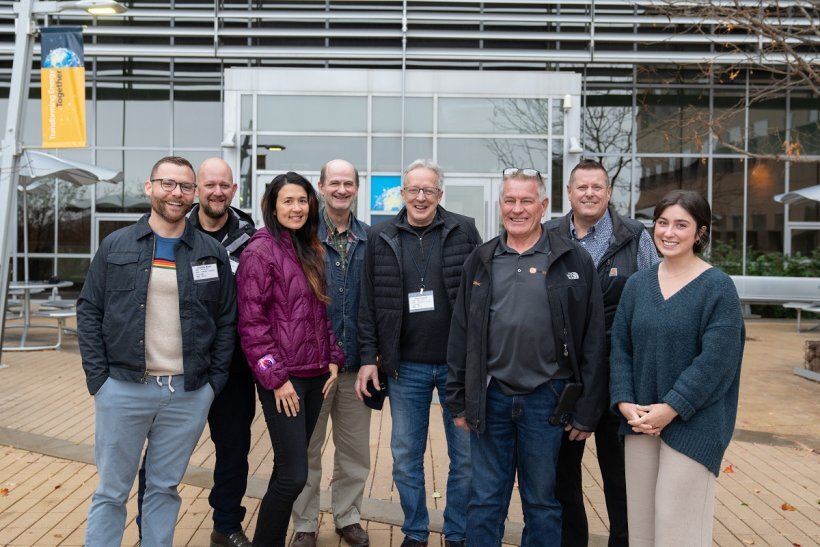 ITKN’s Tribally-owned microgrid project development and consulting firm, Grey Snow Green Energy, visited the National Renewable Energy Laboratory in Golden, Colorado, as part of the project.
The Iowa Tribe of Kansas and Nebraska (ITKN) is a Native community that spans the plains of northeast Kansas and southeast Nebraska. ITKN experiences a high energy burden, and frequent outages require buildings to rely on backup generators powered by diesel, increasing energy prices and creating health and safety risks.
To develop solutions, ITKN applied and was selected for technical assistance through DOE’s Communities Local Energy Action Program (LEAP) program. Over the past year and a half, ITKN has worked with the National Renewable Energy Laboratory and Sandia National Laboratories to discover pathways to meet their energy goals.
Read this recent blog to learn more about ITKN’s work with Communities LEAP.
- On March 22, Communities LEAP announced their second cohort of technical assistance communities, including Native Village of Eklutna, Native Village of Kongiganak, and Native Village of Tyonek, in Alaska.
Biden-Harris Administration Announces $120 Million to Enhance Climate Resilience in Tribal Communities
146 Awards Will Support 102 Tribes and 9 Tribal Organizations to Strengthen Preparedness and Resilience in the Face of Climate Change
On March 14, the Department of the Interior announced that more than $120 million from President Biden’s Investing in America agenda will fund 146 projects to help Tribal communities plan for and implement projects to tackle severe climate-related environmental threats to their homelands.
This investment will help Tribes proactively plan for and adapt to these threats and safely relocate critical community infrastructure, where necessary.
It is the largest amount of annual funding awarded to Tribes and Tribal organizations in the history of the Bureau of Indian Affairs’ Tribal Climate Annual Awards Program, with 102 Tribes and 9 Tribal organizations receiving funding.
“Indigenous communities are facing unique and intensifying climate-related challenges that pose an existential threat to Tribal economies, infrastructure, lives and livelihoods,” said Secretary of the Interior Deb Haaland. “Through President Biden’s Investing in America agenda, we are making transformational commitments to assist Tribes and Tribal organizations as they plan for and implement climate resilience measures, upholding our trust and treaty responsibilities and safeguarding these places for generations to come.”
First Annual ETIPP Report Details Impact for Remote and Island Communities
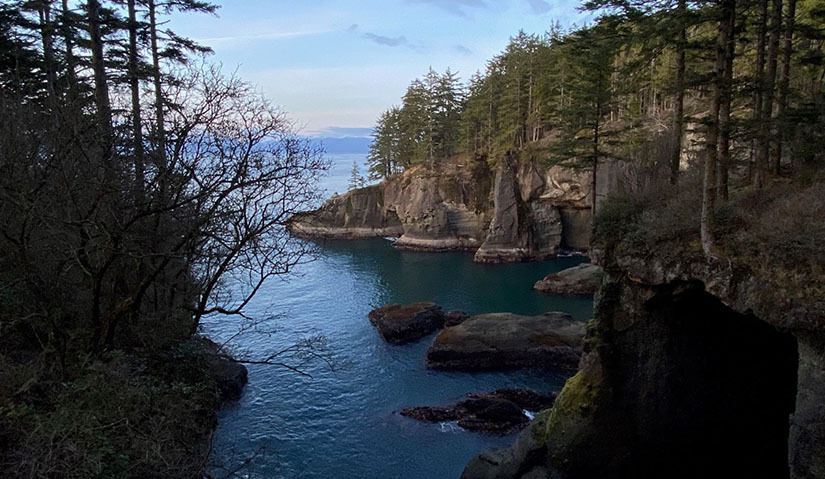 The Makah Tribe joined ETIPP in 2022 to learn how renewable energy could support its energy sovereignty goals and foster energy resilience during power outages and emergency events.
DOE’s Energy Transitions Initiative Partnership Project (ETIPP) has released its first annual report, detailing the progress of remote and island communities toward their energy resilience goals. ETIPP combines the support of DOE, the expertise of national laboratories, and the local knowledge of regional partner organizations to help communities plan and implement strategies to combat unreliable power, high energy costs, and the escalating effects of climate change. To learn more about ETIPP’s impact, read the report.
Would your community or someone you know benefit from ETIPP? Applications for Cohort 4 open at the end of March. Sign up to receive alerts about the next ETIPP application period.
Funding Opportunities
Printable Flyer: Tribal Clean Energy Funding Opportunities
- Tribal Home Electrification and Appliance Rebates
- NEW: EPA Pollution Prevention Program Grants
- Transmission Facilitation—Microgrids in Alaska, Hawaii, and the U.S. Territories
- NEW: 2024 Renew America's Schools Prize
- Clean Energy to Communities In-Depth Partnerships.
 New Resources: Tribal Home Electrification and Appliance Rebates Program
$225 million
Recommended Letter of Intent Due by May 15, 2024; Full applications due by May 31, 2025.
DOE has issued new and revised resources for Tribes to apply for their Home Electrification and Appliance Rebates funding. This program will provide up to $14,000 per eligible household for energy efficiency and electrification home upgrades to be administered by Tribal entities.
Tribal Budget Justification Workbooks: Tribes will use this workbook to describe how they plan to budget their program funds across the applicable number of funding tranches. Tribes should use the workbook that corresponds with their expected award size based on the tranche approach outlined in the Administrative and Legal Requirements:
Getting Started on the Tribal Home Electrification and Appliance Rebates Application: This resource identifies tasks and resources for Tribes when applying for their funding.
View the full list of application resources for Tribes, and refer to DOE’s Program Design and Implementation page for additional resources.
NEW: EPA Pollution Prevention Program Grants
$24 million
Applications due May 17, 2024.
On, March 18, the U.S. Environmental Protection Agency (EPA) announced the availability of nearly $24 million in grants to support states, U.S. territories, and Tribes in providing technical assistance to businesses to develop and adopt pollution prevention practices. The funding is available through two Notice of Funding Opportunities for EPA’s Pollution Prevention program, with approximately $14 million in grants available at no cost-share/-match requirement, thanks to funding made possible by President Biden’s Bipartisan Infrastructure Law.
“Supporting Pollution Prevention in Indian Country and for Alaska Native Villages” is one of the six National Emphasis Areas established to generate the most beneficial economic, environmental, and health impacts when applying pollution prevention practices and to help share information among grantees working on similar issues.
- Eligible applicants include federally recognized Tribes and intertribal consortia.
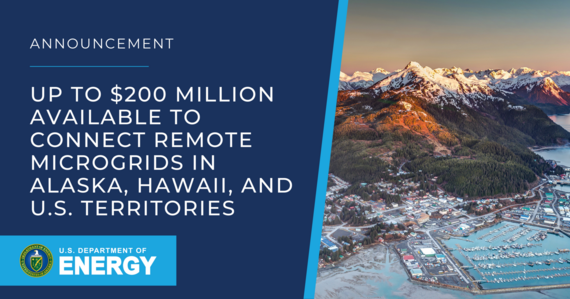 Transmission Facilitation Program Public-Private Partnerships to Connect Microgrids in Alaska, Hawaii, and U.S. Territories
$200 million
Applications due May 31.
On Feb. 29, 2024, DOE announced a Request for Proposals for up to $200 million for transmission projects to connect remote and isolated microgrids to existing infrastructure corridors in Alaska, Hawaii, and the territories of the United States.
This Request for Proposals will be designed to address the unique electric grid configurations and challenges faced by residents in these remote and often isolated communities. Strategically interconnecting existing microgrids to each other and to a larger operating transmission system will enhance grid reliability and resilience and expand access to clean, diverse, and more affordable energy in these areas.
 NEW: 2024 Renew America's Schools Prize
$180 million
Applications due June 13.
On March 20, DOE opened applications for the 2024 Renew America's Schools Prize, which will award $180 million to districts across the country engaging in strategic partnerships to build capacity and implement energy upgrades at K-12 schools, lowering energy use and costs, improving indoor air quality, and fostering healthier learning environments, with a focus on schools that serve disadvantaged communities, including those with a high percentage of students eligible for free and reduced-price lunch, and/or which qualify as rural.
Eligible improvements—like new HVAC and ventilation systems, building envelope and lighting projects, alternative fuel (such as electric) vehicles and infrastructure, and renewable energy technologies—will improve energy performance and/or lead to improvements in student, educator, and staff health.
 Apply for Clean Energy to Communities In-Depth Partnerships Starting April 1
$500,000 in subcontracting funding; $3.5 million in technical assistance
Proposals due June 14.
Starting April 1, the National Renewable Energy Laboratory will accept proposals from new communities to join in-depth partnerships through DOE’s Clean Energy to Communities program.
Communities can submit proposals for up to $500,000 in subcontracting funding and $3,500,000 in technical assistance from one or more national laboratories to develop secure, reliable, resilient, equitable, and affordable clean energy systems. Proposals are welcome from community teams composed of at least one local government, a community-based organization, and an eligible electric utility.
Events
- 2024 Renew America's Schools Prize—Informational Webinar
- EPA Pollution Prevention Grant Program Tribal Applicants Webinar
- Western Regional Briefing for Energy Improvements in Rural or Remote Areas Program
- Tribal Offshore Wind Transmission Informational Webinar
- Alaska Native Tribal Health Consortium Tribal Climate Initiatives Gathering.
2024 Renew America's Schools Prize—Informational Webinar
📅 March 26 | 12 p.m. MT
Learn about the 2024 Renew America's Schools Prize (see details above), which will invest an anticipated $180 million in public K-12 schools. The webinar will be recorded and posted within 2–3 business days on the prize page.
-
Office hours will also be held April 24 and May 29 to answer questions about the prize.
EPA Pollution Prevention Grant Program for Tribal Applicants Webinar
📅 March 27 | 12 p.m. MT
This webinar will provide an overview of the EPA Pollution Prevention Grant Program (see details above) and the application submission process to help potential applicants submit high-quality applications and to highlight additional resources available to applicants.
- There will be an additional webinar (not specific to Tribal applicants) April 11, 2 p.m. ET.
Western Regional Briefing for Energy Improvements in Rural or Remote Areas Program
📅 April 1 | 6 p.m. MT
On Feb. 27, DOE announced 17 projects spanning 20 states and 30 Tribal Nations selected to begin award negotiations as part of the Energy Improvements in Rural or Remote Areas program. In this virtual briefing, DOE’s Office of Clean Energy Demonstrations will share more details about the six Western region projects.
Community members can also ask questions, voice concerns, and share other considerations with the Office of Clean Energy Demonstrations and the selected applicants during a feedback session.
Tribal Offshore Wind Transmission Informational Webinar
📅 April 10 | 12–2 p.m. MT
Tribal members and staff are invited to join an informational webinar on offshore wind transmission topics. This 2-hour webinar, supported by DOE’s Tribal Nation Offshore Wind Transmission Technical Assistance Program and facilitated by the National Renewable Energy Laboratory, will provide an overview of offshore wind transmission technologies, as well as planning and decision-making processes.
The webinar will also highlight the technical assistance and participation support that the program can provide to help Tribes as they engage in offshore wind transmission discussions and decision-making.
ANTHC Tribal Climate Initiatives Gathering
📅 May 21–23 | Anchorage, Alaska
The first annual Tribal Climate Initiatives Gathering will be hosted by the Alaska Native Tribal Health Consortium (ANTHC) with sponsorship support from the National Oceanic and Atmospheric Administration.
Building upon The Unmet Needs of Environmentally Threatened Alaska Native Villages: Assessment and Recommendations (ANTHC 2024), participants will hear firsthand community experiences, discuss report recommendations, and explore concrete actions to support environmentally threatened Alaska Native communities through a whole-of-government coordination framework.
- For more information, contact Jackie Qataliña Schaeffer, Director, ANTHC Climate Initiatives: jdschaeffer@anthc.org.
Here's what's catching attention on our social media pages. Follow us on X and Facebook for the latest updates.
|