Office Updates
Register Now: Funding Opportunity Webinar Thursday
📅 March 14 | 1–3:30 p.m. MT | Webinar
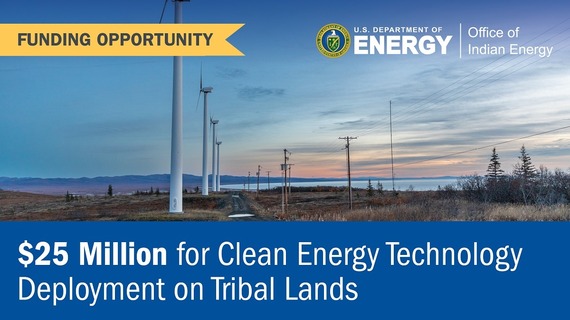 Please join us Thursday, March 14, to learn about our new $25 million funding opportunity for clean energy technology deployment on Tribal lands.
The Office of Indian Energy will host an informational webinar for interested applicants with more information on the Funding Opportunity Announcement, Clean Energy Technology Deployment on Tribal Lands – 2024 (DE-FOA-0003298), and how to apply.
Applications are due May 30, 2024, at 5 p.m. ET.
2024 Tribal Clean Energy Summit Concludes
The 2024 Tribal Clean Energy Summit concluded Feb. 28 with Office of Indian Energy Director Wahleah Johns delivering closing remarks, a round dance accompanied by the Indian Hill Singers, and a Retiring of the Colors by the Native American Veterans Association.
Among the esteemed Tribal Leader attendees was our host Tribal Leader, Mark Macarro, Chairman of the Pechanga Band of Indians and President of the National Congress of American Indians. We extend special thanks to Chairman Macarro and the Pechanga Band for their hospitality.
-
Livestream recordings: You can view plenary sessions from the Day 1 and 2 livestream recordings on the Summit event page.
-
Alaska resources: DOE’s Arctic Energy Office provided an overview of the Alaskan presence at the Summit and a roundup of relevant resources.
News
Learn More about the 12 Tribal Projects Selected for Rural and Remote Areas Funding
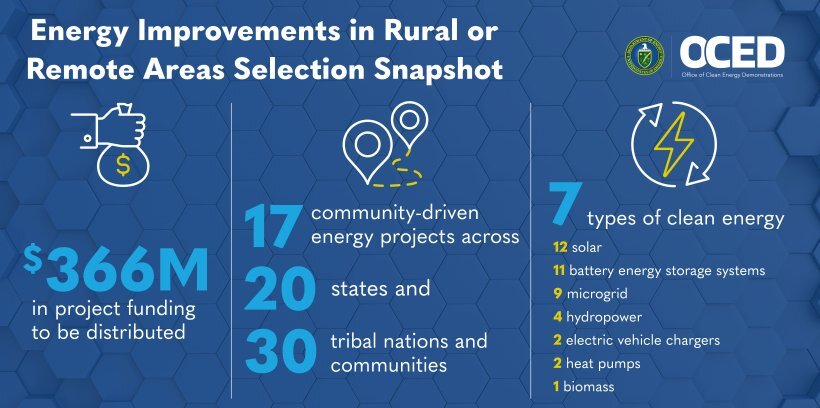 On Feb. 27, Secretary of Energy Jennifer M. Granholm announced 17 community-driven projects selected for award negotiation under the Energy Improvements in Rural or Remote Areas program, including 12 Tribal energy projects that will serve a total of 30 Tribal Nations and communities.
The projects cover a wide range of clean energy technologies to support rural and remote communities around the country—from solar, battery energy storage systems, and microgrids to hydropower, heat pumps, biomass, and electric vehicle charging infrastructure.
Tribal Projects—Federal Cost Share and Technologies:
-
Taos Pueblo: $10,000,000 for solar + battery storage system
-
Nulato, Huslia, Minto, Kaltag, Grayling, Anvik, Shageluk, and Holy Cross, Alaska: $26,070,000 for solar + battery storage systems and microgrid controls
-
Chignik Bay, Alaska: $7,270,000 for run-of-the-river hydroelectric facility
-
Northwest Arctic Borough, Alaska: $54,810,000 for solar + battery storage system, AC/DC intertie, and heat pumps
-
Navajo Nation and Hopi Nation: $8,000,000 for solar photovoltaics (PV) and battery storage systems in off-grid homes
-
Hopi Nation: $9,110,000 for hybrid microgrid, solar PV, and battery storage system with optimized back-up diesel generation
-
Bad River Reservation: $14,080,000 for mini-grid, solar PV, and battery storage system, and utility upgrades to create islanding capabilities
-
Seven communities, including Shakopee Mdewakanton Sioux Community: $45,280,000 for microgrids, including solar PV and battery storage system with distribution upgrades
-
Old Harbor, Alaska: $10,000,000 for run-of-the-river hydroelectric facility and electric transmission line
-
Red Cliff Band Tribal lands and Bayfield County, Wisconsin: $9,780,000 for solar PV + battery storage system microgrids
-
Angoon, Alaska: $26,920,000 for run-of-the-river hydroelectric facility and transmission line
-
Yakama Indian Reservation: $32,000,000 for solar and hydropower irrigation system.
View full summaries for each project selected for award negotiations and learn more about the funding process and related programs.
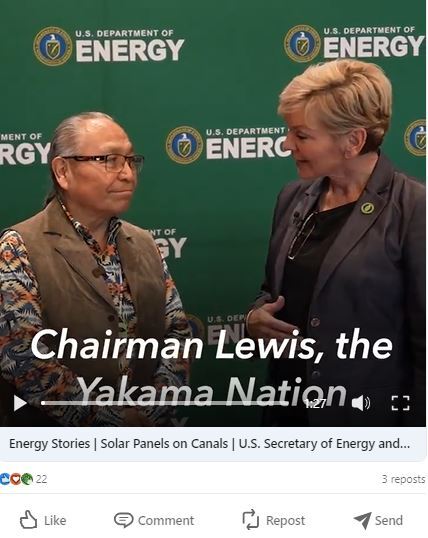
Secretary Granholm spoke with Yakama Nation Chairman Gerald Lewis at the Tribal Clean Energy Summit to congratulate the Yakama Tribal Solar Canal & Hydro Project for being selected to receive up to $32 million.
Watch the video to learn more about the Yakama project and where the idea came from.
|
Biden-Harris Administration Announces $72 Million to Electrify Homes Across Indian Country with Clean Energy
Funding will close access-to-electricity gap in 21 Tribal communities
On March 5, Secretary of the Interior Deb Haaland announced $72 million from President Biden’s Investing in America agenda to help Tribal communities electrify homes.
This first round of funding from the Office of Indian Affairs’ Tribal Electrification Program will provide financial and technical assistance to 21 Tribes to connect homes to transmission and distribution that is powered by clean energy; provide electricity to unelectrified Tribal homes through zero-emissions energy systems; transition electrified Tribal homes to zero-emissions energy systems; and support associated home repairs and retrofitting necessary to install the zero-emissions energy systems. The program will also support clean energy workforce development opportunities in Indian Country.
Learn more and view the list of 2024 grant recipients.
- A second round of funding availability is expected to be announced in the spring of 2024.
In Case You Missed It: EECBG Program Extends Deadline for Tribes to May 31, 2025
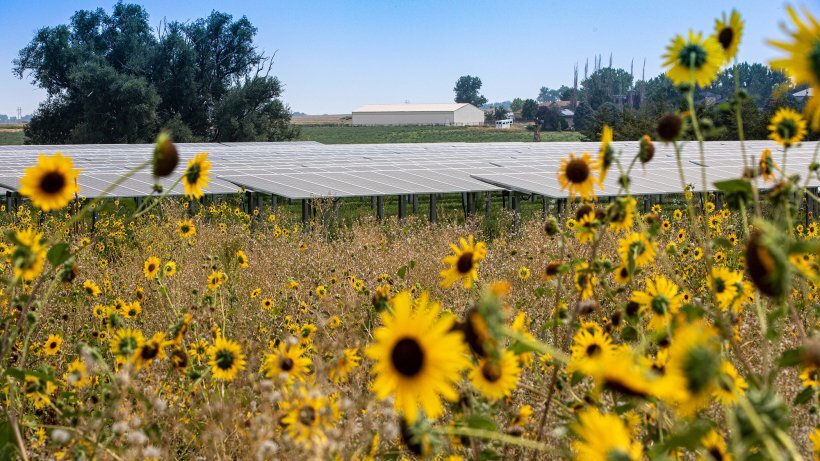 The Energy Efficiency and Conservation Block Grant (EECBG) Program application deadline for Tribes has been extended more than a year to May 31, 2025.
The funding available through the EECBG Program is noncompetitive; all eligible Tribes have already been allocated these funds from DOE—the next step is to apply to receive them. There is no match requirement for EECBG Program funds.
Learn more on the EECBG Program page for Tribes.
Still have questions? You’re invited to join the EECBG Program Tribe-specific office hours. Come with questions or just to listen in! Sign up here: EECBG Program Tribal Applicant Office Hours.
Opportunity for Tribal Governments To Receive Waste-to-Energy Technical Assistance
DOE’s Bioenergy Technologies Office and the National Renewable Energy Laboratory are launching the next phase of waste-to-energy technical assistance for state, local, and Tribal governments. For 2024, the program’s scope now includes additional waste resources, such as plastics, paper, cardboard, and wood waste.
Insights gained from this program can help communities evaluate the most sensible end uses for their waste, such as repurposing for on-site heat/power, transportation fuels, resource recovery, or other options.
Online applications will be open March 4–April 15, 2024. For more information, including eligibility and how to apply, please visit the technical assistance web page.
|
Hit Me with Your Sun Shot: Enter the DOE Solar Photo Competition!
 You built an incredible solar energy project…now it’s time to share your art!
DOE’s Solar Energy Technologies Office is in search of the best photos of solar energy with the American-Made Solar Photo Competition: Hit Me with Your Sun Shot.
- Winners of the competition can earn up to $2,500 for a photo in one of the eight categories.
- Professional and amateur photographers are encouraged to enter the competition.
- All photos must be taken within the United States or U.S. territories.
Submit your photos by 5 p.m. ET on May 23, 2024. Winners are expected to be announced in June 2024.
Funding Opportunities
Printable Flyer: Tribal Clean Energy Funding Opportunities
- Rural Energy for America Technical Assistance Grant Program
- NEW: Resilient and Efficient Codes Implementation Program
- NEW: Transmission Facilitation Program—Microgrids in Alaska
- Communities Sparking Investments in Transformative Energy.
U.S. Department of Agriculture Extends Application Deadline for the Rural Energy for America Technical Assistance Grant Program
Deadline extended to March 21.
Through Rural Energy for America Program technical assistance grants, the U.S. Department of Agriculture Rural Development offers hands-on assistance to agricultural producers and small business owners applying for Rural Energy for America Program funding, which will lower energy costs and make energy efficiency improvements in rural areas.
Resilient and Efficient Codes Implementation Program
$90 million
Required concept papers due April 4; full applications due June 6, 2024.
On March 4, 2024, DOE announced $90 million in funding to support building energy code adoption, training, and technical assistance at the state, Tribal, and local level. This second installment of the Bipartisan Infrastructure Law: Resilient and Efficient Codes Implementation initiative builds on the 27 awards that were announced last year, which included activities such as workforce development; community engagement; research and data collection; energy, equity, and environmental justice; and increased support for compliance and enforcement. Applicants must include a relevant state or Tribal government agency.
Transmission Facilitation Program Public-Private Partnerships to Connect Microgrids in Alaska, Hawaii, and the U.S. Territories
$200 million
Applications due May 31.
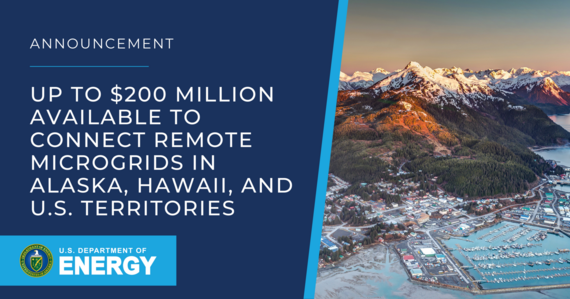
On Feb. 29, 2024, DOE announced a Request for Proposals for up to $200 million for transmission projects to connect remote and isolated microgrids to existing infrastructure corridors in Alaska, Hawaii, and the territories of the United States.
This request for proposals will be designed to address the unique electric grid configurations and challenges faced by residents in these remote and often isolated communities. Strategic interconnection of existing microgrids to each other and to a larger operating transmission system will enhance grid reliability and resilience and expand access to clean, diverse, and more affordable energy in these areas.
Communities Sparking Investments in Transformative Energy
$18 million
Applications due May 31.
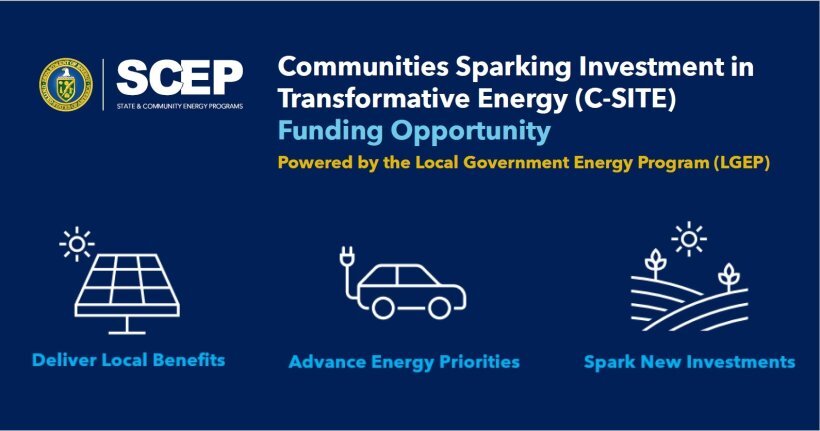
Under the new Local Government Energy Program, Communities Sparking Investments in Transformative Energy will award approximately $18 million to implement municipally or Tribal-led, high-impact clean energy projects in disadvantaged communities, energy communities, small- and medium-sized cities and towns, and Tribal communities.
This funding supports the Biden-Harris Administration’s commitment to protecting and supporting Tribal sovereignty and self-determination, honoring the federal government’s trust and treaty obligations, and ensuring Tribal nations have access to affordable clean energy technology.
Events
- Office of Indian Energy FOA Webinar
- 48C Regional Development Workshops
- EECBG Program Tribal Applicant Office Hours
- Alaska Infrastructure Development & Grant Symposium
- Grid Resilience Formula Grants Tribal Office Hours.
Clean Energy Technology Deployment on Tribal Lands—2024 FOA Webinar
📅 March 14 | 1–3:30 p.m. MT | Webinar
The Office of Indian Energy will host an informational webinar for interested applicants with more information on the Funding Opportunity Announcement (FOA), Clean Energy Technology Deployment on Tribal Lands – 2024 (DE-FOA-0003298), and how to apply.
Qualifying Advanced Energy Project Credit (§48C) Regional Development Workshops
The Energy Communities Interagency Working Group, in partnership with DOE’s Office of Manufacturing and Energy Supply Chains, and on behalf of the U.S. Department of Treasury and the Internal Revenue Service, will host a series of regional workshops to highlight the Qualifying Advanced Energy Project Credit (§48C) Program.
Learn how §48C and other historic opportunities offered by the Inflation Reduction Act and Bipartisan Infrastructure Law can help catalyze clean energy projects that support economic development in energy communities and strengthen the nation’s energy supply chain.
-
📅 March 21 | Golden, Colorado: Intermountain West
-
📅 March 26 | Charleston, West Virginia: Central Appalachia
-
📅 April 16 | Evansville, Indiana: Illinois Coal Basin.
EECBG Program Tribal Applicant Office Hours
📅 March 26 | 4–5 p.m. ET | Virtual
The EECBG Program team holds bi-weekly Office Hour Sessions specifically for Tribal members and their implementation partners. Come with questions or just to listen in!
Alaska Infrastructure Development and Grant Symposiums
📅 April 2–5 | Anchorage
Grid Resilience Formula Grants Tribal Office Hours
📅 April 9 | 4–5 p.m. ET | Virtual
The Grid Development Office will be available to answer questions and offer guidance for Tribes about the Grid Resilience State and Tribal Formula Grant Fiscal Year 2024 Administrative and Legal Requirements Document.
Here's what's catching attention on our social media pages. Follow us on Twitter and Facebook for the latest updates.
|