|
|
- When: Wednesday, August 5 to Friday, August 7
-
Where: Washington Marriott Georgetown, Washington D.C.
Priority registration for both the UESC training and FUPWG will be given to contracting officers, contracting specialists, and other federal employees. Attendees from private industry will be admitted as space allows.
Visit the FUPWG webpage for information about how to register for the seminar and the pre-event training and the upcoming agenda.
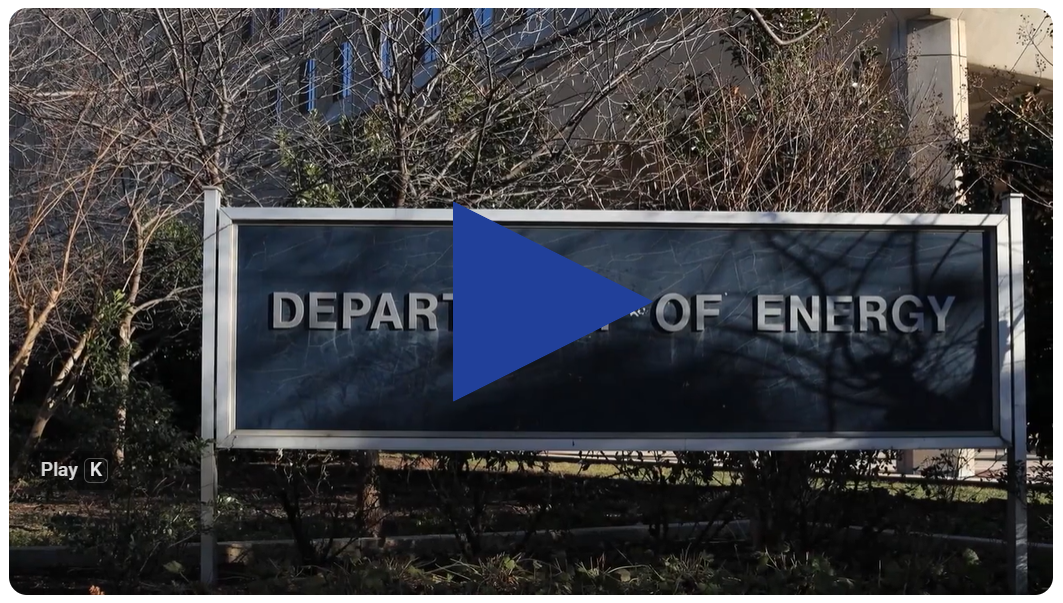
Get to know the Federal Energy Management Program through our new overview video. Explore FEMP’s key programs, success stories, and tools designed to help federal agencies achieve energy and water efficiency goals. This engaging video is a great introduction for anyone interested in learning more about driving energy resilience improvements in federal operations with smart, cost-saving solutions.
|
|
Join an Upcoming FEMP Training or Working Group!
Become a Certified Data Center Energy Practitioner
As energy-intensive facilities, data centers stand to benefit from measures that save energy. However, conducting effective energy assessments requires specialized knowledge and training.
To support this need, the U.S. Department of Energy and industry partners developed the Data Center Energy Practitioner (DCEP) Training Program. This program certifies professionals as qualified to assess energy performance and identify savings opportunities in data centers.
Live online courses are offered every other month, providing a pathway to becoming a certified DCEP and helping advance energy savings across the sector.
Sign up for a DCEP course
| |
|
Training Level
|
Date(s)
|
|
Generalist
|
July 13
|
|
HVAC Specialist
|
July 14–15
|
|
Electrical Specialist
|
July 16
|
|
IT Specialist
|
July 17
|
|
|
ESPCs from Start to Finish: A Three-Day Federal Training
Join this three-day virtual training series to learn how energy savings performance contracts (ESPCs) can be used to achieve energy and water goals while modernizing federal infrastructure. Participants will learn how to successfully develop, award, and manage ESPC projects throughout the performance period, gaining practical tools and best practices to support long-term energy and water savings, infrastructure reliability, and cost-effective facility operations.
Each session builds on the last, covering each of the five phases of the ESPC project development process—from acquisition planning and project initiation through investment-grade audits, proposal evaluation, task order award, and construction implementation.
Please note: Attendees must register for each day separately.
Participate in an Upcoming FEMP Re-tuning Event at NASA Langley Research Center in Virginia
July 14–15 | 8 a.m.–4:00 p.m. ET | NASA Langley Research Center – Hampton, VA
FEMP offers a program to federal agencies called the “Re-tuning Challenge” that offers no-cost, guided, two-day, on-site trainings held at federal facilities. Re-tuning is a systematic process aimed at reducing building energy consumption by identifying and correcting operational problems that plague buildings. Typically, these problems can be resolved by applying no-cost or low-cost measures. These trainings help agency staff and site occupants learn to identify cost-effective operational improvements that amount to significant energy and cost savings. If you would like to participate in this upcoming training, click here to learn more or email Allison Ackerman.
Withstanding Natural Disasters: Wildfire Hazards and Mitigation Strategies
Training | July 21, 2026 | 1–2:00 p.m. ET
This training provides an overview of wildfire hazards, helping participants understand how factors such as vegetation, building materials, and site layout influence a federal site’s vulnerability. Potential mitigation strategies will be explored, including approaches to harden infrastructure against various wildfire impacts.
Register here.
Learn How to Make Your Site Resilient
Working Group | August 4, 2026 | 2–3:00 p.m. ET
Join FEMP for the next FEMP Energy Security Roundtable! These quarterly gatherings bring together personnel from federal agencies to discuss agency progress, challenges, and best practices, while also exchanging updates on federal resilience initiatives. This forum aims to assess current advancements and perceived obstacles to energy and water resilience planning at agency sites and installations. The topic for this session will be passive survivability which is the ability to maintain safe conditions in a facility without active power or HVAC during a hazard event.
Participation in the forum is limited to federal agency employees. To express your interest in joining, fill out this form.
Join the Next Federal Water Forum Meeting
Working Group | August 13, 2026 | 2–3:00 p.m. ET
The Federal Water Forum provides federal agencies with a space to:
-
Understand federal requirements for water management
-
Discuss facility water management
-
Learn about new technical resources and tools
-
Share lessons learned and successes
-
Build strategies to meet federal requirements
-
Improve water efficiency and resilience.
The forum meets virtually every quarter. Participation in the forum is limited to federal agency employees. Email Jennifer Williamson to request to join.
Fundamentals of Next Generation Geothermal Technology for Power Generation
Training | August 17, 2026 | 1–2:00 p.m. ET
This 101-level training introduces the fundamentals of geothermal technologies, helping participants differentiate conventional hydrothermal systems from next-generation solutions like Enhanced Geothermal Systems (EGS) and Advanced Closed Loop Geothermal Systems (AGS). The session will cover the current market status of conventional hydrothermal systems and technology readiness levels of next-generation technologies, as well as the key federal drivers influencing investment and innovation. Participants will gain insight into the technical barriers, regulatory landscape, and demonstration timelines for power generation.
|
|
The U.S. Department of Energy’s Federal Energy Management Program builds the capacity of the federal agency workforce to achieve efficient, secure, and reliable energy use in facilities and fleets—saving taxpayers money. |
|
|
|
|