|
Funding Assists Communities Participating in the National Flood Insurance Program
FEMA is announcing approximately $41 million in grant awards to empower communities across the nation to bolster resilience to flood hazards.
Fiscal Year 2026 funding through FEMA's Cooperating Technical Partners program will enable communities to identify flood threats so they can lead actions that reduce risk to property. This aligns with President Donald J. Trump’s America First Resilience Strategy, which calls for a new risk-informed approach that treats resilience as an investment opportunity.
The Cooperating Technical Partners program is a competitive grant program that provides funding to state, local, tribal and territorial partners in communities participating in the National Flood Insurance Program. It assists communities with flood mapping through actions such as hiring engineers and providing training to ensure maps incorporate local knowledge and accurately reflect risk. Through this federal partnership, more than 60,000 miles of rivers and streams have been studied and identified on FEMA flood maps.
This funding specifically prioritizes continued work on the more than 1,000 flood-mapping projects currently in progress across the country.
Flood data and maps enable local leaders to identify and understand their unique flood risk and decide whether and how to act to reduce it. For more information about flood maps, visit Flood Maps | FEMA.gov.
FEMA announced that President Donald J. Trump made additional federal assistance available to disaster survivors in the state of Texas to aid in their recovery from the severe storms, straight-line winds, tornadoes and flooding from July 12 to Aug. 4.
The president’s action makes federal funding available to affected individuals in Bandera, Bexar, Comal, Crockett, Dimmit, Frio, Gillespie, Kendall, Kerr, Kimble, Kinney, La Salle, Maverick, Medina, Real, Schleicher, Sutton, Uvalde, Val Verde and Zavala counties. Assistance can include grants for temporary housing and home repairs, low-interest loans to cover uninsured property losses and other programs to help individuals and families recover from the effects of the disaster.
Individuals who sustained losses in the designated areas should first file claims with their insurance providers and then apply for assistance by registering online at DisasterAssistance.gov, by calling 1-800-621-3362 or by using the FEMA App. If you use a relay service—such as video relay service (VRS), captioned telephone service or others—provide FEMA the number for that service.
For more information, visit Texas Severe Storms, Straight-line Winds, Tornadoes and Flooding.
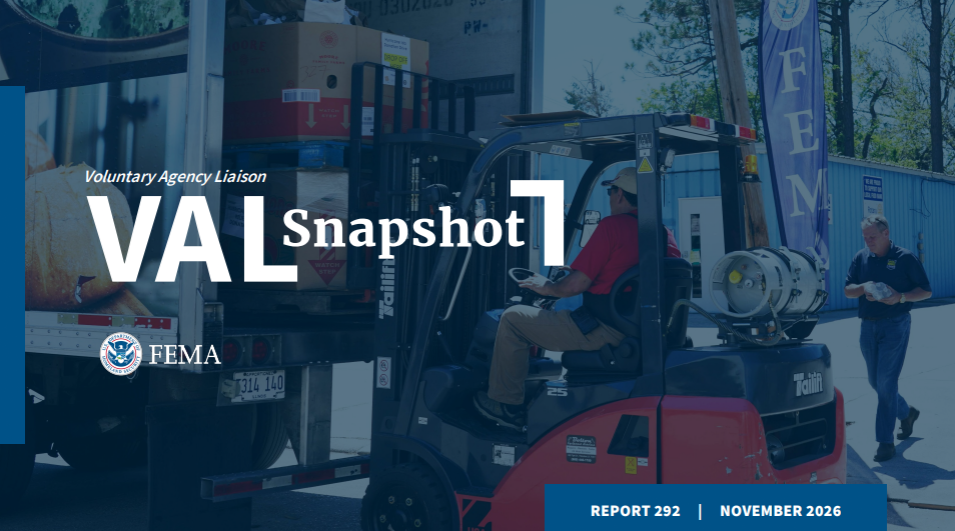
The November 2026 edition of the FEMA Voluntary Agency Liaison (VAL) Snapshot Report is now available, highlighting the Crow Tribe of Montana’s recovery built by community, for community.
The monthly snapshot provides FEMA’s nongovernmental partners with updates on current disaster activity, recovery operations and partner-led efforts supporting survivors and communities nationwide. Each snapshot highlights examples of collaboration among voluntary, philanthropic, private sector, faith-based and community-based organizations working alongside emergency management partners before, during and after disasters.
Project at Crow Tribe of Montana Provides Shelter Options
At the Crow Tribe of Montana, FEMA Region 8 VALs helped local partners establish the Seven Stars Long-Term Recovery Group and secure more than $42,000 in grants from Adventist Community Services, the Christian Church (Disciples of Christ) and the United Church of Christ.
Using the grants, donations and volunteer labor, the group converted multiple buildings into furnished temporary shelters. Trained tribal members now manage the shelters while FEMA repairs and replaces storm-damaged homes through its Permanent Housing Construction program, which provides direct assistance to build permanent or semi-permanent housing.
More Stories in the October VAL Snapshot Report
The November VAL Snapshot Report features additional stories about FEMA's nongovernmental partners supporting disaster survivors and communities throughout the United States, tribal nations and territories. Read the full newsletter at: November VAL Snapshot Report.
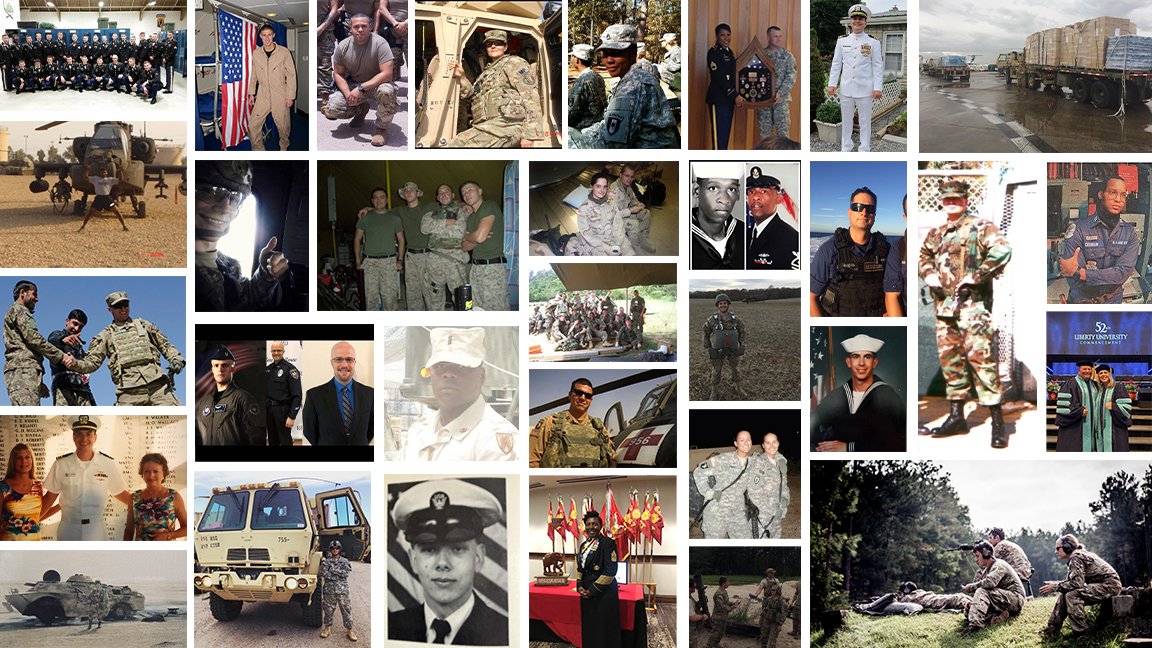
Every year, Veterans Day offers us an opportunity to honor the men and women who have served in the armed forces to defend and protect our great nation. Their courage, sacrifice and unwavering commitment to our country help make our freedom possible.
Watch a video message from FEMA Administrator Cameron Hamilton honoring Veterans Day by visiting: Honoring Veterans Day | FEMA.gov.
Attend FEMA Webinar on Updated Public Assistance Reporting Requirements, November 12
FEMA is hosting a webinar on Nov. 12 at 2:30 p.m. to guide Public Assistance recipients and subrecipients as they prepare for new quarterly reporting requirements that will begin in January 2027.
The 90-minute webinars are intended to prepare state, local, tribal and territorial partners, including Public Assistance recipients and subrecipients, during this transition. By attending the webinars, participants will learn about the new reporting requirements and how to submit reports through the Grants Portal. Webinar participants do not need to pre-register to join.
To join the webinar, visit: FEMA Public Assistance Reporting Requirements Webinar | Zoom.
....................................................................................................................................................
Apply for the Fiscal Year 2027 Counter Unmanned Aircraft Systems Grant Program by November 16
On Oct. 16, FEMA made $250 million available to states and territories through a new Counter-Unmanned Aircraft Systems Grant Program funding opportunity. This funding will empower state and territorial governments to enhance their capabilities to aggressively combat the unlawful use of unmanned aircraft systems, also known as drones.
This Fiscal Year 2027 funding opportunity is published on Grants.gov. This is a noncompetitive grant program. State Administrative Agencies are the only eligible applicants for this funding opportunity. All applications must be submitted in FEMA Grants Outcomes (FEMA GO), the grants management system of record. The application period opened on Oct. 16 and will close on Nov. 16.
....................................................................................................................................................
FEMA and the Federal Communications Commission Schedule Nationwide 2026 Emergency Alert System Test for November 17
FEMA, in coordination with the Federal Communications Commission, will conduct a nationwide test of the Emergency Alert System at approximately 2:20 p.m. ET, Tuesday, Nov. 17. Through this test, FEMA will assess how participating broadcasters and other communications providers receive and relay a national test message to the public.
FEMA is required by law to conduct a nationwide test of the public alert and warning system at least once every three years. These tests evaluate the operational readiness and effectiveness of external Emergency Alert System participants and the infrastructure they use to relay national emergency messages to the public. Emergency Alert System participants include thousands of radio and television broadcasters, cable systems, satellite radio and television providers and wireline video providers.
The test message will state, “This is a nationwide test of the Emergency Alert System, issued by the Federal Emergency Management Agency, covering the United States from 2:20 to 2:50 hours ET. This is only a test. No action is required by the public.” The test message may be delivered as audio, on-screen text or both, depending on the provider. After the test concludes, normal programming will resume.
....................................................................................................................................................
|


