|
On Oct. 16, FEMA made $250 million available to states and territories through a new Counter-Unmanned Aircraft Systems Grant Program funding opportunity. This funding will empower state and territorial governments to enhance their capabilities to aggressively combat the unlawful use of unmanned aircraft systems, also known as drones.
In recent years, criminals, terrorists and hostile foreign actors have intensified their use of unmanned aircraft systems to endanger the American people, threaten the integrity of our communities, and jeopardize the protection of critical infrastructure and vital institutions. With the support of the White House Task Force on the FIFA World Cup 2026, the FBI and the Department of Homeland Security (DHS) have coordinated federal efforts to address unlawful drone threats and protect communities, critical infrastructure and large-scale public events. FEMA designed this grant program to address this evolving threat by empowering state and territorial governments to build the capabilities they need to effectively detect, identify, track and monitor this technology. This program aligns with President Donald J. Trump’s broader initiative to protect the public from hostile drones, as outlined in the Executive Order on Restoring American Airspace Sovereignty.
The grant program was established under the One Big Beautiful Bill Act of 2025 and signed into law by President Donald J. Trump in July 2025. This legislation directed DHS to provide $500 million in federal funding over two years to enhance state and local capabilities to combat unmanned aircraft systems. Last year, FEMA awarded $250 million specifically to states hosting FIFA World Cup matches and to the National Capital Region to address drone threats. This year, the remaining $250 million will be distributed to all 50 states, five territories and the District of Columbia, enabling robust detection and response capabilities in communities nationwide. This design demonstrates that the Trump Administration is working to keep Americans secure as they attend historic events across the nation while also building long-term protections against drone threats.
This Fiscal Year 2027 funding opportunity is published on Grants.gov. This is a noncompetitive grant program. State Administrative Agencies are the only eligible applicants for this funding opportunity. All applications must be submitted in FEMA Grants Outcomes (FEMA GO), the grants management system of record. The application period opened on Oct. 16 and will close on Nov. 16.
On Oct. 16, FEMA and its partners released a new study that provides key insights into challenges faced by emergency managers across the nation. The Emergency Management Organizational Structures, Staffing and Capacity Study confirms that America’s emergency management system is strongest when it is locally led, state managed and federally supported. The study surveyed over 1,700 emergency management officials nationwide and found that local and state agencies are best positioned to understand and address the unique needs of their communities.
FEMA sponsored the study to better understand the emergency management landscape across the nation, including in cities, suburbs, rural areas and within tribal nations. The report summarizes quantitative and qualitative data from survey responses and interviews across 1,689 local jurisdictions, 37 states, 59 tribal nations and four territories.
The report finds that local emergency management agencies are critical to our nation’s resilience, but it also finds that those organizations are typically understaffed and underfunded. This finding reinforces the vision outlined in President Donald J. Trump’s America First Resilience Strategy, which calls for state and local governments to develop and maintain capacity to effectively manage incidents affecting their communities.
For decades, many states have relied excessively on federal grants to maintain emergency response capabilities—to their own detriment. To strengthen their resilience against disasters and emergencies, states, tribal nations, territories and local jurisdictions should consistently invest in their own emergency management capabilities.
This study was funded by FEMA and conducted by Argonne National Laboratory. Big City Emergency Managers, the International Association of Emergency Managers and the National Emergency Management Association also collaborated on the study.
In addition to publishing the study’s findings as a report, FEMA worked with the Argonne National Laboratory to launch the National Emergency Management Data Explorer tool. This tool is available to help review and analyze the summary information gathered from the local survey component of the study. Community leaders can review the findings to make informed, strategic decisions on investment and capacity building efforts.
To view the report and access the tool, visit the Argonne National Laboratory website.
On Oct. 17, FEMA announced that federal disaster assistance is available to Guam and the Commonwealth of the Northern Mariana Islands to supplement territory and local response efforts due to the emergency conditions resulting from Typhoon Champi beginning on Oct. 16 and continuing.
The President’s action authorizes FEMA to coordinate all federal disaster relief efforts to alleviate the hardship and suffering caused by the emergency on the local population, and to provide appropriate assistance to save lives, protect property, public health and safety and to lessen or avert the threat of a catastrophe.
Specifically, FEMA is authorized to identify, mobilize and provide at its discretion, equipment and resources necessary to alleviate the impacts of the emergency. Emergency protective measures, limited to direct federal assistance, will be provided at 75% federal funding.
FEMA will host four webinars between Oct. 27 to Nov. 12 to guide Public Assistance recipients and subrecipients as they prepare for new quarterly reporting requirements that will begin in January 2027.
Beginning January, recipients must submit a quarterly progress report for each large Public Assistance project through Grants Portal to improve visibility on disaster recovery progress. A quarterly progress report is a brief update on a project’s status, including completed work, project costs and identifying issues to minimize delays. Recipients must submit each report within 30 days after the end of each fiscal quarter.
The new reporting process replaces the current manual reporting process. FEMA expects the new process will reduce errors and delays, ensure consistency across disasters and improve data quality, saving time and resources. Public Assistance recipients and subrecipients can expect a more streamlined system that improves project data reliability and verification, supporting faster repair and rebuilding of public infrastructure.
The 90-minute webinars are intended to prepare state, local, tribal and territorial partners, including Public Assistance recipients and subrecipients, during this transition. By attending the webinars, participants will learn about the new reporting requirements and how to submit reports through the Grants Portal. Webinar participants do not need to pre-register to join.
Join one of the following webinar sessions below:
FEMA will continue to work closely with Public Assistance recipients and subrecipients to ensure that disaster recovery projects move forward in a timely manner.
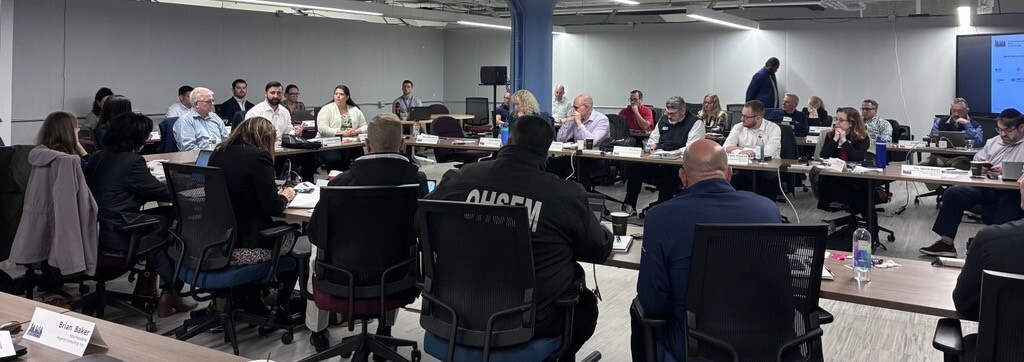 On Oct. 7, FEMA Administrator Cameron Hamilton met with local emergency management leaders from across the nation during the annual Big City Emergency Managers fall meeting in Boston. The administrator’s remarks emphasized the importance of strengthening emergency management through clear requirements, core objectives and building local capacity to reduce national-level risks. He also highlighted the importance of partnerships at every level of government to support communities before, during and after disasters.
The Big City Emergency Managers fall meeting brings together municipalities from across the nation to discuss priorities in emergency management, identify opportunities for enhanced collaboration and share best practices that strengthen readiness and resiliency nationwide.
Administrator Hamilton also welcomed the 2026 Big City Emergency Managers Emerging Leaders cohort to FEMA headquarters last week for a professional development discussion and a tour of FEMA’s National Response Coordination Center. The roundtable emphasized the administrator’s strategic vision for the agency and how emerging leaders in emergency management can strengthen the profession through coordination, capacity building and continuous improvement.
Big City Emergency Managers Emerging Leaders is a nine-month professional development program that connects participants with the nation’s most innovative emergency management leaders to provide leadership tools, techniques, best practices and lessons learned.
FEMA is proud to partner with Big City Emergency Managers and emergency managers nationwide to strengthen the emergency management profession, build local capacity, enhance readiness and resiliency, and reduce the impacts of disasters on communities nationwide.
Vanguard Crisis Leaders Fellowship Application Deadline Extended to October 31
The application deadline for FEMA’s 2027 Vanguard Executive Crisis Leaders Fellowship has been extended to Saturday, Oct. 31.
Senior executives and experienced crisis leaders are invited to apply for the two-week, senior-level leadership program offered by FEMA’s National Disaster and Emergency Management University. The fellowship supports leaders from government, academia, nongovernmental, philanthropic and private-sector organizations in strengthening the skills needed to lead through complex, uncertain and rapidly changing crises.
Applicants must submit their application by Oct. 31 to be considered for the 2027 Vanguard cohorts. After application review by the selection board, selectees will be notified by Nov. 30.
For more information and application instructions, visit the Vanguard Executive Crisis Leaders Fellowship webpage.
....................................................................................................................................................
FEMA and the Federal Communications Commission Schedule Nationwide 2026 Emergency Alert System Test for November 17
FEMA, in coordination with the Federal Communications Commission, will conduct a nationwide test of the Emergency Alert System at approximately 2:20 p.m. ET, Tuesday, Nov. 17. Through this test, FEMA will assess how participating broadcasters and other communications providers receive and relay a national test message to the public.
FEMA is required by law to conduct a nationwide test of the public alert and warning system at least once every three years. These tests evaluate the operational readiness and effectiveness of external Emergency Alert System participants and the infrastructure they use to relay national emergency messages to the public. Emergency Alert System participants include thousands of radio and television broadcasters, cable systems, satellite radio and television providers and wireline video providers.
The test message will state, “This is a nationwide test of the Emergency Alert System, issued by the Federal Emergency Management Agency, covering the United States from 2:20 to 2:50 hours ET. This is only a test. No action is required by the public.” The test message may be delivered as audio, on-screen text or both, depending on the provider. After the test concludes, normal programming will resume.
....................................................................................................................................................
|


