On September 14-15, FEMA announced the approval of more than $308 million in post-disaster recovery and resilience funding across the nation for Public Assistance, Hazard Mitigation Grant Program and Building Resilient Infrastructure and Communities projects.
These programs empower states, local communities, tribes and territories to recover from disasters and to protect infrastructure from future events. With this funding, President Donald J. Trump and Department of Homeland Security Secretary Markwayne Mullin have kept their commitment to reform federal disaster support and ensure that taxpayer money is spent only on projects that deliver safety and security to the American people.
The funding includes more than $182 million under FEMA’s Public Assistance program. State, territorial and local governments, as well as certain private nonprofits, will use this funding for more than 89 recovery projects related to previous disasters. In line with President Donald J. Trump’s executive order 14395 Establishing the Task Force to Eliminate Fraud, FEMA has conducted detailed reviews of claimed costs for Public Assistance funds to help prevent fraud, waste and abuse. These Public Assistance projects include repairs to critical infrastructure, restoration of public buildings, road repairs and reimbursement for actions taken to protect public health and safety during and after disasters.
Hazard Mitigation Grant Program
FEMA is also awarding more than $123 million for 55 projects through the Hazard Mitigation Grant Program. These projects, located in 14 states, are designed to prevent, reduce or eliminate future disaster-related damage. Through this program, state, local and territorial governments, as well as tribal nations, implement mitigation measures such as acquiring hazard-prone homes and businesses, adopting and enforcing modern building codes and standards, protecting against floods through elevations and drainage improvements, constructing safe rooms and upgrading utilities and infrastructure.
Building Resilient Infrastructure and Communities
More than $2.7 million is being awarded through the Building Resilient Infrastructure and Communities program to empower states, local governments, territories and tribal nations to take decisive, proactive steps to protect their communities from potential disasters like fires, floods, earthquakes and hurricanes. This federal investment generates jobs, protects private property, strengthens infrastructure, reduces the cost of future disasters and—most importantly—saves lives. The program maximizes state and local responsibility for resilience and risk reduction. This funding prioritizes infrastructure resilience by funding construction projects that are ready to implement and incentivizes the adoption of the latest hazard-resistant building codes.
For these three grant programs, FEMA obligates funding directly to states, territories and tribal nations. These government entities are responsible for ensuring funds are dispersed to local subrecipients. This supports FEMA's principle that disaster recovery should be locally led, state managed and federally supported.
On Sept. 18, FEMA announced nearly $180 million in grant funding to states and territories across the country. This funding will empower community leaders to take decisive steps to protect infrastructure and people from future disasters. This funding aligns with President Donald J. Trump’s America First Resilience Strategy, which calls for a new, risk-informed approach that treats resilience as an investment opportunity. It also delivers on the Department of Homeland Security Secretary Mullin’s commitment to empowering state and local officials to manage their own disaster preparedness which includes being locally executed, state managed and federally supported.
The funding announced is for three separate mitigation programs:
-
FEMA will award more than $160 million to fund disaster mitigation projects in communities across the country, empowering local leaders to take proactive steps to protect their communities from potential disasters. This funding was administered through FEMA’s Pre-Disaster Mitigation Grant Program. In the Fiscal Year 2026 Homeland Security and Further Additional Continuing Appropriations Act, Congress directed that these funds be distributed to support 115 specific projects in 39 states and one tribal nation. Most projects focus on improving infrastructure to reduce flood risk, while others address hazards such as earthquakes and wildfires.
-
FEMA will award $15 million in federal funding to states and territories to reduce the risk of floods by improving floodplain management practices. This funding is administered through FEMA’s Community Assistance Program – State Support Services Element. This competitive grant program is designed to empower states and territories to lead floodplain management activities in their communities. By proactively taking steps to manage flood risk, these communities can save lives and protect property.
-
FEMA will award $3.8 million in federal funding to states and territories, as well as nonprofit organizations and higher education institutions, to reduce the risk of earthquakes. This funding is administered through two funding opportunities under FEMA’s National Earthquake Hazards Reduction Program grants. These awards include more than $2.3 million to 22 states and U.S. territories to train officials, conduct exercises and carry out other activities to prepare for potential earthquakes. Additionally, through a competitive process, FEMA will award $1.5 million to help nonprofit organizations and higher education institutions develop and implement regional (multi-state) and/or national earthquake risk mitigation activities.
Nearly two years after Tropical Storm Helene devastated portions of North Carolina, FEMA has committed more than $7.5 billion in recovery funding for Helene and other recent disasters following the leadership of President Donald J. Trump and Secretary Mullin.
Recently, FEMA Administrator Cameron Hamilton viewed the North Carolina recovery in person, talked with local leaders and ensured the more than 3,000 Helene recovery projects remain on track for timely completion.
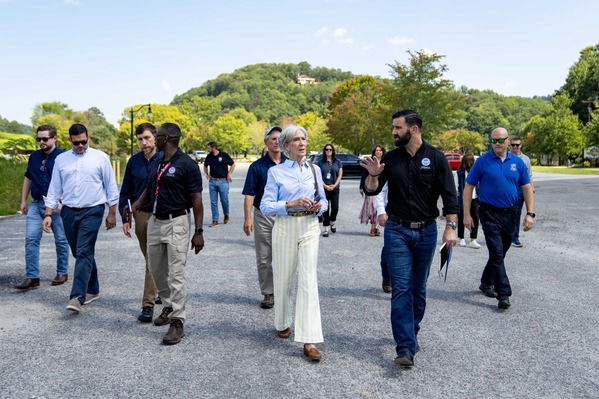 Lake Lure, N.C. (Sept. 2, 2026) - Lake Lure Mayor Carol Pritchett, center, guides FEMA Administrator Cameron Hamilton along the city’s marina and park location that was destroyed two years ago during Helene. Federal contractors cleared more than 1.2 million cubic yards of debris from the lake to help the marina reopen for Memorial Day weekend.
In the last month, FEMA announced more than $162 million for recovery projects in North Carolina, bringing the total to more than $7.5 billion in FEMA funding for Helene and other recent disaster recovery efforts.
FEMA is also awarding nearly $48 million to the state through the Hazard Mitigation Grant Program to acquire approximately 135 flood-prone properties damaged by Helene in several hard-hit communities. The properties will be converted into permanent open space to prevent, eliminate or reduce future disaster damage. In total, FEMA has provided funding for the state to acquire more than 500 properties.
FEMA’s total recovery funding includes more than $2.5 billion for approximately 3,000 Helene recovery projects to reimburse services for debris removal, rebuilding critical infrastructure and other storm-related expenses.
To learn more about Helene funding recovery funding and how federal agency partners are supporting North Carolina’s recovery, read the press release at: Recovery Progress Continues Nearly Two Years After Helene
FEMA plans to conduct a nationwide test of the Emergency Alert System at approximately 2:20 p.m. ET, Tuesday, Nov. 17. Through this test, FEMA will assess how participating broadcasters and other communications providers receive and relay a national test message to the public. No action is required by the public.
About the 2026 Nationwide Test
FEMA is required by law to conduct a nationwide test of the public alert and warning system at least once every three years. These tests evaluate the operational readiness and effectiveness of external Emergency Alert System participants and the infrastructure they use to relay national emergency messages to the public. Emergency Alert System participants include thousands of radio and television broadcasters, cable systems, satellite radio and television providers and wireline video providers.
FEMA is coordinating with the Federal Communications Commission, the National Association of Broadcasters, state broadcast associations, participating broadcast companies and federal, state, tribal and territorial agencies to prepare for and conduct the test.
What to Expect on the Day of the Test
On Nov. 17, radio and television broadcasters, cable systems, satellite radio and television providers, and wireline video providers nationwide will interrupt normal programming to relay a test message. The message will state, “This is a nationwide test of the Emergency Alert System, issued by the Federal Emergency Management Agency, covering the United States from 2:20 to 2:50 hours ET. This is only a test. No action is required by the public.” The test message may be delivered as audio, on-screen text or both, depending on the provider. The test will take place at approximately 2:20 p.m. ET. When it has concluded, normal programming will resume.
In the coming weeks, FEMA will host webinars for broadcasters and radio operators participating in the test. Additional details will be posted on the FEMA.gov Events Page
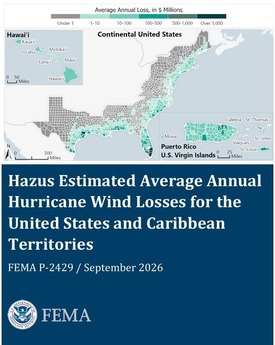
FEMA has released a report detailing the risk of hurricane wind across the United States. This report is an important resource to help communities better understand, mitigate and prepare for the effects of these devastating storms.
The P-2429 Hazus Estimated Average Annual Hurricane Wind Losses for the United States and Caribbean Territories is FEMA’s first national assessment of hurricane wind risk. The report quantifies and compares hurricane wind risk across Atlantic and Gulf coasts of the United States, the Caribbean territories and Hawaiʻi. It estimates more than $29 billion in average annual losses to buildings due to hurricane winds.
Under the leadership of FEMA Administrator Cameron Hamilton, FEMA is focused on empowering state, local, tribal and territorial governments to proactively prepare for natural disasters, hazards and other emergencies. This report helps emergency managers clearly see their community’s hurricane wind risks so they can make better decisions to protect people and property. Additionally, the report includes case studies for Wilmington, North Carolina, and Charleston, South Carolina, demonstrating how modern wind-resistant building codes can save lives and property.
In addition to the report, FEMA also released an interactive version of the report’s data, allowing officials to easily visualize findings for their area. The Hurricane Wind Risk/Loss Severity viewer is also available.
This report is just one of the resources that FEMA recently released to empower state, local, tribal and territorial governments to make informed, strategic decisions about disaster readiness and hazard mitigation. Community leaders can also use FEMA resources to understand how they may be impacted by tsunamis and earthquakes.
|
To help leaders master the skills needed to successfully lead through a more complex, uncertain and rapidly changing world, FEMA’s National Disaster and Emergency Management University is accepting applications for the 2027 Vanguard Executive Crisis Leaders Fellowship. The two-week, senior-level leadership program focuses on disruptive changes in emergency management and crisis leadership.
Who Should Apply
The fellowship is designed for senior executives and experienced crisis leaders with substantive crisis leadership or emergency management experience. Applicants may come from government, academia, non-governmental, philanthropic or the private sector. Ideal candidates are executive level leaders responsible for operational and strategic decision-making during crises, or leaders who have guided organizations through crises.
Fellowship Schedule
Week one will be held at a rotating, offsite location. Week two will be held in Washington, D.C. and typically includes visits with elected officials and Department of Homeland Security and FEMA leadership.
2027 Vanguard Fellowship Dates:
-
Cohort 13:
-
Week One: Feb.1-5, 2027, in Nashville, Tennessee.
-
Week Two: Feb. 22-26, 2027, in Washington, D.C.
-
Cohort 14:
-
Week One: March 15-19, 2027, in Charlotte, North Carolina.
-
Week Two: April 12-16, 2027, Washington, D.C.
-
Cohort 15:
-
Week One: May 10-14, 2027, in Denver Colorado.
-
Week Two: June 21-25, 2027, in Washington, D.C.
Fellowship Selection Process
Applicants must submit their application by Oct. 15 to be considered for the 2027 Vanguard cohorts. After application review by the selection board, selectees will be notified by November 30.
Applications will be evaluated based on the applicant’s executive leadership role within an organization with significant responsibility for crisis, disaster and emergency management.
Applicants are encouraged to carefully review all requirements before submitting their application package.
For more information and application instructions, visit the Vanguard Executive Crisis Leaders Fellowship webpage.
FEMA Corps Resumes, Application Period Open for 2027 Class
The FEMA Corps program has resumed and is accepting applications for its next class of future emergency managers. The FEMA Corps program is restarting after being carefully reviewed and refocused to align with FEMA’s core mission and the Trump Administration's priorities. About 80 members and 10 team leaders will be selected to serve from February 2027 to November 2027.
Apply to be a FEMA Corps Team Leader:
Apply to be a FEMA Corps Member:
FEMA Corps graduates may receive an education award upon completion, which can be used for tuition or student loans, and relocation expenses. Additionally, FEMA Corps members receive paid housing and a weekly stipend for food and living expenses, all while being deployed to serve communities in need across the country. To learn more, visit AmeriCorps NCCC.
....................................................................................................................................................
|


