|
Last week, President Donald J. Trump approved 12 federal declarations, including 11 major disaster declarations and one emergency declaration. The disaster declarations make recovery assistance available to eligible states and one Tribal Nation. The emergency declaration makes federal assistance available to supplement state and local response efforts.
Individual Assistance is available under the following major disaster declarations:
Survivors are encouraged to file insurance claims for damage to their homes, personal property and vehicles before they apply for FEMA assistance. FEMA Individual Assistance cannot pay for expenses that other sources will cover.
The fastest way to apply is online at DisasterAssistance.gov or the Spanish language site DisasterAssistance.gov/es.
If you need more information or additional help:
- Download the FEMA App.
- Call the FEMA Helpline at 1-800-621-3362 for assistance in multiple languages. If you use a relay service—such as video relay service (VRS), captioned telephone service or others—provide FEMA the number for that service.
- Find in-person FEMA support at fema.gov/drc.
To view an accessible video on how to apply, visit What to Expect Before Applying for FEMA Assistance.
Public Assistance is available under the following major disaster declarations:
-
Oglala Sioux Tribe: Assistance is available to supplement recovery efforts in the areas affected by severe storms, straight-line winds and flooding from June 2-4. Learn more at: Oglala Sioux Tribe Severe Storms, Straight-line Winds and Flooding.
-
Iowa: Assistance is available to supplement recovery efforts in the areas affected by severe storms and flooding from July 1-4. Learn more at: Iowa Severe Storms and Flooding.
-
Kansas: Assistance is available to supplement recovery efforts in the areas affected by two disasters:
-
Kentucky: Assistance is available to supplement recovery efforts in the areas affected by severe storms, straight-line winds, tornadoes and flooding from June 26-30. Learn more at: Kentucky Severe Storms, Straight-line Winds, Flooding, Landslides and Mudslides.
-
Missouri: Assistance is available to supplement recovery efforts in the areas affected by severe storms, straight-line winds and flooding from July 9-11. Learn more at: Missouri Severe Storms, Straight-line Winds and Flooding.
-
North Dakota: Assistance is available to supplement recovery efforts in the areas affected by severe storms, straight-line winds and tornadoes from June 7-9. Learn more at: North Dakota Severe Storms, Straight-line Winds and Tornadoes.
-
South Dakota: Assistance is available to supplement recovery efforts in the areas affected by severe storms, straight-line winds, tornadoes and flooding from June 28 to July 3. Learn more at: South Dakota Severe Storms, Straight-line Winds, Tornadoes and Flooding.
-
Texas: Assistance is available to supplement recovery efforts in the areas affected by severe storms, straight-line winds, tornadoes and flooding on July 12 and continuing. Learn more at: Texas Severe Storms, Straight-line Winds, Tornadoes and Flooding.
-
Colorado: Assistance is available to supplement recovery efforts in the areas affected by wildfires, flooding and mudslides from June 27 to July 29. Learn more at: Colorado Wildfires, Flooding and Mudslides.
Public Assistance funding is available to state, tribal and eligible local governments and private nonprofit organizations on a cost-sharing basis for emergency work and the repair or replacement of disaster-damaged facilities. Learn more about FEMA’s Public Assistance program at FEMA.gov.
When You Apply, Ensure the Disaster Declaration Number is Accurate
When you apply, specify the damage and the date it occurred to ensure you are applying under the correct declaration number. If you were affected by multiple disasters, you should apply separately for each disaster.
FEMA also announced that federal disaster assistance is available under the following emergency declaration:
-
Nevada: Assistance is available to supplement state and local response efforts due to the emergency conditions resulting from the Hawk Fire that began August 22. Learn more at: Nevada Hawk Fire.
On September 3, FEMA announced the approval of more than $345 million in post-disaster recovery and resilience funding across the nation, delivering on President Donald J. Trump and Department of Homeland Security Secretary Markwayne Mullin’s commitment to reform federal disaster support, empower state and local partners, and ensure taxpayer dollars are invested in projects that protect lives, property and critical infrastructure.
Public Assistance
The funding includes more than $325 million under FEMA’s Public Assistance program. State, territorial and local governments, as well as certain private nonprofits, will use this funding for more than 100 recovery projects related to previous disasters, including projects associated with the COVID-19 pandemic. In line with President Trump’s executive order 14395 Establishing the Task Force to Eliminate Fraud, FEMA has conducted detailed reviews of claimed costs for Public Assistance funds to help prevent fraud, waste and abuse. These Public Assistance projects include repairs to critical infrastructure, restoration of public buildings, road repairs and reimbursement for actions taken to protect public health and safety during and after disasters.
FEMA obligates Public Assistance funding directly to states, territories and Tribal Nations. States, territories and Tribal Nations are responsible for ensuring funds are dispersed to local subrecipients as appropriate. This supports FEMA’s principle that disaster recovery should be locally led, state-managed and federally supported.
Hazard Mitigation Grant Program
FEMA is also awarding more than $20 million for 33 projects through the Hazard Mitigation Grant Program. These projects, located in 13 states and one territory, are designed to prevent, reduce or eliminate future disaster-related damage. Through this program, state, local and territorial governments, as well as Tribal Nations, implement mitigation measures such as acquiring hazard-prone homes and businesses, adopting and enforcing modern building codes and standards, protecting against floods through elevations and drainage improvements, constructing safe rooms and upgrading utilities and infrastructure.
FEMA obligates Hazard Mitigation Grant Program funding directly to states, territories and Tribal Nations. States, territories and Tribal Nations are responsible for ensuring funds are dispersed to local subrecipients as appropriate. This supports FEMA’s principle that disaster recovery should be locally led, state managed and federally supported.
Individual Assistance
In addition, FEMA approved $1.5 million in Individual Assistance grants to North Carolina. These grants directly support individuals, families and communities by addressing urgent post-disaster needs such as disaster unemployment assistance, crisis counseling and disaster case management.
These latest approvals are part of FEMA’s continued work under President Donald J. Trump’s leadership to deliver disaster recovery assistance efficiently, strengthen accountability and support communities as they rebuild from hurricanes, severe storms, tornadoes, wildfires and other disasters. FEMA remains committed to a locally led, state-managed, federally supported approach that helps communities recover while reducing the impacts and costs of future disasters.
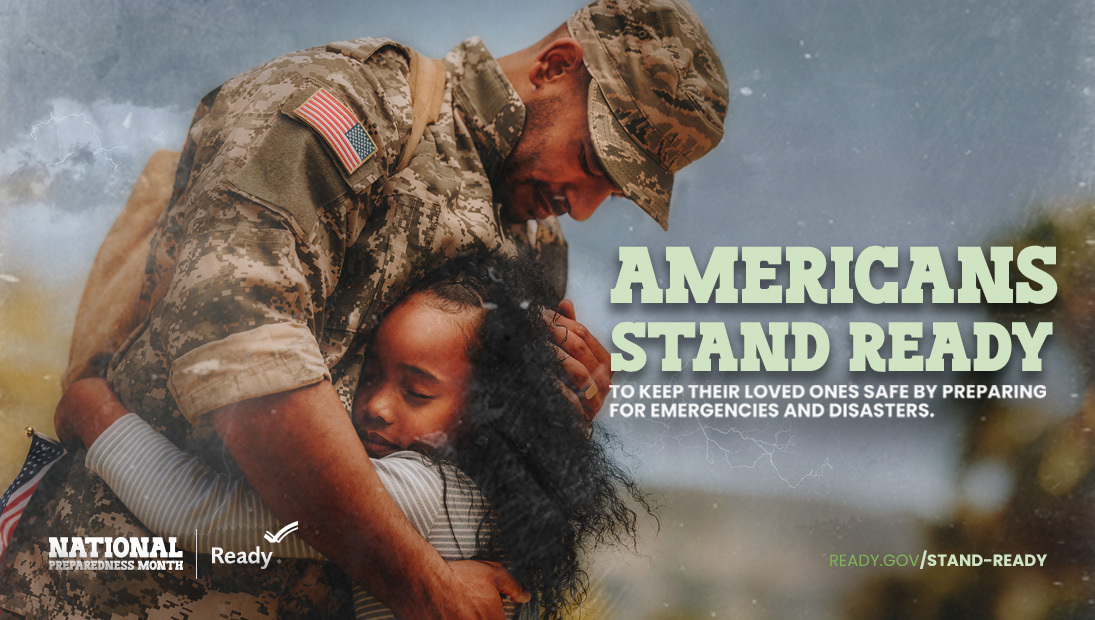
Every September, National Preparedness Month encourages us to take steps to be ready for disasters and emergencies. This year we are focused on how “Americans Stand Ready.” Our theme reflects the spirit of unity, resilience and resourcefulness that makes our country strong. It’s a reminder that taking proactive steps before a disaster strikes and encouraging loved ones to do the same can contribute to the safety and security of the entire nation.
When you’re prepared, you help first responders focus on those who need help most. Emergencies can happen anywhere, at any time, and being ready is a way to support your community and your country.
Learn more and access preparedness resources by reading the blog at: Americans Stand Ready: 3 Steps You Can Take this National Preparedness Month.

For families across the nation, back-to-school season means gathering school clothes and supplies and getting familiar with new routines. This time of year is also one of the best chances to get serious about one thing that really matters: your child’s safety.
Children rely on grown-ups to keep them safe and protected during hazards like tornadoes, earthquakes, fires and hurricanes. In these frightening moments, do the children in your care know how to get in touch or where to meet if they are separated from you?
Planning for emergencies may seem difficult, but you don’t need to be an expert; you just need to be ready. Learn more and download resources for you and your family by reading the blog at: Back to School, Back to Safety.
|
The U.S. Department of Health and Human Services (HHS) recently announced a new national effort to help communities respond when an autistic child or adult is reported missing. The effort is being led by HHS, in partnership with the Department of Homeland Security, FEMA and other federal agencies.
The new National Autism Missing Person Alert initiative is the first effort of its kind, bringing federal, state, local, and community partners together to improve how emergency managers, law enforcement, first responders, and local organizations prepare for and respond to these situations.
To learn more about this initiative, read the blog at: New National Effort Will Improve Response When Autistic People Go Missing.
Attend FEMA Webinars on the Updated Resilience Analysis and Planning Tool Web Application
FEMA’s updated Resilience Analysis and Planning Tool (RAPT) web application is now available.
FEMA will host 90-minute interactive webinars for potential users. Topics include a general overview of the RAPT tool and an overview of the advanced or standard RAPT versions. The webinars are scheduled for:
-
Public Webinar 5: 2026 RAPT Update, Advanced Version Focus, Option 1 of 2: September 9 from 3:30-5 p.m. ET.
-
Public Webinar 6: 2026 RAPT Update, Advanced Version Focus, Option 2 of 2: September 10 from 3-4:30 p.m. ET.
Visit the RAPT Resource Center to access supporting materials, learn more about the tool's functionality and see how it can improve resilience planning in your community. For questions and feedback, email FEMA-TArequest@fema.dhs.gov.
....................................................................................................................................................
FEMA Corps Resumes, Application Period Open for 2027 Class
The FEMA Corps program has resumed and is accepting applications for its next class of future emergency managers. The FEMA Corps program is restarting after being carefully reviewed and refocused to align with FEMA’s core mission and the Trump Administration's priorities. About 80 members and 10 team leaders will be selected to serve from February 2027 to November 2027.
Apply to be a FEMA Corps Team Leader:
Apply to be a FEMA Corps Member:
FEMA Corps graduates may receive an education award upon completion, which can be used for tuition or student loans, and relocation expenses. Additionally, FEMA Corps members receive paid housing and a weekly stipend for food and living expenses, all while being deployed to serve communities in need across the country. To learn more, visit AmeriCorps NCCC.
....................................................................................................................................................
|


