Today, FEMA's Ready Campaign launched National Preparedness Month. Since 2004, FEMA has observed September as National Preparedness Month to encourage Americans to plan for emergencies. This year’s theme—Americans Stand Ready—celebrates the self-reliant spirit of the American people. When Americans take steps to prepare for disasters and keep their families safe, every neighborhood and community is more resilient.
To promote preparedness this month, FEMA’s Ready Campaign will share easy, affordable steps that people can take to stand ready, no matter what comes.
-
Make a plan for your household, including your pets, so that you and your family know what to do, where to go, and what you will need to protect yourselves during a disaster. Consider the unique risks of where you live and the needs of your family. Know where you’ll go if you need to leave your home and learn your evacuation routes so you can get there safely.
-
Be in the know. Sign up for your community’s warning system. Disasters can happen suddenly, so it’s important to have multiple ways to get alerts. The Emergency Alert System and National Oceanic and Atmospheric Administration Weather Radio also provide emergency alerts.
-
Build a kit. We know how to keep our loved ones safe when things go wrong, but do you have what you need to stay safe and comfortable until help arrives? You may think building a well-stocked emergency kit is difficult or expensive, but it doesn’t need to be. You can gather supplies over time, starting with items you may already have at home like canned food and first aid supplies. Visit ready.gov/kit for a list of items to include and how to tailor your kit to meet your family’s needs.
To help state, local, tribal, territorial, private sector, faith-based and community organizations, and the public promote personal preparedness information within their communities, the Ready Campaign is providing a free, ready-to-use toolkit with customizable preparedness messaging and safety tips.
Congressional Support for National Preparedness Month
Throughout September, several Members of Congress are serving as the 2026 co-sponsors for this year’s National Preparedness Month. FEMA and the Ready Campaign are honored to partner with this year’s Congressional co-chairs to spread the message of preparedness.
Chairman Sam Graves of Missouri, House Transportation and Infrastructure Committee
“National Preparedness Month serves as an important reminder that emergencies and disasters can happen at any time, often with little warning. Preparedness is a shared responsibility, so when individuals, families, local officials, first responders and emergency managers are prepared and working together, our communities are stronger and more resilient. Taking the time to prepare before disaster strikes can make a real difference in keeping families safe and helping communities respond and recover. I encourage Americans to use this month as an opportunity to review their plans, talk with their families and take practical steps to be ready if disaster strikes.”
Chairman Dale Strong of Alabama, Subcommittee on Emergency Management and Technology
“North Alabama is no stranger to severe weather events, and we know all too well how destructive natural disasters can be. As a lifelong volunteer firefighter, certified EMT and former 9-1-1 dispatcher, I understand how critical it is to plan for emergency situations. That is why I am proud to serve as a Co-Chair for National Preparedness Month and coordinate with FEMA to ensure our communities are planning for safety and mitigating risk. Readiness is key, and we all must be prepared to do our part when disaster strikes.”
On August 28, FEMA announced the approval of more than $2 billion in post-disaster recovery and resilience funding across the nation, delivering on President Donald J. Trump and Department of Homeland Security Secretary Markwayne Mullin’s commitment to reform federal disaster support, empower state and local partners, and ensure taxpayer dollars are invested in projects that protect lives, property and critical infrastructure.
Public Assistance
The funding includes more than $1.5 billion under FEMA’s Public Assistance program. State, territorial and local governments, as well as certain private nonprofits, will use this funding for 1,188 recovery projects related to previous disasters, including projects associated with the COVID-19 pandemic. In line with President Trump’s executive order 14395 Establishing the Task Force to Eliminate Fraud, FEMA has conducted detailed reviews of claimed costs for Public Assistance funds to help prevent fraud, waste and abuse.
These Public Assistance projects include repairs to critical infrastructure, restoration of public buildings, road repairs and reimbursement for actions taken to protect public health and safety during and after disasters.
FEMA obligates Public Assistance funding directly to states, territories and Tribal Nations. States, territories and Tribal Nations are responsible for ensuring funds are dispersed to local subrecipients as appropriate. This supports FEMA’s principle that disaster recovery should be locally led, state-managed and federally supported.
Hazard Mitigation Grant Program
FEMA is also awarding $400 million for 280 projects through the Hazard Mitigation Grant Program. These projects, located in 29 states and three territories, are designed to prevent, reduce or eliminate future disaster-related damage.
Through this program, state, local and territorial governments, as well as Tribal Nations, implement mitigation measures such as acquiring hazard-prone homes and businesses, adopting and enforcing modern building codes and standards, protecting against floods through elevations and drainage improvements, constructing safe rooms and upgrading utilities and infrastructure.
FEMA obligates Hazard Mitigation Grant Program funding directly to states, territories and Tribal Nations. States, territories and Tribal Nations are responsible for ensuring funds are dispersed to local subrecipients as appropriate. This supports FEMA’s principle that disaster recovery should be locally led, state managed and federally supported.
Building Resilient Infrastructure and Communities
More than $51 million is being awarded through the Building Resilient Infrastructure and Communities program to empower states, local governments, territories and Tribal Nations to take decisive, proactive steps to protect their communities from potential disasters like fires, floods, earthquakes and hurricanes. This federal investment generates jobs, protects private property, strengthens infrastructure, reduces the cost of future disasters and—most importantly—saves lives. The program maximizes state and local responsibility for resilience and risk reduction. This funding prioritizes infrastructure resilience by funding construction projects that are ready to implement and incentivizes the adoption of the latest hazard-resistant building codes.
FEMA obligates Building Resilient Infrastructure and Communities funding directly to states, territories and Tribal Nations. States, territories and Tribal Nations are responsible for ensuring funds are dispersed to local subrecipients as appropriate. This supports FEMA’s principle that disaster recovery should be locally led, state managed and federally supported.
Individual Assistance
In addition, FEMA approved approximately $40 million in Individual Assistance grants that fund nine state-managed recovery programs across the United States. These grants directly support individuals, families and communities by addressing urgent post-disaster needs such as disaster unemployment assistance, crisis counseling and disaster case management.
These latest approvals are part of FEMA’s continued work under President Donald J. Trump’s leadership to deliver disaster recovery assistance efficiently, strengthen accountability and support communities as they rebuild from hurricanes, severe storms, tornadoes, wildfires and other disasters. FEMA remains committed to a locally led, state-managed, federally supported approach that helps communities recover while reducing the impacts and costs of future disasters.
FEMA announced that federal disaster assistance is available to the state of Indiana to supplement recovery efforts in the areas affected by severe storms, straight-line winds, tornadoes and flooding from August 11 and continuing.
The President's action makes federal funding available to affected individuals in Carroll, Dearborn, Decatur, Delaware, Fayette, Franklin, Hamilton, Hancock, Henry, Lake, LaPorte, Madison, Marion, Morgan, Porter, Pulaski, Randolph, Rush, Tipton, Union and Wayne counties. Assistance can include grants for temporary housing and home repairs, low-cost loans to cover uninsured property losses and other programs to help individuals and families recover from the effects of the disaster.
Individuals and families who sustained losses in the designated areas should first file claims with their insurance providers and then apply for assistance online at DisasterAssistance.gov, by calling 1-800-621-3362 or by using the FEMA App. If you use a relay service, such as video relay service (VRS), captioned telephone service or others, provide FEMA the number for that service.
Federal funding is also available to state, tribal and eligible local governments and certain private nonprofit organizations on a cost-sharing basis for emergency work and the repair or replacement of facilities damaged by severe storms, straight-line winds, tornadoes and flooding in Delaware, Fayette, Franklin, Hamilton, Henry, Lake, LaPorte, Madison, Porter, Tipton and Wayne counties.
For more information, visit FEMA.gov.
FEMA announced that federal disaster assistance is available to the state of Hawaii to supplement state and local response efforts due to the emergency conditions resulting from Hurricane Lala from August 14-16.
The President’s action authorizes FEMA to coordinate all federal disaster relief efforts to alleviate the hardship and suffering caused by the emergency on the local population, and to provide appropriate assistance to save lives, to protect property, public health and safety and to lessen or avert the threat of a catastrophe.
This assistance is for Hawaii County.
Specifically, FEMA is authorized to identify, mobilize and provide, at its discretion, equipment and resources necessary to alleviate the impacts of the emergency. Emergency protective measures, limited to direct federal assistance, will be provided at 75% federal funding.
For more information, visit FEMA.gov.
As the severity of wildfires continues to grow, so has the number of casualties, property damage and post-fire impacts such as landslides, flash floods and mudslides. The expansion of development into previously undeveloped land also increases the number of ignition sources for wildfires, such as downed power lines, fireworks or improperly disposed barbecue coals and campfires.
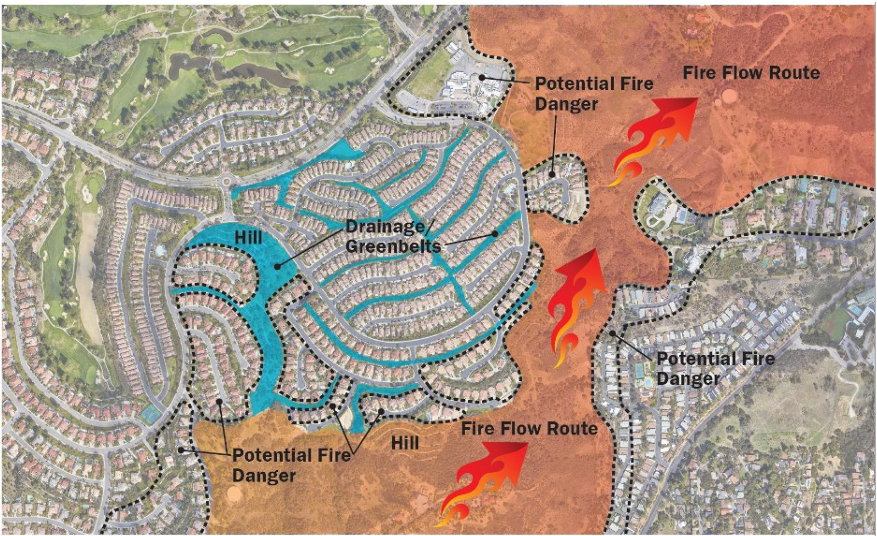 Drainages and greenbelts in or adjacent to communities can provide access for fire to flow into the urban/built environment.
Because of the growing need for information on building in fire-prone areas, FEMA published the Builder's Guide to Construction in Wildfire Zones (P-737). This guide outlines best practices to reduce the vulnerability of buildings to wildfires. The focus is on new construction, but existing construction is also referenced.
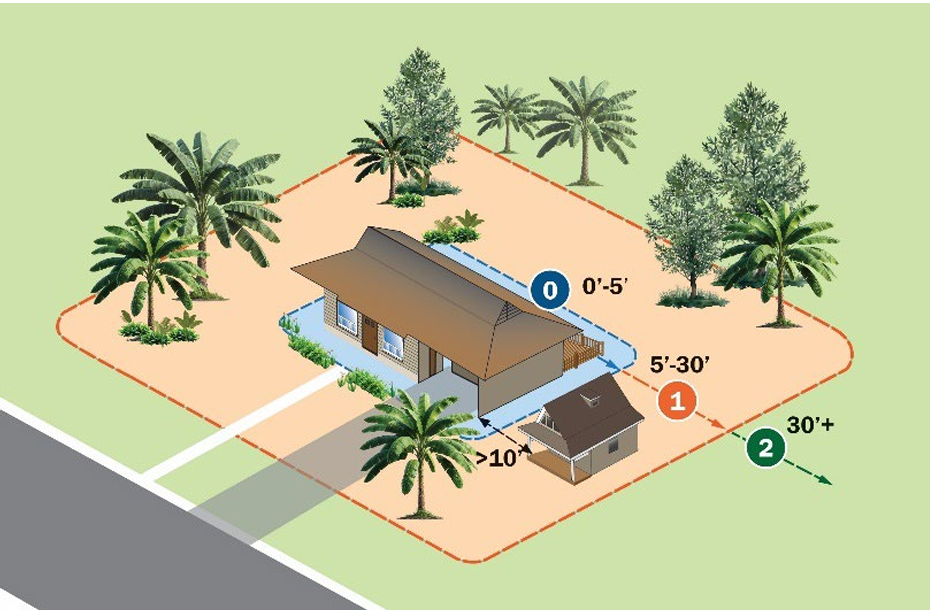 Defensible space is divided into three zones based on distance from a structure.
This resource addresses structural hardening by providing guidance on design, material specifications and construction of new buildings, and in some cases, existing buildings. Roof construction, exterior walls, vents, windows and doors are all considered to help mitigate potential damage from wildfires. Decks, outdoor lighting and fences can increase flammability when ignited by wildfire.
Effective wildfire mitigation, including exposure reduction and structure hardening, is necessary to reduce risk and increase community resilience. This guide provides best practices and considerations for materials, construction and storage of flammable materials.
For more information, download a copy of the Builder's Guide to Construction in Wildfire Zones.
Representatives from the nine major fire service organizations met with FEMA to recommend funding priorities for the agency’s Fiscal Year 2026 Fire Grants programs.
FEMA hosted the Criteria Development Panels in Washington, D.C., on August 25. Five panel members joined in-person and another 12 members joined virtually. Also participating was U.S. Fire Administration’s National Fire Academy Superintendent, Eriks Gabliks.
FEMA administers a trio of Fire Grants: Assistance to Firefighters Grant, Staffing for Adequate Fire and Emergency Response, and Fire Prevention and Safety. However, the FEMA Criteria Development Panel, a key advisory board, shapes funding priorities, application evaluation criteria, program guidelines and direction of the trio of Fire Grants.
Last week’s meeting enabled FEMA to consult with fire service stakeholders to help ensure next year's Fire Grants funding notices reflect operational needs and priorities, demonstrating clear momentum toward improving the grant programs. The meeting reinforced the importance of the Fire Grants programs in supporting firefighter safety, emergency response capability and community resilience. As a result, FEMA and the fire service have strengthened its working relationship, including establishing plans to begin quarterly coordination meetings.
FEMA constantly seeks feedback from its partners and stakeholders. The agency is working on urgent needs and reducing the complexity of our Fire Grants programs to ease the burden on the fire service community across the country.
With peak hurricane season underway, FEMA is encouraging emergency managers to act now to strengthen community readiness. This blog highlights key federal tools and resources to support hurricane planning, evacuation decisions, risk assessment, public alerts and warnings, recovery planning and public education.
If you work in emergency management for a town, county, state, Tribal Nation or territory, you can use the resources in this blog from FEMA and other federal agencies to improve your community’s readiness for the next storm.
Early action can save lives, reduce impacts and support faster recovery when storms strike. Read the blog at: 2026 Hurricane Readiness Resources Every Emergency Manager Needs
Local long-term recovery groups are helping Western North Carolina rebuild after Hurricane Helene with coordination and technical support from FEMA. Made up of volunteer organizations, nonprofits, businesses and faith groups, these groups are connecting survivors with local resources by addressing unmet needs and strengthening community resilience.
Today, 14 groups are supporting thousands of residents across 15 counties, with additional groups in development. Recovery milestones include millions in distributed aid, rental and eviction assistance, new wells, home repairs, disaster case management and rebuilding projects.
To learn more, read the blog at: Local Groups Support Recovery in Western North Carolina with FEMA Support
Apply for the FY26 National Dam Safety Program's State Assistance Funding Opportunity by September 2
On August 18, FEMA announced a $7.4 million funding opportunity to promote dam safety around the nation. Only state dam safety programs from eligible states and territories may apply. The funding opportunity deadline is Wednesday, September 2, and may be viewed on Grants.gov.
Through the National Dam Safety Program’s Fiscal Year 2026 State Assistance funding opportunity, FEMA is empowering states and territories to manage programs critical to ensure safety in their communities. State and territory dam safety programs may use these funds to help identify and mitigate risk before disasters occur. Eligible actions include training, increasing dam inspections, reviewing and issuing permits, safety coordination and identifying dams in need of repairs or removal.
For more information, visit FEMA's National Dam Safety Program webpage.
....................................................................................................................................................
Attend FEMA Webinars on the Updated Resilience Analysis and Planning Tool Web Application
FEMA’s updated Resilience Analysis and Planning Tool (RAPT) web application is now available.
FEMA will host six, 90-minute interactive webinars for potential users. Topics include a general overview of the RAPT tool and an overview of the advanced or standard RAPT versions. The webinars are scheduled for:
-
Public Webinar 4: 2026 RAPT Update, Standard Version Focus, Option 2 of 2: September 3 from 1-2:30 p.m. ET.
-
Public Webinar 5: 2026 RAPT Update, Advanced Version Focus, Option 1 of 2: September 9 from 3:30-5 p.m. ET.
-
Public Webinar 6: 2026 RAPT Update, Advanced Version Focus, Option 2 of 2: September 10 from 3-4:30 p.m. ET.
Visit the RAPT Resource Center to access supporting materials, learn more about the tool's functionality and see how it can improve resilience planning in your community. For questions and feedback, email FEMA-TArequest@fema.dhs.gov.
....................................................................................................................................................
FEMA Corps Resumes, Application Period Open for 2027 Class
The FEMA Corps program has resumed and is accepting applications for its next class of future emergency managers. The FEMA Corps program is restarting after being carefully reviewed and refocused to align with FEMA’s core mission and the Trump Administration's priorities. About 80 members and 10 team leaders will be selected to serve from February 2027 to November 2027.
Apply to be a FEMA Corps Team Leader:
Apply to be a FEMA Corps Member:
FEMA Corps graduates may receive an education award upon completion, which can be used for tuition or student loans, and relocation expenses. Additionally, FEMA Corps members receive paid housing and a weekly stipend for food and living expenses, all while being deployed to serve communities in need across the country. To learn more, visit AmeriCorps NCCC.
....................................................................................................................................................
|


