On June 1, FEMA Senior Official Performing the Duties of Administrator Robert J. Fenton Jr. and Senior Counselor to the Department of Homeland Security Secretary Cameron Hamilton met with the Director of the National Oceanic and Atmospheric Administration’s (NOAA) National Hurricane Center, Dr. Michael Brennan, to discuss preparedness efforts and how communities can stay safe as hurricane season officially begins. This effort is part of FEMA’s broader commitment to help states, local, tribal and territorial governments prepare to quickly respond to and recover from extreme weather events this season.
“We’re ready for hurricane season,” said FEMA Senior Official Performing the Duties of the Administrator Robert J. Fenton Jr. “This is something we do every year. It’s in our DNA and everything we do builds upon getting ready for hurricane season. But we’re only one piece of that team, and the most important piece is local and state government and, really, Americans. They need to be ready for this too.”
Readiness begins long before hurricane season. FEMA runs regular exercises with governors, local officials and tribal leaders to test hurricane scenarios, enabling capability gaps to be identified and addressed. Over the past year, FEMA trained more than a million state, local, tribal and territorial first responders, emergency managers and local leaders to protect communities and respond quickly and effectively to large-scale events, such as hurricanes, the FIFA World Cup 2026™ and Freedom 250 events.
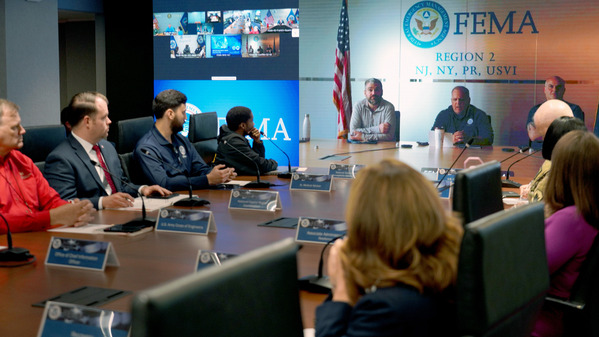
On May 27, the Department of Homeland Security and FEMA leadership teams across the nation coordinated with emergency management directors from hurricane-prone states, territories and tribal nations during the annual hurricane readiness outlook video teleconference. The teleconference tested connectivity capabilities, reviewed readiness posture and identified opportunities for collaboration ahead of the 2026 hurricane season.
During the teleconference, FEMA's Senior Official Performing the Duties of Administrator Robert J. Fenton Jr. discussed FEMA’s disaster readiness and emphasized the critical role that state, local, tribal and territorial partners play before, during and after disasters. He affirmed that FEMA will continue to support partners in building capacity and position federal resources in anticipation of incidents that require federal support.
National Hurricane Center Director Dr. Michael Brennan provided an overview of the 2026 hurricane season outlook and FEMA Regional Administrators facilitated readiness briefs with emergency management directors. The convening also served as an opportunity to test interagency communications technical capabilities with participants used during real-world events.
FEMA works year-round to ensure the nation is ready for hurricane season and other hazards. Emergency managers were encouraged to coordinate closely with their FEMA regional contacts to identify and address immediate needs in preparation for the 2026 hurricane season.
On May 21, FEMA joined the National Oceanic and Atmospheric Administration (NOAA) for their 2026 Atlantic hurricane season outlook at a press conference in Lakeland, Florida. NOAA's yearly outlook is an important preparedness tool to help people understand the potential for tropical storms.
For the 2026 Atlantic hurricane basin, NOAA forecasts a 10% chance of an above-normal season, a 35% chance of a near-normal season and a 55% chance of a below-normal season, calling for 8-14 named storms with winds of 39 mph or higher. Of those, 3-6 are forecast to become hurricanes with winds of 74 mph or higher, including 1-3 major hurricanes of category 3, 4 or 5 with winds of 111 mph or higher.
NOAA also issued seasonal hurricane outlooks for the Eastern Pacific and Central Pacific hurricane basins. For these basins, NOAA forecasts a 70% chance of an above-normal season, a 20% chance of a near-normal season and a 10% chance of a below-normal season.
FEMA encourages everyone to prepare for this hurricane season, as it only takes one storm to cause major or catastrophic effects.
Here are four ways you can prepare.
-
Know your risks: Understand the risks where you live. If you live near the coast, you are most at-risk for extreme wind and storm surge. However, inland communities can also be hit the hardest due to severe rainfall even when the hurricane category decreases.
-
Protect yourself and your property: Create an emergency plan and learn ways to strengthen your home or business to withstand hurricane-related hazards. Consult your local emergency management agencies to get guidance on location-specific hazards and best practices.
-
Review your insurance coverage: Confirm you have the insurance coverage you need for high winds and flooding. Flood insurance takes 30 days to take effect. Visit FloodSmart.gov to get a flood insurance policy today.
-
Follow local officials: Read your community’s evacuation plan and sign up for local alerts for your safety.
FEMA is making it easier for National Flood Insurance Program (NFIP) policyholders to understand how the flood insurance claim process works.
As hurricane season begins, FEMA and the NFIP recently released a checklist to guide policyholders through the insurance claims process following a flood.
The two-page checklist includes easy-to-follow steps to navigate the flood claims process, from immediate actions to take after a flood, to finalizing the claim. It was developed by NFIP experts with feedback from NFIP policyholders to ensure it’s useful for the policyholder. It also features sections policyholders can check off to help stay organized during the claims process.
View and download the claims checklist now by visiting the webpage: NFIP Claims Checklist for Policyholders
For more information about the National Flood Insurance Program, or get a flood insurance quote, visit FloodSmart.gov.
This summer, preparing for wildfires is key to staying safe. Many areas of the country face above-average risk of wildfires, fueled by a warm spring and drought parching 62% of the country.
Read the blog to get yourself, your family and friends' wildfire ready at Get Ready for Fire Season | FEMA.gov.
Submit Comments on the FEMA Review Council Recommendation Report by June 8
On May 7, the FEMA Review Council approved its final report. The recommendations result from approximately a year of meetings, deliberations and public input. They focus on empowering state, local, tribal and territorial governments to strengthen their disaster management and recovery efforts.
The FEMA Review Council members, appointed by President Donald J. Trump, conducted a thorough review of FEMA. Comprised of top disaster response experts, including individuals from states ravaged by recent natural disasters, the Council provided actionable recommendations to streamline federal response to national emergencies. The report and all Council documents are available at DHS.gov/FEMA-Review-Council.
The report provides recommendations to the President. The public can submit comments on the report until Monday, June 8, on the Federal Register website: Federal Register: Federal Emergency Management Agency Review Council; Notice of Meeting.
....................................................................................................................................................
Apply for FEMA's FY24-25 Building Resilient Infrastructure and Communities Grants by July 23
FEMA is currently accepting applications for the Fiscal Years 2024 and 2025 Building Resilient Infrastructure and Communities (BRIC) funding opportunity. Through this program, FEMA is making $1 billion in federal funding available to state, local, tribal and territorial governments, empowering them to take decisive, proactive steps to protect their communities from disasters like fires, floods, earthquakes and hurricanes.
FEMA held two national webinars to provide an overview of the funding opportunity. These sessions covered eligibility requirements and application guidance for states, local communities, tribal and territorial governments.
Watch the Fiscal Year 2024 and 2025 BRIC webinars at the links below:
The deadline to submit applications is Thursday, July 23.
Interested applicants and subapplicants may review the funding opportunity on Grants.gov. A fact sheet is available online summarizing the eligible projects and available funding.
For more information on the BRIC program, applicants should contact their FEMA Regional Office or visit the Building Resilient Infrastructure and Communities webpage.
....................................................................................................................................................
Submit or Update Your Flood Mitigation Assistance Application by August 6
Up to $600 million is available to states, local communities, tribes and territories to reduce or eliminate the risk of repetitive flood damage to buildings insured under the National Flood Insurance Program.
The funding opportunity was originally published on January 6, 2025. Then on April 30, FEMA published an amendment to the funding opportunity that incorporates recent federal guidance and aligns with overarching national goals.
Applicants have until Thursday, August 6, at 3 p.m., to revise and re-submit their application to FEMA. States, territories and tribal nations may have an earlier deadline for subapplications. All applications must be submitted using FEMA Grants Outcomes (FEMA GO). Applications received after this deadline will not be considered.
Learn more about this funding opportunity and its recent amendments.
....................................................................................................................................................
|


