|
On Dec. 12, FEMA announced that federal disaster assistance is available to the State of Washington to supplement response efforts due to emergency conditions resulting from severe storms, straight-line winds, flooding, landslides and mudslides beginning on December 9, 2025, and continuing.
The President’s action authorizes FEMA to coordinate all disaster relief efforts to alleviate the hardship and suffering caused by the emergency on the local population and to provide appropriate assistance to save lives, to protect property, public health and safety and to lessen or avert the threat of a catastrophe in Benton, Chelan, Clallam, Grays Harbor, Jefferson, King, Kittitas, Lewis, Mason, Pierce, Skagit, Snohomish, Thurston, Wahkiakum, Whatcom and Yakima counties, the Samish Indian Nation and all other tribal nations within the specified jurisdictions.
Specifically, FEMA is authorized to identify, mobilize and provide, at its discretion, equipment and resources necessary to alleviate the impacts of the emergency. Emergency protective measures, limited to direct federal assistance, under the public assistance program, will be provided at 75% federal funding.
FEMA has positioned key resources to address any state requested needs, including search and rescue teams. These assets are positioned in Washington state and are providing rapid lifesaving and life-sustaining response when requested by the state.
Follow FEMA Region 10 on for the latest updates and visit FEMA.gov for more information.
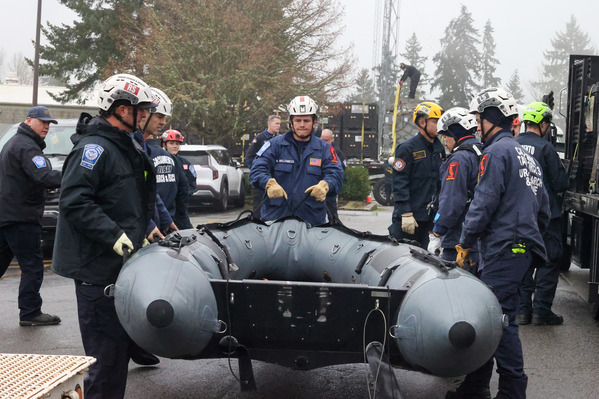
Bothell, Wash. (Dec. 12, 2025) - FEMA U.S. Search and Rescue teams support state and local disaster response in Washington state after atmospheric rivers impacted the area causing severe flooding..
Under President Trump’s leadership and Secretary of Homeland Security Noem’s efforts to streamline resources, effective Dec. 15, 2025, community planners will have one central tool to access important risk assessment information.
FEMA will move the National Risk Index data into the Resilience Analysis and Planning Tool. This change is part of FEMA’s effort to streamline resources, improve efficiency and help state, local, tribal and territorial governments strengthen their resilience.
The tool is a free, easy-to-use online mapping program that allows users to combine data on community resilience, infrastructure and hazards. This tool helps local officials visualize challenges in their communities to make smarter, more strategic decisions about reducing risks and responding to disasters.
National Risk Index data is integrated into this tool, which shows the risk of 18 natural hazards at the county and U.S. Census tract levels. By including this data, FEMA is simplifying planning tools and helping communities identify and address their community resilience challenges.
The updated National Risk Index data includes significant improvements thanks to collaboration with local and federal experts and researchers. These updates make the data more accurate and useful, helping emergency managers and planners better understand their community’s natural hazard risks.
Key updates include improved methods for assessing risks from hazards like tsunamis, inland flooding, landslides and volcanic activity.
Other updates include enhanced frequency estimates and geographic coverage for disasters like winter weather, wildfire, lightning, heat and cold waves and improved historic loss ratios for all hazards.
For more information visit FEMA.gov.

As temperatures drop, it's important to prepare for winter weather risks to ensure the safety and comfort of yourself and your loved ones whether at home or on the road. Taking proactive steps now can help you stay protected throughout the colder months.
Three #WinterReady topics you'll learn more about, include:
-
Dressing appropriately for cold weather: Find out how to layer clothing to safeguard vulnerable body parts—especially for those working or spending extended time outdoors.
-
Preparing your vehicle for winter conditions: Learn about critical vehicle winter maintenance, creating an emergency supply kit for your car and safe driving practices to help you navigate winter roads safely.
-
Winterizing your home: Explore practical measures to prepare your home for winter weather, insulate pipes, seal drafts, maintain heating systems and reduce energy costs while keeping your home warm and secure.
Read the full blog by visiting FEMA.gov to learn more.

As we approach the end of the year, FEMA extends its appreciation for your support to our collective mission of helping people before, during and after disasters.
During the holiday season, the FEMA Bulletin will not be published on Dec. 23 and Dec. 30, 2025. The FEMA Bulletin will resume on Jan. 6, 2026, bringing you a new year filled with updates and resources for emergency management and preparedness.
In the meantime, visit FEMA.gov for any immediate information or updates.
Individual and Public Assistance Application Deadlines Approaching for Recent Disaster Declarations
Individuals affected by the following disasters should apply for FEMA assistance by these dates:
Survivors are encouraged to file insurance claims for damage to their homes, personal property and vehicles before they apply for FEMA assistance. FEMA Individual Assistance cannot pay for expenses that other sources will cover.
The fastest way to apply is online at DisasterAssistance.gov or the Spanish language site DisasterAssistance.gov/es.
If you need more information or additional help:
- Download the FEMA App.
- Call the FEMA Helpline at 1-800-621-3362 for assistance in multiple languages. If you use a relay service—such as video relay service (VRS), captioned telephone service or others—provide FEMA the number for that service.
- Find in-person FEMA support at fema.gov/drc.
To view an accessible video on how to apply, visit What to Expect Before Applying for FEMA Assistance.
When applying for FEMA assistance, specify the damage and the date it occurred to ensure you are applying under the correct declaration number.
In addition, Public Assistance is available in Alaska for governments and non-profits in the designated areas affected by severe storms, flooding and remnants of Typhoon Halong from Oct. 8-13. Apply for Public Assistance by Dec. 21.
Public Assistance funding is available to state, tribal and eligible local governments and private nonprofit organizations on a cost-sharing basis for emergency work and the repair or replacement of disaster-damaged facilities. Learn more about FEMA’s Public Assistance program at FEMA.gov.
....................................................................................................................................................
|