|
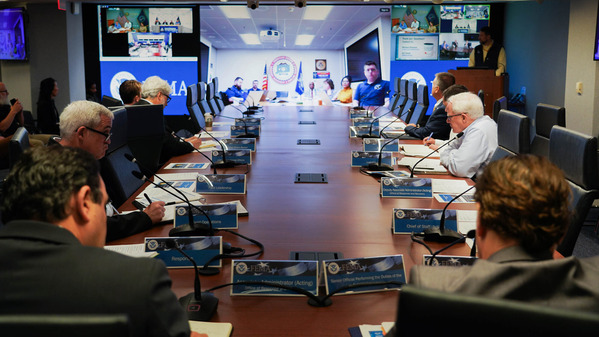
This month, FEMA headquarters and regional leadership teams across the nation coordinated with emergency management experts from federal, state, tribal and territorial partners in seven video teleconferences to test connectivity capabilities and discuss needs for hurricane and wildland fire response and recovery this year.
FEMA works throughout the year to ensure the nation is ready for hurricane season and the severe impacts from fires and other hazards. The agency has hosted annual hurricane preparedness video teleconferences for the past 10 years. This year, the teleconferences also included a scenario about severe wildland fire impacts for high-risk areas.
Senior Official Performing the Duties of the Administrator David Richardson addressed FEMA’s disaster readiness and emphasized the leading role that state, local, tribal and territorial partners play after a disaster. He discussed FEMA’s role in ensuring disaster response and recovery are locally executed, state managed and federally supported and affirmed that FEMA will continue to support partners in building capacity, and position federal resources in anticipation of incidents that require federal support.
Read the full blog by visiting FEMA.gov.
As wildfires become more frequent and destructive across the country, FEMA’s newly released Maui Wildfires Mitigation Assessment Team Report provides guidance for communities working to reduce wildfire risk. The report is based on FEMA's in-depth and on-the-ground assessment of the August 2023 wildfires that devastated Lahaina and Kula, Hawaii. 2,173 structures were lost, and the long and complex recovery is still underway.
The report pulls together lessons from the damage, including:
- Detailed insights of how residential buildings performed under extreme wildfire conditions.
- Evaluation of building codes, standards and permitting systems that shaped the constructed structures before the fires.
- Recommendations for rebuilding with wildfire resistance in mind, including making sure nearby vegetation has been treated or cleared, creating a space defensible from fires and using fire-resistant building materials.
- Five Recovery Advisories focused on minimizing risks for existing homes, designing new homes, utilizing fire-resistant materials, implementing multi-hazard planning and providing resources for homeowners.
The report is grounded in the experiences of impacts on the Maui community, offering transparent insights into the conditions that allowed the fire to spread so destructively. As Hawai'i continues its road to recovery, this resource is also a call to action for all communities. Wildfire season is now year-round, and no region in the United States is immune to this increasing hazard.
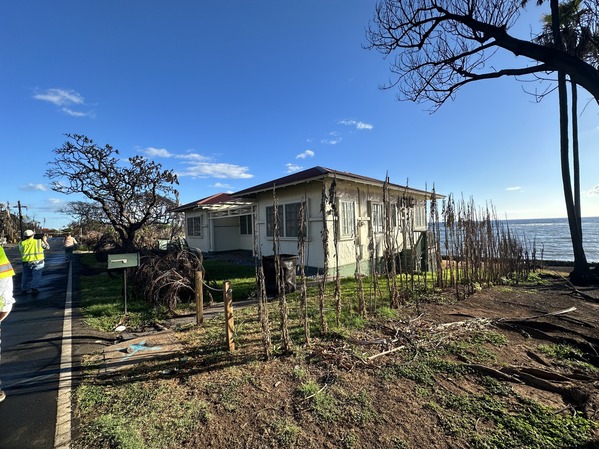 In June 2024, members of the FEMA Pre-Mitigation Assessment Team assess fire-damaged structures along the shoreline in Maui as part of ongoing recovery and resilience efforts.
Now is the time to act. Whether you're a builder, planner, emergency manager, code official or resident in a fire-prone area, this report delivers critical information that can help protect lives, property and communities before the next fire strikes.
Emergency managers can use this report to provide:
- Wildfire communication and community education.
- Planning and zoning efforts.
- Recovery strategies after local fires.
- Collaboration with building officials and planners.
Explore the full report and Recovery Advisories at FEMA.gov. You’ll also find more tools in FEMA’s Building Science Resource Library to enhance your understanding of resilient construction practices and disaster preparedness, ensuring your community is equipped to face future hazards.
Let the lessons learned from past disasters guide your preparation and recovery efforts. Together, we can build toward a more wildfire-resilient future.
FEMA Updates Free Tool to Help Local Emergency Managers Assess Hazards
For the sixth consecutive year, FEMA has updated its free, easy-to-use geographic information systems (GIS) tool that helps emergency managers and local partners assess threats and hazards that may challenge their community’s resilience. This tool is part of FEMA’s work to empower states and localities across the country to prepare for and respond to disasters.
The 2025 update of the Resilience Analysis and Planning Tool includes new census data from the American Community Survey five-year estimate (2019-2023) and the updated Community Resilience Challenges Indices for counties and census tracts. The tool includes over 100 pre-loaded data layers, and its functionality allows users to visualize combinations of these data layers for a specific location.
FEMA will host three interactive webinars on the Resilience Analysis and Planning Tool. Each webinar will cover the same content. Please register for one of these 60-minute Zoom sessions below:
Visit the Resilience Analysis and Planning Tool Resource Center to access supporting materials, learn more about the tool's functionality and see how it can improve resilience planning in your community.
....................................................................................................................................................
Application Period Open Until July 3 for $360M in Grants to Boost Number of Firefighters and $36M in Grants to Strengthen Fire Prevention and Safety
FEMA opened the Fiscal Year (FY) 2024 Staffing for Adequate Fire and Emergency Response (SAFER) application period for $360 million. In addition, FEMA also opened the Fire Prevention and Safety application period for $36 million. The application period for both the FY24 SAFER and Fire Prevention and Safety programs will close on Thursday, July 3, at 5 p.m. ET.
The SAFER grant program awards these funds directly to fire departments and volunteer firefighter interest organizations across the nation to help them increase or maintain the number of trained firefighters available in their community.
The Fire Prevention and Safety grant program helps strengthen community fire prevention programs and support scientific research on innovations that improve firefighter safety, health and well-being.
Since 2005, the SAFER program has awarded approximately $5.2 billion in grant funding. The Fire Prevention and Safety program has awarded nearly $900 million since its inception in 2002.
The FY24 SAFER and Fire Prevention and Safety Notices of Funding opportunity and technical assistance documents for both programs are available at Grants.gov and on the FEMA websites at SAFER and Fire Prevention and Safety. Additional information about upcoming webinars to assist applicants is also available on the FEMA website.
....................................................................................................................................................
|


