|
FEMA announced that Individual Assistance is available for the following states:
-
Arkansas: Declared on May 8 to supplement recovery efforts in the areas affected by severe storms and tornadoes from March 14–15. Learn more at fema.gov/disaster/4865.
-
Mississippi: Declared on May 21 to supplement recovery efforts in the areas affected by the severe storms, straight-line winds, tornadoes and flooding from March 14–15. Learn more at fema.gov/disaster/4874.
-
Missouri: Declared on May 21 to supplement recovery efforts in the areas affected by severe storms, straight-line winds, tornadoes and wildfires from March 14–15. Learn more at fema.gov/disaster/4867.
-
Oklahoma: Declared on May 21 to supplement recovery efforts in the areas affected by wildfires and straight-line winds from March 14–21. Learn more at fema.gov/disaster/4866.
-
Texas: Declared on May 21 to supplement recovery efforts in the areas affected by the severe storms and flooding from March 26–28. Learn more at fema.gov/disaster/4871.
-
Arkansas: Declared on May 21 to supplement recovery efforts in the areas affected by severe storms, tornadoes and flooding from April 2–22. Learn more at fema.gov/disaster/4873.
-
Kentucky: Declared on May 23 to supplement recovery efforts in the areas affected by severe storms, straight-line winds and tornadoes from May 16–17. Learn more at fema.gov/disaster/4875.
FEMA assistance for individuals affected by the severe weather can cover rental assistance, temporary housing, home repairs, personal property losses and other disaster-related needs not covered by insurance. Individual Assistance funds from FEMA to disaster survivors do not have to be repaid. FEMA assistance is nontaxable and will not affect eligibility for Social Security, Medicaid or other federal benefits.
Survivors are encouraged to file insurance claims for damage to their homes, personal property and vehicles before they apply for FEMA assistance. FEMA Individual Assistance cannot duplicate insurance benefits or other sources of assistance.
There are three ways to apply for FEMA assistance:
- Go online to DisasterAssistance.gov.
- Call the FEMA Helpline at 800-621-3362. If you use a relay service, such as Video Relay Services (VRS), captioned telephone or other services, give FEMA your number for that service.
- Visit a Disaster Recovery Center. To find a Disaster Recovery Center, visit fema.gov/DRC or text DRC along with your ZIP code to 43362 (Example: “DRC 29169”).
To view an accessible video on how to apply for assistance, visit Three Ways to Apply for FEMA Disaster Assistance - YouTube.
FEMA announced that Public Assistance is available for the following states:
-
Mississippi: Declared on May 21 to supplement recovery efforts in the areas affected by the severe storms, straight-line winds, tornadoes and flooding from March 14–15. Learn more at fema.gov/disaster/4874.
-
Missouri: Declared on May 21 to supplement recovery efforts in the areas affected by severe storms, straight-line winds, tornadoes and wildfires from March 14–15. Learn more at fema.gov/disaster/4867.
-
Kansas: Declared on May 21 to supplement recovery efforts in the areas affected by the severe storms, fire and the winter storm from March 14–19. Learn more at fema.gov/disaster/4869.
-
Iowa: Declared on May 21 to supplement recovery efforts in the areas affected by the severe winter storm on March 19. Learn more at fema.gov/disaster/4870.
-
Nebraska: Declared on May 21 to supplement recovery efforts in the areas affected by the severe winter storm and straight-line winds from March 18–19. Learn more at fema.gov/disaster/4868.
-
Missouri: Declared on May 21 to supplement recovery efforts in the areas affected by severe storms, straight-line winds, tornadoes and wildfires from March 30–April 8. Learn more at fema.gov/disaster/4872.
-
Arkansas: Declared on May 21 to supplement recovery efforts in the areas affected by severe storms, tornadoes and flooding from April 2–22. Learn more at fema.gov/disaster/4873.
Public Assistance federal funding is available to the state, tribal and eligible local governments and certain private nonprofit organizations on a cost-sharing basis for emergency work and the repair or replacement of disaster-damaged facilities. Learn more about FEMA’s Public Assistance program at FEMA.gov.
Ensure Disaster Declaration Number is Accurate When Applying for FEMA Assistance
When applying for FEMA assistance, specify the damage and the date it occurred to ensure you are applying under the correct declaration number. If you were affected by multiple disasters, you should apply separately for each disaster. When two or more disasters are declared in the same state, FEMA ensures survivors receive all assistance they're eligible for while preventing duplication of federal benefits.
On May 22, FEMA announced that in-person training will resume in early June at the Center for Domestic Preparedness (CDP) in Anniston, Alabama; the National Fire Academy (NFA) and the National Disaster; and the Emergency Management University (NDEMU) in Emmitsburg, Maryland.
In-person training was paused in March 2025 following President Trump’s Executive Order 14222, Implementing the President’s “Department of Government Efficiency” Cost Efficiency Initiative to ensure alignment with the Administration’s priority of good use of taxpayer funds.
Following a comprehensive review by FEMA and the U.S. Fire Administration (USFA), it was determined certain courses provide effective training to enhance national readiness for state, local, tribal and territorial emergency managers, first responders and local leaders. FEMA’s principles for emergency management assert that disasters are best managed when they’re locally executed, state managed and federally supported.
.
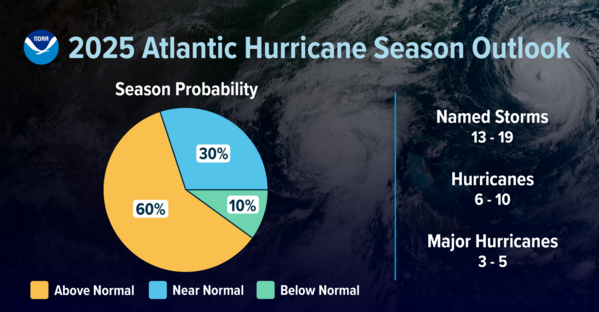
On May 22, the National Oceanic and Atmospheric Administration (NOAA) released its 2025 Atlantic Hurricane Season outlook during a press conference at the Jefferson Parish Emergency Operations Center in Gretna, Louisiana. NOAA also issued seasonal hurricane outlooks for the eastern Pacific and central Pacific hurricane basins.
NOAA forecasts a 60% chance of an above-normal season, a 30% chance of a near-normal season and a 10% chance of a below-normal season.
The forecast calls for between 13 to 19 total named storms with winds of 39 mph or higher. Of those, 6-10 are forecast to become hurricanes with winds of 74 mph or higher, including three to five major hurricanes of category 3, 4 or 5 with winds of 111 mph or higher. NOAA has a 70% confidence in these ranges.
This yearly outlook is an important preparedness tool to help people to understand the potential for tropical storms. It’s also a reminder that everyone has the responsibility to prepare before a hurricane.
The first step to hurricane preparedness is understanding the risks where you live. If you live near the coast, you are most at risk for extreme wind and storm surge. However, the hazards don’t stop just because a storm has moved inland. Inland communities can be hit the hardest due to the severe rainfall even when the hurricane category decreases.
Next, people should think about what they can do to protect themselves and their property. It’s important to know your area’s evacuation routes and procedures and learn how to make sure their homes and businesses can withstand hurricane-related hazards. Local emergency management agencies have a wealth of information on location-specific hazards and best practices to keep people safe. Visit Ready.gov/hurricanes and Ready.gov/business for practical advice on staying safe before, during and after a hurricane.
Third, make sure you have the insurance coverage you need for high winds and flooding. It takes 30 days for flood insurance to take effect, so now is the time to make sure you have the coverage you need. Visit Floodsmart.gov today to get a flood insurance policy today.
Finally, listen to local officials. They are the first line of defense to keeping individuals and communities safe. Know your community’s evacuation plan, possible evacuation routes and how to sign up for local alerts.
FEMA opened the Fiscal Year (FY) 2024 Staffing for Adequate Fire and Emergency Response (SAFER) application period for $360 million and the Fire Prevention and Safety application period for $36 million to empower states and localities to manage disasters and emergencies. The application period for both the FY24 SAFER and Fire Prevention and Safety programs will close on Thursday, July 3, at 5 p.m. ET.
The SAFER grant program awards these funds directly to fire departments and volunteer firefighter interest organizations across the nation to help them increase or maintain the number of trained firefighters available in their community.
During 2024, there were approximately 4,200 home fire fatalities in the United States, including 61 firefighters. To keep communities and firefighters safer, FEMA will award SAFER funding directly to fire departments and volunteer firefighter interest organizations to help increase the number of firefighters to help communities meet industry minimum standards and attain 24-hour staffing, provide adequate fire protection from fire and fire-related hazards and fulfill traditional missions of fire departments.
The Fire Prevention and Safety grant program helps strengthen community fire prevention programs and support scientific research on innovations that improve firefighter safety, health and well-being.
The purpose of the Fire Prevention and Safety grant program is to award grants directly to fire departments, national, regional, state, local, tribal and nonprofit organizations such as academic institutions (e.g., universities), research foundations, public safety institutes, public health, occupational health and injury prevention institutions for fire prevention programs and to support firefighter health and safety research and development, such as clinical studies that address behavioral, social science and cultural research.
Since 2005, the SAFER program has awarded approximately $5.2 billion in grant funding. Fire Prevention and Safety has awarded nearly $900 million since its inception in 2002.
The FY24 SAFER and Fire Prevention and Safety Notices of Funding opportunity and technical assistance documents for both programs are available at Grants.gov and on the FEMA websites at SAFER and Fire Prevention and Safety. Additional information about upcoming webinars to assist applicants is also available on the FEMA website.
Emergency Management Capacity Survey for Tribal Nations Open Through June 1
In collaboration with Argonne National Laboratory, FEMA and several emergency management associations are conducting the Emergency Management Organizational Structures, Staffing and Capacity Study. This study will provide a better understanding of current state, local, tribal and territorial emergency management structures, staffing and capacity.
As part of the study, emergency managers from all federally recognized tribes are invited to respond to a survey open through June 1, which should take no more than 20 minutes to complete. All information will be collected, and individual responses will be kept confidential.
The results of the study can support and inform the examination of FEMA roles and functions to support state, local, tribal and territorial partners.
The tribal survey was sent to tribal leaders on Jan. 29. If you have not received the survey, please fill out the Tribal Emergency Management Capacity Study Contact Information Form and someone from the research team will contact you.
....................................................................................................................................................
Kentuckians Affected by April Storms Can Apply for FEMA Assistance by June 25
Kentucky homeowners and renters who suffered uninsured or underinsured damage to their property from the April severe storms, flooding, straight-line winds, tornadoes, flooding, landslides and mudslides have until June 25 to apply for FEMA assistance.
Disaster Recovery Centers are physically accessible to people with disabilities and others with access and functional needs. They are equipped with assistive technology and other resources to ensure all applicants can access resources.
For more information, visit fema.gov/disaster/4864.
....................................................................................................................................................
|


