|
As of May 5, more than $549 million in federal assistance and low-interest loans has gone out to Hurricane Helene survivors in Georgia.
Eight months after the devastating storm, families and individuals have received money for basic repairs to their homes, rental assistance, sheltering in hotels, funds for replacement of essential personal property, money for serious needs, disaster case management and other assistance.
This assistance has been provided to more than 399,300 households in Georgia.
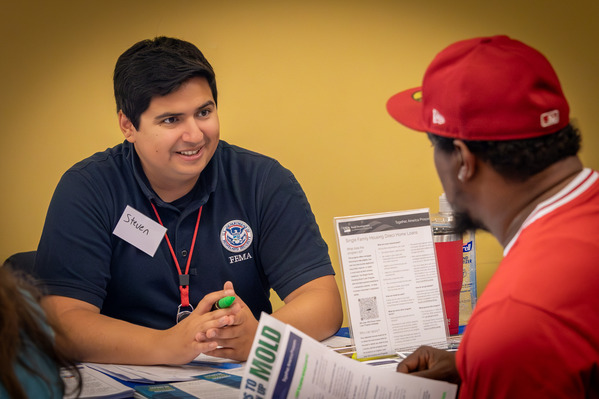 Hazlehurst, Ga. (May 3, 2025) - A FEMA Recovery Specialist speaks with a survivor about housing options at the Georgia Housing Resource Fair.
Here are some ways that FEMA, the U.S. Small Business Administration (SBA) and other federal agencies are working with the state of Georgia and local communities to provide support:
- FEMA approved more than $364 million in grants to survivors to help with housing repair or replacement, rental assistance, personal property loss and other needs.
- Of that, more than 4,700 families have received over $11.5 million in rental assistance which gives families funds to rent a new home. This program also lets families get additional funds for up to 18 months.
- SBA approved more than 3,200 in low-interest disaster loans for businesses and homeowners for more than $187 million.
- FEMA paid out more than $26.3 million in flood insurance claims to more than 460 policyholders.
- FEMA paid for emergency hotel/motel stays for more than 840 families.
- FEMA and the U.S. Army Corps of Engineers are working with the state and communities to monitor debris removal. To date, over 40.1 million cubic yards of debris have been removed from public rights of way.
FEMA remains committed to helping Georgians on their road to recovery and continues to work with federal, state and local agencies to find survivors affordable housing options by hosting housing resource fairs to connect families with local services and resources. To date, FEMA has hosted 12 housing resource fairs and helped 1,011 survivors who attended.
As severe storm season continues and hurricane season approaches, FEMA encourages Georgians to prepare by:
-
Getting an insurance check-up. Your insurance policy may not cover floods or wildfires. Talk to your agent to make sure you have the right kind and amount of insurance. You can visit FEMA's National Flood Insurance Program Quoting Tool to find out how much flood insurance may cost and find an insurance agency to purchase a policy.
-
Having several ways to receive alerts. Download the FEMA app to receive real-time alerts from the National Weather Service for up to five locations nationwide. Sign up for community emergency alerts in your area and make sure your phone can receive Wireless Emergency Alerts.
-
Gathering Supplies. Your supplies should have items you and your family would need to stay safe and comfortable for several days after disaster. Remember to consider the needs of those you care for, whether they are children, older adults, loved ones who have a disability and pets.
Visit Ready.gov to learn more about low and no cost preparedness, lists to build emergency kits and templates to create a Family Emergency Communication Plan.
Deadline to Apply for FEMA Assistance Extended to May 25 for Kentucky Homeowners and Renters Affected by February Storms
Kentucky homeowners and renters who suffered uninsured or underinsured damage to their property from the February severe storms, flooding and straight-line winds now have a few additional weeks to apply for disaster assistance. FEMA has extended the application deadline to Sunday, May 25.
FEMA assistance for individuals affected by the severe weather can cover rental assistance, temporary housing, home repairs, personal property losses and other disaster-related needs not covered by insurance. Money from FEMA does not have to be repaid. FEMA assistance is nontaxable and will not affect eligibility for Social Security, Medicaid or other federal benefits.
Survivors are encouraged to file insurance claims for damage to their homes, personal property and vehicles before they apply for FEMA assistance. FEMA Individual Assistance cannot duplicate insurance benefits or other sources of assistance.
There are four ways to apply for FEMA assistance:
- Go online to DisasterAssistance.gov.
- Call the FEMA Helpline at 800-621-3362. If you use a relay service, such as Video Relay Services (VRS), captioned telephone or other services, give FEMA your number for that service.
- Download the FEMA App.
- Visit a Disaster Recovery Center. To find a Disaster Recovery Center, visit fema.gov/DRC or text DRC along with your ZIP Code to 43362 (Example: “DRC 29169”).
To view an accessible video on how to apply for assistance, visit Three Ways to Apply for FEMA Disaster Assistance - YouTube.
Disaster Recovery Centers are physically accessible to people with disabilities and others with access and functional needs. They are equipped with assistive technology and other resources to ensure all applicants can access resources.
For more information, visit fema.gov/disaster/4860.
....................................................................................................................................................
Emergency Management Capacity Survey for Tribal Nations Open Through June 1
In collaboration with Argonne National Laboratory, FEMA and several emergency management associations are conducting the Emergency Management Organizational Structures, Staffing and Capacity Study. This study will provide a better understanding of current state, local, tribal and territorial emergency management structures, staffing and capacity.
As part of the study, emergency managers from all federally recognized tribes are invited to complete a survey open through June 1, which should take no more than 20 minutes to complete. All information will be collected, and individual responses will be kept confidential.
The results of the study can support and inform the examination of FEMA roles and functions to support state, local, tribal and territorial partners.
The tribal survey was sent to tribal leaders on January 29. If you have not received the survey, please fill out the Tribal Emergency Management Capacity Study Contact Information Form and someone from the research team will contact you shortly after.
....................................................................................................................................................
|


