|
Individuals and communities affected by February's flooding and severe storms in the designated areas of West Virginia and Kentucky can apply for Individual Assistance or Public Assistance. FEMA's assistance programs offer critical support to affected individuals, government entities and certain private non-profits to support their recovery efforts from major disasters quickly and efficiently.
Following a presidential major disaster declaration, FEMA may provide two main types of possible assistance: Individual Assistance and Public Assistance. The Individual Assistance program provides support to individuals and households, while the Public Assistance program provides support to communities and the public.
Individual Assistance
FEMA's Individual Assistance program provides direct financial assistance to eligible individuals and families who have sustained losses due to disasters. This program directly helps those with uninsured or underinsured basic critical needs. Through the Individual Assistance program, FEMA offers several types of financial and direct assistance to eligible individuals and families, including homeowners and renters.
Housing and Other Needs Assistance may provide:
- Money to help pay for alternate housing while the resident is displaced from their disaster-damaged property.
- May reimburse for hotels, motels or other short-term lodging while the resident is displaced from disaster-damaged property.
- Money to help restore the disaster-damaged primary residence to safe, sanitary and livable conditions.
- Money for uninsured or underinsured disaster-caused personal property losses, medical and dental expenses, and other serious expenses.
- Money for childcare, moving and storage costs, a disaster-damaged primary vehicle and other essential costs.
- Money to help clean and sanitize a resident’s home, which is intended to help prevent additional losses and protect health and safety.
Money provided through Individual Assistance is a grant and does not need to be repaid. This type of assistance is not considered taxable income, and accepting a FEMA grant will not affect your Social Security benefits, Medicare, Medicaid, Supplemental Nutrition Assistance Program or other federal assistance programs.
To find out if you can apply for disaster assistance, visit disasterassistance.gov to find out if your area has been declared for Individual Assistance. Affected residents can apply online, at a Disaster Recovery Center, through the FEMA App or by calling the FEMA helpline at 1-800-621-3362.
Learn more about FEMA’s Individual Assistance program at Individual Assistance | FEMA.gov.
Public Assistance
The Public Assistance program provides supplemental grants to state, tribal, territorial and local governments, and certain types of private non-profits, to assist communities in quickly responding to and recovering from major disasters or emergencies.
Federal funding is available to eligible entities, including state and local governments, and certain private non-profit organizations, such as schools, hospitals, houses of worship and public utility districts.
Although funds are awarded to government entities and certain private non-profits, the Public Assistance program is intended to benefit the public, including neighborhoods, cities, counties and states.
Under Public Assistance, FEMA may offer two main types of assistance:
- Grant funding for emergency protective measures and debris removal (emergency work).
- Grant funding for permanent restoration of damaged facilities, such as roads, culverts, bridges, water control facilities, utilities, public buildings and parks in designated areas, including cost-effective hazard mitigation to protect the facilities from future damage (permanent work).
Public Assistance dollars are used to:
- Clean up disaster-related debris.
- Repair roads and bridges.
- Restore utilities and water systems.
- Rebuild buildings and equipment that provide community services, including schools and hospitals.
Learn more about FEMA’s Public Assistance program at Assistance for Governments and Private Non-Profits After a Disaster | FEMA.gov.
Wildfires may threaten your home and wildland areas across many parts of the United States. These dangerous fires spread quickly and can devastate not only wildlife and natural areas but also communities.
From Jan. 1 – March 27, 29 Fire Management Assistance Grants were approved to assist firefighting costs against ongoing wildfires in different parts of the country. The Fire Management Assistance Grant Program is available to states, local and tribal governments, for the mitigation, management and control of fires on publicly or privately owned forests or grasslands, which threaten such destruction as would constitute a major disaster.
Without taking the proper precautions, those we care about and the items we cherish may be in jeopardy. Now is the time to prepare. In this blog you will find three tips to help make your home resilient against wildfires.
To learn more, read the blog on FEMA.gov.
.
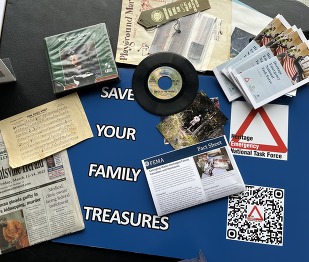
After severe flooding hit Kentucky in February, more than 150 survivors received training and resources on steps they can take to salvage important personal items that were damaged during the disaster.
Survivors learned how to use common household materials to preserve cherished items, including photographs, books, textiles, artwork, documents and other keepsakes. Alongside practical assistance and hands-on support, educational resources were made available, and survivors connected with professional conservators for expert guidance to continue their restoration efforts at home.
As the Commonwealth of Kentucky's recovery progresses, the Save Your Family Treasures Initiative—a collaborative effort between the Smithsonian Institution and FEMA—assists survivors in salvaging treasured items and family memories.
To learn more, read the blog on FEMA.gov.
|
FEMA Assistance Deadline Extended for North Carolinians
North Carolinians affected by Tropical Storm Helene can apply for disaster assistance until Monday, April 7.
To apply with FEMA:
- Go online to DisasterAssistance.gov.
- Use the FEMA App.
- Call the FEMA Helpline at 800-621-3362. If you use a relay service, such as Video Relay Services (VRS), captioned telephone, or other services, give FEMA your number for that service.
- Visit a Disaster Recovery Center (DRC). To find a Disaster Recovery Center, go online at fema.gov/drc or text DRC and your ZIP code to 43362.
To view an accessible video on how to apply for assistance, visit Three Ways to Apply for FEMA Disaster Assistance - YouTube.
....................................................................................................................................................
Kentuckians and West Virginians Can Apply for FEMA Assistance
Individuals affected by severe storms, straight-line winds, flooding, landslides and mudslides in the designated areas of Kentucky and West Virginia can apply for federal disaster assistance.
If you have homeowners, renters or flood insurance, you should file a claim as soon as possible. FEMA cannot pay for losses covered by insurance. If your policy does not cover all your disaster expenses, you may be eligible for federal assistance.
The first step to receiving FEMA assistance is to apply. There are four ways to apply:
- Go online at DisasterAssistance.gov.
- Use the FEMA App.
- Call the FEMA Helpline at 800-621-3362. If you use a relay service, such as Video Relay Services (VRS), captioned telephone, or other services, give FEMA your number for that service.
- Visit a Disaster Recovery Center (DRC). To find a Disaster Recovery Center, go online at fema.gov/drc or text DRC and your zip code to 43362.
To view an accessible video on how to apply for assistance, visit Three Ways to Apply for FEMA Disaster Assistance - YouTube.
Local governments and certain private non-profit organizations in the designated counties are eligible for assistance for emergency work and the repair or replacement of disaster-damaged facilities. Learn more about FEMA's Public Assistance program by visiting FEMA.gov.
Kentuckians can apply for assistance until April 25. For more information, visit DR-4860-KY.
West Virginians can apply for assistance until April 28. For more information, visit DR-4861-WV.
....................................................................................................................................................
|


