|
FEMA remains committed to helping survivors in Western North Carolina recover, working closely with the state, the U.S. Army Corps of Engineers and other local and voluntary agencies to remove debris, repair infrastructure and provide housing solutions for survivors. This weekend, Secretary of Homeland Security Kristi Noem and Senior Official Performing the Duties of the FEMA Administrator Cameron Hamilton visited key recovery sites, including the North Fork Reservoir, waterway debris missions at Azalea Park and Swannanoa and direct housing sites to assess progress and reinforce federal support.
To date, FEMA has approved more than $371 million to assist 154,000 North Carolina households with home repairs, rental assistance and rebuilding efforts. More than 13,200 households have participated in Transitional Sheltering Assistance, with approximately 2,000 currently staying in hotels as FEMA works to connect them with long-term housing options. Additionally, 160 families have moved into FEMA-provided disaster housing, such as mobile homes, travel trailers and leased apartments, with another 300 households in processing.
FEMA is expediting funding to help communities recover, approving over $348 million for local governments, state agencies and private nonprofits to reimburse disaster-related expenses, including infrastructure repairs and debris removal. The U.S. Army Corps of Engineers began clearing debris from waterways in Buncombe and Polk counties last weekend and will continue until the job is done.
Survivors in North Carolina now have until March 8 to apply for federal assistance. For more information on recovery efforts and available resources, visit fema.gov/disaster/4827.
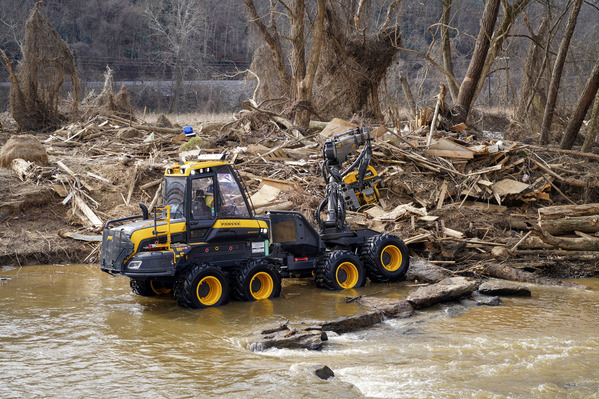 Swannanoa, N.C. (Feb. 2, 2025) - Waterway debris removal operations by the U.S. Army Corps of Engineers are underway in the Swannanoa River near Azalea Park in Buncombe County, North Carolina.
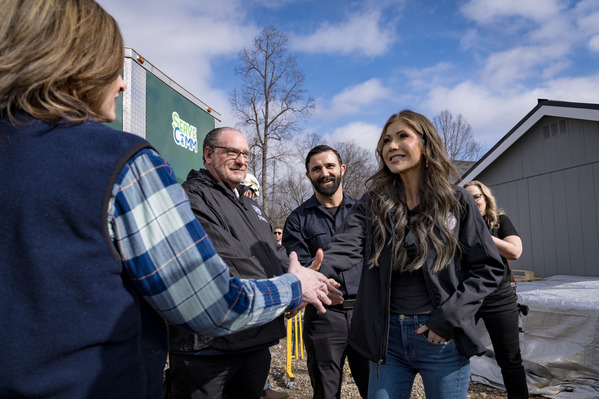 Swannanoa, N.C. (Feb. 8, 2025) – Department of Homeland Security Secretary Kristi Noem is joined by the Senior Official Performing the Duties of the FEMA Administrator Cameron Hamilton, Region 4 Regional Administrator Robert Samaan and Federal Coordinating Officer Brett Howard visit the site of waterway debris cleanup underway by the U.S. Army Corps of Engineers.
In partnership with the state of California, Los Angeles County and local officials, the federal government continues helping Californians get back on their feet in response to the California wildfires. On Feb. 2, the fires were 100% contained. As of Feb. 7, more than $683 million has been provided in FEMA grants and low-interest Small Business Administration disaster loans to eligible homeowners, renters and businesses.
To date, more than 27,800 households have been approved for FEMA assistance, including:
-
More than $10.5 million in housing assistance for short-term rental assistance and home repair costs.
-
More than $56.4 million for other essential disaster-related needs, such as expenses related to medical care, dental care and lost personal possessions.
-
More than 41,700 home inspections to assess property damage have been completed.
If you were affected by the wildfires in Los Angeles County, you may be eligible for FEMA financial assistance. You can apply for FEMA assistance by the following:
If you have insurance, file a claim with your insurance company first. You can apply for FEMA assistance before or after, but you’ll need your insurance settlement or denial letter for FEMA to determine what it can cover.
The deadline to apply for FEMA assistance for the wildfires is March 10.
FEMA continues to work with state, local, federal, nonprofit and Tribal Nation partners to support the California wildfire response, with teams actively on the ground to support the state-led disaster response.
For more information and resources, visit 4856 | FEMA.gov
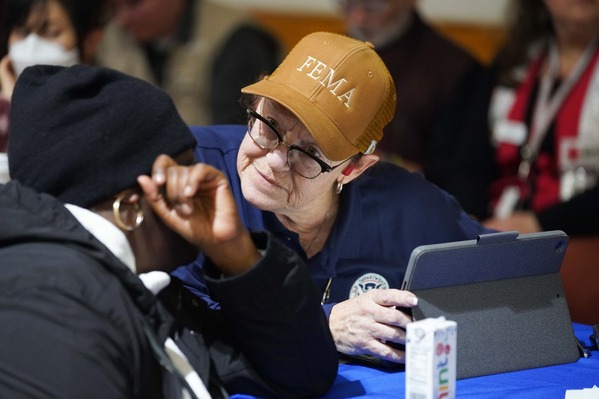 Pasadena, Calif. (Feb. 6, 2025) - FEMA Disaster Survivor Assistance teams assist wildfire survivors in applying for FEMA disaster assistance at the Eaton Fire Resource Fair.
FEMA has exercised its borrowing authority under the National Flood Insurance Act of 1968 to borrow $2 billion from the U.S. Treasury to pay eligible National Flood Insurance Program (NFIP) policyholder claims. This follows more than $10 billion in projected payments related to hurricanes Helene and Milton.
This borrowing action follows payouts in 2024 from several large-scale and back-to-back flooding events. While the NFIP’s premiums are usually sufficient to pay claims in years without catastrophic floods, heavy rain events in 2024 – including hurricanes Helene and Milton caused massive, widespread damage, resulting in tens of thousands of flood insurance claims.
The NFIP is not designed to pay for multiple catastrophic events in a single year without additional financial assistance. The combined losses from 2024 have depleted the NFIP’s funds generated from premiums to pay claims.
Hurricane Helene has received more than 57,400 flood insurance claims totaling more than $4.5 billion as of Feb. 6. Based on data as of Jan. 31, the estimated range for total losses paid into the NFIP is between $6.4 to $7.4 billion.
As of Feb. 6, more than 21,100 flood insurance claims from Hurricane Milton were received, totaling more than $740 million. The estimated range for losses paid is between $1.2 to $2.9 billion based on data as of Jan. 31.
FEMA’s borrowing authority is $30.425 billion, of which FEMA has already borrowed $20.525 billion in the aftermath of hurricanes Katrina, Sandy and Harvey between 2005-2017. The debt is now $22.525 billion.
The agency has always paid its NFIP claims on all eligible losses. Those who take the step to protect their homes and businesses by purchasing flood insurance get paid every dollar they are owed under their flood insurance policies.
Flooding continues to be the costliest and most frequent natural disaster in the United States, and flood insurance is still the best way for individual homeowners, renters and businesses to financially protect against future flood losses. The National Flood Insurance Program provides about $1.3 trillion in coverage to nearly 4.7 million policyholders nationwide.
For more information about the NFIP, visit Floodsmart.gov.
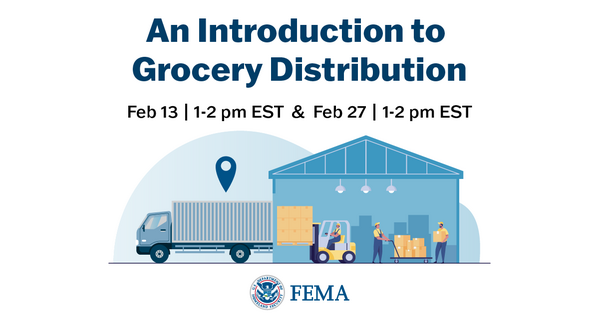 FEMA is releasing a new FEMA Field Notes video, An Introduction to Grocery Distribution, and a Partnership Guide to give emergency managers an overview of the grocery supply chain, insights into Grocery Distribution Center operations, and action steps to restore the flow of private sector capacity during disasters.
The grocery industry manages the food, beverages and household supplies supporting communities every day. This daily capacity far exceeds what the government and nonprofit organizations can provide during disasters using temporary distribution networks. By supporting the restoration of private sector commodity flows, emergency managers can expedite community recovery and direct government-managed relief supplies to the most at-risk and in-need areas.
Join FEMA and private sector representatives for a discussion of strategies for emergency managers to support restoring the flow of private sector capacity.
Webinars:
.
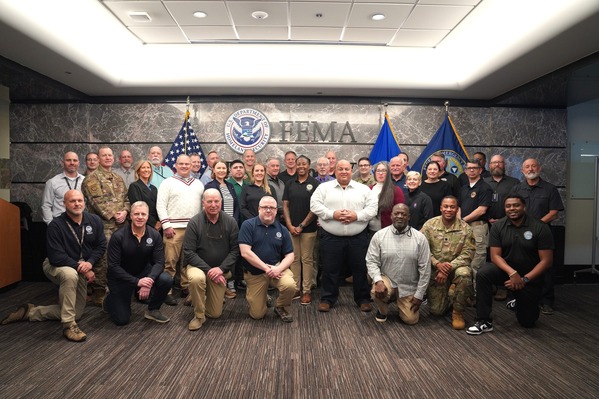
In a collaborative effort to enhance emergency response capabilities, FEMA and U.S. Army North successfully conducted an air operations course at FEMA Region 4 in Atlanta. This comprehensive training brought together representatives from:
- All ten regional defense coordinating elements.
- U.S. Northern Command and key stakeholders.
- Customs and Border Protection.
- Civil Air Patrol.
- FEMA Urban Search & Rescue.
- State partners.
- National Incident Management Assistance Teams.
Facilitated by FEMA air operations personnel, the course provided essential instruction on a range of air operations topics. Participants engaged in discussions on lessons learned from recent response operations and gained valuable insights into the functions and responsibilities associated with an air operations branch.
Course topics covered air asset coordination, mission planning, airspace deconfliction and integration with ground operations. By fostering an understanding of best practices and coordination efforts, the training equipped attendees with the knowledge necessary to support disaster response missions effectively.
“It’s imperative to have a unified response so that our partners understand our concept of operations, processes and how FEMA is able to provide air mission support to an incident," said NIMAT Blue Air Operations Branch director and lead instructor Tracy Moffett. By investing in the training and development of partners and personnel, FEMA ensures that it is prepared to meet the challenges of future incidents and help people before, during and after a disaster.
U.S. Northern Command is the Army’s dedicated headquarters focused on Department of Defense operations within the homeland. When requested, U.S. Army North rapidly deploys U.S. military assets and personnel to help local, state and federal partners during natural or manmade disasters.
This course underscores the ongoing commitment of FEMA and U.S. Army North to strengthening national resilience and improving operational effectiveness in disaster response scenarios. Future iterations of the training will continue to refine methodologies, incorporate emerging technologies and address evolving challenges in air operations to further enhance readiness and response capabilities.
.
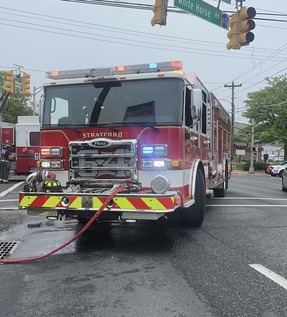
A Staffing for Adequate Fire and Emergency Response (SAFER) Grant helped the Stratford, New Jersey Fire Department in New Jersey respond faster and save a life during a serious motor vehicle accident.
On May 6, 2024, at 8:22 a.m., a driver suffered a medical emergency, causing a collision involving a motorcycle. Within three minutes, four SAFER-funded firefighters from the department arrived on the scene and provided critical medical care, ultimately saving the life of one of those involved in the crash.
Before receiving the SAFER Grant, the firehouse would have been unstaffed at that time, delaying emergency response and potentially changing the outcome of this incident. The Fiscal Year 2021 SAFER grant awarded $479,662 in federal funds over four years and has enabled the department to enhance its daytime response capabilities and strengthen overall community safety.
The purpose of the SAFER Grant Program is to help fire departments and volunteer firefighter organizations increase staffing levels to meet industry minimum standards, achieve 24-hour coverage and provide adequate protection from fire and fire-related hazards. The program also ensures fire departments can continue fulfilling their traditional missions effectively.
Located 15 miles east of Philadelphia in Camden County, New Jersey, the Stratford Fire Department is an all-volunteer department. Since receiving the SAFER grant, seven operational volunteer firefighters have joined the department. According to Chief Michael Lemmerman, these SAFER-funded firefighters have become the department’s most active members during the day, with some continuing to serve at night.
Chief Lemmerman said the firefighters have really played an important role in building this fire department to a level the department couldn’t have achieved without the SAFER funds.
This success story highlights the real-life impact of FEMA’s investment in firefighter staffing, ensuring communities have trained personnel ready to respond when seconds matter. Learn more about SAFER grants and their impact on local fire departments by visiting FEMA.gov.
|
.
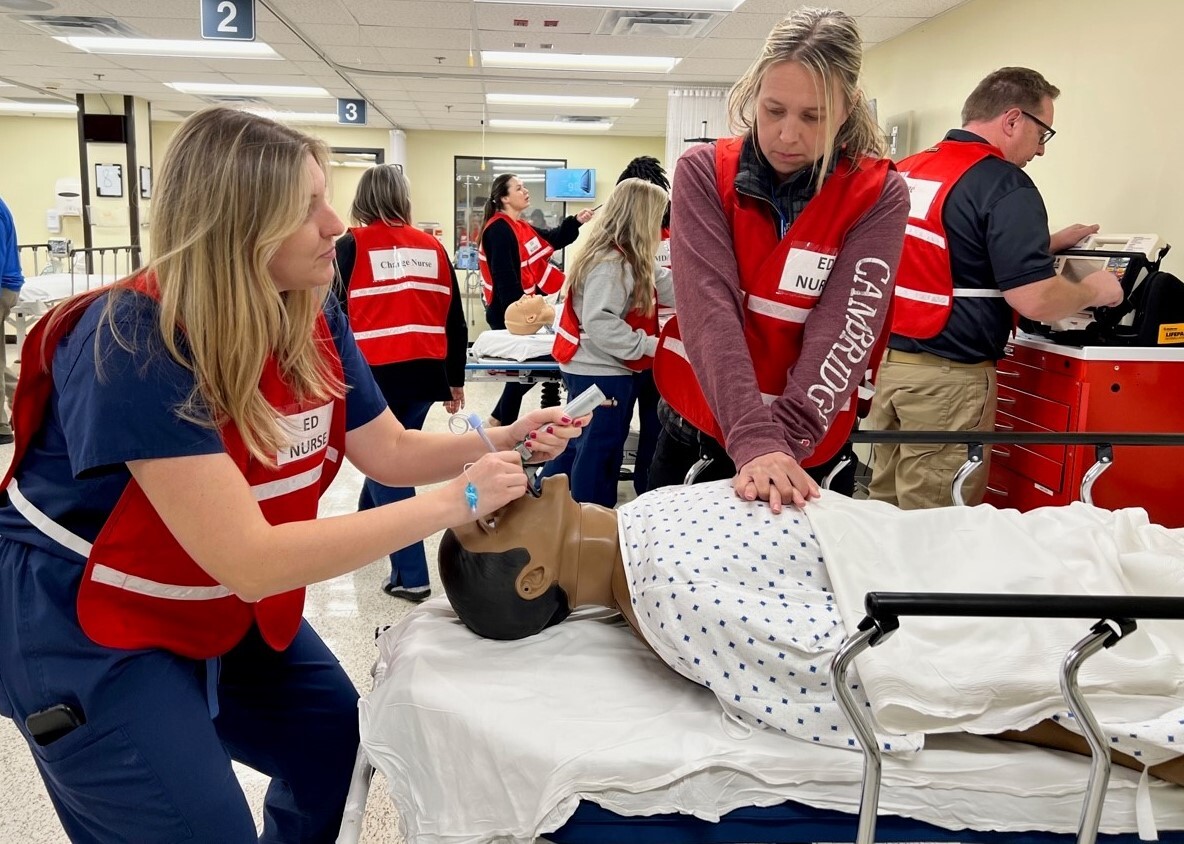 FEMA's Center for Domestic Preparedness trainees performing Hospital Emergency Response Training for Mass Casualty Incidents.
As the Philadelphia Eagles and the Kansas City Chiefs faced off in New Orleans for Super Bowl LIX, the presence of trained first responders from Louisiana contributed significantly to ensuring the event’s safety. Over the past five years, FEMA’s Center for Domestic Preparedness recorded more than 3,000 course completions by these first responders, underscoring their preparedness for high-stakes events.
Graduates of the Center for Domestic Preparedness, equipped with training in various critical areas, played vital roles in ensuring the safety of fans and players at the event. The first responders included law enforcement officers, healthcare personnel and firefighters, who received extensive training at both the Center for Domestic Preparedness campus in Anniston, Alabama and locations across Louisiana. Others attended one or more of the center’s virtual offerings or online courses.
Among the specialized training courses completed by these responders were the following:
- Field Force Operations.
- Hazardous Materials Technician.
- Hospital Emergency Response Training for Mass Casualty Incidents.
- Intermediate Hands-On Training for Chemical, Biological, Radiological, Nuclear and Explosive Incidents courses.
This extensive training prepared them to tackle a wide range of potential emergencies, providing a robust safety net during the high-stakes event.
The Center for Domestic Preparedness instructors and support staff routinely train responders in preparation for National Special Security Events, such as the Super Bowl, Democratic and Republican National Conventions and presidential inaugurations. Such events draw large crowds and television audiences and are considered potential targets for terrorism or other criminal activities, making the role of trained responders crucial.
As fans gathered to celebrate the championship, the commitment and expertise of these graduates ensured that precautions were in place, allowing the focus to remain on the excitement of the game.
For more information about the Center for Domestic Preparedness training opportunities, visit FEMA's Premier All-Hazards Training Center.
Attend the Youth Preparedness Council Info Session Tonight
Teens in grades eight through 11 who are interested in applying for the Youth Preparedness Council can learn more about the process and have their questions answered in a webinar tonight at 5 p.m. ET. The webinar will walk students through the application process and give applicants a glimpse of what it’s like to be on the council. Please register for this webinar in advance using this Zoom link.
During their one-year term, council members collaborate virtually with each other to develop projects that promote preparedness on a local and national scale. Members will also have the chance to engage with top leaders within FEMA, the federal government and national nonprofit organizations.
If you know a teen interested in preparedness and community service, encourage them to apply.
The Youth Preparedness Council application period closes on Monday, March 3. To learn more about the Youth Preparedness Council and the application requirements, visit FEMA.gov.
....................................................................................................................................................
FEMA Hosts Webinar on Using Exercise and Incident Data to Drive Change for Risk Assessments
FEMA is hosting three 60-minute webinars on the connections among continuous improvement activities, exercises and the Threat Hazard Identification and Risk Assessment/Stakeholder Preparedness Review. The webinars will also consider how data from these activities can feed into the National Preparedness System.
To register for the webinar, please click on the “Register” link below:
- Webinar 2: 2-3 p.m. ET on Thursday, Feb. 13 - Register.
- Webinar 3: 4-5 p.m. ET on Tuesday, Feb. 18 - Register.
Participants can download or read the National Continuous Improvement Guidance by visiting the National Continuous Improvement Guidance Preparedness Toolkit. To download the Homeland Security Exercise and Evaluation Plan (HSEEP) doctrine, visit the HSEEP Policy and Guidance webpage. To download the Threat Hazard Identification and Risk Management Assessment/Stakeholder Preparedness Review Guide, please visit the Unified Reporting Tool.
For questions or help with registration, please email FEMA-CITAP@fema.dhs.gov. For more information on the webinar series, visit FEMA.gov.
....................................................................................................................................................
Annual FEMA Offer for Exercise Support Now Open
FEMA's National Exercise Program provides state, local, Tribal Nation and territorial jurisdictions with no-cost technical assistance for exercises designed to enhance preparedness and response capabilities. The 2025 exercise support requests can be submitted through March 3. New applicants are strongly encouraged to apply, especially those from underserved jurisdictions.
To learn more, including how to request this technical assistance for exercises, attend one of the webinars or office hours FEMA is hosting. All webinars will offer the same content. Register in advance by selecting the links below:
To learn more about the National Exercise Program, visit FEMA.gov. For specific questions, please email the program staff at NEP@fema.dhs.gov and include "2025 Exercise Support Question" in your subject line.
....................................................................................................................................................
|


