|
FEMA is actively working together with state, local, federal and nonprofit partners to support the California wildfire response, with teams actively on the ground to support the state-led disaster response. President Trump visited Southern California on Friday to talk to survivors and assess the damage. He also issued an Executive Order that calls on FEMA, along with many of our federal partners, to collaborate on making immediate plans for improvement on issues such as housing and debris removal in California and North Carolina. So far, FEMA has given $51 million to survivors affected by the Southern California wildfires to help cover home repairs, find a place to stay and assist with other essential needs.
Disaster Assistance
If you were affected by the wildfires in Los Angeles County, you may be eligible for FEMA financial assistance. After filing a claim with your insurance company, you can apply for FEMA assistance by phone at 1-800-621-3362 or by visiting DisasterAssistance.gov. If you use a relay service such as VRS, give FEMA your number for that service. The phone line is open daily from 7 a.m. to midnight PT, and help is available in most languages.
The deadline to apply for assistance for the wildfires is March 10.
After you apply with FEMA for disaster assistance, you may wonder what comes next. FEMA may call you for more information or to give you an update. Messages from FEMA will arrive by email, phone or text. You will know the message comes from FEMA if it is from one of the following sources:
Visit FEMA.gov to learn the steps you can take to help move your disaster recovery forward.
Disaster Recovery Centers
There are currently three Disaster Recovery Centers (DRC) in Los Angeles and Pasadena for people to get in-person help with FEMA assistance. If you need additional support or would like help uploading documents, you can visit a DRC to apply for assistance and learn about resources from FEMA and other state organizations to aid you in your recovery.
To find the nearest DRC, text “DRC” along with your ZIP Code to 43362 or visit the DRC Locator. At DRCs, you can get help applying for federal assistance, speak to representatives from state and federal agencies, receive updates on your FEMA application for assistance and learn about the appeals process.
Temporary Housing Assistance
Los Angeles residents displaced by the wildfires may be eligible for temporary housing assistance while they work on their long-term housing plan. This can include funds for a temporary place to live while their home is repaired, temporary stays in participating hotels, and more.
The first step to receive temporary housing is applying for FEMA assistance by:
Clean and Sanitize Assistance
If your home was damaged by the Los Angeles County Wildfires but you can live in it safely, FEMA may be able to provide up to $300 in one-time financial assistance to help with cleanup. This assistance is for eligible homeowners and renters and is in addition to other FEMA grants you may be eligible for.
To get Clean and Sanitize assistance, you must first apply for FEMA assistance. To apply, visit DisasterAssistance.gov, call the FEMA Helpline at 800-621-3362 or apply in person at a DRC.
Beware of Stolen Identity Fraud and Other Disaster Recovery Scams and Deceptions
Some Californians impacted by the Los Angeles County wildfires may be targeted with scams and fraudulent schemes. If you suspect fraud, call the FEMA Helpline immediately at 800-621-3362 or speak to a FEMA representative at a Disaster Recovery Center. If you did not apply for assistance but received a letter from FEMA about your application, call the FEMA Helpline to stop further processing of the application and investigate the apparent fraud. Visit IdentityTheft.gov for more information and steps you can take if you suspect you're the victim of identity theft.
Resources to Help Survivors and Responders
The Disaster Distress Helpline is available anytime to provide support. Survivors and responders feeling overwhelmed can call or text 1-800-985-5990 to receive free, confidential support in any language. This service is available 24 hours a day, seven days a week to anyone experiencing emotional distress due to disasters. Help is available in multiple languages. Spanish speakers should press "2." Deaf and hard-of-hearing ASL callers can text the Disaster Distress Helpline or call the hotline using a preferred third-party relay service.
The 988 Suicide & Crisis Lifeline is a free and confidential resource available for those who need to connect with a mental health professional. You can also visit the 988 website that has a feature to chat online.
For more information and resources, visit 4856 | FEMA.gov

Los Angeles (Jan. 21, 2025) - Volunteers at the Los Angeles Homeless Services Agency participated in a registration drive to support homeless survivors after the California wildfires.

Los Angeles (Jan. 22, 2025) - FEMA attends the LA County Recovers Press Conference to discuss response and recovery efforts across the state, local, federal and nonprofit agencies in support of the Southern California wildfires.
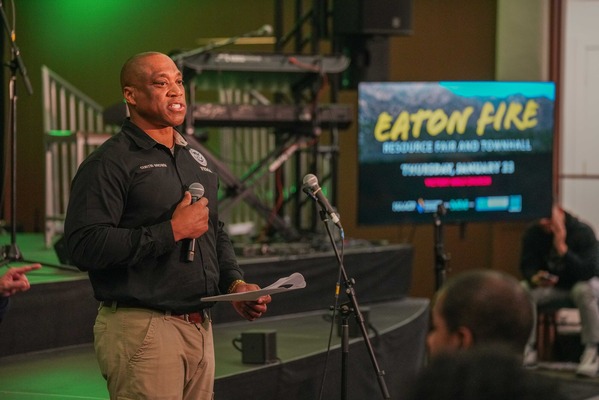
Pasadena, Calif. (Jan. 23, 2025) - A town hall hosted at the Pasadena Victory Bible Church included FEMA officials and local officials assisting survivors of the Eaton Wildfires.
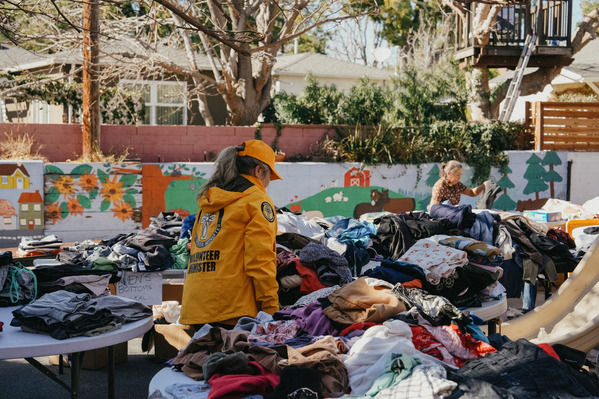
Pasadena, Calif. (Jan. 23, 2025) - FEMA, other agencies and volunteers attended the Eaton/Altadena Fire Community Town Hall. The town hall provided wildfire survivors in the Altadena and Eaton Canyon communities with legal guidance, resources, essential supplies and emotional support to help navigate their recovery process.
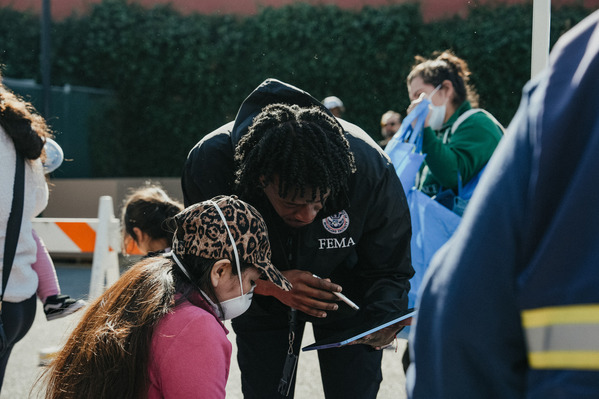
Pasadena, Calif (Jan. 25, 2025) - FEMA, alongside various organizations, joined forces at the Dodgers giveaway event to support those affected by the recent Southern California wildfires. The event featured food, water and essential supplies distributed to survivors.
FEMA began contacting Tropical Storm Helene survivors staying in hotel rooms paid for by FEMA to ensure their continued need for the Transitional Sheltering Assistance (TSA) program.
The short-term sheltering program pays for hotel rooms for homeowners and renters displaced by Helene while they find permanent housing solutions or make repairs to their homes. To date, approximately 13,000 Western North Carolina survivor households have used the program. A key part of the program’s management is eligibility reviews. These reviews occur every two weeks and ensure that available rooms are being used by those in need.
“I want to be clear, this program is not ending for Western North Carolina,” said Federal Coordinating Officer Brett Howard. “We understand the great need survivors have at the time and this program will last as long as necessary. That said, the length of eligibility for an individual survivor will be based on their individual circumstances. FEMA staff are working daily with survivors and on their cases to help them find permanent housing solutions.”
Due to the extenuating circumstances in Western North Carolina, FEMA representatives will call any survivors who may become ineligible to work with them and give them additional time to check out of their hotel rooms. Instead of seven days, survivors who are no longer eligible for the program will have three weeks’ notice.
The following conditions indicate that a survivor or household no longer needs this assistance:
- A home inspection indicated that Tropical Storm Helene did not cause any eligible damages to a home or rental unit.
- A home inspection determined that their home is now habitable.
- After multiple attempts from case workers or inspectors, FEMA has been unable to reach the survivor.
- A survivor has missed multiple home inspections.
- A survivor withdrew from FEMA’s Individual Assistance program.
- A survivor was unhoused prior to the disaster.
After a review of FEMA’s eligibility, out of the 2,700 households checked in, approximately 740 are no longer eligible to remain in the TSA program. FEMA is in contact with these individuals to inform them they are no longer eligible and need to relocate. If any family feels they are eligible and need to remain in the program, we urge them to contact us immediately.
Survivors who still need assistance with their recovery should stay in touch with FEMA to provide regular updates on their housing status and update contact information, so their recovery process is not delayed. Anyone who has received a notification and still needs housing assistance should call the helpline at 800-621-FEMA (3362) or visit a Disaster Recovery Center. No appointment is needed and to find those center locations, go to fema.gov/drc or text “DRC” and a ZIP code to 43362.
As of Jan. 20, FEMA has provided more than $316 million in cash grants to Western North Carolina survivors, including more than $6.2 million in rental assistance. The U.S. Small Business Administration has also approved more than $213 million in low-interest loans to help survivors. Those loans are 0% interest for the first year. FEMA, the state of North Carolina, other federal agencies and volunteer organizations continue working with families to help them begin their recovery.
One-day Agriculture Recovery Centers are planned to help North Carolina farmers recover from Tropical Storm Helene damage. The first locations are set for Buncombe, Henderson, McDowell and Watauga counties. Additional events are planned for Ashe, Avery, Burke, Mitchell and Yancey counties. All centers will be open from 9 a.m. to 6 p.m.
The walk-through events will provide information on addressing agricultural or rural needs not covered by standard programs offered by FEMA or the state, and offer opportunities for farmers, ranchers, nursery owners, vineyards, honeybee growers and fish producers to meet with agricultural officials to learn about available assistance.
The centers have specifically trained representatives of FEMA, the U.S. Department of Agriculture, the North Carolina Department of Commerce, the North Carolina Department of Agriculture, the U.S. Small Business Administration, local Farm Service Agency officials and other government agencies to assist agricultural workers with their recovery needs.
Please bring evidence of ownership or photos of damaged or lost tools and equipment, along with estimated replacement costs to expedite your application.
|
Jan. 28 – Henderson County
Dana Community Center: 2879 Upward Rd, Flat Rock, NC 28731
|
Jan. 30 – Buncombe County
Asheville–Buncombe Technical Community College (Ivy Building): 9 Genevieve Circle, Asheville, NC 28801
|
Jan. 31 – Watauga County
Watauga Agricultural Conference Center (Winter Farmer’s Market): 252 Poplar Grove Road, Boone, NC 28607
|
FEMA will host a series of new weekly Lunch and Learn webinars every Thursday, beginning in February and concluding on March 6. These sessions will focus on FEMA's updated Radiological Emergency Preparedness Program Manual, which provides planning and assessment guidance for state, local, Tribal Nations and territorial partners located near commercial nuclear power plants.
Each webinar will cover a different topic, including:
- Overview of the FEMA Technological Hazards Division's Radiological Emergency Preparedness Program.
- Overview of the Radiological Emergency Preparedness Program Manual.
- Hurricane Florence Impacts and the Radiological Emergency Preparedness Program.
The topics and registration links are listed below. You can also find the sessions on the FEMA Events page. Once registered, you will receive a meeting invitation with the link to join the session. For more information about sessions and registration, visit FEMA Radiological Emergency Preparedness Program Lunch and Learn Webinar Series.
To learn more about the Radiological Emergency Preparedness Program, including training opportunities and additional resources such as the standard operating guide, reference library, after-action reports and the national public information map, visit Radiological Emergency Preparedness | FEMA.gov.
Topic: Overview of the Radiological Emergency Preparedness Program Manual
-
Date: Thursday, Feb. 20.
-
Time: 1-2 p.m. ET.
-
Location: MS Teams Register Here.
Topic: Flexibilities in the Protective Action Guides Manual
-
Date: Thursday, Feb. 27.
-
Time: 1-2 p.m. ET.
-
Location: MS Teams Register Here.
Topic: Hurricane Florence Impacts and the Radiological Emergency Preparedness Program
-
Date: Thursday, March 6.
-
Time: 1-2 p.m. ET.
-
Location: MS Teams Register Here.
Topic: An Overview of the FEMA Technological Hazards Division's Radiological Emergency Preparedness Program
-
Date: Thursday, March 13.
-
Time: 1-2 p.m. ET.
-
Location: MS Teams Register Here.
Some of the resources we may reference during the sessions include:
Explore valuable insights from recent disasters, highlighting how communities can become more resilient. Following the impacts of hurricanes Debby, Helene and Milton, FEMA shares key takeaways aimed at shaping safer communities.
Learn how communities are taking proactive measures and using community cooperation to enhance resilience, ensuring a safer future for all. To learn more about how to enhance resilience in your community, visit FEMA.gov.
Annual FEMA Offer for Exercise Support Now Open
FEMA's National Exercise Program provides state, local, Tribal Nation and territorial jurisdictions with no-cost technical assistance for exercises designed to enhance preparedness and response capabilities. The 2025 exercise support requests can be submitted through March 3. New applicants are strongly encouraged to apply, especially those from underserved jurisdictions.
To learn more, including how to request this technical assistance for exercises, attend one of the webinars or office hours FEMA is hosting. All webinars will offer the same content. Register in advance by selecting the links below:
To learn more about the National Exercise Program, visit FEMA.gov. For specific questions, please email the program staff at NEP@fema.dhs.gov and include "2025 Exercise Support Question" in your subject line.
....................................................................................................................................................
Register for the 2025 Radiological Emergency Preparedness Scenario Guidance Listening Sessions
FEMA will host a series of listening sessions through the agency's Radiological Emergency Preparedness Program. The session will gather feedback on existing exercise scenario guidance found in the 2023 Radiological Emergency Preparedness (REP) Program Manual. The sessions will allow state, local, Tribal Nations, territorial, industry and federal stakeholders the opportunity to provide feedback on the challenges presented in implementing REP exercise scenarios.
FEMA will seek feedback on potential improvements to REP scenario guidance. Registration links are listed below. You can also find these sessions listed on the FEMA Events page. Once registered, you will receive a meeting invitation with the link to join.
REP Scenario Guidance Listening Session #3
-
Date: Thursday, Jan. 30.
- Time: 1-2 p.m. ET.
- Location: Zoom Register Here
REP Scenario Guidance Listening Session #4
-
Date: Thursday, Feb. 6.
-
Time: 1-2 p.m. ET.
-
Location: MS Teams Register Here.
....................................................................................................................................................
FEMA is Accepting Youth Preparedness Council Applications
FEMA is accepting applications for the Youth Preparedness Council. Students must complete their applications by Monday, March 3.
Register for the Youth Preparedness Council Webinar to Learn More
Teens in grades eight through 11 who are interested in applying for the Youth Preparedness Council can learn more about the process and have their questions answered in a webinar at 8 p.m. ET, Thursday, Jan. 30. The webinar will walk students through the application process and give applicants a glimpse of what it’s like to be on the council. Please register for this webinar in advance at this Zoom link.
During their one-year term, council members collaborate virtually with each other to develop projects that promote preparedness on a local and national scale. Members will also have the chance to engage with top leaders within FEMA, the federal government, and national nonprofit organizations.
If you know a teen interested in preparedness and community service, encourage them to apply.
To learn more about the Youth Preparedness Council, visit Youth Preparedness Council | FEMA.gov.
....................................................................................................................................................
Attend the Response Inventory System Advantage in Disaster Preparedness Webinar
FEMA is hosting two webinars on the Response Inventory System (RIS) on Feb. 4, from 1-2 p.m. ET, and on Feb. 6, from 1-2 p.m. ET.
The webinar will cover the basic capabilities and functions of RIS and provide a live demonstration of using the tool. Resource management is the cornerstone of preparing for and responding to incidents that require mutual aid among agencies and jurisdictions.
Please register in advance to attend the webinar at the links below:
For more information, visit the National Resource Hub.
....................................................................................................................................................
Register for the 2025 National Dam Safety Program Technical Seminar
The 32nd FEMA National Dam Safety Program Technical Seminar is scheduled for Feb. 19-20 at the National Disaster and Emergency Management University in Emmitsburg, Maryland. This year’s theme is “Innovations in Dam Safety: Collaborative State and Federal Efforts."
This seminar will provide a comprehensive platform for state and federal agencies to collaborate on dam safety by featuring specialized sessions on dam modeling tools, updated resources, and grant requirements for state dam safety programs. Participants will also review evolving dam safety strategies, provide feedback on FEMA publications, and engage in a panel discussion on cross-sector collaborative efforts. The goal is to enhance decision-making, problem-solving and resilience in dam infrastructure through shared expertise and resources.
Experience the excitement and breakthroughs of the 2025 National Dam Safety Program Seminar—watch the highlight video to learn how collaboration is shaping the future of dam safety!
....................................................................................................................................................
|


