|
.
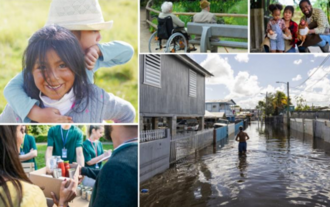
FEMA released the “Planning Considerations: Putting People First” guide. This document aims to assist emergency managers and planning partners at all jurisdiction levels in identifying and understanding the interests and needs of populations throughout their community, particularly those that are disproportionately impacted by disasters and may have been historically underserved populations.
When these populations are engaged, they can strengthen plans and help contribute to the response and recovery of the whole community. The guide outlines an understanding of a people-first approach and helps emergency managers by applying that approach to the six-step planning process established in the Comprehensive Preparedness Guide 101 (CPG 101).
The “Putting People First” guide also discusses the importance of community engagement in maintaining strong community partnerships. Additionally, the guide includes data analysis and visualization resources and population spotlight sheets to help begin the process of how to engage and assess the needs of underserved populations.
To access, visit Planning Guides | FEMA.gov.
.
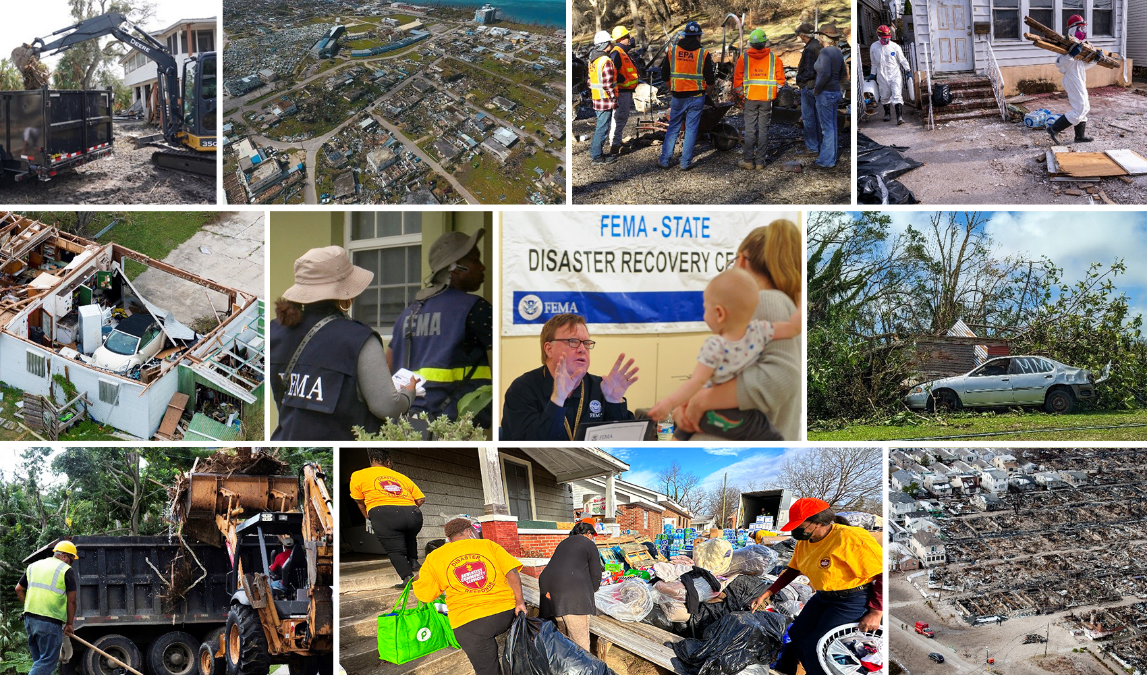
State, local and territorial governments, Tribal Nations, nonprofits and the emergency management community are encouraged to view and use FEMA’s National Disaster Recovery Framework. The revised framework includes feedback and recommendations from the public during a 30-day public comment period that ended in October 2024.
Key revisions focus on clarifying roles and responsibilities, detailing the federal recovery support function structure and its role in supporting local recovery goals, enhancing collaboration across the whole community and providing practical resources to assist in recovery planning efforts.
The updates incorporate feedback from Tribal Nations, territories, state and local partners, nonprofits and voluntary organizations. FEMA engaged business, industry and academic partners to gather lessons learned, best practices and other input to maximize the framework's usefulness.
The framework explains the federal government’s roles and responsibilities for organizing and deploying disaster recovery assistance. It also enhances effective collaboration among federal, state, local, Tribal Nations and territorial agencies while informing nongovernmental partners.
For more information, visit National Disaster Recovery Framework | FEMA.gov.
.

FEMA released the 2024 National Tribal Strategy Progress Report, which builds on our commitment to implementing FEMA’s 2022-2026 National Tribal Strategy. The report serves as a testament to ensuring we remain accountable to the Tribal Nations that played a pivotal role in shaping this strategy.
FEMA’s National Tribal Strategy redefines how FEMA can better meet the needs of Tribal Nations and tribal community members. It is a roadmap with directions for how we honor our treaty and trust responsibilities with Tribal Nations.
FEMA’s 2024 National Tribal Strategy Progress Report illustrates how the agency has engaged with Tribal Nations in the past year and improved our support to them before, during and after disasters. The progress report and FY 2024 FEMA Tribal Engagement Map are available on the FEMA Tribal Affairs Hub.
During 2024, the FEMA Administrator, Deputy Administrator, National Tribal Affairs Advocate and other senior leaders connected face-to-face with leadership from over 238 Tribal Nations. During activations for hurricanes Debby, Beryl, Francine, Helene and Milton, FEMA continued to enhance federal incident support capability to impacted Tribal Nations.
One important aspect of this work is FEMA’s update of the Tribal Disaster Declarations Pilot Guidance. Since its creation, the guidance has provided Tribal Nations with the long overdue tribal pathway to request their own presidential disaster declarations. The revised Tribal Declarations Interim Guidance, released on December 3, 2024, helps Tribal Nations better navigate pathways to receive a presidential disaster declaration and obtain assistance for tribal community members when they need it most.
FEMA held three government-to-government tribal consultations on the Individual Assistance reform rule and a series of tribal listening sessions and consultations to discuss updating its 2019 Tribal Consultation Policy. FEMA also invited Tribal Nations to participate in tribal consultations to gather formal input on revisions to the newly updated National Disaster Recovery Framework and hosted a six-hour tribal consultation on all FEMA grant programs.
Registration is open for the Center for Domestic Preparedness 10th annual Tribal Nations Training Week, which will be held April 26-May 3, 2025. The training is for state, local, Tribal Nation and territorial responders who work in an emergency response capacity and are affiliated with one or more Tribal Nations or the Indian Health Service. The event will feature courses in 10 separate tracks, including Cyber, Climate, Continuity of Operations, Tribal Curriculum, Executive, Funding/Grants, Exercise and three Healthcare tracks. To register, contact FEMA-tribalnationscdp@fema.dhs.gov. If you cannot attend in person, contact FEMA-tribalnationscdp@fema.dhs.gov to discuss virtual instructor-led courses being offered in May 2025.
In 2024, 375 students from 105 Tribal Nations attended Training Week, and FEMA seeks to increase participation for 2025. The training is fully funded for tribal emergency responders and includes roundtrip airfare, meals and lodging.
.
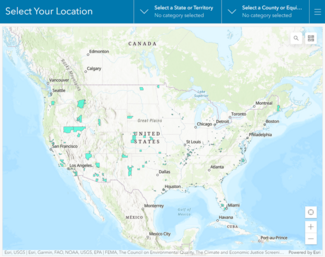
FEMA announced the designation of 275 census tracts in territories and on Tribal Nation lands as Community Disaster Resilience Zones. These zones will be eligible for increased federal support to become more resilient to natural hazards and extreme weather. Congress directed FEMA to designate these zones in the Community Disaster Resilience Zones Act of 2022, a piece of bipartisan legislation to help build resilience to natural hazards in communities most at risk due to climate change.
After initially designating 483 Community Disaster Resilience Zones on Sept. 6, 2023, for states and the District of Columbia, there are now 758 zones across the United States eligible for increased federal support. FEMA will continue the process of designating additional Community Disaster Resilience Zones in territories, states, the District of Columbia and on Tribal Nation lands in 2025.
View the full list online of state, territory and Tribal Nation designations.
FEMA took a collaborative approach to designating Community Disaster Resilience Zones for territories and Tribal Nations due to challenges with risk data and to allow these entities to use local knowledge and data sources to inform zone selection.
The Community Disaster Resilience Zones Act is intended to support resilience projects within or that primarily benefit a designated zone. The primary benefit of a designation is the potential for increased access to additional funding and technical assistance for resilience and mitigation projects, including an increased 90% federal cost share under the Building Resilient Infrastructure and Communities (BRIC) grant program.
Community Disaster Resilience Zones have been incorporated into different programs and initiatives across federal agencies, and numerous private sector organizations are driving targeted technical assistance to communities with designated zones.
FEMA Publishes Summary Report of the 2023 Request for Information Comments
In addition to announcing new designations in territories and on Tribal Nation lands, FEMA published a summary report of the comments received from the Community Disaster Resilience Zones and the National Risk Index Request for Information published in the Federal Register. The Request for Information was open for public comment for 60 days from May – July 2023.
FEMA is committed to using this feedback to help improve future designations and implementation across these six categories. The summary report is available on FEMA.gov. A link to the summary report, as well as a list of Community Disaster Resilience Zones, is available in the Federal Register.
|

The Department of the Interior and FEMA, in partnership with the White House Council on Environmental Quality, Office of Science and Technology Policy, are pleased to announce the release of Opportunities for Federal Support of Community-Driven Relocation and Community-Driven Relocation: Guide for Communities to Federal Programs and Resources. These two resources were produced by the federal interagency Community-Driven Relocation Subcommittee, co-led by the Interior Department and FEMA, with representation from 14 federal agencies and seven Executive Offices of the President.
The Opportunities for Federal Support of Community-Driven Relocation report provides an overview of the current landscape of community-driven relocation in the United States. The phrase “community-driven relocation” is deliberate—it describes a situation where a community decides it will move, in whole or in part, out of harm’s way. The report's intent is to collectively reinforce that it is essential for the consideration or implementation of planned relocation projects to be grounded in a community’s ability to define and determine their future.
The report identifies next steps for federal agencies in developing an all-of-government strategy for holistically supporting communities that are relocating or considering relocating. The report also seeks to highlight that the federal government must consider challenges that may exist in the areas that individuals are relocating to (i.e., receiving communities) to establish holistic support of community-driven relocation.
This is the first federal report that begins to lay out an approach for building an all-of-government strategy for considering all the needs of a community when choosing community-driven relocation – and it is the first time that climate and legacy pollution-based relocation have been considered together. This report represents the next step to advance collaborative interagency support of communities seeking to relocate out of harm’s way.
An additional resource, the Community-Driven Relocation: Guide for Communities to Federal Programs and Resources, was created as a tool for communities considering relocation to explore available federal resources. The guide includes details on programs, activities, and eligibility to help communities understand the range of opportunities that may be available to them.
To learn more, visit FACT SHEET: Biden-Harris Administration Announces New Actions and Historic Progress Supporting Tribal Nations and Native Communities Ahead of Fourth Annual White House Tribal Nations Summit | The White House.
|
.
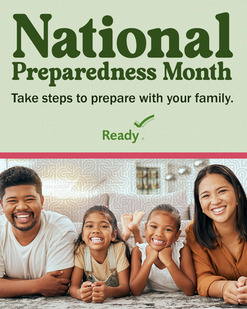
On Dec. 12, FEMA’s Ready Campaign launched new public service advertisements (PSAs) with the Ad Council, encouraging Asian American, Native Hawaiian and Pacific Islander (AANHPI) communities to prepare for future risks and disasters. Recognizing the unique barriers faced by AANHPI communities, the campaign urges everyone to start a conversation with their family and plan together for emergencies.
According to FEMA’s 2023 National Household Survey, nearly two-thirds of Asian Americans (65%) and over a half of Native Hawaiian or Pacific Islanders (58%) do not believe taking a step to prepare will make a difference in a disaster, compared to 50% of the American public. The new “Inner Circles” PSAs deepen FEMA’s focus on encouraging all audiences, especially AANHPI communities, to prioritize disaster preparedness with culturally competent resources and messaging.
The “Inner Circles” video PSAs were developed pro-bono for FEMA’s Ready Campaign by TDW+Co in collaboration with the Ad Council. Informed by extensive research and insights, the new PSAs build on the campaign’s National Preparedness Month efforts this past September, highlighting how individuals and families can prepare for disasters by taking simple steps to start a conversation and ensure their readiness. As part of the initiative, FEMA Administrator Criswell signed a Memorandum of Agreement formalizing the partnership with the National Council of Asian Pacific Americans (NCAPA) to underscore the historic effort. FEMA also conducted roundtables with AANHPI communities nationwide to gain insights on how to best support the communities’ preparedness needs.
In addition to the new PSAs, FEMA has developed new resources, including a conversation guide tailored for the AANHPI communities on Ready.gov/Start.
These resources help reduce barriers to preparedness and are available in several languages, including Arabic, Hawaiian, Japanese, Korean, Simplified Chinese, Tagalog, Traditional Chinese and Vietnamese.
This year’s AANHPI-focused PSAs continue the Ready Campaign’s community-centric efforts of the past three years, which previously engaged Black and African American, Latino and older adult communities, as well as the nation at-large in individual preparedness. Since its launch in 2003, the Ready Campaign has generated over 128 million visitors to Ready.gov, providing disaster preparation information for individuals, families and communities.
This round of creative work is the latest in FEMA and the Ad Council’s 21-year partnership to educate communities about disasters and emergency preparedness. For more information and to get started on your emergency plan, visit Ready.gov/Start.
|

FEMA will host a series of listening sessions through the agency's Radiological Emergency Preparedness Program. The session will gather feedback on existing exercise scenario guidance found in the 2023 Radiological Emergency Preparedness (REP) Program Manual. The sessions will allow state, local, Tribal Nations, territorial, industry and federal stakeholders the opportunity to provide feedback on the challenges presented in implementing REP exercise scenarios.
FEMA will seek feedback on potential improvements to REP scenario guidance. Registration links are listed below. You can also find these sessions listed on the FEMA Events page. Once registered, you will receive a meeting invitation with the link to join.
REP Scenario Guidance Listening Session #1
-
Date: Thursday, Jan. 9, 2025
-
Time: 1-2 p.m. ET
-
Location: Zoom Register Here
REP Scenario Guidance Listening Session #2
-
Date: Thursday, Jan. 16, 2025
-
Time: 1-2 p.m. ET
-
Location: Zoom Register Here
REP Scenario Guidance Listening Session #3
-
Date: Thursday, Jan. 23, 2025
-
Time: 1-2 p.m. ET
-
Location: MS Teams Register Here
REP Scenario Guidance Listening Session #4
-
Date: Thursday, Feb. 6, 2025
-
Time: 1-2 p.m. ET
-
Location: MS Teams Register Here
Some of the resources FEMA may reference during the sessions include:
|
.
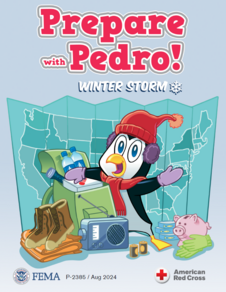
As we face the cold weather this winter season, are the children in your community ready and prepared? Let Pedro the penguin show them how to get prepared!
The Prepare with Pedro Winter Storm Storybook is the latest in a series of storybook releases by FEMA and the American Red Cross that feature Pedro as he goes on adventures and learns how to take action in an emergency.
It is released in English and Spanish for children in kindergarten through second graders. This storybook follows Pedro the preparedness penguin as he navigates what to do before, during and after a winter storm.
You can download this storybook and others for free by visiting Prepare with Pedro | Ready.gov.
|
.

Over the last few weeks, cold weather has blanketed much of the country. Want to break the ice but not the bank? Discover 10 affordable ways to stay warm indoors and outdoors by visiting FEMA.gov.
.

As we approach the end of the year, FEMA extends its appreciation for your support to our collective mission of helping people before, during and after disasters.
During the holiday season, FEMA's Bulletin will be on a brief hiatus. Please note that the FEMA Bulletin will not be published on Dec. 24 and Dec. 31. The FEMA Bulletin will resume on Jan. 7, bringing you a new year filled with updates and resources for emergency management and preparedness.
In the meantime, visit FEMA.gov for any immediate information or updates.
FEMA Taking Applications for $291.6M in Assistance to Firefighters Grants
The application period is underway for Fiscal Year 2024 Assistance to Firefighters Grants (AFG), which will award $291.6 million to enhance the safety of the public and firefighters nationwide against fire-related deaths and hazards. This year’s AFG Notice of Funding Opportunity was released on Nov. 6. The application period will close at 5 p.m. ET, Friday, Dec. 20.
The AFG funding notice and technical assistance documents are available at Grants.gov and on FEMA.gov. Additional information about upcoming webinars to assist applicants is available on FEMA.gov.
....................................................................................................................................................
Hurricane Helene and Milton Individual Assistance Deadline Extended to Jan. 7 for Most States
Homeowners and renters in Florida, Georgia, North Carolina, South Carolina and Tennessee affected by hurricanes Helene and Milton can apply for federal disaster assistance until 11:59 p.m. ET, Tuesday, Jan. 7, 2025. FEMA provides financial assistance for displacement, basic home repairs, personal property losses and other uninsured or underinsured disaster-caused expenses.
Homeowners and renters are encouraged to apply online at DisasterAssistance.gov or by using the FEMA App. You may also apply by phone at 800-621-3362. Lines are open every day and help is available in most languages. If you use a relay service, captioned telephone or other service, give FEMA your number for that service. For an accessible video on how to apply for assistance, go to FEMA Accessible: Applying for Individual Assistance - YouTube.
If you had damage from Hurricane Helene and Hurricane Milton, you will need to apply separately for both disasters and provide the dates of your damage for each.
....................................................................................................................................................
$210M in Additional Funds Available to Protect Faith-based and Nonprofit Organizations
The Department of Homeland Security (DHS), through FEMA, is accepting applications for $210 million in Nonprofit Security Grant Program (NSGP) funds as the second tranche of additional funding that the Biden-Harris Administration secured to protect faith-based institutions and nonprofit organizations against targeted attacks.
The Notice of Funding Opportunity was published on Oct. 28. Completed applications must be submitted in the FEMA GO system no later than 5 p.m. ET on Jan. 24, 2025.
Supporting materials for stakeholders are available on the Nonprofit Security Grant Program | FEMA.gov. All application materials are also posted on Grants.gov. Eligible applicants should submit their application through FEMA GO. Applicants needing technical support with the FEMA GO system should contact FEMAGO@fema.dhs.gov or (877) 585-3242, Monday-Friday from 9 a.m. - 6 p.m. ET.
....................................................................................................................................................
|


