|
Hurricane Debby, Hurricane Helene and Hurricane Milton have impacted communities across the Southeast. As recovery efforts are underway FEMA is holding a webinar on the available recovery resources.
This webinar will provide valuable information intended to empower community organizations serving those affected by Hurricanes Helene and Milton with the knowledge and resources needed to navigate FEMA's disaster recovery process. Individuals and communities recover faster from disasters through whole of community efforts in collaboration with community organizations such as yours.
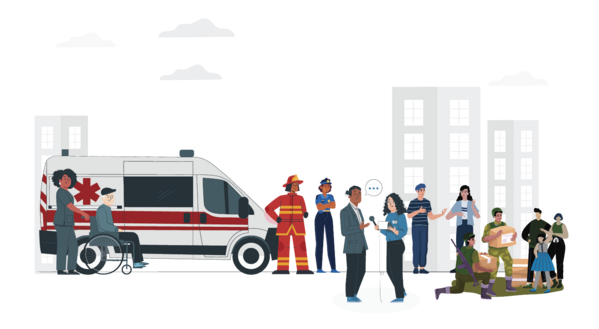
Please join other community organizations throughout the Southeast to learn more about FEMA resources and how you can share this information to help individuals, families, businesses and organizations in your community recover. Your participation will enrich the discussion, help strengthen community partnerships and ensure survivors receive accurate information and resources needed to jumpstart their recovery. Please share this invitation with community organizations that may also benefit from this information.
Webinar Details:
During this session, you will have the opportunity to:
- Learn about FEMA assistance available for your communities and how to access FEMA support.
- Learn how to address false and misleading information and avoid fraud.
- Gain best practices and resources to help you share important resources with people in your organization’s network.
- Ask questions and receive answers directly from subject matter experts.
We strive to host inclusive, accessible events that enable all individuals to engage and participate fully. The webinar will offer captioning in English and Spanish, Spanish interpretation and ASL interpretation.
For more information about this webinar, visit FEMA.gov.
On Dec. 4 and 5, FEMA will host the Civil Rights Summit 5.0: Gender Based-Violence in Disasters.
The summit will focus on gender-based violence and how it is prevented and addressed in emergency management, disaster response and recovery. FEMA leaders, national and local civil rights organizations and community leaders will discuss gender-based violence in emergency management. They will explore how gender-based violence intersects with other forms of discrimination and address the unique needs and vulnerabilities of victims and survivors of gender-based violence before, during and after disasters.
The summit, hosted by FEMA’s Office of Civil Rights, will build upon conversations from previous Civil Rights Summits, which focused on environmental justice, accessibility and the Stafford Act’s requirement that disaster “relief and assistance activities shall be accomplished in an equitable and impartial manner.” The 2024 summit will help to educate and support emergency managers and foster dialogue and partnerships through engagement with the public, federal, state, local, Tribal Nations and territorial partners and community allies and organizations. Presentations and discussions will allow participants to learn more about FEMA’s programs and services.
Join the summit discussion by registering in advance on FEMA.gov. For more information on the 2024 summit, the agenda and presenter bios, visit FEMA Civil Rights Summit 5.0: Gender-Based Violence in Disasters.
Únase a la Quinta Cumbre de Derechos Civiles de FEMA
Los días 4 y 5 de diciembre, FEMA celebrará la Quinta Cumbre de Derechos Civiles: Violencia de Género en los Desastres.
La cumbre se centrará en la violencia de género y en cómo se previene, aborda y prioriza en el manejo de emergencias, la respuesta por desastre y la recuperación. Dirigentes de FEMA, organizaciones nacionales y locales de derechos civiles y líderes comunitarios conversarán sobre la violencia de género en el manejo de emergencias. Explorarán cómo la violencia de género se entrecruza con otras formas de discriminación y abordarán las necesidades y vulnerabilidades únicas de las víctimas y sobrevivientes de la violencia de género antes, durante y después de los desastres.
La cumbre, organizada por la Oficina de Derechos Civiles de FEMA, se basará en las conversaciones mantenidas cumbres anteriores sobre derechos civiles, que se centraron en la justicia ambiental, la accesibilidad y el requisito de la Ley Stafford de que “las actividades de ayuda y asistencia por desastre se lleven a cabo de manera equitativa e imparcial". La cumbre de 2024 contribuirá a educar y apoyar a los funcionarios de manejo de emergencias y fomentar el diálogo y las alianzas a través de la participación del público, los colaboradores federales, estatales, locales, de las naciones tribales y territoriales, y los aliados y organizaciones de la comunidad. Las presentaciones y diálogos permitirán a los participantes conocer mejor los programas y servicios de FEMA.
Únase al diálogo de la cumbre inscribiéndose aquí con antelación. Para obtener más información sobre la cumbre de 2024, el programa y las biografías de los oradores, visite la Quinta Cumbre de Derechos Civiles: Violencia de Género en los Desastres.
.
FEMA’s Office of Business, Industry and Infrastructure Integration and the U.S. Small Business Administration’s Office of Disaster Response and Resilience are hosting the fourth session of the Small Business Disaster Preparedness Series, Disaster Response: Small Business Resources, Insurance and Claims, from 1-2:30 p.m. ET on Tuesday, Dec. 10.
This quarter’s session will focus on insurance and claims resources for small businesses interested in or actively participating in the disaster claims process after a disaster. Session presenters will also share information and resources on the insurance life cycle, including making initial insurance claims and finding and applying for additional federal resources.
Sign up for this webinar by visiting FEMA.gov.
As of Nov. 7, more than 55,000 flood loss claims have been reported to the National Flood Insurance Program (NFIP) from Hurricane Helene. The program has paid approximately $830 million in claim payments to policyholders.
FEMA has projected Hurricane Helene could potentially generate National Flood Insurance Program claims losses between $3.5 to $7 billion (initial estimate), including loss adjustment expenses. The losses include flood insurance claims received from six states, with the majority of claims coming from Florida.
The agency based the initial estimate on several data points. These include policy information, daily reports of claims and payments made, significant historical events patterns of reported claims and payments, current economic conditions and claim adjuster observations. As NFIP flood insurance claims are submitted for payment, these are paid from the National Flood Insurance Fund and Reserve Fund. The program also has the authority to borrow an additional $9.9 billion in funds.
In addition, FEMA currently holds $1.92 billion of reinsurance coverage for Fiscal Year 2024. If a covered flood event results in NFIP claim payouts that equal or exceed an agreed-upon amount, then reinsurers agree to pay a certain percentage of NFIP flood risk.
FEMA’s reinsurance program includes an annual traditional reinsurance program with a $7 billion or more trigger for a percentage of coverage and three capital market placements that provide coverage beginning at $6.52 billion in received claims payments. To recoup the full amount of reinsurance coverage, the National Flood Insurance Program must incur at least $11.5 billion in flood insurance claims losses from Hurricane Helene.
The NFIP reinsurance program helps FEMA manage the future exposure of the NFIP through the transfer of NFIP flood risk to private reinsurance companies and through a transformer reinsurer to private capital market investors. By securing reinsurance at a fair and reasonable cost, FEMA has an additional method to fund payments of flood claims after catastrophic flood events.
Insurance providers, such as the NFIP, pay premiums to reinsurers. In exchange, reinsurers provide coverage for losses incurred up to a specified amount for covered events like Hurricane Helene. While Hurricane Helene is a significant flood insurance event that may trigger reinsurance payments, it will take many months for FEMA to determine if the NFIP is able to collect under its reinsurance agreements.
For additional information on FEMA’s National Flood Insurance Program, visit FEMA.gov.
|
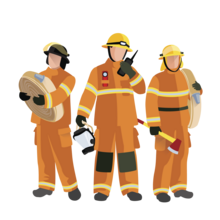
The application period is underway for Fiscal Year 2024 Assistance to Firefighters Grants (AFG), which will award $291.6 million to enhance the safety of the public and firefighters nationwide against fire-related deaths and hazards.
During 2023, there were nearly 2,300 home fire fatalities in the United States, including 85 firefighters. To help keep communities and firefighters safer, FEMA is announcing new funding for critically needed resources to better equip and train emergency response personnel, enhance operational efficiencies, foster communications interoperability between emergency responders and support community risk reduction and resilience. In addition, these grants will provide direct financial assistance to eligible fire departments, nonaffiliated emergency medical service organizations, and state fire training academies.
The application period will close at 5 p.m. ET, Friday, Dec. 20.
Since fiscal year 2001, the AFG has awarded approximately $8.7 billion in grants to provide critically needed resources to help keep firefighters and the public safe from fires and fire-related hazards. Although the available funding for FY 2024 AFG is $291.6 million, the total amount appropriated under the Department of Homeland Security Appropriations Act, 2024, Pub. L. No. 118-47, Title III, Protection, Preparedness, Response and Recovery (2024 DHS Appropriations Act) is $324 million.
However, to meet the statutory requirements of the Federal Fire Prevention and Control Act, $32.4 million (10%) of these “available grant funds” will be awarded later this year under the FY 2024 Fire Prevention and Safety program.
This year’s AFG Notice of Funding Opportunity was released on Nov. 6. The AFG funding notice and technical assistance documents are available at Grants.gov and on the FEMA.gov. Additional information about upcoming webinars to assist applicants is available on the FEMA.gov.
|
The Department of Homeland Security (DHS), through FEMA, is accepting applications for $210 million in Nonprofit Security Grant Program (NSGP) funds as the second tranche of additional funding that the Biden-Harris Administration secured to protect faith-based institutions and nonprofit organizations against targeted attacks.
The $210 million in additional funds is a portion of the $390 million that was included in the fiscal year 2024 National Security Supplemental, a key priority of the Administration as it continues to intensify its efforts to combat the dramatic increase in hate crimes and other forms of targeted violence against faith-based institutions and nonprofit organizations. The first tranche was made available in June 2024. In total for fiscal year 2024, the Administration has secured $664 million for the NSGP, more than double last year’s $305 million appropriation.
In light of the changing threat environment, the NSGP has become an even more important resource to faith-based institutions and nonprofit organizations to strengthen their security posture. In 2024, more than 3,200 faith-based and other nonprofit organizations have been awarded over $454 million in NSGP funding to purchase security cameras, additional warning and alert systems, gates and lighting, access control systems and training programs for staff.
The distribution of grant funds is one element of DHS’s multi-pronged strategy to protect communities and their institutions from targeted violence. DHS regularly communicates with over 2,000 state, local, tribal, territorial and campus law enforcement officials and with the leadership of all national-level law enforcement associations.
A State Administrative Agency (SAA) is the only entity eligible to apply for NSGP-NSS funds. The SAA applies to FEMA on behalf of eligible nonprofit organizations (subapplicants) that are at high risk of terrorist or other extremist attacks. A consortium of nonprofit organizations is also an eligible subapplicant. A consortium application is an opportunity for an eligible nonprofit organization to act as a lead and apply for funding on behalf of itself and any number of other participating NSGP-NSS eligible nonprofit organizations.
The Notice of Funding Opportunity was published on Oct. 28. Supporting materials for stakeholders are available on the NSGP webpage: Nonprofit Security Grant Program | FEMA.gov.
Completed applications must be submitted in the FEMA GO system no later than 5 p.m. ET on Jan. 24, 2025.
All application materials are also posted on Grants.gov. Eligible applicants should submit their application through FEMA GO. Applicants needing technical support with the FEMA GO system should contact FEMAGO@fema.dhs.gov or (877) 585-3242, Monday-Friday from 9 a.m. - 6 p.m. ET.
|
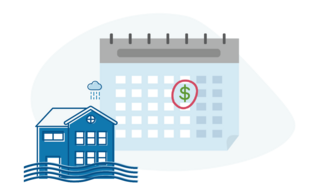
FEMA published a final rule, “National Flood Insurance Program Installment Payment Plan," to the Federal Register.
Consistent with ongoing efforts to improve the customer experience, build policyholder trust and reduce disaster suffering, FEMA is enabling National Flood Insurance Program (NFIP) policyholders the option of paying their flood insurance premiums in monthly installments rather than annually.
For over 55 years, the NFIP had always required payment in full at the time of application or renewal. Installment payments will make it easier for NFIP policyholders to purchase a flood insurance policy because they will no longer have to have the full premium available to spend all at once.
With the publication of this rule, FEMA can now work with the insurance companies that offer flood insurance through the NFIP to ensure an effective rollout of this new option for policyholders. Now the Federal Register is published, FEMA is taking administrative steps and working through operational changes with insurance companies to implement this change.
Providing an option for monthly installments will expand access to flood insurance to meet the evolving needs of the nation. The option to pay in installments may also increase policyholders’ budgetary flexibility by alleviating cash flow pressure.
FEMA and the insurance companies offering coverage under the NFIP will work together to notify current and future policyholders of this new approach to making premium payments and continue to find ways to improve the experience for NFIP customers.
To view the notice, visit FederalRegister.gov.
|
.

(From left) Federal Communications Commission (FCC) Office of Native Affairs and Policy Chief Bambi Kraus, FCC Deputy Chief for Cybersecurity and Communications Reliability James Wiley, Mandan, Hidatsa and Ariana Nation Co-Chair Emmalene Sitting Bear, FEMA Tribal Affairs Advocate Kelbie Kennedy, Rincon Band of Luiseño Indians Liaison Supervisor Joshua Keliikoa, IPAWS Director Manny Centeno, IPAWS Program Analyst Pamela Holstein-Wallace and FEMA Tribal Affairs Specialist Yawna Allen.
Manny Centeno, director of FEMA’s Integrated Public Alert and Warning System (IPAWS), hosted an IPAWS Tribal Alerting panel at the 2024 annual conference of the National Congress of American Indians (NCAI) in Las Vegas, Nevada.
The panel, “Operation Silent Scream: Issuing Public Alerts Across Indian Country,” was moderated on Oct. 31 by FEMA National Tribal Advocate Kelbie Kennedy. IPAWS is FEMA's national system for local alerting that provides authenticated emergency and life-saving information to the public through mobile phones using Wireless Emergency Alerts, radio and television via the Emergency Alert System, and on the National Oceanic and Atmospheric Administration's Weather Radio. With more than 1,900 Alerting Authorities, 15 of them are Tribal Nations.
The National Congress of American Indians is the oldest, largest and most representative American Indian and Alaska Native organization serving the broad interests of tribal governments and communities. The panel included two Tribal Alerting Authorities (Mandan, Hidatsa and Ariana Nation, and the Rincon Band of Luiseno Indians) to discuss their experiences issuing alerts and why it is important to get quick and timely information out to the public in an emergency.
The Federal Communications Commission (FCC) was on hand to share information on the new Missing and Endangered Persons code that the FCC approved this summer. The new code to be sent through IPAWS aims to raise awareness about the national crisis regarding violence, murder and the disproportionate risk faced by American Indians and Alaska Natives. This initiative is expected to be especially beneficial for Tribal Nation communities, where individuals are at greater risk of becoming victims.
.

Preparedness starts with knowledge, and there’s no better time to start building that knowledge than with our youth. FEMA Region 9 is excited to launch our Youth Preparedness Toolkit, a resource designed to engage young people across elementary, junior high and high school levels in understanding and practicing emergency readiness.
Our Toolkit uses a Learn-Practice-Share model that connects age-appropriate activities with FEMA Region 9's most significant hazards—like earthquakes, wildfires and floods—and empowers young people to take meaningful preparedness actions. Whether through games, community projects or leadership roles, each activity encourages youth to develop safety skills, think creatively and gain confidence in their ability to respond to emergencies.
Activities by Age Group:
-
Elementary Students can dive into fun, hands-on projects like creating personalized emergency kits with the Prepare with Pedro and Rocket’s Emergency Preparedness programs, introducing them to safety basics.
-
Junior High Students take a step further, engaging in community-focused activities such as Teen CERT, creating Family Communication Plans and even preparing emergency kits for pets.
-
High School Students are encouraged to take on leadership through the Youth Preparedness Council, leading social media campaigns and organizing school-based preparedness clubs.
- For youth leaders, our Resource Hub offers a range of tools on school safety, inclusion, and emergency planning, making it easier to lead preparedness initiatives and foster a community of safety-conscious youth.
Our Toolkit isn’t just about responding to disasters; it’s about building resilience and inspiring young leaders to take safety into their own hands. Ready to get started? Visit our website to explore the toolkit and bring preparedness to life in your community by visiting, FEMA.gov.
.

FEMA, the U.S. Small Business Administration and the U.S. Department of Agriculture have created a one-stop-shop resource with information about multiple federal support that is available to assist local businesses with their recovery. The guide—tailored for each affected state—is available on FEMA’s website at the links below:
A full list of more than 70 resources from 17 federal agencies is available on disasterassistance.gov.
|
|


