|
The Biden-Harris Administration has approved more than $1.5 billion in direct assistance to hurricane Helene and Milton survivors. These funds help survivors with housing repairs, personal property replacement and other essential recovery efforts. Additionally, over $1.2 billion has been approved for debris removal and emergency protective measures necessary to save lives, protect public health and prevent further damage to public and private property.
FEMA personnel are supporting communities across the Southeast, coordinating with local officials, conducting damage assessments and helping individuals apply for disaster assistance programs. More than 1,400 FEMA Disaster Survivor Assistance team members are in affected neighborhoods, helping survivors apply for assistance and connecting them with additional state, local, federal and voluntary agency resources.
Disaster Recovery Centers can provide survivors with in-person help with their applications. There are currently more than 80 Disaster Recovery Centers open across states affected by Helene and Milton where survivors can speak with representatives from the state, FEMA and the U.S. Small Business Administration that can assist them with their recovery and applying for assistance. Survivors can find their closest center at FEMA.gov/DRC.
President Biden declared major disaster declarations for six states affected by Helene—Florida, Georgia, North Carolina, South Carolina, Tennessee and Virginia—and Florida for Milton. FEMA encourages Helene and Milton survivors to apply for disaster assistance online as this remains the quickest way to start your recovery. Individuals can apply for federal assistance by:
Lines are open every day and help is available in most languages. If you choose to apply by phone, please understand calls to FEMA’s helpline are experiencing delays because of the increased volume due to multiple recent disasters. If you use a relay service, such as Video Relay Service (VRS), captioned telephone or other service, give FEMA your number for that service. To view an accessible video on how to apply, visit Three Ways to Apply for FEMA Disaster Assistance - YouTube.
Applicants may be eligible for Transitional Sheltering Assistance, which provides survivors with a safe, temporary place to stay, like a hotel or motel, until they can find a short or longer-term housing solution. To date, more than 30,400 households have checked into FEMA provided hotels.
For the latest updates on the Hurricane Helene and Milton response, please visit Press Releases | FEMA.gov or our disaster pages at Hurricane Helene and Hurricane Milton. Additional information is available on our Hurricane Rumor Response webpage.
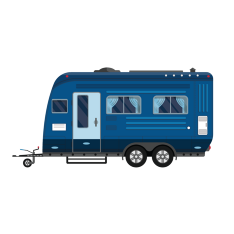
At the request of the State of Florida, FEMA approved Direct Temporary Housing Assistance, which may be provided to eligible applicants to meet their temporary housing needs.
FEMA is providing three forms of Direct Temporary Housing Assistance to eligible applicants in 13 counties: Citrus, Columbia, Dixie, Hamilton, Hernando, Lafayette, Levy, Madison, Okeechobee, Pasco, Pinellas, Suwannee and Taylor.
-
Multi-Family Lease and Repair allows FEMA to enter into lease agreements with owners of multi-family rental properties and to make repairs or improvements to those properties to provide temporary housing to applicants.
-
Direct Lease utilizes existing ready-for-occupancy residential property leased for use as temporary housing for eligible applicants, and, if necessary, these units can be modified or improved to provide reasonable accommodations for eligible applicants and any household members with a disability and others with access and functional needs.
-
Transportable Temporary Housing Units are readily fabricated dwellings such as travel trailers or mobile homes. These dwellings are purchased by FEMA and provided to eligible applicants for use as temporary housing for a limited period.
Applicants do not need to apply for direct temporary housing. Applicants will be notified by FEMA of their eligibility.
Direct temporary housing takes significant time to implement and is not an immediate solution for a survivor's interim and longer-term housing needs. The process involves ordering, transporting, site preparation, installation, inspection, permitting and utility hookup, among other steps.
Applicants who are displaced from their homes and currently staying in hotels may continue to participate in the state’s non-congregate sheltering program and FEMA’s Transitional Sheltering Assistance for immediate housing needs. FEMA also is providing displacement assistance, rental assistance and other financial help for those who cannot remain in their homes. These options remain FEMA’s primary means of helping survivors.
|
Homeowners and renters in North Carolina may be eligible for FEMA Rental Assistance if they cannot live in their homes because of damage due to Tropical Storm Helene.
FEMA Rental Assistance is a grant to provide survivors with a temporary place to live while they repair or rebuild their home. This money can be used to rent a place to live, such as a house, apartment, hotel room, RV or other options while your home is repaired, or while you look for a new place to live.
Rental Assistance can cover:
- Temporary housing while you are unable to live in your permanent residence.
- Rent, security deposits and the cost of essential utilities (gas, water and electric).
- Short-term hotel stays while you look for a place to rent.
If you are deemed eligible for FEMA Rental Assistance, the initial grant is for two months. The first step in receiving any assistance from FEMA is to apply for federal assistance. You can do this in several ways: Online at DisasterAssistance.gov, via the FEMA App or by calling 800-621-3362. If you use a relay service, such as Video Relay Service (VRS), captioned telephone or other service, give FEMA your number for that service.
|
The deadline for North Carolinians in 39 counties to apply for FEMA Individual Assistance after Tropical Storm Helene has been extended to Jan. 7, 2025.
Homeowners and renters in the following counties may be eligible for FEMA financial assistance for serious needs, displacement, basic home repairs, personal property losses and other uninsured or underinsured disaster-caused expenses: Alexander, Alleghany, Ashe, Avery, Buncombe, Burke, Cabarrus, Caldwell, Catawba, Cherokee, Clay, Cleveland, Forsyth, Gaston, Graham, Haywood, Henderson, Iredell, Jackson, Lee, Lincoln, Macon, Madison, McDowell, Mecklenburg, Mitchell, Nash, Polk, Rowan, Rutherford, Stanly, Surry, Swain, Transylvania, Union, Watauga, Wilkes, Yadkin and Yancey counties, along with the Eastern Band of Cherokee Indians of North Carolina, with losses from Tropical Storm Helene.
The quickest way to apply is to go online to DisasterAssistance.gov. You can also apply using the FEMA App for mobile devices or calling the toll-free number at 800-621-3362.
|
|
At the request of the state of Georgia, homeowners and renters in counties approved for individual assistance due to Hurricane Helene or Tropical Storm Debby now have until Jan. 7, 2025, to apply for FEMA assistance.
Homeowners and renters with damage and losses related to Tropical Storm Debby whose primary home is in Bryan, Bulloch, Chatham, Effingham, Evans, Liberty, Long and Screven counties may be eligible for FEMA financial assistance for serious needs, displacement, basic home repairs, personal property losses and other uninsured or underinsured disaster-caused expenses.
Likewise, homeowners and renters with damage and losses related to Hurricane Helene whose primary home is in Appling, Atkinson, Bacon, Ben Hill, Berrien, Brantley, Brooks, Bryan, Bulloch, Burke, Butts, Camden, Candler, Charlton, Chatham, Clinch, Coffee, Colquitt, Columbia, Cook, Dodge, Echols, Effingham, Elbert, Emanuel, Evans, Fulton, Glascock, Glynn, Hancock, Irwin, Jeff Davis, Jefferson, Jenkins, Johnson, Lanier, Laurens, Liberty, Lincoln, Long, Lowndes, McDuffie, McIntosh, Montgomery, Newton, Pierce, Rabun, Richmond, Screven, Stephens, Taliaferro, Tattnall, Telfair, Thomas, Tift, Toombs, Treutlen, Ware, Warren, Washington, Wayne Wheeler, and Wilkes counties may be eligible for FEMA financial assistance for serious needs, displacement, basic home repairs, personal property losses and other uninsured or underinsured disaster-caused expenses.
People with damage related to Hurricane Helene and/or Tropical Storm Debby, damage Aug. 4-22, must apply separately for assistance for each disaster, but only once for each disaster. People with homeowners, renters or flood insurance should file a claim as soon as possible. FEMA cannot duplicate benefits for losses covered by insurance. If an insurance policy does not cover all disaster expenses, people may be eligible for federal assistance.
The quickest way to apply is to go online to DisasterAssistance.gov. You can also apply using the FEMA App for mobile devices or calling the toll-free number at 800-621-3362.
|
.

Commonwealth, federal, local, and nonprofit agencies are coming together to hold Agricultural Recovery Resource Days, where staff from over 15 participating organizations share resources with farmers and agribusinesses impacted by Hurricane Helene in southwest Virginia.
Farmers, private forest owners and agribusiness owners can attend whichever event best fits their schedule and can drop in any time during the hours listed. For latest information, please visit: Hurricane Helene Virginia Agriculture Recovery Resource Days | FEMA.gov
The next Agriculture Recovery Resource Days will be held on:
Tuesday, Nov. 12 Details:
- Open from 9 a.m. – 6 p.m.
- Chilhowie Christian Church, 172 Apple Valley Road, Chilhowie, VA 24319
Thursday, Nov. 14 Details:
- Open from 8 a.m. – 5 p.m.
- Glamorgan Chapel, 183 Southmark Road SW, Wise, VA 24293
Visit FEMA.gov to see the following agencies who will be present at the Agriculture Recovery Resource Days to answer questions about grants, loans and other resources available for the agricultural community.
For information about commonwealth and federal resources for agribusinesses, see Help for Virginia Agribusinesses and Farmers Fact Sheet.
|

If you are making repairs to your home after Tropical Storm Debby or Hurricane Helene, you can get tips from FEMA to make your home safer and stronger.
FEMA Mitigation Specialists will be available to answer questions and offer home improvement tips along with proven methods to prevent or reduce damage from future disasters. They will also offer advice and techniques on rebuilding hazard-resistant homes.
Mitigation is an effort to reduce the loss of life and property damage by lessening the impact of a disaster. FEMA specialists will be available during the following dates and times:
-
Location: Home Depot: 1825 Norman Drive, Valdosta, GA 31601
-
Times: 8 a.m. to 6 p.m. ET
-
Dates: Daily except Wednesdays. Monday, Nov. 11 through Friday, Nov. 29 (except Wednesday, Nov. 13, 20 and 27). There will be no FEMA specialists available on Thanksgiving Day.
|
.
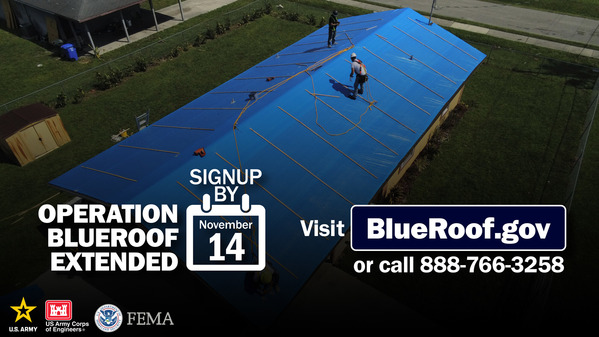
At the request of the State of Florida and FEMA, the U.S. Army Corps of Engineers (USACE) will continue to collect Right of Entry forms for Operation Blue Roof through Thursday, Nov. 14, extending the original deadline by nine days.
Homeowners impacted by Hurricane Milton can sign-up for this free service at BlueRoof.gov or by calling toll free 1-888-ROOF-BLU (1-888-766-3258).
The program provides a temporary solution that protects a homeowner’s property and allows them to remain in their home. Though commonly misreferred to as a “tarp,” this is fiber-reinforced, industrial-strength sheeting that is well-suited to protect storm-damaged roofs until homeowners can make permanent repairs.
The 25 Florida counties currently eligible for Operation Blue Roof are: Brevard, Citrus, Charlotte, DeSoto, Flagler, Hardee, Hernando, Highlands, Hillsborough, Indian River, Lake, Manatee, Martin, Okeechobee, Orange, Osceola, Palm Beach, Pasco, Pinellas, Polk, Sarasota, Seminole, St. Lucie, Sumter and Volusia Counties.
Operation Blue Roof is a priority mission managed by USACE and FEMA. Applying for the program requires a Right of Entry form, which allows USACE access to a homeowner’s property to their home's damage. The Right of Entry form also allows contracted crews to complete the Blue Roof installation.
Not all roof types qualify for the program. Check the BlueRoof.gov website for details.
Watch or share the Operation Blue Roof video in English or Spanish.
.
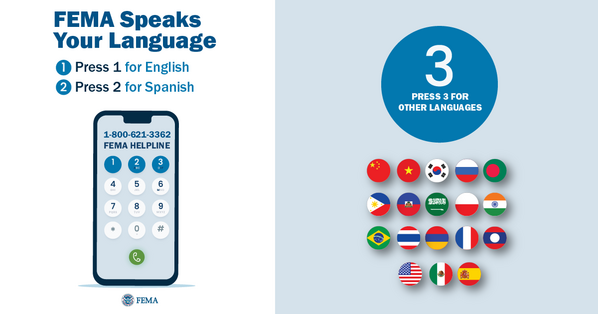
Don't let language be a barrier for you to apply for FEMA assistance. Regardless of language or accessibility needs, FEMA is here to help all eligible survivors of Hurricane Helene.
If you are a non-English speaker, you can receive assistance in your language when applying for FEMA disaster aid. Additionally, you can request assistive communication tools if needed.
Interpreters for many languages are available to those who call the FEMA Helpline. Multilingual phone operators are available to help non-English speaking survivors register for disaster aid and answer questions. After dialing the FEMA Helpline, 800-621-3362, callers should choose Option 2 for Spanish or Option 3 for other languages.
The Disaster Recovery Centers have a sign with the phrase “I Speak” in over 40 languages, which staff members can use to connect you with an interpreter who speaks your language.

Survivors can visit any Disaster Recovery Center to connect with American Sign Language interpreters by requesting one ahead of time or in real-time using Video Relay Services or Video Remote Interpreters. Assistive listening devices, amplified phones and caption phones for survivors who are deaf or hard of hearing are also available at the Disaster Recovery Centers.
Magnifying devices and printed information in Braille and large print are available for people who are blind or have low vision.
|
.
To help the communities affected by hurricanes Helene and Milton, FEMA implemented the agency’s local hire program. FEMA’s local hire program consists of residents who aid in the recovery of their community. These employees are hired into 120-day appointments that may be extended based on the needs of the disaster.
If you know someone who was impacted by the storms and wants to make a difference in their community, consider sharing the information below:
You can also sign up to receive USAJOBS email notifications for similar jobs.
To learn more about the local hire process, what you need to apply and resume tips, visit FEMA.gov.
.
FEMA, the U.S. Small Business Administration and the U.S. Department of Agriculture have created a one-stop-shop resource with information about multiple federal support that is available to assist local businesses with their recovery. The guide—tailored for each affected state—is available on FEMA’s website at the links below:
A full list of more than 70 resources from 17 federal agencies is available on disasterassistance.gov.
|

For many, the next few months will be a time for decorating, traveling and cooking. If you and your family have experienced a disaster, you may not feel the same excitement you usually do about the holiday season.
Coping with these emotions during the holiday season can be difficult. Visit FEMA.gov to read three things to keep in mind as you navigate new challenges over the coming weeks.
|
|


