FEMA is honored to announce the first six of 19 Congressional co-chairs for this year's National Preparedness Month. Their bipartisan collaboration and commitment to promoting preparedness across the nation and in their districts supports a nation more resilient to emergencies and disasters.
Visit to read quotes from all 19 Congressional co-chairs.
Congressional Support for National Preparedness Month
U.S. House of Representatives
-
Rep. Judy Chu (CA), Member, Ways and Means Committee. “From wildfires to hurricanes, extreme weather emergencies are increasing in frequency and devastating families and communities across the nation. With heightened risks due to climate change, it is critical for us to be prepared and know how to react so that we can keep our loved ones safe when every second counts. As Chair of the Congressional Asian Pacific American Caucus, I also know that seniors and communities of color are especially vulnerable to disasters, with Asian Americans, Native Hawaiians and Pacific Islanders facing challenges like language barriers, lack of culturally appropriate outreach, and rising sea levels for coastal communities. I look forward to serving as Co-Chair of the 2024 National Preparedness Month to increase awareness about disaster readiness and partnering with FEMA to make certain that all families, including AANHPI ones, know how to take protective measures before, during and after an emergency.”
-
Rep. Suzan DelBene (WA), Chair, Congressional Hazards Caucus. “Climate change is reshaping our planet, bringing with it more frequent and dangerous natural disasters like landslides, storms, and wildfires. National Preparedness Month provides a great opportunity to highlight safety and readiness initiatives, particularly for Asian American, Native Hawaiian and Pacific Islander communities who bear a disproportionate burden from climate change impacts across the Pacific Northwest and country. I will continue advocating for investments and programs to mitigate these impacts so we can protect lives, property, culture and communities.”
-
Rep. Lizzie Fletcher (TX), House Committee on Energy and Commerce, Subcommittee on Energy, Climate, and Grid Security. “Preparing ahead of a disaster can make all the difference in keeping our families and loved ones safe. I am glad to serve as Congressional Co-Chair and to work with FEMA this National Preparedness Month to help empower our Asian American, Native Hawaiian and Pacific Islander neighbors to be prepared and to ensure this important community has access to culturally competent preparedness materials to be more resilient. FEMA plays a critical role in disaster preparedness, response and recovery, and I look forward to assisting them with efforts across our communities.”
-
Resident Commissioner Jenniffer Gonzalez Colon (Puerto Rico), Vice Chair, House Committee on Natural Resources Indian and Insular Affairs. “Emergencies and disasters come in many forms. Over the past few years Puerto Rico has faced a series of hurricanes, earthquakes and floods, impacting different communities across the Island and teaching us some valuable lessons along the way. From wildfires in California, to tornadoes in Oklahoma, to blizzards in South Dakota, and typhoons in Guam, adequate preparedness is crucial both to withstand the immediate effect and to be able to quickly recover. As a member of the subcommittee with jurisdiction over FEMA I have called out the need not only for prompt action and execution of recovery after the disaster, but also of readiness to face the next situation more effectively. National Disaster Preparedness Month happens during the peak of Hurricane Season and is a time to emphasize the effort to support preparation and planning in the public and private sectors, using the tools and knowledge of federal, state and local responders to help our vulnerable residents. I am proud to be a Co-Chair of the 2024 National Disaster Preparedness Month with my colleagues from both sides of the aisle, to help reach out to the public with vital information on how to face disaster risks.”
-
Rep. Sam Graves Missouri (MO), Chairman, Committee on Transportation and Infrastructure in the U.S. House of Representatives. “National Preparedness Month is a reminder that disaster can strike anytime, anywhere, and it’s critical for families and businesses to have a plan in place to prepare for emergencies. Even a basic emergency plan can make a huge difference when disasters occur, and FEMA and other federal, state, and local officials have the resources available to put together such a plan. I encourage all Americans to take advantage of these resources and to help themselves and each other be better prepared throughout the year.”
-
Rep. Mark E. Green, M.D. (TN), Chairman, House Homeland Security Committee. “Nearly 20 years after the historic devastation from Hurricane Katrina, natural disasters still threaten the lives of Americans and our critical infrastructure. Just last year, we learned from the fires that tore through Lahaina, Hawaii, tragically taking more than 100 lives, that disaster can strike anywhere at any moment and if we are not prepared, the impacts can be catastrophic. Whether preparing for a wildfire, hurricane, earthquake, or even just excessive summer heat and unpredictable winter weather, the best thing anyone can do is develop a plan for their family, home, business and community. As a congressional co-chair for National Preparedness Month, I encourage every American to use FEMA’s preparedness resources to ensure they and their loved ones can stay safe when disaster strikes.”
FEMA has announced selections for a combined $150 million in capitalization grants to help communities reduce vulnerability to natural hazards. Funding through the Safeguarding Tomorrow Revolving Loan Fund Program will enable 10 states, a Tribal Nation and the District of Columbia to administer revolving loan funds that will help local governments carry out hazard mitigation projects and build community climate resilience. Through this program, states can direct loans to local governments to mitigate the effects of events like drought, intense heat, wildfires, floods and earthquakes.
The announcement aligns with the 2024 FEMA Year of Resilience theme to build capacity to withstand tomorrow’s hazards.
Today’s funding announcements were made possible by President Biden’s Bipartisan Infrastructure Law, which provides $500 million to fund the Safeguarding Tomorrow Revolving Loan Fund Program through 2026. Local governments have flexibility to use funding for projects to enhance natural hazard resilience for critical infrastructure such as roads, public housing, water treatment facilities, dams, levees and coastal structures. This includes improving flood control, implementing changes in zoning and land-use planning needed to adapt to a changing climate, and enforcing adoption of resilient building codes.
FEMA selected 12 applications for a combined total of $150 million in capitalization grants. These applicants will use funding to make direct loans to local governments through a revolving fund. Visit FEMA.gov for the applicants and amounts selected for this funding cycle. As these loans are paid back to the states, the funding can be used to finance additional mitigation projects, providing a sustainable local source of financing for protecting communities.
This is the second round of Safeguarding Tomorrow Revolving Loan Fund Program selections. In September 2023, FEMA announced seven states and the District of Columbia received a combined $50 million in capitalization grants.
The Safeguarding Tomorrow Revolving Loan Fund Program complements FEMA’s hazard mitigation grant portfolio to support mitigation projects at the local government level and increase the nation’s resilience to natural hazards and climate change.
In support of the Justice40 initiative, the Safeguarding Tomorrow Revolving Loan Fund Program aims that 40 percent of the overall benefits generated by entity loan funds flow to disadvantaged communities. The Safeguarding Tomorrow Revolving Loan Fund program encourages applicants to develop revolving loan funds that target these areas. How these goals will be achieved is determined by the applicant.
FEMA encourages applicants to develop revolving loan funds that target low-income geographic areas and underserved communities. Entities selected for awards will use funding based on their unique needs and priorities to become more resilient to natural hazards.
The agency will continue to offer technical assistance through webinars, office hours, on-demand videos and program support materials that are publicly available to assist and encourage existing and future applicants to participate and make use of this innovative program.
.
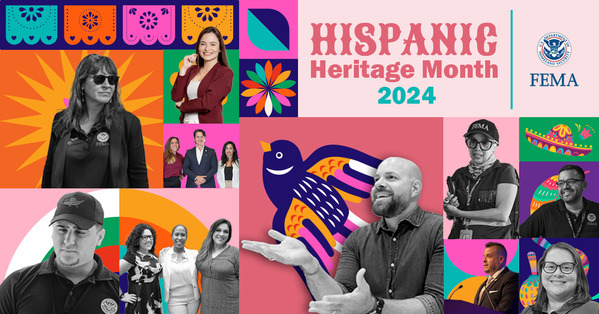
The celebration of Hispanic Heritage Month from Sept. 15 to Oct. 15 honors the rich cultural contributions and impact of Hispanic and Latino Americans in the United States. FEMA joins this celebration as a reminder that the fabric of our nation is strengthened by its diversity. The enduring legacy and ongoing contributions of Hispanic and Latino communities fosters a deeper understanding and appreciation of their cultural heritage and enhances our mission to help and serve all communities.
As members of this community, FEMA Associate Administrator for External Affairs Justin Ángel Knighten and the Senior Official Performing the Duties of the Associate Administrator for Resilience Victoria Salinas share their perspective on what Hispanic Heritage Month means to them and how it impacts their work at FEMA.
Read the full blog on FEMA.gov.
FEMA's Continuous Improvement Technical Assistance Program (CITAP) will host a webinar designed to support the development of state, local, Tribal Nation and territorial partners, non-governmental organizations and the private sector’s continuous improvement capabilities in emergency management. The webinar will be held from 3:30-4:30 p.m. ET, Monday, Sept. 23.
During this webinar, FEMA will:
- Provide an overview of resources available on the FEMA's PrepToolkit website.
- Equip participants with tools to establish a clear and consistent approach for continuous improvement activities in emergency management.
- Build organizational capabilities.
The webinar will include a tour of frequently used templates and resources as outlined in FEMA’s National Continuous Improvement Guidance including, the After-Action User Guide, Incident After-Action Report Template and Collection Analysis Template.
Advanced registration is available on FEMA.gov by clicking the "Register" button. If an issue arises while registering or logging in, please email FEMA-CITAP@fema.dhs.gov.
FEMA invites Tribal Nations and partners to discuss their overarching cybersecurity needs and provide feedback on their experience with the Tribal Cybersecurity Grant Program at a virtual tribal consultation about ways to improve the program from 3-5 p.m. ET, Sept. 24.
FEMA works with the Cybersecurity and Infrastructure Security Agency on the Tribal Cybersecurity Grant Program to provide grants for recipients to address cyber risk and threats to keep their systems and operations secure.
Register in advance by visiting Zoom (zoomgov.com).
FEMA invites state, local, Tribal Nation and territorial emergency managers to apply for the Emergency Manager Exchange (EMX) program. The agency wants your experience and expertise to help shape our programs and policies. The nomination period opened Aug. 26 and has been extended to Sept. 30.
During the exchange, non-federal emergency managers will work for six months in FEMA offices engaging with decision makers. FEMA staff will be sent to the emergency manager’s home office to help fill in gaps and learn about the participant’s emergency management work. Opportunities are available in FEMA’s Office of Response and Recovery and Office of Resilience.
Emergency Managers can apply for the EMX program by submitting their resume and a nomination letter from their home office. Requirement details and submission information can be found online at Emergency Manager Exchange | FEMA.gov. Submit the completed package to FEMA-EMX-Nominations@fema.dhs.gov.
Watch the EMX Program Open Enrollment (Fall 2024) to learn more!
On July 11, FEMA published the final rule to implement the Federal Flood Risk Management Standard fully, allowing the agency to consider the best available science in making projects and communities more resilient to increased flood conditions.
The new standard requires federally funded projects to be resilient to a higher level of flooding, considering current and future flood risk. This step is essential for mitigating future flood risk and benefiting communities by allowing them to avoid or recover from future disasters more efficiently and effectively.
Learn more by reading the full blog on FEMA.gov.
…………………………………………………………………………………………………………..
Attend Protecting Places of Worship National Weeks of Action Webinars
In support of National Preparedness Month, FEMA and the Department of Homeland Security dedicate national Weeks of Action. The DHS Center for Faith-Based and Neighborhood Partnerships coordinates the initiative in collaboration with participating agencies of the Protecting Places of Worship Interagency Policy Council. The Weeks of Action support implementation of the National Strategy for Countering Domestic Terrorism and the National Strategy to Counter Antisemitism.
The 2024 Weeks of Action include virtual and in-person workshops for the faith community and private sector. The DHS Center for Faith-Based and Neighborhood Partnerships is hosting two webinars:
-
Active Shooter Preparedness Webinar: Sept. 18 from 2 – 4 p.m. ET. To register, visit Zoom. For more information go to Active Assailant Security Resources | CISA.
-
DHS Protecting Places of Worship Weeks of Action- Fall Religious Observance Security Briefing Webinar: Sept. 19 from 2 – 3:15 p.m. ET. To register, visit Zoom. This event is closed to the press.
Register for these webinars by visiting, 2024 Protecting Places of Worship Weeks of Action Virtual Calendar of Events | FEMA.gov.
…………………………………………………………………………………………………………..
Radiological Emergency Preparedness Program Presents New Webinars During September
Throughout National Preparedness Month, FEMA will host new weekly lunch-and-learn webinars related to their issue area, community preparedness around commercial nuclear plants. Topics and registration links are listed below. You can also find these sessions listed on FEMA Technological Hazards Division Lunch and Learns. Once registered, you will receive a meeting invitation with the link to join.
Topic: Overview of the REP Evaluator Prep Guide
-
Date: Thursday, Sept. 19.
-
Time: 1-2 p.m. ET.
-
Location: MS Teams - Register Here.
Topic: Field Team Exposure Management for Commercial Nuclear Power Plant Incidents
-
Date: Thursday, Sept. 26.
-
Time: 1-2 p.m. ET.
-
Location: MS Teams - Register Here.
…………………………………………………………………………………………………………..
Save the Date and Register for Two FEMA Events During the Upcoming NYC Climate Week Sept. 23-27
Register to attend the Communicating Disaster Preparedness session on Tuesday, Sept. 23, at 2:30 p.m. ET. Presenters will discuss the Summit Report and share supporting examples of successful community engagement and risk communications for disaster preparedness. There is an open Questions and Answers session.
FEMA and EPA Co-Hosted Session: Climate Resilient Infrastructure: Building a More Sustainable Future from 9 a.m. to 4 p.m. ET on Tuesday, Sept. 24.
This one-day summit is an opportunity for states, local and territorial representatives and Tribal Nations to examine resilient infrastructure challenges and innovative solutions. Attendees will get to hear from FEMA and public, private and academic partners on a number of topics including nature-based solutions, net-zero energy projects, energy efficiency efforts, the use of salvaged materials and how each of these fit into nationwide resilience strategy.
Register today to attend this hybrid day-long session. Specific details and times about the session topics are available on the registration page. There is a capacity of 1,000 online participants.
…………………………………………………………………………………………………………..
Attend FEMA National Preparedness Webinars
Each September, FEMA celebrates National Preparedness Month, a time to focus on preparing the nation for emergencies and disasters. FEMA’s 2023 National Household Survey showed that 65% of Asian American, Native Hawaiian and Pacific Islander individuals (AANHPI) in the United States do not believe that taking steps to prepare will make a difference. To underscore this historic effort, Administrator Criswell signed a Memorandum of Agreement with the National Council of Asian Pacific Americans (NCAPA).
Later in September, FEMA will host the following webinars:
-
Engaging Communities and Communicating Preparedness Webinar: Monday, Sept. 23 at 2:30 p.m. ET: FEMA and partners will discuss messaging strategies for communicators to prepare their communities for existing and emerging hazards. Presenters will share takeaways from the Risk Communications, Crisis Communications & Community Engagement Summit report and set the stage for continued convenings. Summit learnings will be applied to examples of successful community engagement and risk communications for disaster preparedness. Speakers from multiple sectors will present on a project or initiative that highlights these concepts and participate in a facilitated panel discussion. Click on the link to register for the webinar.
-
Research Findings Webinar: Monday, Sept. 30 at 1:30 p.m. ET: The Ad Council and creative partners will present their research and findings on the AANHPI communities. During the webinar, they will highlight how they have used data to create impactful and relevant preparedness campaigns, share lessons learned from this year’s focus groups, as well as helpful tips for communicators. This webinar is for state, local, Tribal Nations and territorial communicators. Registration link to follow.
For preparedness messaging, graphics and resources for National Preparedness Month, visit Ready.gov/September.
…………………………………………………………………………………………………………..
Join FEMA and the Small Business Administration for an Informational Session on Disaster Readiness
FEMA and the U.S. Small Business Administration’s (SBA) are hosting the third virtual session of the Small Business Disaster Preparedness Series, Disaster Readiness: Small Business Continuity, from 1 - 2:30 p.m. ET on Tuesday, Sept. 24.
Subject matter experts will provide small business owners and representatives with resources and information on effectively developing business continuity plans and readying for natural and cybersecurity threats.
…………………………………………………………………………………………………………..
Attend FEMA Webinars on the New National Resilience Guidance
FEMA is proud to announce the release of the National Resilience Guidance. The guidance offers a unifying vision of resilience and the principles and steps all communities and organizations can take to increase their resilience in every sector and discipline.
FEMA will host a series of 60-minute webinar sessions in September and October to discuss the National Resilience Guidance and additional resources available to help new and experienced resilience practitioners improve their communities’ resilience.
Register for the following webinars:
If you require assistive accommodations to participate in these sessions, please email us at national-resilience@fema.dhs.gov. To view the document and learn more about the webinar sessions, please visit the FEMA website at National Resilience Guidance | FEMA.gov.
…………………………………………………………………………………………………………..
New Campaign Features Civil Rights Training for FEMA Grant Recipients
In August, FEMA launched the Recipients’ Awareness Campaign. During the trainings, FEMA’s Office of Civil Rights will directly engage a large audience of recipients and sub-recipients with information about relevant civil rights laws and executive orders that affect how they provide services to their beneficiaries. Participants will have the opportunity to ask questions about compliance with civil rights laws as they create or review their policies and programs. The next training session will be held from noon to 3 p.m. ET, Wednesday, Sept. 25, with others to follow throughout the year.
If you know a recipient or sub-recipient of FEMA’s financial assistance, please send them a message and encourage them to register to attend. For more information, contact FEMA-RecipientsAwarenessCampaign@fema.dhs.gov.
For information and to register for this webinar, visit FEMA Recipients’ Awareness Campaign: Civil Rights Training | FEMA.gov
Para obtener información e inscribirse en este seminario en línea, visite Campaña de concientización para receptores de FEMA: Adiestramiento sobre derechos civiles | FEMA.gov.
…………………………………………………………………………………………………………..
FEMA Extends National Floodplain Administrator Training Assessment Survey to Sept. 30
For the first time in more than 15 years, FEMA is conducting a National Floodplain Administrator Needs Assessment survey of the nation’s floodplain administrators in more than 22,600 communities that participate in the National Flood Insurance Program.
We want to hear from the local officials who help protect their communities and retain existing floodplain administrators. The survey is available in English and Spanish. The survey will close on Monday, Sept. 30.
It takes approximately 20-30 minutes to complete the survey. It is primarily in “checkbox” format to choose from multiple answers. There are a few open-ended questions to provide specific thoughts as well.
Many of the questions seek to learn more about the capacity challenges that under-resourced local governments face and the training impacts this has on floodplain administrators. The lack of training resources may be a contributor to high turnover rates for these positions.
If you have any questions about the survey or wish to take a Spanish-language version of the survey, please contact fema-fpmtraining@fema.dhs.gov.
…………………………………………………………………………………………………………..
Register for the Great ShakeOut!
Earthquakes can happen anywhere with little to no warning. Do you know how to keep your family, employees or stakeholders safe? Knowing what to do before a big earthquake can determine how well you survive and recover. Join FEMA in the world's largest earthquake drill on Oct. 17!
Register today so that you or your organization will:
- Be counted in the largest-ever earthquake drill in the world!
- Be listed with other participants in your area, if desired.
- Set an example that motivates others to participate and prepare.
- Get updates with ShakeOut news and preparedness tips.
- Have peace of mind that you, your family, your co-workers and millions of others will be better prepared to survive and recover quickly from the next big earthquake!
Get ready to DROP, COVER and HOLD ON. Spread the word! Please ask friends and family to text SHAKEOUT to 43362. Visit Earthquakes | Ready.gov to learn more about how to stay safe before, during and after an earthquake.
…………………………………………………………………………………………………………..
Deadline Extended for Input on FEMA’s Disaster Case Management Program
FEMA published a Request for Information notice on SAM.gov, seeking input from post-trauma case management and emergency management professionals to help remove barriers, identify best practices and find innovative solutions related to its Disaster Case Management program. The deadline to submit public comment has been extended to Friday, Oct. 25.
FEMA encourages all professionals in post-trauma case management and emergency management to provide their valuable feedback.
To participate, please visit the Request for Information notice on SAM.gov and submit your comments by Friday, Oct. 25.
Please note that responses to these notices are not offers and cannot be accepted by the government to form a binding contract.
…………………………………………………………………………………………………………..
FEMA Risk Map Systems Plans Outage for Infrastructure Improvement, Oct. 24-27
Nearly 40 FEMA Risk Mapping, Assessment and Planning (MAP) applications will be unavailable from 12 a.m. on Thursday, Oct. 24 through 11:59 p.m. on Sunday, Oct. 27. The full list of applications affected can be viewed on this FEMA webpage.
Applications will be offline for four days as FEMA upgrades system infrastructure to improve capacity, security and reliability, enabling better service for Risk MAP customers.
During this period, users of these applications and services will be unable to access flood risk data, historic and effective flood mapping products, view flood maps, submit data to revise existing Flood Insurance Rate Maps (FIRMs) and access key applications with other capabilities.
FEMA encourages users to plan accordingly and seek alternative methods for obtaining necessary information before the outage. Common users of Risk MAP data include emergency managers, flood plain managers, prospective homebuyers, real estate agents and insurance professionals.
The agency is making every effort to minimize the length of the outage. The vast volume of Risk MAP flood data and the extensive network of applications requires this length of outage.
All Risk MAP applications are expected to be back online and fully functional after Oct. 27.
Anyone who has questions or needs assistance should contact FEMA support at fema-riskmap-outreach@fema.dhs.gov. Visit FEMA.gov for more information on its Risk MAP products.
…………………………………………………………………………………………………………..
|


