|
.

This week, the National Weather Service reported that more than 72,650,000 people are under heat advisories and excessive heat watches and warnings across much of the Midwest, Great Lakes, Northeast and Mid-Atlantic. With the extreme heat forecast expected to last throughout this week and possibly the next, FEMA is encouraging communities to prepare and protect themselves against this hazard.
Extreme heat is the leading weather-related cause of death in the U.S. However, heat related illnesses and deaths are largely preventable with proper planning, education and action. In April, FEMA launched its annual #SummerReady Campaign with an Extreme Heat Summit to help people and communities build local capacity to prepare for and take actionable steps to address extreme heat. The Summer Ready Campaign provides free and low-cost tips to protect against this serious hazard. As we continue to experience the impacts of this extreme hazards, FEMA urges individuals in affected areas to pay close attention to weather forecasts, heed the advice from local officials and follow these tips to stay safe during extreme heat.
Understand Your Risk and Hazard. Summer heat can be especially dangerous for older adults, those who work outside, people with certain health conditions, and those without access to air-conditioning. It’s important to recognize the signs of heat exhaustion, heat cramps, heat stroke and ways to respond. While all heat-related illnesses can require medical attention, heat stroke is always a medical emergency. If you experience – or notice someone else experiencing the symptoms of heat stroke, call 9-1-1 and get the person to a cooler place right away.
Keep Everyone Safe. Never leave children or pets alone in hot vehicles. Heat can rise in a car up to 20 degrees in just 10 minutes. It is important to check on family, friends and neighbors who do not have air conditioning and who spend much of their time alone.
Stay Cool. Fans alone aren’t enough in high heat and high humidity. FEMA encourages people and especially those that are vulnerable to go somewhere with air conditioning or visit a public place like the library, museum, or shopping mall to stay cool. Other ways to keep cool include wearing lightweight, loose-fitting clothing, taking a cool shower or bath to cool off and if you are at home, keep curtains closed to keep the heat out.
Stay Hydrated. Drink plenty of water even if you do not feel thirsty and avoid drinks with caffeine. If you have epilepsy or heart, kidney, or liver disease, are on fluid-restricted diets, or have a problem with fluid retention consult a doctor before increasing liquid intake.
Check the Air Quality. Hot weather can make air quality worse. Poor air quality can be especially dangerous for people with heart or lung disease, older adults and children. You can enter your zip code on the AirNow.gov page to get air quality data where you live.
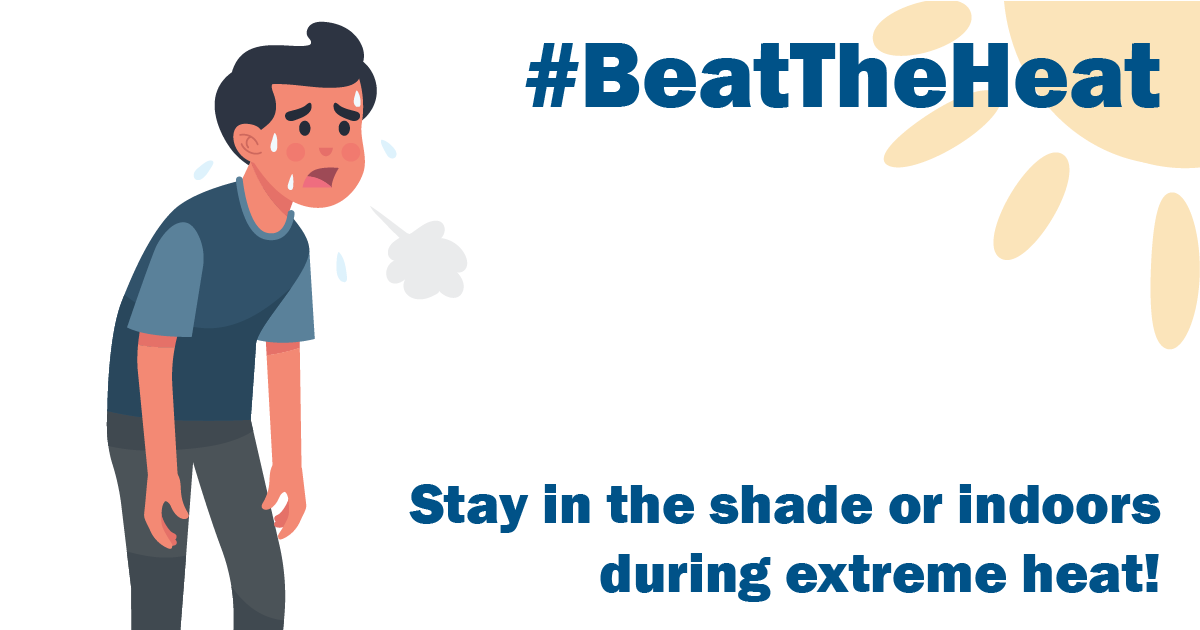 .
Other Important Tips:
- Extreme heat and heat waves can also affect power systems, as utility companies may shut down portion of the electric grid. If the power goes out, use only flashlights or battery-powered lanterns for emergency lighting. Never use candles during a blackout or power outage due to extreme risk of fire.
- Use generators safely and always use them outdoors and at least 20 feet from windows, doors and attached garages. Make sure to keep the generator dry and protected from rain or flooding.
- Visit Ready.gov or Listo.gov for more information on how to stay safe before, during and after extreme heat.
Identify places in your community where you can get cool by visiting the National Center for Healthy Housing to find cooling centers by state. You can also call 3-1-1 to connect to resources for extreme heat.
FEMA Administrator Deanne Criswell has announced that Arkansas and Massachusetts are each eligible for up to $20 million in funding to reduce flood risks. Texas is eligible for up to another $40 million. The funding is available through the fiscal year 2023 Swift Current funding opportunity, made possible by President Biden’s Bipartisan Infrastructure Law.
This announcement complements the April 17 announcement of 16 states and one Tribal Nation and the May 9 announcement for two additional states eligible for the same funding opportunity.
The announcement of funding comes from the $3.5 billion provided for the Flood Mitigation Assistance program through the Bipartisan Infrastructure Law.
Swift Current is designed to get funding on the ground as soon as possible after a flood-related disaster to help communities implement upgrades to reduce their flood risk. This funding will support National Flood Insurance Program policyholders who have experienced repetitive and substantial flood damage to eligible structures. Since June 2023, each state and Tribal Nation had a Presidentially declared major disaster related to flooding.
The funding opportunity aligns with FEMA’s Year of Resilience and will help communities build local capacity to withstand tomorrow’s hazards from climate change.
This announcement advances the President’s Justice40 Initiative, which set a goal to deliver 40% of the overall benefits of certain federal investments to disadvantaged communities that have been marginalized by underinvestment and overburdened by pollution. Swift Current provides more equitable access to mitigation grants by increasing the federal cost share for eligible applicants above the standard 75% cost share and offering tailored pre-application support to disadvantaged communities that often face challenges meeting their non-federal match.
Property acquisition, demolition, elevation and relocation are examples of projects eligible for this funding opportunity. Buildings must be insured through the National Flood Insurance Program to be eligible.
Visit FEMA.gov for a complete list of FY23 Swift Current activations.
FEMA has directed that all its systems implement Multi-Factor Authentication (MFA) for user login to improve cybersecurity and comply with Executive Order 14028 on Improving the Nation's Cybersecurity. MFA is enabled for FEMA employees through PIV cards, but it is needed for FEMA Grants Outcome (GO) external login ID and password users.
The integration of FEMA GO with login.gov, scheduled for Tuesday, July 2, is a strategic move to bolster our security protection goals. This integration not only aligns with our commitment to cybersecurity but also aims to streamline user access. The chosen date attempts to avoid the bulk of open funding opportunities, while still meeting agency guidance as soon as practical.
Starting July 2, external users will need to access FEMA GO using their personal login.gov account. This change is part of our ongoing efforts to enhance security. However, FEMA employees will continue to access FEMA GO with their PIV card, ensuring a seamless transition for them.
To prepare external users for the change, the updated FEMA GO Startup Guide includes important information to help external users make the change, including:
- Best practices to create a Login.gov account.
- New FEMA GO user account creation.
- Account scenarios.
- Managing emails.
- Managing email notifications.
FEMA GO users will continue to sign in the old way for now. Beginning July 2, 2024, FEMA GO external users will be required to sign into FEMA GO using login.gov.
Starting July 2, the FEMA GO login page will look similar to the image below.
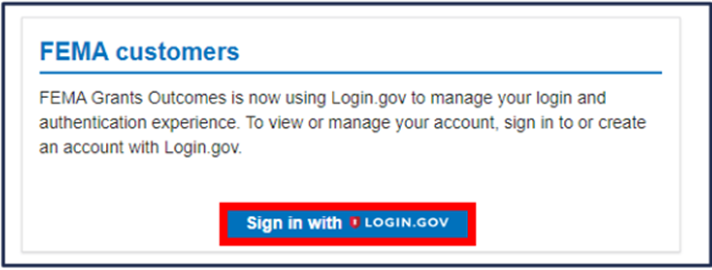
For questions related to the adoption of login.gov, users are encouraged to contact the FEMA GO Help Desk. The FEMA GO Help Desk hours of operation are Monday-Friday from 9 a.m. to 6 p.m. ET. Call the Help Desk at (877) 585-3242 or email femago@fema.dhs.gov.
In response to the recent surge in federally declared disasters due to the springtime storms, the FEMA Voluntary Agency Liaisons and the DHS Center for Faith-Based and Neighborhood Partnerships will co-host an operational VOISE Partner Call from 2 to 3 p.m. ET on Thursday, June 20. The call will provide crucial situational awareness from national partners, FEMA and other agencies supporting ongoing recovery efforts in the impacted states.
This call is an opportunity for our partners to share their response and recovery efforts to support the 10 impacted states. In addition, it will serve as a space for coordination among federal, state and non-profit organizations. This call underscores the unified approach to addressing the impact of the disasters on the affected communities.
Webinar Information:
- Topic: Operations Update Multi-Hazards
- Date: Thursday, June 20, 2024
- Time: 2 to 3:30 p.m. ET
- Location: ZOOM | Virtual Platform
- Passcode: FEMAVAL
The application period for FEMA’s Fiscal Year 2024 Spring Dam Safety State Assistance Grant Program will run from June 24 – July 26. This year’s funding opportunity is for $7.5 million.
The State Assistance (SA) grant program provides financial assistance to states and territories to help strengthen the administration of their dam safety programs. Eligible activities include training for state dam safety personnel, dam inspections, public awareness campaigns, emergency action plans and similar activities.
The announcement aligns with FEMA’s Year of Resilience theme to build local capacity to withstand tomorrow’s hazards. FEMA expects to begin award notifications in late August 2024.
To be eligible for the grant, applicants must have a state dam safety program authorized by state legislation and working toward meeting specific criteria and budgeting requirements. Each state or territory will submit one application to FEMA on behalf of its respective dam safety program.
The FY24 spring funding opportunity for this congressionally directed spending will be published on Grants.gov on June 24. All applications must be submitted through FEMA Grant Outcomes.
Applicants can find more detailed information on applicant eligibility and the application process on this fact sheet. The Dam Safety webpage on FEMA.gov will be periodically updated with timeline and award information.
.
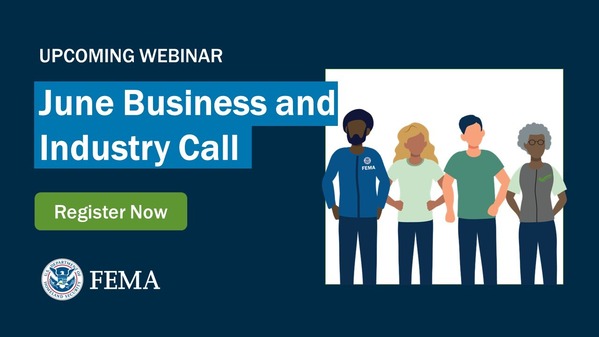
FEMA’s Office of Business, Industry, and Infrastructure Integration is hosting the virtual June Business and Industry Call from 3 to 4 p.m. ET on June 25.
The call will focus on operational readiness for the 2024 Atlantic Hurricane Season. Panelists will showcase a variety of tools, resources and best practices for businesses and emergency management professionals to use when preparing for, responding to and recovering from the impact of hurricane season.
The call will feature expert partners who will share best practices and insights for business organizations to get operationally ready for hurricane events. Presenters include representatives from FEMA’s National Response Coordination Center (NRCC), NOAA and Walmart. To register, visit https://bit.ly/JuneBICall.
FEMA hosts monthly Business and Industry Calls to update NBEOC members, business and industry organizations and FEMA partners on the tools available during all stages of the disaster lifecycle. Each month, experts from FEMA, other interagency partners, and business and industry organizations present different topics. For organizations interested in joining the call, visit fema.gov/NBEOC.
FEMA received 13 complete applications from entities requesting more than $271 million—almost double what is available—to fund eligible projects through a program providing capitalization grants to eligible applicants nationwide.
The requests follow the agency’s December 2023 announcement, making $150 million available for Safeguarding Tomorrow through the Ongoing Risk Mitigation Revolving Loan Fund grant program’s second funding opportunity. The application period closed in April and aligns with the 2024 FEMA Year of Resilience theme to build capacity to withstand tomorrow’s hazards.
The 13 applicants, including one Tribal Nation, come from seven out of ten FEMA regions in areas affected by various types of disasters such as tornadoes, flooding, drought and extreme heat.
Funded by the Bipartisan Infrastructure Law, the program enables applicants to offer low-interest loans directly to local communities to reduce their vulnerability to disasters, promote equity, foster greater community resilience and reduce disaster impacts.
FEMA expects to announce the selections for this funding opportunity later this year. The oversubscription for this program demonstrates the growing need to make the nation more resilient to the increasing frequency and severity of climate threats.
To date, FEMA has offered $200 million in funding for capitalization grants for the Safeguarding Tomorrow Revolving Loan Fund program. In comparison, entities have requested a total of $453 million in federal funding for these opportunities.
In September 2023, FEMA announced selections for the first funding opportunity totaling $50 million.
The Safeguarding Tomorrow Revolving Loan Fund is part of FEMA’s Hazard Mitigation Assistance portfolio of programs. These grant programs help communities increase resilience to extreme heat waves, drought, wildfires, floods and hurricanes by funding transformational projects that reduce risk to multiple hazards, support adaptation to future conditions and reduce the impact of all disasters on our nation’s most at-risk, underserved and disadvantaged communities.
Applicants eligible to receive revolving loan capitalization grants include states, the District of Columbia, territories and Tribal Nations that have received a major disaster declaration. Local governments may use these low-interest loans provided by these entities for projects and activities to reduce the effects of drought, intense heat, hurricanes, tornadoes, winter storms, wildfires, floods, earthquakes and other natural hazards – including many fueled by climate change.
Additional eligible project types under this program include activities that mitigate the impact of natural hazards, zoning and land use planning changes and adoption and enforcement of modern building codes. Local governments may also use loans to satisfy a local government’s non-federal cost-share requirement for other FEMA Hazard Mitigation Assistance grant programs.
Of the nearly $7 billion available in Bipartisan Infrastructure Law funding to FEMA announced in 2021, $500 million is invested over five years in the Safeguarding Tomorrow Revolving Loan Fund program to reduce disaster suffering and avoid future disaster costs. In addition, four additional FEMA mitigation and cyber security programs will receive multi-year Bipartisan Infrastructure Law funding.
.
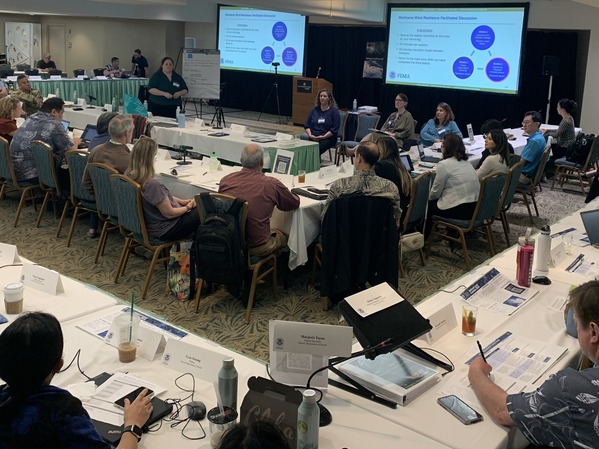
FEMA conducted the 2024 National Level Exercise (NLE), which involved a scenario of a large hurricane impacting the Hawaiian Islands and the resulting supply chain issues to Honolulu Harbor, with an additional challenge of a cyber-attack on Guam. Exercise activities were conducted from Oahu, Hawaii and Guam.
The exercise focused on activities that examined plans and core capabilities within the mitigation, response, and recovery mission areas. Four national-level objectives guided the development of the exercise activities, providing a structured framework for the exercise evaluation:
- Climate change implications for national security.
- Information sharing.
- Response and stabilization.
- Intermediate and long-term recovery.
The exercise featured activities designed to strengthen threat and hazard planning for climate change impacts and provided an opportunity for whole community partners to participate. This inclusive approach encourages participation from stakeholders with equities, roles and responsibilities in catastrophic disaster response and recovery, including key private sector and non-governmental partners.
The National Level Exercise activities began in April and will continue through August, bringing together more than 900 individuals across 15 partner departments, agencies, and organizations. Each activity supports the nation's readiness and resilience in the face of complex and interconnected threats and fosters collaboration and innovation across the whole community.
For more information on NLE 2024, visit National Level Exercise 2024 | FEMA.gov
.
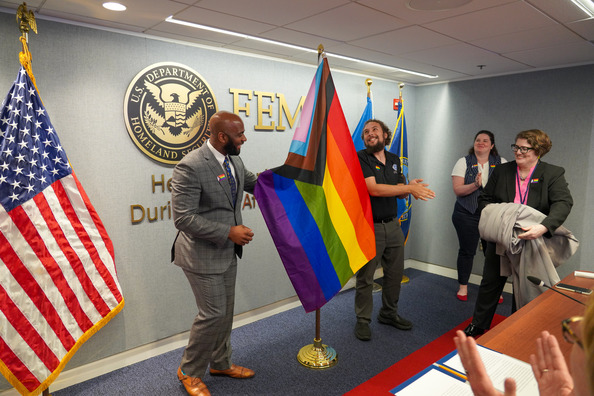 FEMA employees DeMarques Coleman and Caitlin Heavey unveil Progressive Pride Flag at FEMA Headquarters in Washington, D.C.
In honor of Pride Month, FEMA recognizes the importance of the LGBTQI+ community, celebrates the contributions of its diverse workforce and for the third successive year, unveiled the Progressive Pride Flag at FEMA Headquarters.
This year, members of the LGBTQI+ community at FEMA picked the theme “Rainbow Resilience” to unify agency Pride events. This theme exemplifies not only the resilience of the LGBTQI+ community but also the agency’s commitment to ensuring everyone is included in our efforts to build a resilient nation able to withstand future disasters.
FEMA’s core values of compassion, fairness, integrity and respect guide the agency's service to the nation and its communities, including the LGBTQI+ community.
This Pride Month, FEMA is hosting several events at its Washington D.C. headquarters and nationwide through its regional offices. These events provide an opportunity for LGBTQI+ staff and their allies to meet and talk about issues pertaining to their identities, build rapport and create a supportive LGBTQI+ community.
FEMA and its workforce are enhanced by the diversity of those who serve the agency and the nation and FEMA supports this annual celebration of equality, appreciation and love.
Read the full press release on FEMA.gov.
.
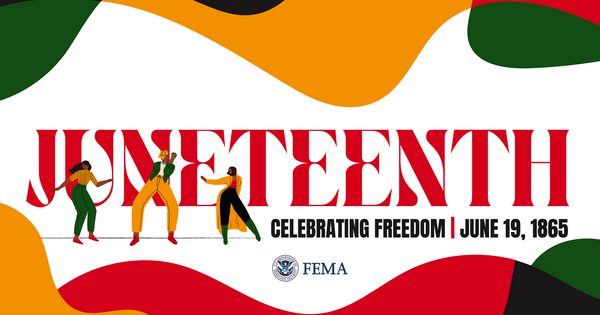
Tomorrow marks Juneteenth, a federal holiday commemorating the day in 1865 when the last enslaved African Americans in Galveston, Texas, were finally freed—approximately two years after the Emancipation Proclamation was signed into law.
FEMA honors this federal holiday as an opportunity to remember this important moment in our nation’s history. It signifies change, freedom, resilience and hope for the future. It’s also a time to recognize and celebrate the contributions, achievements and resilience of African Americans.
Read the full blog on FEMA.gov.
.
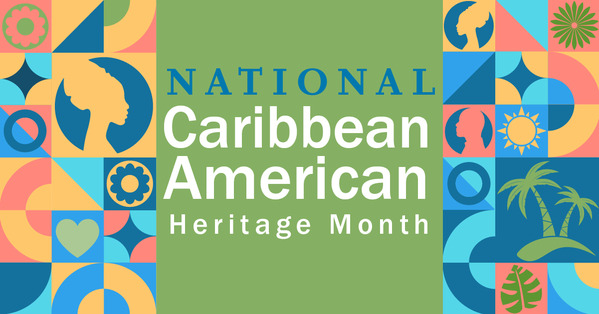
In celebration of Caribbean Heritage Month, we are taking time to honor Caribbean FEMA employees who help make our nation safer, stronger and more prepared.
Read the full blog at FEMA.gov.
…………………………………………………………………………………………………………..
Radiological Emergency Preparedness Program Manual Webinars
FEMA updated the Radiological Emergency Preparedness program manual, which provides planning and assessment guidance for state, local, Tribal Nations and territorial (SLTT) partners in the vicinity of a commercial nuclear power plant.
FEMA will host a series of 60–90-minute webinars to provide an overview of notable changes found in the 2023 program manual. Each webinar will focus on one or two specific parts of the manual. Advanced registration is required.
Register for the webinar series below:
For additional information and event resources, visit the 2023 REP Program Manual and Change Summary on FEMA.gov. For any questions, contact FEMATHDPolicy@fema.dhs.gov.
…………………………………………………………………………………………………………..
FEMA Seeks Feedback on the Draft “Planning Considerations: Putting People First” Guide
FEMA seeks feedback on “Planning Considerations: Putting People First” guidance. This document is intended to assist emergency managers and planning partners at all jurisdiction levels in identifying and understanding the interests and needs of populations throughout their community, particularly those who are disproportionately impacted by disasters and populations who have been historically underserved.
A line-numbered version of the draft guide is provided to help identify specific areas or topics for potential revision or development. The feedback form can be used to capture any recommendations— email feedback or questions to NPD-Planning@fema.dhs.gov. The feedback period will conclude at the close of business on July 10.
FEMA will host webinars to provide an overview of the draft and facilitate discussion on additional ways to improve the guide. The webinars will be held:
- Thursday, June 20 at 3 p.m. ET.
- Tuesday, June 25 at 11 a.m. ET.
To access the guide and register for the webinars, visit https://www.fema.gov/emergency-managers/national-preparedness/plan.
…………………………………………………………………………………………………………..
FY24 FEMA National Earthquake Hazards Reduction Program State Assistance Grant Applications Available this Month
The Fiscal Year 2024 Notice of Funding Opportunity (NOFO) for the FEMA National Earthquake Hazards Reduction Program Multi-State and National Earthquake Assistance funding opportunity was made available May 8 on grants.gov/search-results-detail/354079. The Fiscal Year 2024 FEMA National Earthquake Hazards Reduction Program Individual State Earthquake Assistance Program Notice of Funding Opportunity opened May 17.
The application period for each funding opportunity is as follows:
- Fiscal Year 2024 Individual State Earthquake Assistance Notice of Funding Opportunity will close at 5 p.m. ET on June 24. All applications must be submitted in FEMA GO.
For more information on FEMA GO, visit FEMA.gov/grants/guidance-tools/fema-go. Additional information on these funding opportunities and FEMA NEHRP is available at FEMA.gov/emergency-managers/risk-management/earthquake/nehrp.
…………………………………………………………………………………………………………..
Join FEMA’s National Integration Center Webinars on the National Resource Hub: OneResponder
Attend FEMA's webinar as an opportunity to learn about the updates to OneResponder and its capabilities and functions from 1 - 2 p.m. ET on Thursday, June 20. It is a primer for existing users and an introduction for new users.
OneResponder is a personnel qualifications management tool for use by the whole community. As part of the National Resource Hub, it supports the implementation of the National Incident Management System’s (NIMS) resource management objective to qualify, certify and credential incident personnel and aids in implementing the National Qualifications System.
In addition to providing a basic overview of OneResponder as a tool and its functionality, the webinar will cover the following recent updates to OneResponder:
- The ability to import National Emergency Training Center training for users with valid FEMA Student IDs.
- The ability to decertify a responder from a position.
- Resolution of an issue with training course importations and course codes with leading zeros.
- A messaging capability for the Responder Portal.
- The addition of military locations to the state dropdown list.
Register for the webinars at FEMA National Integration Center OneResponder Webinars on FEMA.gov.
…………………………………………………………………………………………………………..
FEMA Publishes Funding Opportunity for 110 Mitigation Projects for Nearly $191M
FEMA published the Fiscal Year 2024 funding opportunity, making approximately $191 million available to support 110 mitigation projects nationwide. These projects were congressionally authorized through the Further Consolidated Appropriations Act 2024. The funding for these projects will be made available through FEMA’s Pre-Disaster Mitigation grant program for 35 states, the District of Columbia and one Tribal Nation.
Communities with projects identified for funding must submit an application by June 28. The agency will only disburse funding after all program eligibility criteria, such as Environmental and Historic Preservation requirements, are met.
For general questions about Pre-Disaster Mitigation congressional community projects, please contact the appropriate State Hazard Mitigation Officer or FEMA regional office. The Hazard Mitigation Assistance Helpline is also available at 866-222-3580.
FEMA will offer a webinar series for applicants. For more information and list of the projects, visit FEMA.gov. If you require further assistance after navigating the resources listed above, email FEMA-Ask-PDM@fema.dhs.gov.
…………………………………………………………………………………………………………..
FEMA Announces Funding Opportunity for Five Homeland Security Training Programs
FEMA has released a Notice of Funding Opportunity for five of the Homeland Security National Training Program’s National Domestic Preparedness Consortium members. Approximately $90.9 million in Fiscal Year 2024 grant funding will be available to eligible consortium members to provide training opportunities for emergency responders and community leaders throughout the nation.
Upon receiving approved submitted applications, funding is provided in the following pre-determined amounts:
- The National Energetic Materials Research and Testing Center, New Mexico Institute of Mining and Technology: $20,840,000
- The National Center for Biomedical Research and Training, Louisiana State University: $20,840,000
- The National Emergency Response and Rescue Training Center, Texas A&M Engineering Extension Service: $20,840,000
- The University of Hawaii’s National Disaster Preparedness Training Center: $3,770,000
- The Security and Emergency Response Training Center: $3,770,000.
The National Nuclear Security Administration’s Center for Radiological/Nuclear Training at the Nevada National Security Site is funded separately ($20,840,000) through an Interagency Agreement between FEMA and the Department of Energy.
The NOFO will be posted at Grants.gov. NDPC members must submit applications for the Homeland Security National Training Program no later than 11:59 p.m. ET on July 12.
…………………………………………………………………………………………………………..
$10.8M Available for Regional Catastrophic Preparedness Grants
FEMA released the funding notice for the Fiscal Year (FY) 2024 Regional Catastrophic Preparedness Grant Program. The program provides $10.8 million to eligible states and local governments to close known preparedness capability gaps, encourage innovative regional solutions to issues related to catastrophic incidents and build on existing regional preparedness efforts.
Awards will be made on a competitive basis to applicants who present an ability to successfully meet the requirements described in the funding notice.
The application period will close at 5 p.m. ET on July 25. Submissions must be made through FEMA Grants Outcomes (GO). The Notice of Funding Opportunity is available on Grants.gov (Assistance Listings Number 97.111), as well as on the FEMA website at www.fema.gov/grants.
…………………………………………………………………………………………………………..
FEMA Announces $300M to Strengthen Community Resilience to Flooding
The third round of Swift Current funding is now available to help National Flood Insurance Program policyholders across the nation become more resilient to flooding. This funding makes $660 million, which FEMA is using from President Biden’s Bipartisan Infrastructure Law for the Flood Mitigation Assistance Program’s Swift Current opportunity.
For the first Swift Current announcement in 2022, FEMA made available a total of $60 million. The second announcement in 2023 made $300 million available and expanded criteria to benefit more places, which as of May 30, includes 19 states and one Tribal Nation.
One of the following criteria must also be met:
- The state, territory or federally recognized tribal government has at least $1 million in National Flood Insurance Program (NFIP) flood insurance claims paid in the 12 months prior to the disaster declaration date.
- The state, territory, District of Columbia or federally recognized tribal government has 500 or more NFIP flood insurance claims submitted in the declared flood-related event.
- The applicant is a U.S. territory or a federally recognized tribal government applying directly to FEMA.
The application window opened on June 1, and the last eligible disaster declaration date is May 31, 2025. The funding opportunity is available on Grants.gov. Potential applicants who have questions may contact their FEMA regional office.
All applications must be submitted in FEMA Grants Outcomes (FEMA GO) and will be reviewed on a rolling basis. The application deadline date will be provided to the applicant. Applications received by FEMA after the deadline will not be considered for funding. For more information, interested NFIP policyholders should contact their state or territory hazard mitigation officer.
…………………………………………………………………………………………………………..
|