|
On May 31, FEMA Deputy Administrator Erik A. Hooks visited the National Oceanic and Atmospheric Administration’s (NOAA) National Hurricane Center (NHC) in Miami. He was joined by NHC Director Michael Brennan and Florida Congressman Jared Moskowitz. They briefed the media on preparedness ahead of the June 1, start of the Atlantic hurricane season. NOAA forecasted an above-normal Atlantic hurricane season, with up to 25 named storms, including up to 13 hurricanes.
During the event, Deputy Administrator Hooks debuted FEMA’s Be in the Know campaign, which underscores the importance of understanding what to do in an evacuation.
In preparation for the upcoming hurricane season, there are four steps everyone should take to Be in the Know:
- Know Your Risk – Identify the specific hazards you face, which can vary according to the community in which you live.
- Know When and Where to Go – Make an evacuation plan and learn your state and local evacuation zones by visiting your state and county emergency management websites. Download the FEMA App to use the Text-to-Shelter feature, which can let you know how to find shelter during an evacuation by texting “shelter” and your ZIP code to 43362.
- Know What to Bring – Build a go-bag with all the essentials you might need. Before a disaster strikes, knowing what to bring will help you evacuate quickly and safely.
- Know Your Information Sources – Identify where you can access reliable information so you can make informed decisions before, during and after a disaster. Subscribe to alerts from FEMA, your local emergency management agencies and the National Weather Service to stay informed on safety procedures and updates.
In addition, NHC Director Michael Brennan shared information on what the public can expect this hurricane season, which runs from June 1 through November 30.
FEMA reminds individuals and communities that the best time to prepare is before an emergency or disaster strikes. Consider the following to make sure you and your family are protected this season:
Gather supplies:
- After a hurricane, you may need to survive on your own for several days. Take some time to make sure you have what you’ll need to say safe and comfortable whether you must evacuate or can stay at home.
- Have enough supplies for your household, including food, water and other supplies to last for several days. Be sure to include any medication, cleaning and pet supplies as well as any important documents you may need. Visit Ready.gov/kit for a printable list you can take to the store when stocking up.
- Every family is unique, so consider your everyday needs when making a kit. This is especially important if you or anyone in your household is an individual with a disability identify if you may need additional help during an emergency.
Make a plan:
- Make sure you have a plan to keep your family connected during and after a hurricane. Visit Ready.gov/plan and use the easy, sharable "Make a Plan" fillable form with your family and loved ones.
- Remember, hurricanes create hazards for more than coastal areas. You may experience rain, flooding and wind far inland from where a hurricane or tropical storm makes landfall.
Check your insurance coverage:
- Review your homeowners, renters and business insurance policy so you understand what kind of damage is covered.
- Remember, standard homeowner’s and renter’s insurance doesn’t cover flooding. You can get flood coverage from your insurance company or the National Flood Insurance Program at floodsmart.gov. Act now, as flood insurance requires a 30-day waiting period.
FEMA Administrator Deanne Criswell announced in a new video this year’s National Preparedness Month 2024 theme will focus on empowering Asian American, Native Hawaiian and Pacific Islander communities to act today to prepare for future risks and disasters. National Preparedness Month is in September and FEMA is announcing this new theme early to encourage communities and our partners to engage this community before hurricane season.
This focus responds to trends that show the importance and the barriers of connecting with this community. According to census data analyzed by the Pew Research Center, the Asian population in the U.S. grew 81% from 2000 to 2019, from roughly 10.5 million to a record 18.9 million people. According to FEMA’s 2023 National Household Survey, 65% of the Asian Americans and 58% of Native Hawaiian or Pacific Islanders surveyed reported that they don’t believe that taking a step to prepare will make a difference and were not confident in their ability to prepare. This community has always been a priority for FEMA before, during and after disasters including our active response and recovery efforts in Hawaii and Guam, and our work to reach people nationwide. FEMA is now prioritizing this community and delivering preparedness information in a new way.
As we head toward September, FEMA will develop materials for AANHPI communities and host summer long activities and webinars to help people prepare for extreme weather events. Through coordination with the Ad Council, research and analysis and direct feedback from the community, FEMA will develop creative ads to further ensure culturally competent resources are available to help motive Asian American, Native Hawaiian and Pacific Islander communities to take steps to prepare.
This year’s campaign builds on FEMA’s ongoing approach to advance accessibility and cultural competency in boosting the nation’s preparedness. Over the past several years, FEMA and the Ad Council created PSA’s designed to resonate with Latino communities called “Prepare to Protect,” PSA’s for the Black and African American community called “A Lasting Legacy” and older adults who are rural, have limited resources and disabilities called “Take Control.”
Empower your preparedness journey today by visiting Ready.gov or Listo.gov for tips, advice and resources before an emergency or disaster.
FEMA has released a Notice of Funding Opportunity for five of the Homeland Security National Training Program’s National Domestic Preparedness Consortium (NDPC) members.
Approximately $90.9 million in Fiscal Year 2024 grants funding will be available to eligible consortium members to provide training opportunities for emergency responders and community leaders throughout the nation.
Upon receiving approved submitted applications, funding is provided in the following pre-determined amounts:
- The National Energetic Materials Research and Testing Center, New Mexico Institute of Mining and Technology: $20,840,000
- The National Center for Biomedical Research and Training, Louisiana State University: $20,840,000
- The National Emergency Response and Rescue Training Center, Texas A&M Engineering Extension Service: $20,840,000
- The University of Hawaii’s National Disaster Preparedness Training Center: $3,770,000
- The Security and Emergency Response Training Center: $3,770,000.
The National Nuclear Security Administration’s Center for Radiological/Nuclear Training at the Nevada National Security Site is funded separately ($20,840,000) through an Interagency Agreement between FEMA and the Department of Energy.
The NOFO will be posted at Grants.gov. NDPC members must submit applications for the Homeland Security National Training Program not later than 11:59 p.m. ET on July 12.
.
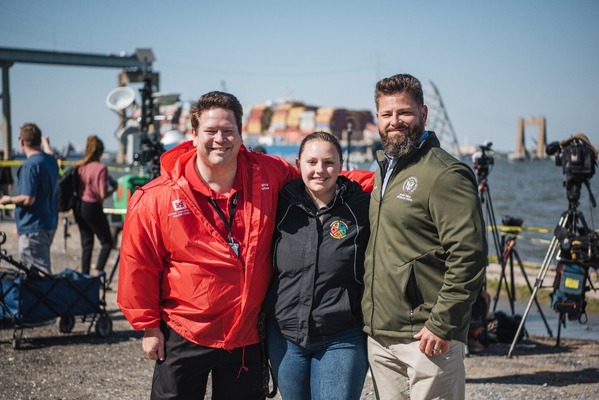 From left to right: Petty, Thomas and Rauschenberg responded to the Key Bridge collapse.
On March 26, the Francis Scott Key Bridge in Baltimore collapsed after a ship collided with one of the bridge’s main support structures. The collapse caused several deaths and blocked most shipping to and from the Port of Baltimore.
The next day, a unified command joint information center was established to coordinate the investigation and salvage. As part of the joint information center, three master public information officers were deployed to advance the whole-of-community messaging behind the incident. These individuals prepared to become master public information officers by completing training provided by FEMA’s Emergency Management Institute.
The U.S. Army Corps of Engineers (USACE) deployed Kurt Rauschenberg, Chief of Public Affairs to spearhead communications efforts within the Joint Information Center (JIC).
Bobby Petty, Strategic Outreach Officer, was deployed from the Galveston District of USACE, supporting USACE communication efforts and managing the JIC.
Kasey Thomas, Public Information Officer for Anne Arundel County OEM, deployed to support the Maryland Department of Emergency Management as an Assistant Public Information Officer supporting the community relations branch of the JIC.
Public information officers play a crucial role in advancing messaging before, during, and after a disaster by coordinating with state, local, territorial and Tribal Nation partners, developing key messages, engaging with the media, monitoring dis- and mis- information, and engaging with the community. These efforts ensure the public receives timely, accurate and helpful information throughout all phases of disaster operations. A master public information officer is someone who has reached an executive level of expertise as recognized through the Public Information Officer Program | Master PIO program.
To learn more about the Francis Scott Key Bridge recovery, visit Francis Scott Key Bridge Response (army.mil).
May 31 is a day of remembrance and in memoriam to the 2,220 people who lost their lives in the 1889 South Fork Dam failure near Johnstown, Pennsylvania. Every year, National Dam Safety Awareness Day seeks to encourage and promote individual community responsibility and best practices for dam safety. FEMA encourages government entities to continue to educate and take actions around the importance of dam safety.
This year’s awareness day theme is Building Resilience: Safeguarding Our Nation's Dams and Empowering Communities. This complements FEMA’s Year of Resilience to enhance response capabilities at all levels of government and build local capacity to withstand tomorrow’s hazards.
Local dam safety officials are addressing ways to prevent dam failure in communities across the nation. Dam upgrades help meet modern construction techniques and seismic activity considerations and help protect communities downstream.
These dam safety actions include investing in infrastructure, having routine inspections and proper maintenance, completing necessary upgrades and implement an Emergency Action Plan to protect the public health, safety and welfare of individuals and communities.
Funding for this project comes from the fiscal year 2022 funding cycle for the Building Resilient Infrastructure and Communities (BRIC) grant program where a historic $2.3 billion was available. The Bipartisan Infrastructure Law -- which provides a total $1 billion to BRIC for grants in fiscal years 2022-2026, provides additional infrastructure funds to support efforts like the Mineral Ridge Dam. This type of resilience project reduces disaster impacts and minimizes future disaster costs.
The improvements and modifications to this dam will provide several benefits to more than 200,000 residents in local jurisdictions between Mineral Ridge and Weathersfield Township, Ohio. In addition, this upgrade ensures the dam can withstand the maximum flood levels from a 500-year storm. To learn more about this infrastructure upgrade project from state emergency management and local dam officials visit FEMA’s YouTube channel.
In support of National Dam Safety Awareness Day, you can make a difference in your community and join FEMA in support of these efforts throughout the year.
.

This month, FEMA joins the Biden-Harris Administration in the recognition of Pride Month, honoring the diverse members of the LGBTQIA+ community and their vast contributions to our agency and our nation.
FEMA’s core values of compassion, fairness, integrity and respect guide every aspect of our service to the nation and its communities, including the LGBTQIA+ community, and FEMA will continue to elevate programs and efforts to support them.
Read the full blog on FEMA.gov.
.
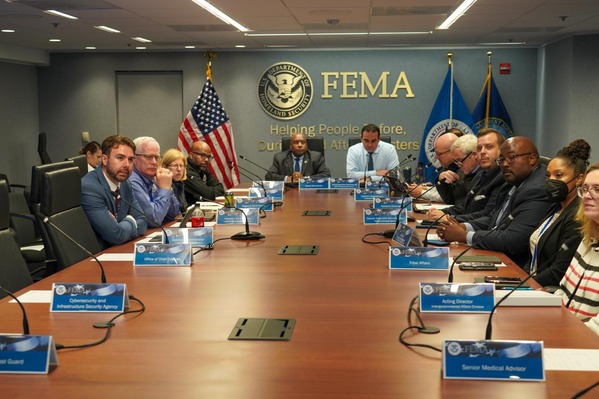
Throughout the year, FEMA works to build resilience in communities and prepare the nation for hurricanes. These actions are particularly important at the start of the Atlantic and Pacific hurricane seasons. On May 23, the agency hosted our annual video teleconference (VTC) focused on FEMA’s posture and readiness. The conference is an opportunity for FEMA regions and agency leaders to collaborate, plan and prepare.
We sat down with two FEMA employees who play an essential role in the VTC and in the agency’s hurricane preparedness. Read the full blog on FEMA.gov to hear from both individuals who help leaders, at every level of response, with situational awareness and decision-making during disasters.
.

Extreme heat is already affecting many areas of the U.S. This type of weather can impact every aspect of our lives, directly shaping how we work, learn and live.
Last year was the hottest year on record, and the National Oceanic and Atmospheric Administration predicts this summer will also bring above-normal temperatures across most of the country. Heat waves are growing more intense and frequent, taking a toll on health across the country sending tens of thousands of people to the emergency room. Since 2021, the U.S. has experienced a 43.7% increase in heat-related deaths.
Be #SummerReady and prepare for extreme heat by reading more on FEMA.gov.
…………………………………………………………………………………………………………..
National Hurricane Program Hosts HURREVAC Webinar Series for Emergency Managers
The National Hurricane Program is a partnership between FEMA, the U.S. Army Corps of Engineers and the NOAA National Hurricane Center. From June 10 – 14, FEMA's National Hurricane Program will host a five-day HURREVAC training for emergency managers. Each session will start at 2 p.m. ET and run 60–90 minutes.
HURREVAC is a free, web-based decision-support tool that assists emergency managers by providing information and tools to inform hurricane response decisions in advance of a threatening storm. Interested emergency managers can register now for this annual HURREVAC webinar series.
…………………………………………………………………………………………………………..
Attend FEMA’s Webinar on Assessing Completed Actions Resulting from Incident After-Action Reviews
FEMA is hosting a webinar on how to assess the success of completed actions from real-world incident after-action reports (AARs) with the agency’s Continuous Improvement Technical Assistance Program (CITAP). The webinar is from 1-2 p.m. ET on Wednesday, June 12, and will focus on approaches for evaluating completed recommended actions as outlined in FEMA’s National Continuous Improvement Guidance.
During this webinar, FEMA will ask attendees to consider two common approaches for evaluating the success of completed actions and when to use them. The webinar will also review best practices for assessing the effect of completed actions and resources available on the FEMA Preparedness Toolkit.
Register in advance to attend the by visiting the event page on FEMA.gov and clicking the "Register" button. If an issue arises while registering or logging in, contact the FEMA CITAP Team at FEMA-CITAP@fema.dhs.gov.
…………………………………………………………………………………………………………..
FEMA Seeks Feedback on the Draft “Planning Considerations: Putting People First” Guide
FEMA seeks feedback on “Planning Considerations: Putting People First” guidance. This document is intended to assist emergency managers and planning partners at all jurisdiction levels in identifying and understanding the interests and needs of populations throughout their community, particularly those who are disproportionately impacted by disasters and populations who have been historically underserved.
A line-numbered version of the draft guide is provided to help identify specific areas or topics for potential revision or development. The feedback form can be used to capture any recommendations. Email feedback or questions to NPD-Planning@fema.dhs.gov. The feedback period will conclude at the close of business on July 10.
FEMA will host webinars to provide an overview of the draft and facilitate discussion on additional ways to improve the guide. The webinars will be held:
- Wednesday, June 12 at 2 p.m. ET.
- Thursday, June 20 at 3 p.m. ET.
- Tuesday, June 25 at 11 a.m. ET.
To access the guide and register for the webinars, visit https://www.fema.gov/emergency-managers/national-preparedness/plan.
…………………………………………………………………………………………………………..
Radiological Emergency Preparedness Program Manual Webinars
FEMA updated the Radiological Emergency Preparedness (REP) program manual, which provides planning and assessment guidance for state, local, Tribal Nations and territorial (SLTT) partners in the vicinity of a commercial nuclear power plant.
FEMA will host a series of 60–90-minute webinars to provide an overview of notable changes found in the 2023 REP program manual. Each webinar will focus on one or two specific parts of the manual. Advanced registration is required.
Register for the webinar series below:
For additional information and event resources, visit the 2023 REP Program Manual and Change Summary on FEMA.gov. For any questions, contact FEMATHDPolicy@fema.dhs.gov
…………………………………………………………………………………………………………..
FY24 FEMA National Earthquake Hazards Reduction Program State Assistance Grant Applications Available this Month
The Fiscal Year 2024 Notice of Funding Opportunity (NOFO) for the FEMA National Earthquake Hazards Reduction program (NEHRP) Multi-State and National Earthquake Assistance funding opportunity was made available May 8 on grants.gov/search-results-detail/354079. The Fiscal Year 2024 FEMA National Earthquake Hazards Reduction Program Individual State Earthquake Assistance Program Notice of Funding Opportunity opened May 17.
The application period for each funding opportunity is as follows:
- Fiscal Year 2024 Multi-State and National Earthquake Assistance Notice of Funding Opportunity will close at 5 p.m. ET on June 14. All applications must be submitted in FEMA GO.
- Fiscal Year 2024 Individual State Earthquake Assistance Notice of Funding Opportunity will close at 5 p.m. ET on June 24. All applications must be submitted in FEMA GO.
For more information on FEMA GO, visit FEMA.gov/grants/guidance-tools/fema-go. Additional information on these funding opportunities and FEMA NEHRP is available at FEMA.gov/emergency-managers/risk-management/earthquake/nehrp.
…………………………………………………………………………………………………………..
Join FEMA’s National Integration Center Webinars on the National Resource Hub: OneResponder
FEMA will host two webinars as an opportunity to learn about the updates to OneResponder and its capabilities and functions from 1 - 2 p.m. ET on Tuesday, June 18 and on Thursday, June 20. It is a primer for existing users and an introduction for new users.
OneResponder is a personnel qualifications management tool for use by the whole community. As part of the National Resource Hub, it supports the implementation of the National Incident Management System’s (NIMS) resource management objective to qualify, certify and credential incident personnel and aids in implementing the National Qualifications System (NQS).
In addition to providing a basic overview of OneResponder as a tool and its functionality, the webinar will cover the following recent updates to OneResponder:
- The ability to import National Emergency Training Center (NETC) training for users with valid FEMA Student IDs.
- The ability to decertify a responder from a position.
- Resolution of an issue with training course importations and course codes with leading zeros.
- A messaging capability for the Responder Portal.
- The addition of military locations to the state dropdown list.
Register for the webinars at FEMA National Integration Center OneResponder Webinars on FEMA.gov.
…………………………………………………………………………………………………………..
FEMA Publishes Funding Opportunity for 110 Mitigation Projects for Nearly $191M
FEMA published the Fiscal Year 2024 funding opportunity making approximately $191 million available to support 110 mitigation projects nationwide. These projects were congressionally authorized through the Further Consolidated Appropriations Act, 2024. The funding for these projects will be made available through FEMA’s Pre-Disaster Mitigation grant program for 35 states, the District of Columbia and one Tribal Nation.
Communities with projects identified for funding must submit an application by June 28. The agency will only disburse funding after all program eligibility criteria, such as Environmental and Historic Preservation requirements, are met.
For general questions about Pre-Disaster Mitigation congressional community projects, please contact the appropriate State Hazard Mitigation Officer or FEMA regional office. The Hazard Mitigation Assistance Helpline is also available at 866-222-3580.
FEMA will offer a webinar series for applicants. For more information and list of the projects, visit FEMA.gov. If you require further assistance after navigating the resources listed above, email FEMA-Ask-PDM@fema.dhs.gov.
…………………………………………………………………………………………………………..
$10.8M Available for Regional Catastrophic Preparedness Grants
FEMA released the funding notice for the Fiscal Year (FY) 2024 Regional Catastrophic Preparedness Grant Program. The program provides $10.8 million to eligible states and local governments to close known preparedness capability gaps, encourage innovative regional solutions to issues related to catastrophic incidents and build on existing regional preparedness efforts.
Awards will be made on a competitive basis to applicants who present an ability to successfully meet the requirements described in the funding notice.
The application period will close at 5 p.m. ET on July 25. Submissions must be made through FEMA Grants Outcomes (GO). The Notice of Funding Opportunity is available on Grants.gov (Assistance Listings Number 97.111), as well as on the FEMA website at www.fema.gov/grants.
…………………………………………………………………………………………………………..
FEMA Announces $300M to Strengthen Community Resilience to Flooding
The third round of Swift Current funding is now available to help National Flood Insurance Program policy holders across the nation become more resilient to flooding. This funding makes $660 million that FEMA is using from President Biden’s Bipartisan Infrastructure Law for the Flood Mitigation Assistance Program’s Swift Current opportunity.
For the first Swift Current announcement in 2022, FEMA made available a total of $60 million. The second announcement in 2023 made $300 million available and expanded criteria to benefit more places, which as of May 30, includes 19 states and one Tribal Nation.
One of the following criteria must also be met:
- The state, territory, or federally recognized tribal government has at least $1 million in National Flood Insurance Program (NFIP) flood insurance claims paid in the 12 months prior to the disaster declaration date.
- The state, territory, District of Columbia or federally recognized tribal government has 500 or more NFIP flood insurance claims submitted in the declared flood-related event.
- The applicant is a U.S. territory or a federally recognized tribal government applying directly to FEMA.
The application window opened on June 1, and the last eligible disaster declaration date is May 31, 2025. The funding opportunity is available on Grants.gov. Potential applicants who have questions may contact their FEMA regional office.
All applications must be submitted in FEMA Grants Outcomes (FEMA GO) and will be reviewed on a rolling basis. The application deadline date will be provided to the applicant. Applications received by FEMA after the deadline will not be considered for funding. For more information, interested NFIP policyholders should contact their state or territory hazard mitigation officer.
…………………………………………………………………………………………………………..
|


