 FEMA Administrator Deanne Criswell announced the opening of the application period for the Fiscal Year 2023 Staffing for Adequate Fire and Emergency Response (SAFER) grant program, which offers $360 million in grants directly to fire departments and volunteer firefighter interest organizations to help them increase or maintain the number of trained firefighters protecting communities across the nation.
Building more resilient communities includes having sufficiently staffed fire departments. FEMA SAFER grant funding will be used to increase the number of firefighters to help communities meet industry minimum standards, attain 24-hour staffing to provide adequate fire protection from fire and fire-related hazards and to fulfill traditional missions of fire departments. The SAFER application period will close on Friday, April 12, 2024, at 5 p.m. ET.
Since 2005, the SAFER Program has awarded approximately $5.2 billion in grant funding. This support helps ready households and communities, trains a skilled firefighting workforce (both paid and volunteer) and builds local capacity across the nation.
Over the years, SAFER funds have had a big impact in communities, including stories of lives saved because of SAFER-funded staffing. These are just some examples of how communities benefited from SAFER funds:
- In Lake County, Florida, two firefighters rescued a 3-year-old boy and a 13-year-old girl from a housefire. They were able to make immediate entry into the burning home because of additional staffing from a SAFER grant.
- A firefighter from Pennsylvania’s Southwest Greensburg Fire Department, hired through a SAFER grant, climbed nine flights of stairs to rescue a man from an apartment fire.
- In Arizona, the City of Maricopa Fire/Medical department was able to continue 24/7 coverage in each fire protection zone during the COVID pandemic in 2020 because of SAFER funding.
The FY 2023 SAFER Notice of Funding opportunity and technical assistance documents for this program are available at www.grants.gov and on the FEMA website. Additional information about upcoming webinars to assist applicants is also available on the FEMA website.
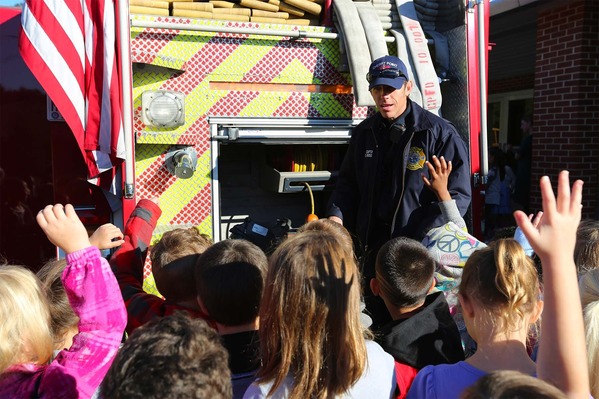 FEMA Administrator Deanne Criswell announced the release of the funding notice and opening of the latest application period for the FY 2023 Fire Prevention and Safety (FP&S) grant program, which will award $36 million to strengthen community fire prevention programs and support scientific research on innovations that improve firefighter safety, health and well-being.
FP&S funds have supported life-saving research and outreach campaigns, while universities and organizations have been able to advance scientific research and study firefighter safety. For example, the University of Arizona is doing a decades-long study involving thousands of firefighters and what work exposures cause cancer in them and ways to reduce it. Knowing that nearly 60% of fire deaths in the nation occur in homes that have no functioning smoke alarms, the American Red Cross’ Home Fire Campaign made home visits with more than 3 million people nationwide to provide fire safety education and installed more than 2 million free smoke alarms. In Crofton, Maryland, the U.S branch of The Institution of Fire Engineers works to reduce fire risk through Vision 20/20, a community risk-reduction program that identifies, prioritizes and addresses risk across fire and emergency services.

The FP&S Program has awarded approximately $852 million since its inception. To help keep communities and firefighters safer, FP&S funding is being made available directly to eligible fire departments, national, regional, state, local, tribal and non-profit organizations such as academic (e.g., universities), research foundations, public safety institutes, public health, occupational health and injury prevention institutions for fire prevention programs and firefighter health and safety research and development such as clinical studies that address behavioral, social science and cultural research. The application period will close on Friday, April 12, at 5 p.m. ET.
The FY 2023 FP&S Notice of Funding Opportunity and technical assistance documents for this program are available at www.grants.gov and on the FEMA website. Additional information about upcoming webinars to assist applicants is also available on the FEMA website.
|
FEMA is hosting a webinar and in-depth training to provide information, guidance and answer questions on its official system of record for Public Assistance grant activities on its Grants Manager and Grants Portal. The webinar will be held virtually on Thursday, March 14, from 1 – 2 p.m. ET, and the training will be held virtually on Wednesday, March 20, from 12:30 – 4:30 p.m. ET.
The informational webinar will provide an overview and timeline of the decommissioning process of the agency’s Emergency Management Mission Integrated Environment (EMMIE) system. The training will help enhance user experience with the system as the agency replaces EMMIE with the more modern, transparent and accessible Grants Manager and Grants Portal systems.
Recipient and Applicant Webinars are designed to train State, Local, Tribal and Territorial (SLTT) stakeholders but are open to all who want to learn about the Public Assistance (PA) grant process and the FEMA Grants Portal website that is used for PA grants.
EMMIE Decommissioning Informational Webinar
To access the webinar via mobile, use the following:
-
Meeting ID: 160 537 7504
-
Passcode: 980991
Grants Portal Functionality with EMMIE Decommissioning Training
-
Host: Public Assistance Training and Development Branch, SLTT Section
-
When: Wednesday, March 20, from 12:30 – 4:30 p.m. ET.
-
Where: Zoom https://fema.zoomgov.com/j/1610975089.
-
Passcode: EMMIE
To access the webinar via mobile, use the following:
-
Meeting ID: 161 097 5089
-
Passcode: 711753
For more on the EMMIE Decommissioning, visit FEMA's EMMIE Transition FAQ Fact Sheet. Applicants and recipients can also email the Public Assistance Support Hotline at FEMA-Recovery-PA-Grants@fema.dhs.gov or call the hotline at 866-337-8448, which is open Monday through Friday from 8 a.m. to 6 p.m. ET.
FEMA's Continuous Improvement Technical Assistance Program (CITAP) will host a webinar on how to plan for data collection and analysis for real-world incident after-action reviews on Wednesday, March 27, from 11 a.m. - 12 p.m. ET. This webinar will emphasize approaches for planning incident after-action reviews outlined in FEMA’s National Continuous Improvement Guidance.
After-action reviews are critical for emergency managers to identify strengths, potential best practices, areas for improvement and mission critical issues during and following real-world incidents. During this webinar, FEMA will equip participants with a systematic approach to successfully collect and analyze data to inform real-world incident after-action review products. The webinar will also review resources focused on developing data collection and analysis plans that are available on the CITAP’s website on the FEMA Preparedness Toolkit.
The webinar is designed for state, local, Tribal Nation and territorial partners, non-governmental organizations, the private sector and other entities involved in emergency management functions engaged in continuous improvement efforts.
To attend the webinar, register in advance by visiting the event page on FEMA.gov and clicking the "Register " button. If an issue arises while registering or logging in, please contact the FEMA CITAP Team at FEMA-CITAP@fema.dhs.gov.
FEMA continues to engage reinsurance markets to help strengthen the financial framework of the National Flood Insurance Program (NIFP) and promote private sector participation in flood-risk management.
On March 7, FEMA obtained reinsurance coverage through Insurance-Linked Securities reinsurance for a seventh time. FEMA entered into three-year reinsurance agreements with its transformer reinsurer, Hannover Re (Ireland) Designated Activity Company, transferring $575 million of the NFIP’s financial flood risk to qualified capital market investors for sponsoring the insurance catastrophe bonds through a special purpose insurer, FloodSmart Re Ltd.
As part of these agreements, FEMA will pay about $85.7 million in premiums, excluding initial expenses, for the first year of reinsurance coverage. Additionally, the agreements will cover the following losses for any single flood event:
- 10% of losses between $8 billion and $9 billion.
- 23.75% of losses between $9 billion and $11 billion.
This coverage builds on FEMA’s NFIP Reinsurance Program, transferring the program’s flood risk to qualified capital market investors since 2018. Each placement is a three-year term:
- $275 million in March 2023.
- $450 million in February 2022.
Combined with FEMA’s existing reinsurance coverage -- FloodSmart 2022-1 bonds, FloodSmart 2023-1 bonds and the January 2024 traditional reinsurance placement -- FEMA has transferred $1.92 billion of the NFIP’s flood risk to the private sector ahead of the 2024 hurricane season.
Congress authorized FEMA to secure reinsurance through the Biggert-Waters Flood Insurance Reform Act of 2012 and the Homeowner Flood Insurance Affordability Act of 2014.
Visit FEMA.gov for more information about the reinsurance programs for the National Flood Insurance Program.
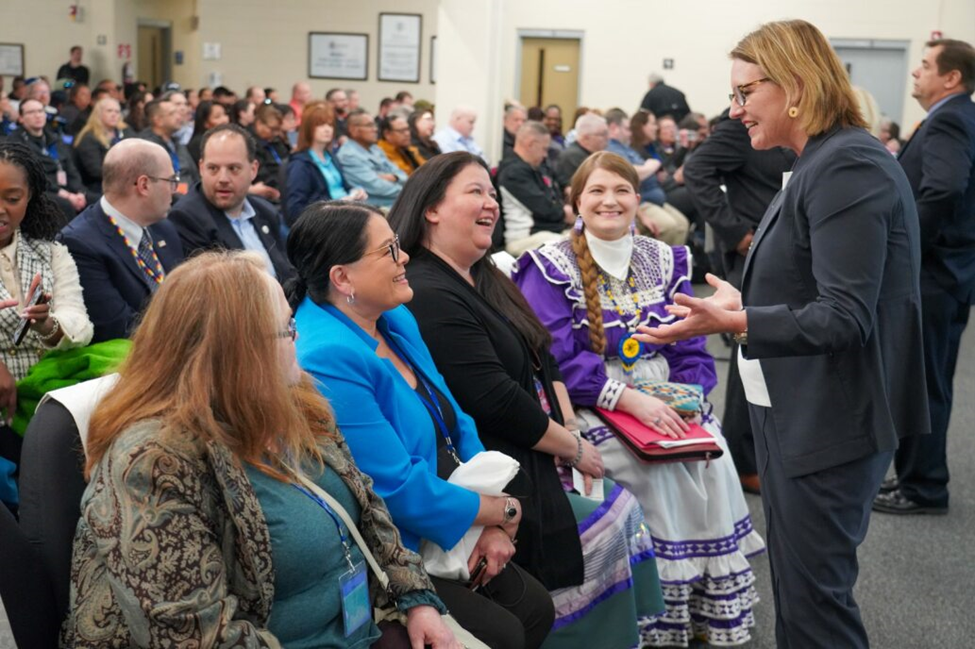 FEMA Administrator Deanne Criswell (far right) and FEMA’s National Tribal Affairs Advocate Kelbie Kennedy (right) discuss strengthening Tribal resilience with Tribal leaders during Tribal Nations Training Week at the Center for Domestic Preparedness. The training kicked off March 10, in Anniston, Alabama, with over 375 Tribal students representing more than 100 Tribal Nations participating. (FEMA Photo)
Yesterday, FEMA’s Center for Domestic Preparedness kicked off its largest ever Annual Tribal Nations Training Week in Anniston, Alabama. Over 375 tribal students representing more than 100 Tribal Nations will participate in engaging workshops, attend specialized classes and engage in Nation-to-Nation dialogue with FEMA leadership. This year’s theme, “Developing Generational Resiliency Through Training,” underscores our commitment to collaborating with and resourcing a skilled tribal emergency management workforce.
On the first day of the training, FEMA Administrator Deanne Criswell addressed tribal students, emphasizing the importance of partnering with Tribal Nations and supporting them before, during and after disasters.
“I’m amazed by the record-setting turnout at this year’s Tribal Training Week,” said Administrator Criswell. “This is an opportunity for Tribal Nations to learn from one another and help us focus on what we at FEMA can do to better support Indian Country before, during and after disasters. FEMA’s leadership is here in person to not only share their best practices in emergency management, but also to listen and learn from the tribal leaders. I’m thankful that we have this forum to come together and build upon last year’s work.”
FEMA’s National Tribal Affairs Advocate Kelbie Kennedy, citizen of the Choctaw Nation of Oklahoma, emphasized the importance of this training. “FEMA’s Tribal Nations Training Week provides vital training for tribal leadership, tribal staff and Indian Health Service staff to build their capacity and strengthen tribal resilience,” said Kennedy. “As the largest gathering of tribal emergency management staff and leadership in the United States, this week provides a place where Tribal Nations can learn from each other, build the inter-tribal emergency management relationships that will save lives and work with FEMA to ensure that we are living up to our treaty and trust responsibilities to all Tribal Nations.”
This 9th annual Tribal Nations Training Week also features an executive session for tribal leaders comprised of a Tribal Leaders Symposium, a tribal listening session with FEMA leadership, a Continuity of Government Operations Planning for Rural Communities and a National Incident Management System Overview for Senior Officials.
After each year’s class, a focus group of tribal students from the previous year is gathered by FEMA to set the theme and agenda for the following year. FEMA’s Tribal Nations Training Week is both created by and for Tribal Nations to ensure that they have vital emergency management information and resources.
Tribal Nations can still attend the 2024 Virtual Tribal Nations Training Week happening March 18-28, 2024, by registering on FEMA.gov today.
To learn more, visit Tribal Nations Training Week | FEMA.gov.
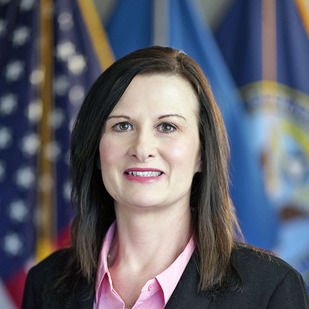
FEMA Administrator Deanne Criswell’s selection of Patricia Pudwill as the agency’s newest Small State and Rural Advocate strengthens FEMA's commitment to serving communities.
This role advises the FEMA Administrator and the agency on small state and rural community concerns and perspectives, as well as facilitates coordination with organizations and associations to enhance response capabilities within these sectors.
Aligning with FEMA’s Year of Resilience, this position enhances individual and community readiness, hazard mitigation and preparedness to build safer, more resilient communities.
This Small State and Rural Advocate position was created during the George W. Bush Administration with Public Law 109-295, the Post-Katrina Emergency Management Reform Act. Pudwill will advocate for 14 states, the District of Columbia and several Tribal Nations and territories -- all of which have populations of less than two million. This also includes many small communities across the nation with 3,000 or less individuals.
|
Pudwill will also counsel states on the emergency and major disaster declaration processes to ensure that the needs of rural communities are being addressed. This includes assisting states and local communities in collecting documentation to demonstrate and validate severe localized impacts to request a disaster declaration.
Rural areas present unique challenges in disaster response. This dedicated position grows FEMA’s culture of preparedness, enhances readiness for catastrophic disasters and supports efforts to jumpstart survivor recovery. The impact of these efforts will increase awareness to access FEMA’s services and funding, resulting in communities better able to withstand and recover from disasters.
Pudwill’s federal service includes experience as the FEMA Integration Team Lead in South Dakota, as well as numerous disaster response and recovery roles. Her prior experience includes more than 12 years with state and local governments within South Dakota.
You can read her full bio at FEMA Welcomes New Small State and Rural Advocate Patricia Pudwill | FEMA.gov.
 Pudwill shares a photo she took near her hometown of Herreid, South Dakota.
Throughout March, FEMA joins the nation in celebrating Women’s History Month.
One of the women the agency is highlighting is FEMA is Deputy Director of Individual Assistance Elizabeth Asche, Ph.D. We asked her more about her role at the agency and what it means to be a leader in equity, diversity and inclusion.
To read the full interview, go to FEMA.gov.
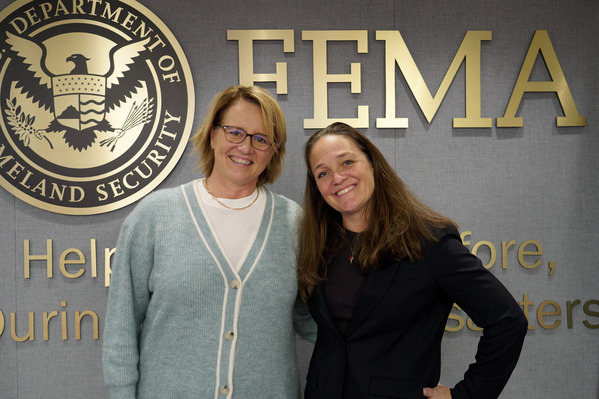 Administrator Deanne Criswell sworn in Individual Assistance Deputy Director Elizabeth Asche in November 2022.
Don’t rely on the luck of the Irish or a four-leaf clover to make sure you’re ready to face a potential disaster. Instead, take steps yourself to prepare for disasters and emergencies now. You can begin by assessing your risk, creating a plan and building an emergency kit.
FEMA’s “It’s Not Luck” campaign focuses on taking control and not leaving preparedness to chance. On Ready.gov, you can find safety and preparedness messages to share on your social media channels or with friends and family.
Read the full blog at FEMA.gov.

…………………………………………………………………………………………………………..
FEMA Hosts Webinar on Resource Management Tool for Incidents
FEMA will host two webinars that will focus on the Resource Typing Library Tool, a web-based catalog that serves as an authoritative source for all FEMA National Incident Management System (NIMS) and National Qualification System resource types. The webinars will be held on March 13 and 19 from 1-2 p.m. ET.
Resource management is critical to prepare for and respond to incidents that require mutual aid among agencies and jurisdictions.
To attend the webinars, FEMA encourages participants to register in advance. Visit the links below to register for the March 13 or March 19 session:
For more information on the Resource Typing Library Tool, visit Resource Typing Library Tool.
…………………………………………………………………………………………………………..
Nonprofit Security Grant Program Webinar Series
FEMA’s Grants Program Directorate invites interested organizations to attend upcoming webinars regarding the Nonprofit Security Grant Program. The program uses a competitive process to award grants for facility hardening and other security enhancements to nonprofit organizations at high risk of a terrorist or other extremist attack.
The webinars will be held on the following dates and times. Register for a webinar on Zoom using the links below:
All interested organizations are required to register in advance for the webinars. Please note that the webinars will cover the same content and will not be recorded for future viewing.
If you have any questions regarding these webinars or require special accommodations, please contact FEMA-NSGP@fema.dhs.gov.
…………………………………………………………………………………………………………..
Attend FEMA’s Webinar Demonstration of Open-text Analysis
FEMA's Continuous Improvement Technical Assistance Program (CITAP) is hosting a 30-minute session on Tuesday, March 19, from 12:30 - 1 p.m. ET to demonstrate a common approach for analyzing open-text qualitative data to inform real-world incident after-action review products.
This webinar will emphasize approaches to open-text analysis outlined in FEMA’s National Continuous Improvement Guidance. To register, visit the webinar's event page on FEMA.gov and click the "Register" button. If an issue arises while registering or logging in, please contact the FEMA CITAP Team at FEMA-CITAP@fema.dhs.gov.
…………………………………………………………………………………………………………..
Attend FEMA Webinar on Mitigation Strategies for a More Resilient Recovery
The DHS Center for Faith-Based and Neighborhood Partnerships and FEMA Individual Assistance Voluntary Agency Coordination Section will co-host a webinar, Making Recovery More Resilient – A Conversation on Mitigation, on Thursday, March 21, at 2 p.m. ET. To register for the webinar visit, FEMA's Zoom page.
This webinar will be focused on highlighting the recently released Guide to Expanding Mitigation, Making the Connection to Faith-Based Partners.
ASL and closed captioning will be provided.
…………………………………………………………………………………………………………..
Emergency Operations Center Skillsets Available for Review and Feedback
FEMA’s National Integration Center released updated National Incident Management System Emergency Operations Center (EOC) Skillsets for national engagement. Feedback is due no later than 5 p.m. ET, March 28, 2024.
Regardless of structure, EOC personnel typically perform these common functions:
- Collect, analyze and share information.
- Support resource needs and requests, including allocation and tracking.
- Coordinate plans and determine current and future needs.
- In some cases, it provides strategic coordination and policy direction.
This update is based on best practices and lessons learned related to operations, assessing processes and transitioning, capabilities, infrastructure (technology), personnel and comprehensive training to support temporary or extended virtual EOC operations or replace the typical EOC model with a hybrid/virtual option.
…………………………………………………………………………………………………………..
FEMA Integrated Public Assistance Forms Available for 60-Day Review
FEMA is requesting public review and comment on its updated Integrated Public Assistance Application forms. These forms standardize required information and documentation for the agency’s Public Assistance Program and Policy Guide. The updated forms are available for a 60-day public comment period, which closes April 1.
These documents reduce the administrative burden of collecting required information by 20%, which meets the Paperwork Reduction Act requirements. This integrated approach to collecting required information will reduce program complexities. The information provided in the initial forms facilitate early identification of an applicant’s critical needs and the type of customer support required to dynamically tailor federal resources to an applicant based on their specific circumstances and resulting needs.
FEMA published the notice for the revision of the forms in the Federal Register (Federal Register: Agency Information Collection Activities: Proposed Collection; Comment Request; Public Assistance Program).
The IPA forms and comment matrix may be accessed at FEMA.gov.
…………………………………………………………………………………………………………..
FEMA Co-Hosts 2024 Partnership Forum Highlighting Stories of Resilience
Registration is now open for the Resilient Nation Partnership Network 2024 Partnership Forum co-hosted with the Sundance Institute. The theme of this year's forum is, “Stories of Resilience: Voices that Inspire.”
Each session will feature diverse speakers discussing and inspiring community-led resilience. Sessions will take place online each Thursday in April (April 4, 11, 18, 25) from 1 – 3 p.m. ET.
Registration is open to all. To register and learn more, visit Resilient Nation Partnership Network | FEMA.gov.
…………………………………………………………………………………………………………..
FEMA Seeks Comments on Simplified Homeowner Flood Insurance Form to Improve Customer Experience
FEMA is seeking public comments to improve the homeowner policyholder experience through a new proposed Homeowner Flood Form to simplify the National Flood Insurance Program's standard flood insurance policy. The proposed Homeowner Flood Form aims to provide homeowners with a more customizable and user-friendly experience with five new proposed endorsements, allowing policyholders to modify their coverage.
Comments can be submitted until April 8 on www.regulations.gov Docket ID: FEMA-2024-0004. Please follow the instructions on the page to submit comments and contact the Regulations.gov Help Desk if you encounter technical issues.
…………………………………………………………………………………………………………..
Biden-Harris Administration Announces $150 Million to Help Underserved Communities Fund Resilience Projects
FEMA announced the second funding opportunity for the Safeguarding Tomorrow Revolving Loan Fund grant program to make communities safer from natural hazards. Funded by the Bipartisan Infrastructure Law, this program provides capitalization grants to eligible applicants nationwide. Applicants then offer low-interest loans directly to local communities to reduce their vulnerability to disasters, promote equity, foster greater community resilience and reduce disaster impacts.
The Safeguarding Tomorrow funding notice is available at Grants.gov. Eligible entities must apply for funding using the Non-Disaster Grants Management System. Applications must be received by Tuesday, April 30, at 3 p.m. ET.
…………………………………………………………………………………………………………..
Application Period Open for Repetitive Flood Mitigation Funding
An additional $300 million in Swift Current funding is available to help property owners across the nation become more resilient to flooding. This funding opportunity is the second time that FEMA is using assets from President Biden’s Bipartisan Infrastructure Law for Swift Current, part of the Flood Mitigation Assistance program. Swift Current makes homes safer and more resilient for National Flood Insurance Program policyholders with repetitively flooded properties. Buildings must be insured through the National Flood Insurance Program to be eligible.
FEMA will work with states and Tribal Nations to explore their participation during this cycle. Potential applicants who have questions may contact their FEMA regional office. The application period opened on Nov. 15, 2023, and the last eligible disaster declaration date is May 31, 2024. The funding opportunity is available on Grants.gov.
…………………………………………………………………………………………………………..
|


