|
FEMA Administrator Deanne Criswell announced the appointment of 12 new members and reappointment of two members to the agency's National Advisory Council.
The National Advisory Council is comprised of 40 geographically diverse emergency managers, emergency responders and subject matter experts from tribal, state, territorial, and local governments, the private sector, and nongovernmental organizations. The 14 new and reappointed members will join the council beginning Dec. 1 and will guide future recommendations centered around readiness, climate resilience, and gender-based violence in the aftermath of disasters.
This year, Carrie Speranza, director of Esri’s Emergency Management Solutions, is the new National Advisory Council chair, making her the first woman to lead the Council. Speranza previously served as vice chair alongside outgoing Chair Jeff Hansen, director of the Office of Emergency Management for the Choctaw Nation of Oklahoma.
The National Advisory Council advises the FEMA Administrator on all aspects of emergency management, including preparedness, protection, response, recovery and mitigation for disasters and national emergencies.
The following 12 members will begin their terms on Dec. 1:
- Councilman Nelson Andrews, Emergency Management Director, Mashpee Wampanoag Tribe.
- The Honorable Jill Boudreau, Mayor, City of Mount Vernon, Washington.
- Chloe Demrovsky, President and Chief Executive Officer, Disaster Recovery Institute International.
- Thomas Jenkins, Fire Chief, City of Rogers, AR, Fire Department.
- Michael Méndez, Assistant Professor, Department of Urban Planning & Public Policy, University of California, Irvine.
- Thomas Munoz, Deputy Director and Emergency Management Coordinator, City of Houston, Office of Emergency Management.
- Brittany Perkins Castillo, Chief Executive Officer, AshBritt, Inc.
- Salvatore Scarpa, Fire-EMS Chief, Columbus Fire and Emergency Medical Services
- The Honorable Frank Scott, Mayor, City of Little Rock.
- Seth Statler, Director of Government Affairs, National Fire Protection Association.
- David Thomson, Clinical Professor and Medical Director, College of Health and Human Services, Department of Health and Exercise Science, Colorado State University.
- Michael P. Williams, Sr., Akiak Native Community Tribal Judge, Yupiit Nation.
The new members will be accompanied by two reappointed members:
- Donald Bliss, Vice President, Field Operations (Ret.), National Fire Protection Association
- Brian Strong, Chief Resilience Officer and Director, Office of Resilience and Capital Planning, City and County of San Francisco
Council members concluding their terms on Nov. 30, include:
- Jeanne Abadie, PACE, Program Manager, Office of Aging and Adult Services, Louisiana Department of Health.
- Sue Anne Bell, Assistant Professor, University of Michigan.
- Donna Boston, Senior Manager, Business Resilience and Emergency Planning, Southern California Edison.
- Paul Downing, Indian Township Tribal Council Member, Passamaquoddy Tribe at Indian Township.
- Jeff Hansen, Director, Office of Emergency Management, Choctaw Nation of Oklahoma.
- Anna Lang, Research Engineer, Founder, Zylient.
- Linda Long, Battalion Chief (Ret.), Philadelphia Fire Department.
- Tina Titze, Director, South Dakota Office of Emergency Management.
- James Waskom, Director (Ret.), Louisiana Governor’s Office of Homeland Security and Emergency Preparedness.
For additional information on the council, visit FEMA.gov.
In 1992, the United Nations General Assembly proclaimed Dec. 3 as the annual observance of the International Day of Persons with Disabilities. This observance is designed to promote the rights and well-being of people with disabilities in every aspect of life, as well as to increase awareness in their communities.
The 2023 theme of the observance is united in action to rescue and achieve sustainable development goals for, with and by persons with disabilities. The goals were adopted by the United Nations in 2015 as a universal call to action to balance social, economic and environmental sustainability. Many of the goals align with FEMA’s commitment to equity.
"Lived experiences that involve disabilities are universal; culture, language, and social attitudes play a critical role in making space for people with disabilities to see their greatest potential," said FEMA Disability Integration and Coordination Director Sherman Gillums, Jr. “How one navigates life when using a wheelchair, sign language, screen reader, or other assistive aids to function independently has evolved over time, and people with disabilities around the world are becoming more self-determined once they see, understand, and appreciate the fullest expanse of what they can do with the right help and support when they need it. This also positions those same people to help others by potentially making their lived experiences a chapter in someone else’s survival guide.”
FEMA is committed to equitably delivering programs and services, as well as shortening the disaster lifecycle for people with disabilities. The agency works with state, local, tribal and territorial stakeholders to provide innovative solutions for identifying and addressing concerns and barriers to access for people with disabilities.
FEMA includes people with disabilities in trainings, exercises and community-level preparedness activities to ensure the agency is delivering programs and services in an effective and accessible way. In fact, FEMA is commemorating this year’s campaign with the launch of an updated training course, Including People with Disabilities in Disaster Operations, for all personnel involved with disaster operations to learn more about including people with disabilities in disaster operations.
FEMA is marking this year’s International Day of Persons with Disabilities with the release of a new version of its training course: IS:368 A. Including People with Disabilities in Disaster Operations, led by the agency's Office of Disability Integration and Coordination (ODIC).
“The Office of Disability Integration and Coordination remains committed to ensuring that first responders at every level are equipped with the tools and knowledge necessary to infuse equity in emergency management,” said ODIC Director Sherman Gillums, Jr. “The release of this course signifies that our commitment to make disability inclusion a part of every program office in the agency.”
The course is designed for all personnel involved in disaster operations. It provides an introductory overview of information and strategies on how to include people with disabilities during mitigation, preparedness, response and recovery efforts.
The course focuses on:
- The difference between disabilities and access and functional needs.
- FEMA’s actions supporting the integration of people with disabilities in disaster operations and ways to shorten the disaster cycle for them.
- The differences between equity vs equality.
- Ways to ensure terminology is in alignment with the needs of people with disabilities.
- Messaging to ensure inclusivity and accessibility to all emergency managers.
- Guidance to FEMA staff on how to ensure physical, program and communication access to the whole community.
The course is live now and can be accessed on FEMA.gov. The self-paced course should take two hours to complete.
On Nov. 1, FEMA and the Cybersecurity and Infrastructure Security Agency (CISA) held their eighth tribal consultation to discuss the Tribal Cybersecurity Grant Program with dozens of tribal representatives. The application deadline for Fiscal Year (FY) 2023 Tribal Cybersecurity Grant Program is Wednesday, Jan. 10.
Consultations began in June 2022 to provide structured communication for tribal input and feedback, with the goal of using this feedback from Tribal leaders and representatives to shape policies and procedures for grant programs. This includes the Tribal Cybersecurity Grant Program, the Tribal Homeland Security Grant Program and the Emergency Management Grant Program, among others.
The tribal cyber grant program, which began in FY 2022, provides funding to federally recognized tribal governments to address cybersecurity risks and threats to information systems owned or operated by or on behalf of tribes. The most recent consultation is being used to improve the program for FY 2024.
The FY 2023 program funding is $18.2 million, including unused rollover funding from the FY 2022 State and Local Cybersecurity Grant Program. To learn more about the Tribal Cybersecurity Grant Program, including several changes based on input from the consultation, visit FEMA.gov.
The Salt River Pima-Maricopa Indian Community hosted FEMA’s Office of National Continuity Programs at the Scottsdale Community College Indigenous Cultural Center in Arizona from Nov. 1-2 for a pilot training course focused on continuity planning for tribal governments.
Representatives from 13 tribal nations from across the country contributed their experience, expertise and valuable insight into the content update to the Continuity Planning for Tribal Governments course that will be accessible to all tribal nations through the Emergency Management Institute (EMI) in 2024.
During the pilot, tribal representatives provided tribal-specific anecdotes, examples of tribal continuity, feedback, best practices, and lessons learned directly to course developers to inform the final version of course materials. The discussions included how continuity planning can benefit tribes, cultural considerations for continuity planning, identification of Tribal essential functions and options to reduce a tribe’s risk. Dr. Eric Leshinskie, president of the Scottsdale Community College, provided a warm welcome to the campus, and Vice President Ricardo Leonard of the Salt River Pima-Maricopa Indian Community offered a blessing.
FEMA is thankful for the opportunity to work closely with the diverse tribal nations that participated in the pilot, the continued coordination with FEMA Region 9, and the multiple Regional Tribal Liaisons who assisted with participant coordination. FEMA appreciates the support from the Salt River Pima-Maricopa Indian Community and Scottsdale Community College for providing the forum to help improve training materials and better serve our tribal partners.
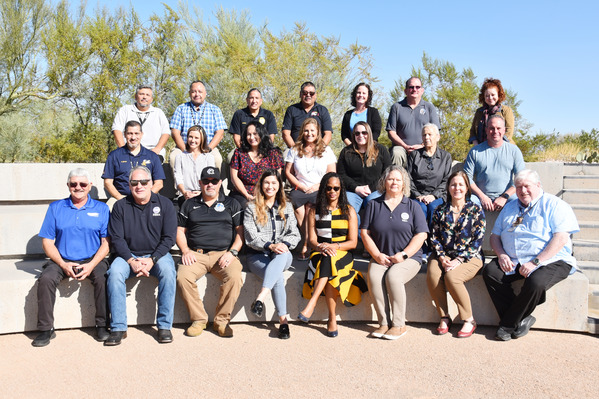
Representatives from FEMA and 13 tribal nations participate in a pilot training course focused on continuity planning for tribal governments, held in Arizona from Nov. 1-2.
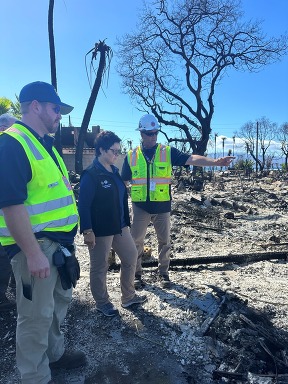
The U.S Fire Administrator, Dr. Lori Moore-Merrell, visited the wildfire impacted areas on Maui and met with federal staff from the Environmental Protection Agency (EPA) who are working to de-energize and remove the lithium-ion batteries in the aftermath of the wildfires in Lahaina. The Fire Administrator heard briefings from the U.S. Army Corp of Engineers and the U.S. Coast Guard on debris and contaminate removal on land and in the water.
She also met with Hawaiian fire chiefs within the margins of Hawaii Fire Chief Conference on Kauai and provided an update on the U.S. Fire Administration's post-Summit National Strategy and the #FireServiceOneVoice initiative, as well as our current role in the Lahaina recovery efforts. During the conference, the Fire Administrator signed a memorandum of understanding with the XPRIZE Foundation to support their XPRIZE Wildfire competition, aimed at bringing innovative solutions to end devastating wildfires.
While on Kauai, the U.S. Fire Administration team visited a DHS Science and Technology Directorate wildfire sensor test site and received a brief on how the sensors work to collect data on early signs of wildfire and alert local authorities.
The Fire Administrator also met with the members of Hawaii's and New Zealand's indigenous communities, listening to their concerns and learning from their wisdom about best practices on land and water management.
To learn more about the U.S. Fire Administration and fire safety, visit U.S. Fire Administration (fema.gov).
|
In time for holiday travel and winter weather, FEMA’s Ready Campaign launched the first-ever #WinterReady campaign, encouraging people to identify and reduce the risks they face during the winter months. The #WinterReady campaign provides easy, low-cost tips to keep you safe, including ways to keep homes warm, travel safely and prepare for inclement weather and simple steps to mitigate the risks of home fires which are most prevalent during this time.
Winter weather brings risks that can be avoided with appropriate preparation. According to the CDC’s National Center for Health Statistics, more temperature-related deaths are attributable to cold exposure than heat, with Americans in rural communities most likely to be impacted. According to the U.S. Fire Administration, one of the most critical risks to mitigate is fires caused by home portable heaters, which remain the second leading cause of home fires in the United States.
Additionally, communities across the nation experience severe winter weather in different ways, face unique risks and have varying levels of infrastructure or experience to handle extreme weather events. Increases in anomalous winter weather in the South and more frequent winter storms, including lake-effect snowstorms in the Northeast, are increasing vulnerabilities for these communities. The #WinterReady tools and resources can help keep them safe.
Over the last few years, FEMA has designed campaigns to meet the needs of specific communities. This year’s Ready campaign focuses on older adults, specifically those with limited financial resources, those living with disabilities and those living in rural areas. As part of the FEMA Ready campaign’s goal of empowering all people to take steps to become disaster resilient, FEMA and the Ad Council launched new PSAs developed specifically for older adults.
The campaign’s new “Take Control” PSAs empowers older adults and their caregivers to take three simple steps to prepare for an emergency:
- Assess needs.
- Make a plan.
- Engage support networks.
This is the first time FEMA has created a campaign to reach older adults with tailored messaging and information specifically for them. FEMA also released an older adults guide in English and Spanish available on Ready.gov/OlderAdults and Listo.gov/Adultos-Mayores to support older adults and their caregivers in preparedness efforts.
The “Cyber Incident Response Planning” video is a six-minute guide that complements the recently released “Planning Considerations for Cyber Incidents: Guidance for Emergency Managers.” The video outlines the important roles emergency managers have in planning for cyber incidents that impact their communities through identifying and prioritizing critical services and dependencies.
FEMA and CISA will host a webinar at 3 p.m. ET on Nov. 29, to provide an overview of the guide and supporting materials. To learn more about the webinar sessions and to download the guide and supporting materials, visit Planning Guides | FEMA.gov.
To view the video, visit the agency's YouTube page. To download the guide and register for a webinar session, visit FEMA.gov.
FEMA Publishes a Proposed Rule for Public Comment on the Federal Flood Risk Management Standard
FEMA published a Notice of Proposed Rulemaking in the Federal Register for revisions to its floodplain management regulations at Title 44 Part 9 of the Code of Federal Regulations (CFR): Floodplain Management and Protection of Wetlands.
This 60-day public comment period closes Dec. 1. The proposed revisions fully implement the Federal Flood Risk Management Standard (FFRMS). The FFRMS increases the resilience of federally funded projects by incorporating anticipated changes in future flood risk into certain federally funded projects to ensure that those projects last as long as intended.
…………………………………………………………………………………………………………..
FEMA Publishes Resources for Developing BRIC and FMA Grant Applications
On Oct. 12, FEMA announced $1.8 billion available in funding for the Fiscal Year 2023 Building Infrastructure and Communities (BRIC) and Flood Mitigation Assistance grant programs. The BRIC funding level will be $1 billion, and the Flood Mitigation Assistance funding level will be $800 million.
FEMA published several program support materials and launched a series of webinars and on-demand videos that provide important resources and information for prospective applicants and sub-applicants. These resources can be used to help develop applications for these two FEMA hazard mitigation grants. The application period for both programs closes on Feb. 29, 2024.
These program support materials are resources to help state, local, tribal and territorial governments preparing applications for this grant cycle. The following program support materials are:
Information about the Building Resilient Infrastructure and Communities and Flood Mitigation Assistance Funding Opportunities Webinar Series is available online and includes an opportunity to watch the video or download the presentation. This webinar provides an overview of and guidance on how to request Building Resilient Infrastructure and Communities Direct Technical Assistance in fiscal year 2023. More information about this opportunity is available on the BRIC Direct Technical Assistance webpage. Please complete this form by Feb. 29, 2024.
…………………………………………………………………………………………………………..
Application Period Now Open for Vanguard Executive Crisis Leaders Fellowship
FEMA Administrator Deanne Criswell announced that the agency is accepting nominations for the 2024 cohorts of the Vanguard Executive Crisis Leaders Fellowship. The program brings together the most experienced crisis leaders from different sectors, including federal, state, local, tribal, territorial, private, academic and non-profit.
There will be three cohorts in 2024: February/April, May/June and July/August. Each cohort will comprise 25 participants representing federal, state, local, tribal, territorial, academic, non-profit, philanthropic and private sector crisis leaders. The application for all 2024 cohorts closes Dec. 15.
Executive leaders interested in applying should submit their resume, personal statement and preferred cohort dates to fema-emi-superintendent@fema.dhs.gov. For additional details on the application process, visit www.training.fema.gov/programs/vanguard.
…………………………………………………………………………………………………………..
FEMA Announces $211M to Fund Dam Safety Grants
FEMA will commit more than $211 million in funding to enhance dam safety efforts across the nation to ensure that communities have the critical infrastructure needed to protect against disasters and prevent flooding.
The Rehabilitation of High Hazard Potential Dams program is making about $185 million available and another approximate $26 million available through the National Dam Safety State Assistance Grant Program. The investments funded by the Bipartisan Infrastructure Law will help protect communities from flooding, avoid disaster costs and strengthen resilience to climate change.
National Dam Safety State Assistance Grant Program is available for any state or territory with an enacted dam safety program. The state administrative agency, or an equivalent state agency, is eligible to apply. Each eligible state or territory may submit only one grant application. The funding opportunities are open now and will close on Feb. 29, 2024. Available opportunities may be found on Grants.gov.
…………………………………………………………………………………………………………..
FEMA Announces Second Round of Funding to Mitigate Repetitive Flooding
Another $300 million in Swift Current funding is available to help property owners across the nation become more resilient to flooding. This funding opportunity is the second time that FEMA is using funds from President Biden’s Bipartisan Infrastructure Law for Swift Current, part of the Flood Mitigation Assistance program. Swift Current makes homes safer and more resilient for National Flood Insurance Program policyholders with repetitively flooded properties. To be eligible, buildings must be insured through the National Flood Insurance Program.
FEMA will work with states, Tribes and territories to explore their participation during this cycle. Potential applicants who have questions may contact their FEMA regional office. The application period opened on Nov. 15 and the last eligible disaster declaration date is May 31, 2024. The funding opportunity is available on Grants.gov.
…………………………………………………………………………………………………………..
|


