|
As we commemorate Native American Heritage Month, we reflect on the enduring legacy, resilience and invaluable contributions of Tribal Nations. FEMA is humbled by the wisdom and cultural richness of Tribal Nations and is committed to addressing past injustices by working with Tribal Nations to create a more inclusive and equitable future.
Through FEMA's first National Tribal Strategy, we aim to support Tribal Nations and to include them in decision-making processes that directly affect their communities. The National Tribal Strategy is a critical step in this direction.
Disasters have disproportionately impacted Tribal Nations, worsening existing vulnerabilities and disparities. FEMA recognizes the need for tailored disaster response and recovery plans that address the unique challenges faced by Tribal Nations. We are committed to providing equitable access to resources, funding and support, and we stand ready to support Tribal Nations in defining their own pathways to resilience.
FEMA helps Tribal Nations improve readiness and resilience to natural disasters with comprehensive emergency management training opportunities. The annual Tribal Nations Training Week offers emergency certifications, training and networking opportunities, all fully funded for Tribal leaders, Tribal first responders, Tribal healthcare providers, Tribal grant specialists and any designated Tribal Nation staff. Tribal Nations and their staff can register now for the 9th Annual Tribal Nations Training Week between March 9-16, 2024, and email David.Hall@fema.dhs.gov to learn more.
FEMA Administrator Deanne Criswell announced that the agency is accepting nominations for the 2024 cohorts of the Vanguard Executive Crisis Leaders Fellowship. The program brings together the most experienced crisis leaders from different sectors, including federal, state, local, tribal, territorial, private, academic and non-profit.
The purpose of the program is to:
- Explore frameworks of crisis leadership.
- Build networks across different sectors.
- Learn from partners outside the traditional emergency management field and discuss rising threats and future challenges.
Vanguard will help leaders to be proactive and innovative in preparing for the challenges that lie ahead. The program is a two-week crisis leadership program designed for executive leaders with at least 15 years of experience in emergency management, crisis leadership or experience in leading through a novel crisis event and who are at the GS-15/Federal SES level.
There will be three cohorts in 2024: February/April, May/June and July/August. Each cohort will comprise 25 participants representing federal, state, local, tribal, territorial, academic, non-profit, philanthropic and private sector crisis leaders. The application for all 2024 cohorts closes Dec. 15.
Executive leaders interested in applying should submit their resume, personal statement and preferred cohort dates to fema-emi-superintendent@fema.dhs.gov. For additional details on the application process, visit www.training.fema.gov/programs/vanguard.
Another $300 million in Swift Current funding is available to help property owners across the nation become more resilient to flooding.
This funding opportunity is the second time that FEMA is using funds from President Biden’s Bipartisan Infrastructure Law for Swift Current, part of the Flood Mitigation Assistance program. Swift Current makes homes safer and more resilient for National Flood Insurance Program policyholders with repetitively flooded properties.
Swift Current aims to speed up the award of Flood Mitigation Assistance funding to reduce the damage-repair cycle of repetitively flooded or substantially damaged properties. Rather than through the annual grant cycles, Swift Current provides resiliency dollars for properties insured through the NFIP as quickly and equitably as possible after a flood disaster event.
Examples of projects eligible for this funding include property acquisition and demolition, elevation and relocation. To be eligible, buildings must be insured through the National Flood Insurance Program.
For this announcement, FEMA expanded criteria so more places could benefit. Applicants will be eligible if they meet two criteria:
- Applicants will meet eligibility criteria if they have received a major disaster declaration for a flood-related disaster event between June 1, 2023 - May 31, 2024. Flood-related disaster events include coastal storms, hurricanes, remnants of hurricanes and floods.
- Additionally, one of the following criteria must be met:
- The applicant (state, tribe or territory) has at least $1 million in prior National Flood Insurance Program claims from June 1, 2022, to the major disaster declaration date until May 31, 2024.
- The applicant (state, tribe or territory) has 500 or more National Flood Insurance Program claims in a declared flood-related disaster event from June 1, 2022, to May 31, 2024.
- The applicant is a federally recognized tribe or U.S. territory that does not meet the flood insurance claims-based allocation determination criteria previously mentioned.
FEMA will work with states, Tribes and territories to explore their participation during this cycle. Potential applicants who have questions may contact their FEMA regional office.
The application period opened on Nov. 15 and the last eligible disaster declaration date is May 31, 2024. The funding opportunity is available on Grants.gov.
U.S. Fire Administrator Lori Moore-Merrell recently led a delegation to Chiapas, Mexico, where she signed a formal memorandum of understanding with the Mexican Association of Fire Chiefs (Asociación Mexicana de Jefe de Bomberos).
The memorandum aims to advance existing work among North American fire services and promote national resilience on both sides of the U.S.– Mexico border. During the visit, the Administrator also met with the Governor of Chiapas and the Municipal President of San Cristobal de las Casas. The event concluded with a keynote by the Administrator Moore-Merrell and the opening of the first fire academy in Chiapas, marking a historic moment.
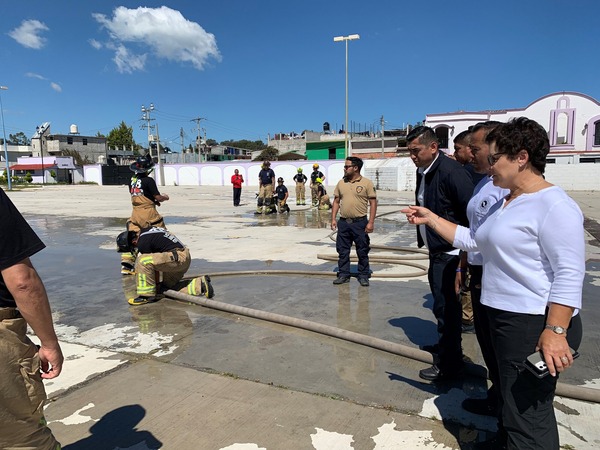 Dr. Lori Moore-Merrell was invited to observe exercises at the conference being led by Tijuana firefighters known for their innovation and forward-thinking in firefighter training.
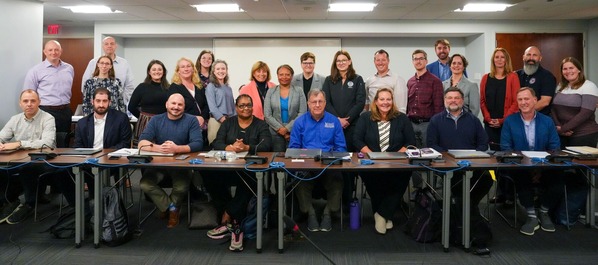
On Nov. 7 and 8, FEMA and U.S. Department of Housing and Urban Development (HUD) concluded the Pre-Disaster Housing Initiative Summit in Chicago. This joint FEMA and HUD initiative, in partnership with state emergency management and state housing partner organizations from Louisiana, Montana, New Jersey and Washington developed strategies to increase availability and affordability of safe housing following a disaster.
Over the past six months, FEMA, HUD and state partners met regularly to improve coordination and collaboration across interstate organizations on the critical issues facing emergency management and housing.
During the closing summit, attendees continued their collaboration in working sessions and heard presentations from MIT’s Urban Risk Lab and Humanitarian Supply Chain Lab and FEMA’s resilience team. FEMA Administrator Deanne Criswell and HUD Deputy Secretary Adrianne Todman were in attendance and heard directly from the state participants and saw presentations of their pre-disaster housing plans.
This collaboration is part of a larger effort to create a resource document on disaster housing for local jurisdictions. In addition to identifying common challenges and solutions in pre-disaster housing, this initiative strengthened networks between emergency management and housing staff from these states while encouraging peer-to-peer collaboration and discussions.
Over the past two years, FEMA has been working to streamline the Registration Intake process for disaster survivors applying for assistance through FEMA call centers and DisasterAssistance.gov.
The new process improves the customer experience by providing a simpler, more intuitive application process while reducing the burden of applying for disaster assistance. This will provide applicants a simple, tailored, plain language experience that only requires them to answer questions based on their specific assistance needs.
The updates at DisasterAssistance.gov began Oct. 30 using a phased implementation approach with an initial 2% of applicants directed to the new registration intake process, which will increase to 100% over the coming months. The measured ramp up will ensure applicants are not affected by any technical issues that may come up. Updates to the call center registration intake also began Oct. 30 and will continue into 2024.
This initiative aligns with Executive Order 14058 – Transforming Federal Customer Experience and Service Delivery to Rebuild Trust in Government. FEMA continues to review and streamline disasters processes and procedures as part of our commitment to serve disaster survivors and jumpstart their recovery.
FEMA published “Achieving Equitable Recovery: A Post-Disaster Guide for Local Officials and Leaders,” a first of its kind framework to help rebuild communities in a more accessible, inclusive, and equitable manner. This guide helps local leaders and officials to better understand, prepare for and execute their leadership responsibilities to promote equity, create accountability and establish an inclusive recovery planning process and recover from disasters while rebuilding long-lasting inclusivity.
“From day one of my tenure, I have asked our agency to put the needs of the diverse communities we serve first. This has meant finding new, creative ways to better support these communities as they recover and rebuild after a disaster strikes,” said FEMA Administrator Deanne Criswell. “This new guide offers fresh insights and strategies for local officials and leaders to ensure the work they are doing to rebuild their communities is done with inclusivity, accountability, and equity top of mind.”
This guide supports local officials and leaders in their efforts to identify needs, establish critical partnerships, leverage new opportunities, conduct strategic public engagement and make a strong case for recovery in an equitable manner. The guide is organized around eight goals focused on approaches to engaging and identifying the needs of all community members and ensuring a more accessible, inclusive and equitable recovery planning process.
This is just the latest example of how FEMA puts people first in its program and policies. In September, Administrator Criswell and NAACP President Derrick Johnson signed an agreement outlining ways in which the two organizations will work together to help people before, during and after disasters, building on the first agreement that was signed by the two organizations in 2013.
FEMA made significant changes to Individual Assistance application process, leading to over 158,000 survivors receiving assistance who would have previously been ineligible. This has resulted in more than $926 million in additional assistance for survivors. In FEMA’s 2022-2026 Strategic Plan, the agency is committed to a goal of “Instilling Equity as a foundation of emergency management.”
Read the guide on FEMA.gov.
On Nov. 1 and 2, FEMA hosted its fourth annual civil rights summit. The agency assembled a diverse and experienced lineup of speakers from both the federal family and community organizations to discuss advancing environmental justice and civil rights in our work.
“We’re at a turning point in the way we look at and assess natural hazards,” said FEMA Administrator Deanne Criswell. “We need to end the cycle of response and recovery and start building the resilience our communities need from the jump. And we need to do it equitably and with the different needs of communities across the nation in mind. This is the reason why instilling equity as the foundation of emergency management is the no. 1 goal of our FEMA Strategic Plan.”
In addition to speakers from FEMA, presenters represented nonprofit, federal and academic organizations, including the U.S. Environmental Protection Agency, the U.S. Fire Administration, Elizabeth City State, Stanford University, Yale and Rice Universities, Thriving Earth Exchange, Little Growers Inc., OUT for Sustainability, among others. A full list of speakers is available here.
During the summit, presenters shared their wealth of knowledge and information gleaned from their areas of expertise and personal experiences. Speakers from FEMA focused specifically on how the agency is working to make advancing environmental justice and civil rights a priority in the work it does now and into the future.
“Whether it’s through the Justice40 Initiative, the creation of Community Disaster Resilience Zones, the Building Resilient Infrastructure and Communities grant program or many of our other initiatives, FEMA has been working nonstop to find and help underserved communities at risk of being left behind following a disaster,” said FEMA Deputy Administrator Erik A. Hooks.
Topics of discussion at the summit included environmental justice and housing, as well as the outlook for environmental justice in emergency management, climate change and health.
“FEMA greatly appreciates the willingness of the presenters, panelists and participants to engage and share their experiences as we continue to strive towards ensuring equity for all communities before, during and after disasters,” said FEMA’s Office of Equal Rights Director Leslie Saucedo.
During the summit, non-profit organizations shared information about their work in communities. They also discussed the positive impact federal funding can have in supporting grassroots organizations.
The summit further emphasizes FEMA’s commitment to prioritize environmental justice, advancing President Biden’s top priority of ensuring that at least 40% of grants and assistance reach historically underserved communities. To achieve this goal, FEMA has worked hard to successfully deliver programs to send historic funding to communities large and small who desperately need help building resilience by:
For more information about FEMA’s External Civil Rights Division, visit External Civil Rights Division | FEMA.gov or email FEMA-CivilRightsOffice@fema.dhs.gov.
FEMA and CISA Release a Cyber Incident Planning Guide for Emergency Managers
FEMA released “Planning Considerations for Cyber Incidents: Guidance for Emergency Managers,” a foundational product developed in coordination with the Cybersecurity and Infrastructure Security Agency (CISA).
FEMA, in cooperation with CISA, will host 60-minute webinars to provide an overview of the guide and supporting materials. See below for webinar details:
-
Webinar 4: Wednesday, Nov. 29 at 3 p.m. ET
To learn more about the webinar sessions and to download the guide and supporting materials, visit Planning Guides | FEMA.gov.
…………………………………………………………………………………………………………..
FEMA Seeks Feedback on Resource Typing for Emergency Medical Services
FEMA is seeking public input on 12 draft documents related to ground Emergency Medical Services (EMS) and ambulance response as part of the National Incident Management System (NIMS)—the documents focus on public health, healthcare and EMS, including paramedics and ambulances.
These resource typing documents aim to enhance interoperability, developed to improve how different systems work together effectively to provide mutual aid where needed. They establish baseline qualifications and facilitate sharing resources that can be deployed across all jurisdiction levels.
National engagement provides an opportunity for stakeholders to review and comment on the draft documents, ensuring their relevance to all implementing partners.
To provide comments on the draft documents during the 30-day comment period, visit National Incident Management System | FEMA.gov, under the Public Feedback and Engagement section, then complete and submit the feedback form to FEMA-NIMS@fema.dhs.gov no later than 5 p.m. ET, Nov. 23.
…………………………………………………………………………………………………………..
FEMA Publishes a Proposed Rule for Public Comment on the Federal Flood Risk Management Standard
FEMA published a Notice of Proposed Rulemaking in the Federal Register for revisions to its floodplain management regulations at Title 44 Part 9 of the Code of Federal Regulations (CFR): Floodplain Management and Protection of Wetlands.
This 60-day public comment period closes Dec. 1. The proposed revisions fully implement the Federal Flood Risk Management Standard (FFRMS). The FFRMS increases the resilience of federally funded projects by incorporating anticipated changes in future flood risk into certain federally funded projects to ensure that those projects last as long as intended.
…………………………………………………………………………………………………………..
FEMA Announces $211M to Fund Dam Safety Grants
FEMA will commit more than $211 million in funding to enhance dam safety efforts across the nation to ensure that communities have the critical infrastructure needed to protect against disasters and prevent flooding.
The Rehabilitation of High Hazard Potential Dams program is making about $185 million available and another approximate $26 million available through the National Dam Safety State Assistance Grant Program. The investments funded by the Bipartisan Infrastructure Law will help protect communities from flooding, avoid disaster costs and strengthen resilience to climate change.
National Dam Safety State Assistance Grant Program is available for any state or territory with an enacted dam safety program. The state administrative agency, or an equivalent state agency, is eligible to apply. Each eligible state or territory may submit only one grant application. The funding opportunities are open now and will close on Feb. 29, 2024. Available opportunities may be found on Grants.gov.
…………………………………………………………………………………………………………..
FEMA Publishes Resources for Developing BRIC and FMA Grant Applications
On Oct. 12, 2023, FEMA announced $1.8 billion available in funding for the Fiscal Year 2023 Building Infrastructure and Communities (BRIC) and Flood Mitigation Assistance grant programs. The BRIC funding level will be $1 billion, and the Flood Mitigation Assistance funding level will be $800 million.
FEMA published several program support materials and launched a series of webinars and on-demand videos that provide important resources and information for prospective applicants and sub-applicants. These resources can be used to help develop applications for these two FEMA hazard mitigation grants. The application period for both programs closes on Feb. 29, 2024.
These program support materials are resources to help state, local, tribal and territorial governments preparing applications for this grant cycle. The following program support materials are:
Information about the Building Resilient Infrastructure and Communities and Flood Mitigation Assistance Funding Opportunities Webinar Series is available online and includes an opportunity to watch the video or download the presentation. This webinar provides an overview of and guidance on how to request Building Resilient Infrastructure and Communities Direct Technical Assistance in fiscal year 2023. More information about this opportunity is available on the BRIC Direct Technical Assistance webpage. Please complete this form by Feb. 29, 2024.
…………………………………………………………………………………………………………..
|


