|
FEMA has begun highlighting community and overall agency resilience efforts around mitigation grants and other initiatives. The agency is highlighting projects, amplifying major initiatives and grant funding to help fight climate change and economic empowerment through disaster resiliency investments.
On Aug. 7, FEMA Region 9 visited a site in Honolulu to highlight structural retrofit that hardens a nonprofit building from natural hazards. Lanakila Pacific—O'ahu's largest and only island-wide meal provider for seniors —is using a FEMA grant to fortify its facility so it has a better chance to continue offering its community services during extreme weather events.
On Aug. 11, FEMA Region 5 will participate in a ribbon cutting for a flood reduction project near Chicago. The Metropolitan Water Reclamation District of Greater Chicago completed a 600-acre-foot Addison Creek Reservoir to capture 195 million gallons of stormwater and overbank flooding from the Addison Creek Channel. The project will help alleviate public health and safety concerns by reducing overbank flooding to approximately 2,200 structures in six Cook County communities: Bellwood, Westchester, Broadview, Melrose Park, Stone Park and Northlake.
The ribbon cutting will formally recognize this milestone and kick off the next phase of channel improvements of the project benefitting from a FEMA grant. Visit FEMA.gov for announcements and related content regarding this month's activities, grant selections and funding announcements.
Test Messages Will be Sent to All TVs, Radios and Cell Phones
FEMA, in coordination with the Federal Communications Commission (FCC), will conduct a nationwide test of the Emergency Alert System (EAS) and Wireless Emergency Alerts (WEA) on Oct. 4.
The national test will consist of two portions, testing WEA and EAS capabilities. Both tests are scheduled to begin at approximately 2:20 p.m. ET on Wednesday, Oct. 4.
The WEA portion of the test will be directed to all consumer cell phones and will be the third nationwide test, but the second test to all cellular devices. The test message will display in either English or Spanish, depending on the language settings of the wireless handset. The EAS portion of the test will be sent to radios and televisions. This will be the seventh nationwide EAS test.
FEMA and the FCC are coordinating with EAS participants, wireless providers, emergency managers and other stakeholders in preparation for this national test to minimize confusion and to maximize the public safety value of the test.
The purpose of the Oct. 4 test is to ensure that the systems continue to be effective means of warning the public about emergencies, particularly those on the national level. In case the Oct. 4 test is postponed due to widespread severe weather or other significant events, the backup testing date is Oct. 11.
The WEA portion of the test will be initiated using FEMA's Integrated Public Alert and Warning System (IPAWS), a centralized internet-based system administered by FEMA that enables authorities to send authenticated emergency messages to the public through multiple communications networks. The WEA test will be administered via a code sent to cell phones.
This year the EAS message will be disseminated as a Common Alerting Protocol (CAP) message via the Integrated Public Alert and Warning System-Open Platform for Emergency Networks (IPAWS-OPEN).
All wireless phones should receive the message only once. The following can be expected from the nationwide WEA test:
- Beginning at approximately 2:20 p.m. ET, cell towers will broadcast the test for approximately 30 minutes. During this time, WEA-compatible wireless phones that are switched on, within range of an active cell tower, and whose wireless provider participates in WEA, should be capable of receiving the test message.
- For consumers, the message that appears on their phones will read: "THIS IS A TEST of the National Wireless Emergency Alert System. No action is needed."
- Phones with the main menu set to Spanish will display: “ESTA ES UNA PRUEBA del Sistema Nacional de Alerta de Emergencia. No se necesita acción.”
WEA alerts are created and sent by authorized federal, state, local, tribal and territorial government agencies through IPAWS to participating wireless providers, which deliver the alerts to compatible handsets in geo-targeted areas. IPAWS helps ensure that these alerts are accessible to the entire public, including people with disabilities, with the alerts being accompanied by a unique tone and vibration.
Important information about the EAS test:
- The EAS portion of the test is scheduled to last approximately one minute and will be conducted with the participation of radio and television broadcasters, cable systems, satellite radio and television providers and wireline video providers.
- The test message will be similar to the regular monthly EAS test messages with which the public is familiar. It will state: "This is a nationwide test of the Emergency Alert System, issued by the Federal Emergency Management Agency, covering the United States from 14:20 to 14:50 hours ET. This is only a test. No action is required by the public.
The Department of Homeland Security announced the availability of $379.4 million in grant funding for the Fiscal Year (FY) 2023 State and Local Cybersecurity Grant Program (SLCGP). This program was made possible by President Biden's Bipartisan Infrastructure Law, which provides $1 billion in funding to state, local and territorial (SLT) partners over four years. In FY22, $185 million was available to support SLT governments to help reduce their cyber risk and build resilience against evolving cybersecurity threats. State and local governments have until Oct. 9 to apply for this FY23 grant opportunity. Award recipients may use the funding for a wide range of cybersecurity improvements and capabilities, including cybersecurity planning and exercising, hiring cyber personnel and improving their services that citizens rely on daily.
SLCGP is jointly administered by the Cybersecurity and Infrastructure Security Agency (CISA) and FEMA. CISA provides expertise and guidance on cybersecurity issues while FEMA manages the grant award and allocation process. Award recipients may use the funding for a wide range of cybersecurity improvements and capabilities, including cybersecurity planning and exercising, hiring cyber personnel and improving the services that citizens rely on daily.
State and local governments have until Oct. 6 to apply for this FY23 grant opportunity. For more information and helpful resources on the State and Local Cybersecurity Grant Program, visit FEMA's webpage: State and Local Cybersecurity Grant Program | FEMA.gov.
FEMA Administrator Deanne Criswell led policy dialogues with Asia-Pacific Senior Disaster Management Officials on inclusive disaster risk reduction, recovery planning, resilient infrastructure, and women's leadership in crisis management at the Asia-Pacific Economic Cooperation (APEC) Senior Officials Meeting in Seattle Aug. 1-3.
"The Asia-Pacific region is both crucial for the global economy and one of the most disaster-prone regions in the world," said Administrator Criswell. "We face similar challenges, especially when it comes to climate change. It is beneficial to all of us to enhance crisis management as we work towards our common goal of a more disaster-resilient region."
This event is part of the U.S. Asia-Pacific Economic Cooperation (APEC) host year. APEC is a multilateral institution that works to achieve sustainable economic growth and prosperity in the Asia-Pacific region. Building on the U.S. Host Year theme of Creating a Resilient and Sustainable Future for All, FEMA furthered APEC's sustainability objectives to address the heightened challenges and disruptions facing the APEC region, including climate-driven disasters.
During the Senior Officials Meeting, Administrator Criswell led policy discussions instrumental to this common goal. Topics included engaging the whole community in disaster risk reduction and post-disaster recovery planning, resilient infrastructure systems and women in crisis management.
On Aug. 3, FEMA led a Resilient Community Site Visit with APEC disaster management officials to demonstrate how communities in the United States approach preparedness and resilience. The foreign officials visited Mt. Vernon, Washington, to observe a flood mitigation project in action and discuss its development with local officials. The tour concluded with a visit to the Seattle Emergency Operations Center to learn about how U.S. disasters are locally led, state managed and federally supported.
FEMA looks forward to continuing our efforts as Emergency Preparedness Working Group members next year when APEC is hosted by Peru.
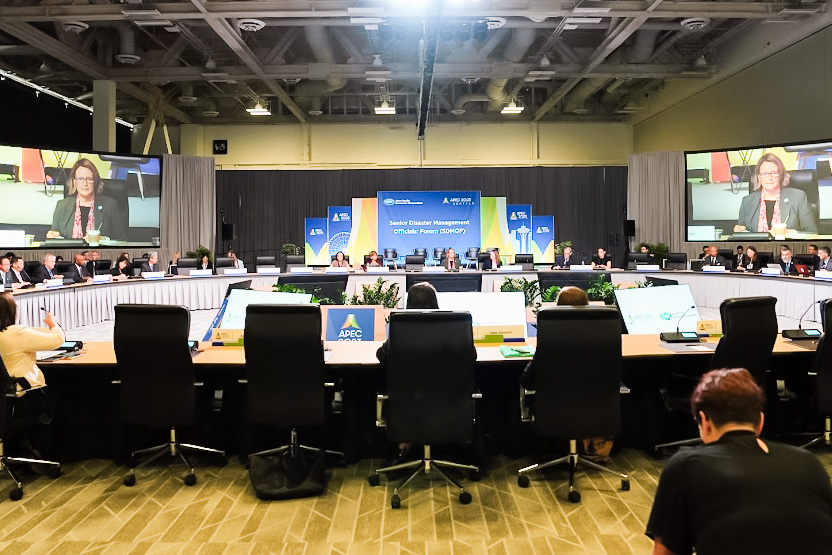 SEATTLE -- Administrator Criswell hosts the APEC Senior Disaster Management Official’s meeting.
FEMA will host a webinar on Wednesday, Aug. 16 in celebration of 2023 FEMA Partnerships Reimagined.
The webinar is a part of a series that celebrates the power of collaborative relationships in emergency management providing an opportunity for FEMA and non-government organization partners to engage with each other and enhance their mutual understanding of disaster assistance resources, capabilities and mechanisms.
The webinar is co-hosted by FEMA’s Individual Assistance Program and by the DHS Center for Faith-Based and Neighborhood Partnerships. It will cover:
- A panel discussion among public, private and nonprofit organizations.
- Resources, tools or examples of practices that highlight different approaches.
- The National Disaster Attorney Guidebook.
- Contact information and how to stay connected.
Webinar Information:
- Topic: Legal Considerations for Achieving Equitable Recovery
- Date: Aug. 16, 2023
- Time: 2 to 3:30 p.m. ET
- Location: ZOOM
- Meeting ID: 160 872 7359
- Passcode: VOISE
- Closed Captioning ID: 11527
FEMA recently released the Inclusion, Diversity, Equity and Accessibility in Exercises (IDEA) Guide to help exercise developers expand preparedness and planning efforts to mitigate risk across the whole community. Community resilience is enhanced by identifying diversity across dynamic communities and including all stakeholders, particularly those from underserved communities.
The IDEA Guide includes planning considerations and best practices to involve the whole community in exercise development and to conduct feedback processes. Exercise planners and program managers will gain insights and tools around key considerations for exercises to help reflect the full spectrum of stakeholders in any community.
The guide promotes accessible and inclusive exercises by widening exercise planners and program members to include feedback from all levels of government, the private sector and nonprofits.
The inclusion of multiple stakeholder perspectives, concerns and characteristics offers clarity around the concepts of inclusion, accessibility, diversity and accommodation throughout the exercise cycle.
Community profile characteristics, including history, culture, racial composition and economic status, are key to understanding the composition of a community and confirming or establishing the best ways to involve everyone.
The guide provides tools and approaches to build a community profile and identify residents' challenges and cultural sensitivities. The IDEA guide is consistent with the Homeland Security Exercise and Evaluation Program which any newly established or mature exercise program can benefit from.
FEMA will host webinars open to all partners that include state, local, tribal and territorial emergency managers, private sector, non-governmental organizations and members of the public interested in learning more about how to increase inclusivity, diversity, equity and accommodations throughout the exercise lifecycle. Exercise practitioners and planners are especially welcome. All webinars will cover the same content.
The webinar dates are:
- Tuesday, Aug. 22 – 10 a.m. ET
- Wednesday, Aug. 30 – 2 p.m. ET
- Thursday, Sept. 7 – 5 p.m. ET
- Tuesday, Sept. 12 – 9 a.m. ET
For more information, see Inclusion, Diversity, Equity and Accessibility Guide Webinars | FEMA.gov or contact HSEEP@fema.dhs.gov.
FEMA Region 5 and the DHS Center for Faith-Based and Neighborhood Partnerships in coordination with FEMA’s Offices of Disability Integration and Coordination and External Affairs are co-hosting a webinar on Extreme Heat and the Impacts on Mental Health on Aug. 15. The webinar will focus on the mental health impacts of extreme heat, especially on people who are at greater risk, such as older adults, children and people with disabilities. It will also highlight inclusionary community engagement practices and lessons learned from non-governmental organizations on mitigating the impacts of extreme heat. In addition, the webinar will include tips on how to prepare for extreme heat events and #SummerReady resources.
Climate models predict that extreme heat will become more frequent and intense as climate change continues. #SummerReady aims to reach vulnerable populations and boost awareness of the impacts of extreme heat and the simple steps to prepare.
The webinar is part of a series for state, local, tribal, territorial and nonprofit partners and stakeholders on the impacts of extreme heat.
This webinar will offer captioning services and ASL interpretation. For questions or additional information, contact: partnerships@fema.dhs.gov.
We hope that you will join us on Aug. 15!
DATE: Aug. 15, 2023
TIME: 2 - 3 p.m. ET
CLICK HERE TO REGISTER
FEMA Seeks New Members for Two National Advisory Council Subcommittees
FEMA is seeking qualified individuals to lend their expertise and serve on one of two new subcommittees through its National Advisory Council.
These two new subcommittees are being formed in response to the “National Defense Authorization Act for Fiscal Year 2023” and the “Planning for Animal Wellness Act” (PAW Act). Individuals appointed to the subcommittees bring their experience and diversity of views to provide the FEMA Administrator with consensus recommendations. They will have the opportunity to be a part of and help shape the future of FEMA. The agency is accepting applications for at least 13 members from state, local, tribal and territorial governments, academia, veterinary experts and nonprofit organizations.
Click on one of the Federal Register links below if you are interested in applying to serve on one of the subcommittees.
Applications for both subcommittees are due no later than midnight ET Aug. 10. Terms for all selectees begin in fall 2023 and will continue for as long as the committee work extends.
…………………………………………………………………………………………………………..
FEMA Hosts Webinars on #SummerReady to Promote Heat Preparedness
To raise awareness and preparedness for extreme heat, FEMA introduced its inaugural #SummerReady campaign. As part of this initiative, FEMA will host two webinars throughout the summer for state, local, tribal and territorial officials to assist stakeholders in promoting preparedness and resilience against extreme heat events. The first webinar was held July 12, and the second webinar will be held on August 16.
The webinars will highlight the collaborative endeavors across several federal agencies to address and tackle this issue. During the webinars, FEMA will identify specific types of hazard mitigation projects that can effectively combat extreme heat. Interested parties are encouraged to visit FEMA’s event page to access the recording of the previous webinar and the link to the upcoming webinar.
…………………………………………………………………………………………………………..
Take the Survey to Help Improve the Building Resilient Infrastructure and Communities Program
In June, FEMA launched a survey for Building Resilient Infrastructure and Communities (BRIC) stakeholders. Survey results help inform continuous improvement of the BRIC program and offer benefits to process improvements across FEMA's Hazard Mitigation Assistance grant programs.
The survey asks participants about their experiences with all aspects of the BRIC grant program from project development to submitting grant applications that will help enable FEMA to better meet stakeholder needs in the future.
FEMA will conduct an in-depth analysis of all feedback and publish a summary report with all of its findings in 2024.
The deadline for all submissions is Thursday, Aug. 31. Take the survey at FEMA.gov or Survey Monkey to submit feedback.
|


