|
On Dec. 7, FEMA issued an updated policy to partially implement the Federal Flood Risk Management Standard for Hazard Mitigation Assistance (HMA) programs to align with Executive Order 14030–Climate-Related Financial Risk to strengthen nationwide resilience.
The updated FEMA policy will help ensure communities affected by flood disasters are less vulnerable to the loss of life and property and reduce the impacts of a changing environment.
The policy supersedes the interim one issued in August 2021.
The Federal Flood Risk Management Standard (FFRMS) aims to increase community resilience against flooding. The policy update is effective on Dec. 7. and addresses elevating and floodproofing requirements for structures using Hazard Mitigation Assistance funding. The policy applies to structures that are using the funds for mitigation activities such as elevation, mitigation reconstruction, dry floodproofing, new construction and substantial improvement.
The policy sets standards for critical actions to make structures like hospitals, nursing homes and emergency operation centers more resilient. It also sets standards for non-critical actions for structures—such as residential, commercial and industrial buildings—that are located in high-risk flood areas.
This policy update applies to any major disasters or Fire Management Assistance declarations made on or after Dec. 7. And it applies to all Fiscal Year 2023 funding opportunities and future application cycles, unless otherwise stated in the funding opportunity.
In addition to this policy for Hazard Mitigation Assistance programs, Public Assistance issued an interim policy in June 2022 for structures that are substantially damaged or need improvements. These two partial implementation policies about the Federal Flood Risk Management Standard allow FEMA to help make communities less vulnerable to flooding.
To learn more about the policy, please visit FEMA.gov.
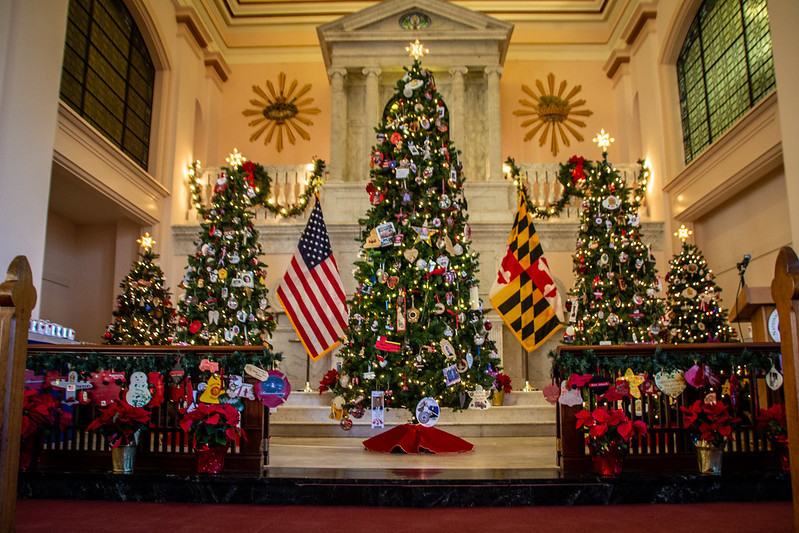
On Friday, Dec. 2, the National Fallen Firefighters Foundation continued its tradition of honoring America’s fallen firefighters with the annual Fire Hero Family Tree Lighting. The tree lighting took place at the National Fallen Firefighters Memorial Chapel on the campus of the National Fire Academy as part of the foundation’s annual Winter Family Retreat. After the ceremony, families placed holiday greens at the National Fallen Firefighters Memorial.
The Fire Hero Family Trees feature ornaments from the families and departments of America’s Fire Heroes from around the country and will remain on display in the Chapel throughout the holiday season. You can also watch the replay of the tree lighting.
FEMA published the Restoration and Recovery Guide for Private-Public Partnerships, which provides recommendations and resources for jurisdictions to help plan and coordinate the restoration of community lifelines, plan and develop recovery strategies and implement recovery operations. A private-public partnership provides a collaborative framework among public and private sector stakeholders to promote equitable and inclusive disaster recovery.
To support private-public partnerships, FEMA also released:
- The “Private-Public Partnerships Support Equitable Outcomes for Risk Reduction” fact sheet. The fact sheet provides guidance for a private-public partnership to consider the risks and needs of vulnerable and disadvantaged communities and support the development of data-driven strategies for equitable outcomes.
- The “Private-Public Partnerships Support Reducing Risks and Building Resilience” fact sheet, which provides guidance for a local government to collaborate with the private sector to develop equitable and inclusive mitigation strategies based on an assessment of shared disaster risks and vulnerabilities.
- The “Disaster Resource Identification” fact sheet to provide recommendations and resources for jurisdictions to conduct disaster resource identification. The fact sheet includes recovery resources, guidance for how to search for disaster recovery resources and recommendations for disaster resource management.
To download the documents, please visit FEMA.gov.
FEMA has a job aid to help emergency management partners increase resilience and build capabilities when updating hazard mitigation plans, Threat and Hazard Identification and Risk Assessments (THIRA) and the Stakeholder Preparedness Process (SPR).
The Increasing Resilience Using THIRA/SPR and Mitigation Planning Job Aid shows how to connect hazard mitigation planning with THIRA and SPR.
Mitigation plans and THIRA/SPR are key tools to reduce risk. A hazard mitigation plan guides state, local, tribal and territorial government decision makers on long-term actions that reduce risk to natural hazards.
A THIRA helps communities identify and provide context to threats and hazards. It also sets a capability target based on the natural hazards or manmade threats selected. In the SPR, communities determine current capabilities, gaps, and then opportunities, including grants.
The job aid helps align these processes to reduce duplication, time, and effort. For example, partners can coordinate the identification of hazards. This is found in a mitigation plan’s risk assessment. The job aid can then be used to describe the impact of an event in the THIRA.
The plans may also use similar data points. If timelines align, partners could collect data once and use it for both.
Partners update mitigation plans and THIRA/SPR on a regular basis. THIRA/SPR submissions are due every year by Dec. 31. Mitigation plans are updated every five years.
In 2023, 34 state mitigation plans will need to be updated. Partners can use this guide to find ways to complement each process while updating plans.
Visit fema.gov to learn more.
Nominations Open for FEMA’s Emergency Manager Exchange
FEMA’s Emergency Manager Exchange (EMX) is accepting nominations through Dec. 15. In March 2023, four selected participants from non-federal government offices will work alongside FEMA leadership and staff for a 4 to 6-month paid work exchange.
New in 2023, the staff exchange will be fully reciprocal. When the participating government organization sends their employee to work at FEMA, a full-time FEMA employee will be sent to support that non-federal government office or program in return.
For the duration of the assignment, FEMA will reimburse the participant’s home organization for the cost of the participant’s salary up to the federal GS-13 level, plus benefits. This reimbursement will include travel costs and per diem in Washington, D.C. consistent with FEMA’s travel policies.
The visiting FEMA employee will work to address capability gaps identified by the non-federal government organization in their nomination letter. The exchange is authorized under the Intergovernmental Personnel Act Mobility Program.
Each participant’s non-federal government organization must nominate their applicant to the program. The work exchange position descriptions and the nomination instructions are available on FEMA.gov.
…………………………………………………………………………………………………………..
FEMA Hosts Webinar for the Nonprofit Security Grant Program
FEMA will cohost a Nonprofit Security Grant Program webinar at 3 p.m. ET on Dec. 18. The webinar will provide a look-back on the FY 2022 Nonprofit Security Grant Program and look-ahead for the prospective FY 2023 Nonprofit Security Grant Program.
The Nonprofit Security Grant Program provides funding for physical and cybersecurity enhancements and other security-related activities to nonprofit organizations that are at high risk of a terrorist attack. In addition, the program seeks to integrate nonprofit preparedness activities with broader state and local preparedness efforts.
To attend, register in advance for the Dec. 18 webinar.
For questions regarding these sessions or to request special accommodations, email FEMA-NSGP@fema.dhs.gov
…………………………………………………………………………………………………………..
FEMA Now Accepting Volunteers for the BRIC Review Panel
FEMA is soliciting the panelists for the Building Resilient Infrastructure and Communities (BRIC) grant program for Fiscal Year 2022. The agency is also convening a virtual National Review Panel to score subapplications.
FEMA is accepting Expression of Interest forms Dec. 1, through Jan. 15, 2023. The review panel helps increase transparency in decision-making while building mitigation capability and partnerships.
To learn more about this opportunity and apply to be a panelist please visit FEMA.gov. Panelists will be announced by late February.
FEMA anticipates hosting the virtual panel from March 13 - April 7, 2023.
If you or someone you know is interested in serving on these panels and meets the panel participant criteria, complete an Expression of Interest form which can be found on the FEMA's BRIC webpage. FEMA will announce the selected panelists by late February 2023.
…………………………………………………………………………………………………………..
|


