|
FEMA and the Cybersecurity and Infrastructure Security Agency (CISA) will host a virtual consultation with tribal nations on the new Tribal Cybersecurity Grant Program at 1:30 - 3 p.m. ET on Aug. 17.
The webinar, led by FEMA and CISA senior leadership, addresses cybersecurity risks and threats to information systems owned or operated by, or on behalf of, tribal nations. Tribal governments received $15 million in fiscal year 2022 funding under the grant program. Additional funding will be available in fiscal years 2023-2025.
FEMA conducts eligibility reviews, issues guidance and manages grant awards, while CISA provides subject-matter expertise.
To review the full agenda and a framing paper with questions for tribal leader consideration, visit FEMA.gov. To submit written questions or comments in advance of the consultation, email gpd-comms@fema.dhs.gov on or before 1 p.m. ET on Aug. 17.
For FEMA Tribal Liaisons contact information, visit FEMA.gov.
On Aug. 3, FEMA announced that the agency is moving forward in reducing the administrative burden on government entities and nonprofit organizations receiving FEMA grants following a disaster.
FEMA implemented a regulatory change to increase the small project maximum for the agency’s Public Assistance (PA) program to $1 million.
This policy change reflects FEMA and President Biden’s commitment to reduce the bureaucracy and ensure that communities get the resources they deserve when they need them most.
Section 422 of the Robert T. Stafford Disaster Relief and Emergency Assistance Act allows FEMA to implement simplified procedures for projects below an established threshold. Congress authorized simplified procedures in 1988 to support program efficiency and allow lower dollar projects the opportunity to get recovery funding faster, setting the small project maximum at $35,000.
Simplified procedures allow FEMA to fund eligible small projects based on estimates, which expedites disaster recovery funding to applicants.
After the Sandy Recovery Improvement Act in January 2013, FEMA completed an analysis of the program in 2015 and adjusted the threshold to $120,000. FEMA conducted another review in 2020, showing 77% of projects were considered small, and that if a $1 million threshold were applied, 94% of projects would be small and help put additional recovery dollars in the hands of applicants faster.
Per the fall 2021 and spring 2022 Unified Agendas, FEMA implemented a regulatory change to increase the Simplified Procedures threshold to $1 million, including unobligated COVID-19 projects.
Applicants are not required to submit quarterly progress reports on small projects or reconcile final costs, but must still comply with all application laws, regulations and policies. National emergency management partners have supported FEMA making this change to reduce administrative burdens, more efficiently use resources, simplify the program for smaller applicants with smaller dollar projects and speed up the closure of projects.
The Department of Homeland Security and FEMA are committed to providing equitable and accessible recovery support to affected communities. FEMA intends to continue adjusting the threshold annually to reflect changes in the Consumer Price Index for all urban consumers and reviewing the base threshold every three years.
The $1 million threshold applies to all projects under major disasters and emergencies declared on or after Aug. 3. The $1 million threshold also applies to all unobligated PA projects in major disasters and emergencies declared between March 13, 2020, and Aug. 3, 2022.
FEMA’s PA program remains our flagship program for helping communities rebuild infrastructure, restore critical services to the public and build climate resilience. By simplifying the application process, the agency can break down barriers and better meet the funding needs of small communities and our nonprofit partners.
To learn more about this initiative, visit FEMA.gov
FEMA provides supplemental grants so that communities can quickly respond to and recover from major disasters or emergencies through its Public Assistance program.
Join the agency's Department of Homeland Security Center for Faith-Based and Neighborhood Partnerships office for a deep dive on public assistance and its role to support houses of worship, private non-profits and communities in times of disaster.
The webinar will:
- Provide an overview of how to apply for Public Assistance funding.
- Discuss ways to employ mitigation measures to reduce future disaster losses.
- Encourage houses of worship and private non-profit organizations to apply for Public Assistance funding.
- Discuss how to implement public assistance mitigation measures as part of their recovery process.
The webinar will also specify the following topics:
- The role of the Small Business Administration on the disaster recovery.
- Considerations for seeking resources for permanent work.
- Public Assistance mitigation benefits.
- Public Assistance Category B.
- Mass care services.
- Policy for leveraging donated resources.
The webinar will take place from 2 - 3:30 p.m. ET on Aug. 16. To participate, register at FEMA's Disaster Assistance resources for places of worship and other community Private Non-Profits.
Captioning will be provided. For additional accommodations, send an email to ricardo.agudelo-doval@fema.dhs.gov or bianca.kapadia@fema.dhs.gov. Last minute requests will be accepted but may not be possible to fulfill.
To learn more about how FEMA is helping faith-based communities, visit FEMA.gov.
On Oct 1, 2021, FEMA launched Risk Rating 2.0: Equity in Action demonstrating the agency’s commitment to transforming the National Flood Insurance Program (NFIP). Risk Rating 2.0 leverages industry best practices and technology to better reflect a property’s individual flood risk.
To help people better understand Risk Rating 2.0: Equity in Action, the Federal Insurance and Mitigation Administration published two videos on Floodsmart.gov.
For an overview of Risk Rating 2.0: Equity in Action, watch Introduction – Risk Rating 2.0: Equity in Action: FEMA’s New Rating Methodology to learn how insurance agents can access the user-friendly technology that incorporates multiple flood risk factors and leverages a new rating methodology developed by the NFIP.
Watch Risk Rating 2.0: Equity in Action: Rating Variables (Part 1) to discover the new methodology which considers specific building characteristics to provide a more modern, individualized and equitable flood insurance rate. The video discusses a building’s rating variables related to where it’s built and the impact of how it’s built.
By illustrating Risk Rating 2.0: Equity in Action in new and engaging ways, these videos make it easier for agents to share the benefits and features of the NFIP’s pricing system.
To learn more about Risk Rating 2.0, visit FEMA.gov.
On Aug. 4, the National Oceanic and Atmospheric Administration’s National Weather Service Climate Prediction Center division released its update to the 2022 Atlantic hurricane season.
NOAA forecasters have slightly decreased the likelihood of an above-normal Atlantic hurricane season to 60%, down from the May outlook which predicted a 65% chance. The likelihood of near-normal activity has risen to 30% and the chances remain at 10% for a below-normal season.
NOAA’s update to the 2022 outlook — which covers the entire six-month hurricane season that ends on Nov. 30 — calls for 14-20 named storms (winds of 39 mph or greater), of which 6-10 could become hurricanes (winds of 74 mph or greater). Of those, 3-5 could become major hurricanes (winds of 111 mph or greater). NOAA provides these ranges with a 70% confidence.
This outlook is for overall seasonal activity and is not a landfall forecast. That’s because landfalls are largely governed by short-term weather patterns that are only predictable within about one week of a storm potentially reaching a coastline.
This doesn’t mean you should relax if you live in a hurricane-prone area. The peak months for hurricanes, August through October, are currently underway. To learn more about how to protect yourself, your family and your pets from hurricanes, visit Hurricanes | Ready.gov.
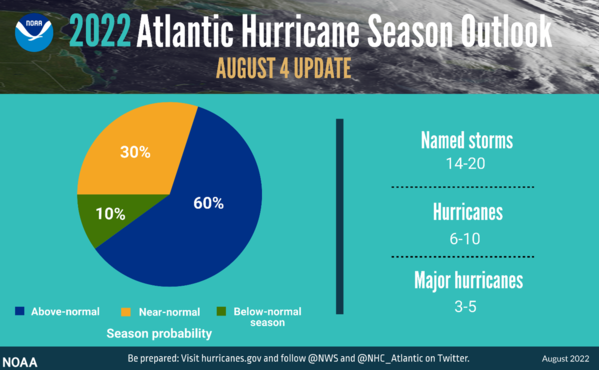 Snapshot of Atlantic Hurricane Season Outlook.
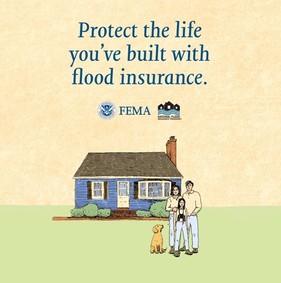
Too many people think flooding only happens somewhere else—or to someone else. It’s always been true that anywhere it can rain, it can flood. However, rare weather events are becoming increasing common and severe.
Prepare this hurricane season with emergency plans and supplies and consider the best preparation of all: flood insurance —protect the life you built.
Help support and protect your community by getting involved in FEMA’s FloodSmart hurricane season campaign and promote the resources available on FloodSmart.gov on your social media platforms and networks. Use the hashtags #FloodSmart #FloodInsurance to join the conversation.
Remember, the benefit of flood insurance is to help lessen the financial burden of rebuilding lives after a storm. At times, the insured receive insurance payments within three weeks.
|
It’s been nearly five years since Hurricane María slammed into Puerto Rico, bringing the economy and the resident’s daily lives to a sudden halt. After the storm subdued, FEMA responded rapidly to hurricane survivors and provided disaster assistance, inspected damaged sites, and processed public assistance applications.
Historically, FEMA obligated over 10,000 response and recovery work projects, representing nearly $28 billion, to address damage caused by a single disaster. This mission is considered one of the largest post-disaster humanitarian and reconstruction efforts in the agency’s history.
Puerto Rico´s transformation is evident as more projects evolve into completed construction projects, bringing a sense of safety and hope into communities. Construction not only rebuilds roads and buildings to pre disaster condition, but also incorporates mitigation measures to strengthen many of these projects to better withstand future events.
Over 62% of obligations were awarded to municipalities to repair roads, bridges, government buildings and facilities Hospitals, retirement centers and houses of worship accounted for over 1,220 of all projects under the health and social services category.
Full recovery of all projects is not too far ahead, and FEMA will continue pursuing its recovery’s goal until the last project has been obligated.
In November 2020, FEMA's landmark study, Building Codes Save: A Nationwide Study, and its accompanying brochure, Protecting Communities and Saving Money, made the case for why communities should proactively adopt and enforce natural hazard-resistant building codes. The results spoke for themselves: an estimated reduction in property losses of $132 billion (based on forecasted consistent growth associated with using modern building codes from 2000-2040) nationwide.
As June 1 marked the start of hurricane season, officials from the White House, FEMA, state and local government and private sector entities announced the National Initiative to Advance Building Codes at Florida International University. Within this initiative, federal departments and agencies will review federal funding and financing of building construction to ensure projects follow updated model codes. The initiative will also provide incentives and support for communities to adopt modern building codes. FEMA’s Building Codes Strategy was announced in April at the National Hurricane Conference.
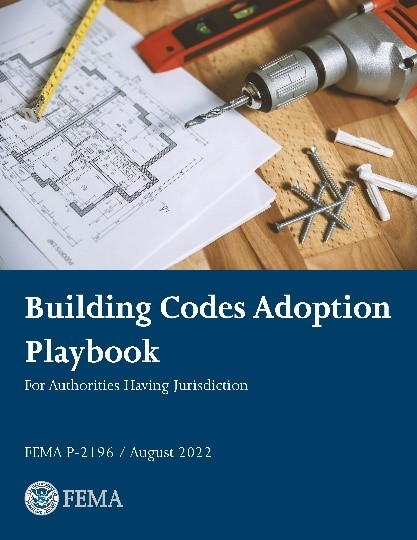
To help with these efforts, FEMA published the Building Codes Adoption Playbook for Authorities Having Jurisdiction. The Playbook is intended for officials interested in increasing community resilience and reducing loss from natural hazards by adopting the latest editions of model building codes.
The Playbook equips officials with background and language to help educate decision-makers and constituents on the benefits of adopting and enforcing the latest building code editions. In addition, the publication provides general steps to help navigate the code adoption process and informs about FEMA grants available to support building code adoption and enforcement activities.
FEMA wants to hear about your building codes best practices and implemented efforts. To share your strategies, email fema-building-codes-program@fema.dhs.gov.
|
Last month, FEMA and our partners held an exercise in Missouri to help responders understand how to use advanced technology during response efforts.
After a disaster, Urban Search and Rescue teams from across the country are often deployed to assist. Teams can ensure all impacted areas are searched in as short amount of time as possible. Large deployments, however, require greater efforts including the use of technology to help responders identify the areas that need assistance and to communicate more efficiently.
During the exercise in Missouri, the response teams worked with Civil Air Patrol (CAP), to make use of their drones and those trained to use them.
CAP has the technology and skill to collect photos, videos and high-resolution imagery to aid in the assessment of structures, roads, debris and even locate survivors in need of assistance. Using these Unmanned Aerial Systems, CAP can provide photos from different angles to help responders quickly identify the needs a community faces after a disaster.
FEMA then uses an imagery repository system to process, store and make it available for responding agencies, including our state, local, tribal and territorial partners at no cost.
The imagery helps teams to:
- Make life saving interventions.
- Plan and prioritize search areas.
- Quickly view locations that are inaccessible by vehicle, boat, air or even foot.
- Provide a visual report of the situation on the ground for use by FEMA, its partners and stakeholders.
Other participants in the exercise included the National Geospatial and Intelligence Agency, Florida State Emergency Response, the Mayor of Sturgeon, Missouri and Task Force teams from California, Missouri and New York.
FEMA Kicks-Off Hazard Mitigation Assistance Summer Engagement Series
On Aug. 4, FEMA kicked-off its 2022 Hazard Mitigation Assistance Summer Engagement Series. The 10-part series features experts and special guests who will provide information and insights on the Hazard Mitigation Grant Program, Building Resilient Infrastructure and Communities and Flood Mitigation Assistance programs.
The webinars provide an overview of the fiscal year 2022 Notice of Funding Opportunity for BRIC and FMA and are designed for regional leaders and key stakeholders in states, local communities, tribes and territories and other interested individuals to learn more about the grant programs and grant application strategies.
FEMA will coordinate with local contacts to host "office hours" for states, tribes and territories to answer questions about subapplications for the 2022 BRIC and FMA grants.
To register, visit Hazard Mitigation Assistance 2022 Summer Engagement Series and find the webinar best suited for your jurisdiction. For special accommodations, contact fema-hmacomms@fema.dhs.gov.
…………………………………………………………………………………………………………..
|


