|
“It is incredibly important that we come together as a nation to recognize the significance of Juneteenth and to never forget the millions of Black Americans who were deprived of their freedoms in this country under slavery,” said FEMA Administrator Deanne Criswell. “At FEMA, we strive to place equity at the center of our efforts and do our part in addressing and correcting these historical injustices.”
Juneteenth, also known as Emancipation Day or Black Independence Day, commemorates the day in 1865 when the last enslaved African Americans in Galveston, Texas, were informed of General Order 3, declaring that all slaves were free. Last year, in support of this important day, President Joseph R. Biden, Jr. signed the “Juneteenth National Independence Day Act” into law, officially commemorating Juneteenth as a federal holiday.
“At FEMA, and across the Biden-Harris Administration, we know even more work must be done if we are to live up to the promise of Juneteenth and ensure everyone in this country lives a life of dignity,” said Deputy Administrator Hooks. Check out a video Deputy Administrator Hooks recorded where he reflected further on his thoughts for the holiday.
FEMA’s National Service Alumni Employee Resource Group also volunteered with Washington D.C.’s non-profit Bread for the City, FEMA also recognized Juneteenth with two special employee-hosted events earlier this week.

It’s important for people living near nuclear power plants to know their emergency management agencies have the tools they need to respond in the event of an emergency or disaster. That’s why exercises from the FEMA Radiological Emergency Preparedness Program are so important.
The Beaver Valley Power Station was the focus of a recent biennial exercise to test the response capabilities of nearby state and local officials and organizations. Sitting on the Ohio River in Beaver County, Pennsylvania, the Beaver Valley Power Station’s 10-mile emergency planning zone extends in Columbiana County, Ohio and Hancock County, West Virginia.
As effects of any disaster and emergency at the plant might affect FEMA Regions 3 and 5, personnel from both regions participated in a tri-state exercise in early June. The exercise simulated a radioactive material plume from the plant which featured simulated weather conditions driving the plume to Pennsylvania, West Virginia and Ohio.
In Ohio, the 225 exercise participants included Columbiana County first responders and officials from health department, communications personnel, schools and public health officials, county commissioners and the American Red Cross. Representatives from plant operator Energy Harbor had representatives were also involved, along with Ohio Emergency Management Agencies local representatives.
FEMA Region 5 technological hazards national program specialist and exercise director Edward Golinski Jr. noted all Ohio participants met the capabilities tested by the exercise.
FEMA Region 3 was responsible for the assessment of the off-site radiological emergency response plans in West Virginia and the Commonwealth of Pennsylvania during the exercise.
During the exercise, Region 3 evaluated 68 locations in West Virginia and Pennsylvania. This included State and county emergency operations centers, evacuee monitoring and decontamination centers, mass care operations and shelters, accident assessment centers, public information processes, alert and notification processes, joint public information centers to include a media briefing, 27 municipalities including several school districts and schools in Beaver County, Pennsylvania and Hancock County, West Virginia.
Region 3 Technological Hazard Branch Chief Thomas Scardino confirmed the Region 3 participants demonstrated the capability to coordinate the response during this exercise.
To learn how to stay safe around nuclear power plants, visit Ready.gov.
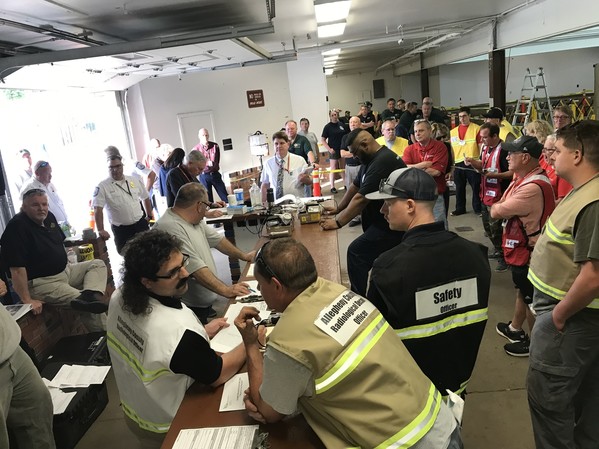 Participants during the radiological briefing with FEMA and the regional and local jurisdictions.
FEMA developed an introductory video to the Disaster Recovery Reform Act Section 1206 to arm floodplain administrators, emergency managers, elected officials and other stakeholders in the recovery process. The video will supply stakeholders with the information needed for successful reimbursement of these new eligible activities. Through the narrator's story following a devastating disaster in her community, viewers will learn key eligibility requirements for communities, work and costs covered under the policy and how to seek reimbursement for these new activities.
When disaster strikes, many communities have hundreds, if not thousands, of structures to protect against future damage or restore to local codes and standards. Section 1206 of the Disaster Recovery Reform Act authorizes FEMA to reimburse communities that participate in the National Flood Insurance Program (NFIP) for the resources needed to effectively administer and enforce building codes and floodplain management regulations following a major disaster declaration. This creates new eligible activities through FEMA’s Public Assistance Program to carry out required post-disaster activities, increasing the overall speed of recovery and enhancing NFIP compliance.
To watch the full video, visit FEMA's YouTube page.
FEMA Co-Hosts the 11th Annual Building Resilience Conference
FEMA is partnering with the U.S. Chambers of Commerce Foundation to host the 11th Annual Building Resilience Through Private-Public Partnerships Conference in Washington, D.C. from July 28-29.
This year's agenda is designed to inspire action and spark insightful discussions that will drive solutions to some of the greatest challenges. Speakers will address key issues such as ensuring equity in disaster response, supply chain coordination, cross-sector collaboration, climate adaptation, pre-disaster resilience investment and more.
The conference is free to attend. To learn more visit, U.S. Chamber of Commerce Foundation.
…………………………………………………………………………………………………………..
FEMA Provides Funding for National Standards in Emergency Management
FEMA made $825,000 in funding available for the FY2022 Emergency Management Baseline Assessment Grant program to support investment in national level standards for emergency management that target critical functions necessary to prepare for and manage disasters.
This application period closes at 5 p.m. ET on July 7.
The program provides funding for:
- Supporting Emergency Management Program Accreditation.
- Supporting Emergency Manager Certification.
State, local, tribal and territorial jurisdictions are eligible to apply for an Emergency Management Baseline Assessment Grant. Initial applications must be submitted through Grants.gov. FEMA will notify eligible applicants to proceed with submitting their complete application package in the Non-Disaster (ND) Grants System by the application deadline.
…………………………………………………………………………………………………………..
Save the Date for Extreme Heat Forum
During its June Ideation Hour, the Resilient Nation Partnership Network's topic will cover Extreme Heat Resilience.
The discussion will focus on the impacts of extreme heat across the country. We encourage you to bring your resilience ideas, projects, resources and collaboration opportunities to the conversation.
This event will be on ZOOM at 1 p.m. on June 29. Registration is now open.
To learn more about the Resilient Nation Partnership network, visit FEMA.gov. For additional information on heat awareness, including tips on how to stay prepared, visit Ready.gov.
…………………………………………………………………………………………………………..
FEMA Releases Resource Typing Documents
FEMA seeks public feedback on the Radio Direction Finding Team resource typing definition. This 30-day national engagement period will conclude at 5 p.m. ET on June 24.
The Radio Direction Finding Team is responsible for conducting electronic direction-finding operations in support of search and rescue operations. The updated document only specifications for Type 1 or Type 2 Radio Direction Finding NIMS-typed teams.
To provide comments on the draft documents, complete the feedback form and submit the form to FEMA-NIMS@fema.dhs.gov no later than 5 p.m. ET on June 24.
…………………………………………………………………………………………………………..
FEMA Publishes Mitigation Funding Opportunity
FEMA published on Grants.gov the Fiscal Year 2022 funding opportunity making approximately $154 million available to support 68 mitigation projects nationwide.
The funding for these projects will be made available through FEMA’s Pre-Disaster Mitigation grant program, in addition to funds provided through other FEMA's Hazard Mitigation Assistance programs.
Communities with projects identified for funding must apply by June 24.
For general questions about Pre-Disaster Grant congressional community projects, please contact the appropriate State Hazard Mitigation Officer or FEMA Regional Office. The Hazard Mitigation Assistance Helpline is also available by telephone at 866-222-3580. For additional information, email FEMA-Ask-PDM@fema.dhs.gov.
…………………………………………………………………………………………………………..
FEMA Hosts Grants Webinar for Houses of Worship
FEMA Region 6 is offering a free online presentation on how houses of worship can take advantage of public assistance and hazard mitigation grants. FEMA developed a house of worship informational webinar designed to provide communities impacted by Hurricane Ida help with submitting grant applications for repairing or rebuilding damaged buildings. The webinar is open to the public.
Mitigation grants can help you reduce the risk of physical damage to your buildings and structures in a disaster, or help you rebuild stronger after.
You’ll learn the steps you need to take to apply for grants after a disaster is declared, including important points of contact for the process.
FEMA provides captioning services for the webinars. If you need additional accommodations, send an email to Rebecca.Dake@fema.dhs.gov or Paul.Albertson@fema.dhs.gov. Last minute requests will be accepted but may not be possible to fulfill.
To learn more about how FEMA is helping faith-based communities, visit FEMA.gov.
…………………………………………………………………………………………………………..
|


