|
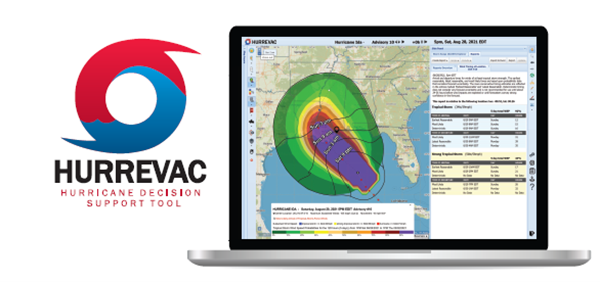
From June 6 – 10, FEMA's National Hurricane Program will host a five-day HURREVAC training for emergency managers.
Each day, sessions will start at 2 p.m. ET and run 60–90 minutes. The webinars will cover a specific theme introduced by guest speakers from FEMA, NOAA National Hurricane Center or U.S. Army Corp of Engineers.
Webinar topics include:
- Introduction to HURREVAC and Overview of the National Hurricane Program: June 6.
- Wind Forecast Features: June 7.
- Evacuation Timing Features: June 8.
- Storm Surge and Other Water Hazards: June 9.
- Exercise Tools and Applying HURREVAC: June 10.
HURREVAC is a free web-based decision-support tool that assists emergency managers by providing information and tools to inform hurricane response decisions in advance of a threatening storm. Interested emergency managers can register now for this annual HURREVAC webinar series.
Learning how to use HURREVAC can help emergency managers prepare for and execute tough evacuation decisions when a hurricane threatens. In addition to operational decision-making, HURREVAC can be used for training, exercises and hurricane preparedness and planning efforts.
On May 5, FEMA and the Department of Homeland Security’s Science and Technology Directorate will host a webinar, “How to Minimize Alerting Delays.” Attendees will leave with an understanding of how the IPAWS Program Planning Toolkit can be used to efficiently send messages that buys back precious time amid an emergency.
The webinar will take place at 1 p.m. ET on May 5. Register in advance on FEMA’s Zoom web page.
The webinar will cover:
- Why is minimizing delays important?
- Detailed explanation of how the Toolkit minimizes alerting delays.
- Pilot participant alerting delay stories.
- How the toolkit solves system issues.
- Question-and-answer session.
Learn how to set alerting authorities and emergency managers up for success in the alerts, warnings and notifications landscape with the stakeholder-driven research that has gone into the development of the FEMA IPAWS Program Planning Toolkit. The toolkit is uniquely tailored to provide the community with guidelines that they will need when implementing emergency response plans.
To learn more about FEMA IPAWS program and the toolkit, visit FEMA.gov.
On May 2, FEMA opened the application period for the Fiscal Year 2022 National Earthquake Hazards Reduction Program Grant Program, including Individual State Earthquake Assistance and the Multi-State and National Earthquake Assistance grants. The notification is available on www.grants.gov.
In addition to detailing eligibility and submission requirements, these notifications provide a program overview, such as objectives, priorities and allowable activities. The application period for both funding opportunities will end at 5 p.m. ET on June 1.
For additional information on these funding opportunities and the FEMA National Earthquake Hazards Reduction Program, visit FEMA.gov or send an email to FEMA-NEHRP@fema.dhs.gov.
From May 3 - 5, FEMA Region 10 in Bothell, Washington will host the Cascadia Rising 2022 Rehearsal of Concept Exercise. The exercise will outline the key policy, command and operational activities needed to carry out a successful response to a 9.0 magnitude earthquake and tsunami in the Cascadia Subduction Zone.
Over the three-day exercise, federal, state and tribal partners will walk through the agency's "Cascadia Subduction Zone Earthquake and Tsunami Response Plan." These discussions will include questions around operational activities, logistics, resource management and communications for response and recovery operations for a zone rupture and subsequent tsunami. Participants will use a large map to display impacted areas and demonstrate resource allocation, staging and movement in response to an event.
The lessons learned from the Rehearsal of Concept Exercise will be incorporated into the update to both the response plan and FEMA’s operational procedures.
To learn more about this federal, state and tribal partner exercise, visit FEMA.gov.
As hurricane season approaches, we sat down with FEMA Administrator Deanne Criswell and National Hurricane Center Director Ken Graham at the National Hurricane Conference to discuss how the agencies collaborate to share vital weather and preparedness information during a storm.
Visit FEMA.gov to listen to the full podcast episode.
On May 4, FEMA will host a technical assistance call for potential applicants on the fiscal year 2022 Homeland Security Grant Program’s National Priority Areas, in advance of the release of Department of Homeland Security’s Preparedness Grants.
As a part of the call, you will hear from FEMA and DHS partners on:
- Specific areas of concern and how priority areas were determined.
- Using Homeland Security Grants to effectively mitigate these concerns.
- Additional resources available from across DHS.
The call, “Enhancing Intelligence and Information Sharing,” will start at 2 p.m. ET on May 4. Visit FEMA’s Zoom web page to join the call.
- Meeting ID: 160 365 1520
- Passcode: 302574
The Homeland Security Grant Program is composed of the State Homeland Security Program, Urban Area Security Initiative and Operation Stonegarden. To learn more about these programs, visit FEMA.gov.
FEMA Extends Deadline for Emergency Management Exchange Program
FEMA Administrator Deanne Criswell announced the agency is accepting nominations for a new emergency management exchange program. The staff exchange program will allow state, local, tribal and territorial government officials to work with FEMA leadership to develop and implement emergency management policies and programs.
Program participants will work alongside FEMA leadership and staff from FEMA’s Office of Response and Recovery or Resilience. These stakeholders will contribute to federal emergency management and see the impact of their contributions from a different governmental perspective.
A total of four participants will be selected for this three - six month assignment at FEMA from July through December 2022. A future session is planned from January to June 2023.
Nominations should include:
- A letter of nomination from the leadership of the candidate's governmental program or organization. The letter should explain why the candidate is nominated for the exchange and should also contain the nominator’s contact information – including phone number and an email address.
- The nominee’s resume - including name, phone number and email address.
The nominating office point of contact should be either the nominee’s supervisor or someone in a higher-level leadership position.
FEMA will reimburse the participant’s home organization for the cost of the participant’s salary plus benefits, for the duration of the assignment.
Nominations are due by May 27. To submit a nomination, email FEMA-EMX-Nominations@fema.dhs.gov.
…………………………………………………………………………………………………………..
FEMA Accepts Video Submissions for 2022 Partnership Month
This July, FEMA will host a virtual exhibitor hall to celebrate Voluntary Agency Coordination Partnership Month. This event celebrates strong partnerships that make emergency management possible.
Your organization is invited to create a short video to be featured as part of the gallery.
Video file specifications
- Length: 1 minute or less.
- Resolution: 1080p.
- Format: .MP4.
- Size: 100MB or less.
- Accessibility: Provide closed captioning by including a script of the dialogue as well as an .SRT file.
For questions and video submissions, email fema-r8hostedpartnershipmonth@fema.dhs.gov To view last year’s videos, visit the partnership month website. Submit a completed version of the video no later than 5 p.m. ET on June 1.
…………………………………………………………………………………………………………..
FEMA Hosts Nonprofit Security Grant Webinars
Gain insight how the fiscal year 2022 Nonprofit Security Grant Program can help your faith-based, community or nonprofit organizations by joining one of the upcoming webinars.
Each webinar will last approximately 90 minutes and will be followed by a Q & A session. Each session will present the same content. Preregistration is required for the webinars.
Click on a link below for your preferred time:
If you have any questions regarding these webinars or require special accommodations, please send an email to FEMA-NSGP@fema.dhs.gov.
…………………………………………………………………………………………………………..
FEMA Updates State and Local Mitigation Planning Policy Guides
FEMA updated its state and local mitigation planning policy guides to reflect programmatic and administrative regulatory changes. The agency routinely updates the policies to improve and better support stakeholders in meeting federal requirements when creating hazard mitigation plans.
FEMA will host external webinars on the policy updates. A webinar on updates to the state mitigation planning policy will be held from 2 – 3:30 p.m. ET on May 10. To attend this webinar, register in advance on FEMA.gov.
A webinar on updates to the local mitigation planning policy will be held from 2 – 3:30 p.m. ET on May 12. To attend this webinar, register in advance on FEMA.gov.
Visit FEMA’s Policy Update webpage to learn more.
…………………………………………………………………………………………………………..
FEMA Provides Over $400M to Emergency Managers
FEMA released the funding notice for the Emergency Management Performance Grant program, making $405.1 million available to assist state, local, tribal and territorial governments to develop their emergency management capabilities and for all-hazards preparedness activities. The program focuses on planning, operations, equipment acquisitions, training, exercises, construction and renovation. This application period closes at 5 p.m. ET on June 13.
Eligible applicants must submit an initial application by June 6, FEMA will notify eligible applicants to proceed with submitting their complete application package in the Non-Disaster (ND) Grants System by the application deadline. FEMA anticipates that all awards will be made no later than Sept. 30.
…………………………………………………………………………………………………………..
|


