|
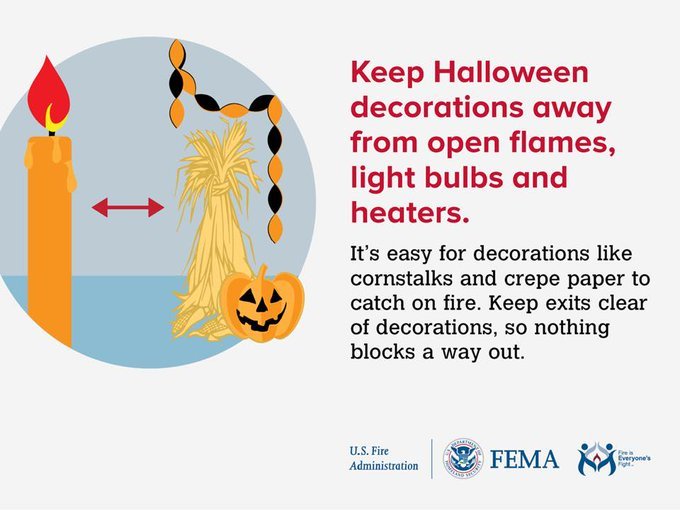
Halloween is around the corner. Keep your home safe from fires by:
- Never leaving burning candles unattended.
- Keeping decorations and costumes away from open flames, bulbs and heaters.
- Use battery-powered lights for your decorations.
To learn how stay prepared for all emergencies, visit Ready.gov. For additional fire safety information, visit USFA.FEMA.gov.
FEMA is pleased to welcome Dr. Lori L. Moore-Merrell, as the new Administrator of the U.S. Fire Administration (USFA). The USFA’s mission is to support and strengthen fire and emergency medical services and stakeholders to prepare for, prevent, mitigate and respond to all hazards.
Dr. Moore-Merrell most recently served as President and CEO of the International Public Safety Data Institute (IPSDI). Leading IPSDI since 2019 and after serving 26 years as a senior executive in the International Association of Fire Fighters, she was responsible for frontline interaction with elected officers, executive board members, state, provincial and local chapter leaders and individual organization members throughout the United States and Canada. Through her years of experience within the public health and safety sector, Dr. Moore-Merrell will bring her unique set of knowledge, skills and abilities to lead and manage USFA.
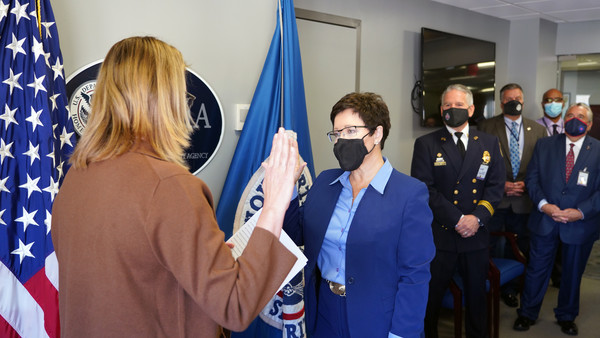
Dr. Moore-Merrell was swore in by FEMA Administrator Criswell on Oct. 25. To learn more about the United States Fire Administration, visit USFA.FEMA.gov.
FEMA released the agency’s response to the National Advisory Council’s (NAC) annual report.
The “National Advisory Council’s Report to the FEMA Administrator” was released in November 2020. This report marked the first time the NAC members were charged with specific areas of concern to address in the field of emergency management, rather than open-ended topics. This report, and FEMA’s response, focuses on four main themes: Equity, Outcomes, Coordination and What Works.
The NAC consists of up to 35 members, including a diverse cross section of officials, emergency managers and emergency responders from state, local, tribal and territorial governments; the private sector; and nongovernmental organizations. Collectively, these members provide advice to the FEMA Administrator through recommendations on all aspects of emergency management.
At the beginning of her tenure in April 2021, Administrator Deanne Criswell charged the agency’s leadership with reviewing and responding to the report through the lens of the Biden Administration’s priorities on equity, climate change and readiness.
While the agency’s formal response has been delayed due to the ongoing COVID-19 vaccination mission, FEMA has not wasted time in implementing the report’s recommendations.
Some of the changes that have been implemented or are already in process include:
FEMA will hold a disability stakeholder call at 11 a.m. ET on Oct. 28 to celebrate National Disability Employment Awareness Month and explore federal employment resources for disabled (and all) veterans in honor of Veterans Day.
Scheduled speakers include:
- FEMA Office of Disability Integration and Coordination Director Linda Mastandrea.
- US Department of Labor Office of Disability Employment Policy, Employer and Workplace Policy Team Director Louis E. Orslene, MPIA, MSW.
- Department of Homeland Security Office of the Chief Human Capital Officer, Veterans Employment Program Manager Paul M. Plasencia.
- FEMA Office of the Chief Human Capital Office Recruiting and Retention Division Lead Talent Recruiter Chip Lankert.
Participation details:
Register on the FEMA Disability Stakeholders event page.
Taking small actions can make a big difference in keeping you safe online. As cybercrimes like scams, frauds, identity theft and network breaches continue to increase, it is more important than ever to know how to protect yourself in the cyber-world.
October is Cyber Security Awareness Month, and DHS's "Stop.Think.Connect." campaign and its partners across the country are highlighting the importance of cybersecurity and online safety.
It can be easier than you may think to practice good cybersecurity every day. FEMA encourages you to help spread the message that you can take simple steps towards safeguarding your privacy and supporting greater cybersecurity:
Secure Your PINs and Set Strong Passwords.
- Stow away and secure all PIN numbers, being mindful to not leave them on desks or unlocked drawers. No one should be able to guess your password–especially on your most sensitive accounts such as, your email or bank account. Your passwords should be at least eight characters and include a mix of numbers, symbols, and upper and lowercase letters. You should also use different passwords for all your online accounts. Follow password policies for work accounts, and do not share your passwords with colleagues or anyone else.
Update Your Software and Operating Systems.
- Cyber-criminals often target vulnerabilities in outdated software and operating systems. Protect your devices from the threat of malware by installing the latest updates.
Protect Your Privacy.
- How much information about you exists online? Review your social media platforms to be sure they are not revealing too much information. Your birthday, address, phone number and email address should all be kept private, and your photos and posts should only be visible to friends. Make sure your privacy options are set to the strictest level.
Learn more about how you can be cyber safe at CISA.gov. To receive cybersecurity tips year round, visit www.dhs.gov/stopthinkconnect, and become a Friend of the Stop.Think.Connect. campaign.
FEMA continues its commitment to building a diverse emergency management by reaching out to Historically Black Colleges and Universities (HBCU).
On Sept. 16, FEMA employee and 20-year civil engineer Preston Wilson presented at Tennessee State University, an HBCU in Nashville, on dam safety and how it plays into FEMA’s mission of helping people before, during and after disasters.
Wilson, a civil engineer from the FEMA National Dam Safety Program, spoke with 19 seniors about dam safety and how the dam safety industry requires civil engineers to use skills and resources from multiple civil engineering subdisciplines. He also discussed the important role civil engineers play in emergency management, including critical infrastructure and helping communities understand the importance of dam safety.
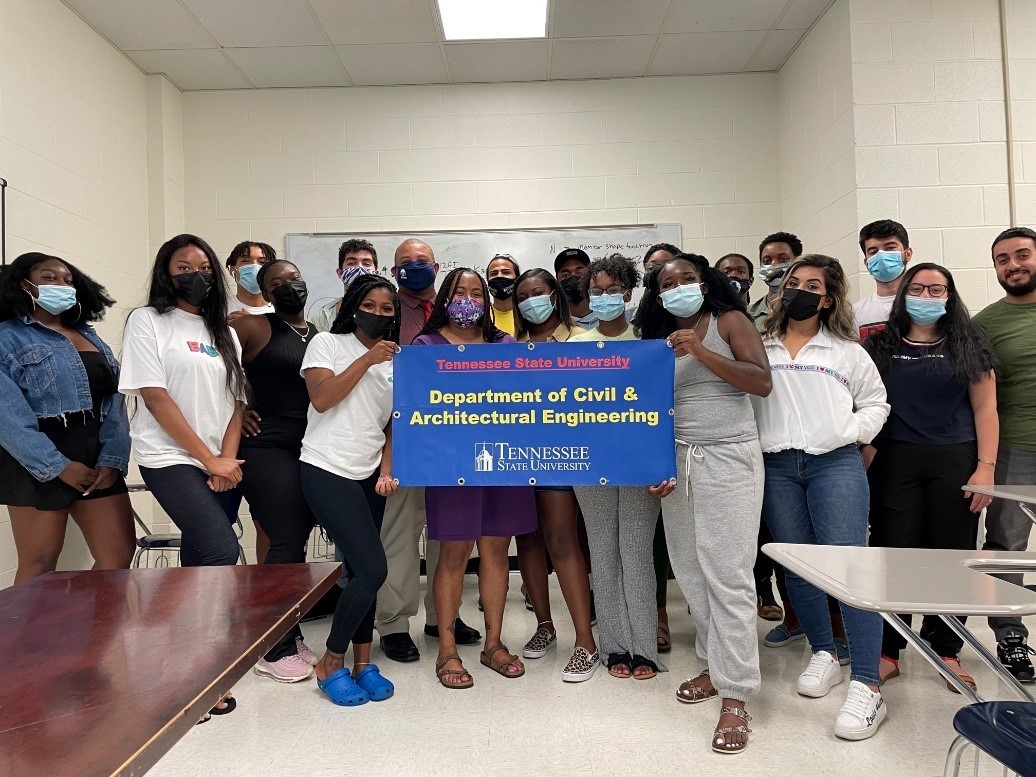
Wilson answered questions and spoke with students about how to work in the dam safety field. Specific employment opportunities he noted were to serve as a state regulator, a dam owner or operator, and a contractor or consultant within an emergency management agency or professional organization.
Preston also attended the Association of State Dam Safety Officials 2021 National Conference in Nashville. As a means of providing a firsthand look into the dam safety and dam risk management industry, the National Dam Safety Program invited four graduate and doctorate level Civil and Architectural Engineering students to attend the conference.
To learn more about the National Dam Safety Program, visit FEMA.gov.
One of the best ways to safeguard our communities against natural disasters is to adopt and follow up-to-date hazard-resistant building codes. Building codes are the minimum design and construction requirements to ensure safe and resilient structures.
These codes reduce casualties, costs and damage by creating stronger buildings designed to withstand disasters. They also help communities get back on their feet faster by minimizing indirect costs such as business interruptions and lost income.
Here are some ways that building codes can improve your community:
- Building codes protect.
- Building codes work.
- Building codes are always improving.
- Building codes level the playing field.
- Building codes help your community.
To read more about how building codes protect your community, visit the FEMA blog. For additional information, visit FEMA's Building Science webpage.
FEMA has released two sets of National Qualification (NQS) System Public Assistance documents for final publication.
The two positions, Program Delivery Manager and Site Inspector, are released today for use by the whole community. Each position includes a job title/position qualification and a position task book. These documents will assist state, local, tribal and territorial partners define and refine Public Assistance positions.
FEMA worked with government partners at all levels to draft and refine these NQS documents.
NQS supports the resource management component of the National Incident Management System (NIMS). NIMS is a key component of U.S. incident management efforts and enables organizations from across the country to work together during incidents of all kinds and sizes. Implementing NIMS across the nation is a fundamental part of building our national preparedness.
FEMA Hosts Webinars on 2021 National Household Survey Results
FEMA is excited to share key findings of the National Household Survey with the public, as well as to continue sharing hazard-specific key messages throughout the next year. FEMA encourages everyone to use the information below and incorporate it into any preparedness-related publications or stakeholder outreach.
Join a webinar from 2 - 3 p.m. ET on Oct. 28 to learn more about the results of the 2021 National Household Survey. The webinar will feature hazards and demographic summaries. Register via Adobe Connect.
Additional resources:
…………………………………………………………………………………………………………..
FEMA Exercise Support Deadline is November 1
FEMA’s National Exercise Program is accepting applications for the next round of exercise assistance. To be considered for the Fall 2021 round of the National Exercise Program, submissions are due by 5 p.m. on Nov.1.
Visit FEMA.gov for instructions on how to request support. Sponsors should email completed support request packages to NEP@fema.dhs.gov by the deadline. For jurisdictions not ready to submit a request at this time, the National Exercise Program will hold additional exercise support rounds in the spring and fall of 2022.
For questions, contact the National Exercise Division.
…………………………………………………………………………………………………………..
FEMA Seeks Public Comment on NFIP Standards
On Oct. 12, FEMA published a notice in the Federal Register seeking public comment on the National Flood Insurance Program's (NFIP) minimum floodplain management standards. This notice is to gather comments on opportunities to adapt floodplain management standards to help communities become safer, stronger and more resilient.
Written comments can be submitted to the Federal eRulemaking Portal, Docket ID: FEMA-2021-2024. The 60-day comment period will conclude on Dec. 13. For background information on the NFIP and the comment period, visit FEMA.gov.
…………………………………………………………………………………………………………..
|


