|
FEMA is announcing the launch of IS-350 Tribal Mitigation Planning, a new independent self-study course now available online through the Emergency Management Institute.
The course provides information on preparing and implementing a tribal hazard mitigation plan. It is based on FEMA’s "Tribal Mitigation Plan Review Guide" (2017) and "Tribal Mitigation Planning Handbook" (2019).
The course is intended for tribal government officials, planners and other partners involved in tribal hazard mitigation planning. After completing the training, participants will be able to:
- Organize the hazard mitigation planning process.
- Engage community members.
- Assess community capabilities.
- Maintain a hazard mitigation plan.
- Learn how to implement a hazard mitigation plan.
Registration is available the Emergency Management Institute webpage. For more information on additional planning courses, please visit FEMA’s Mitigation Planning Training page.

As part of a national effort to speed the pace of COVID-19 vaccination campaigns, FEMA is collaborating with other federal agencies, state, local, tribal, territorial, voluntary, faith-based and private sector partners.
These organizations are critical lifelines to communities, providing resources and services that improve communities every day. To date, FEMA and our partners have identified, scheduled, coordinated and monitored 2,907 clinical and non-clinical volunteers as they facilitated more than 300,000 vaccinations throughout the nation.
|
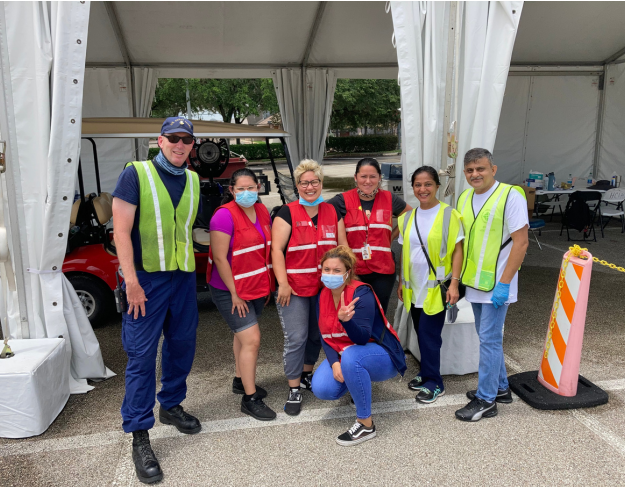
Visit the FEMA blog for more information on how these organizations continue to help people before, during and after disasters.
On Oct. 12, FEMA published a notice in the Federal Register seeking public comment on the National Flood Insurance Program's (NFIP) minimum floodplain management standards. This notice is to gather comments on opportunities to adapt floodplain management standards to help communities become safer, stronger and more resilient.
This notice also seeks comments on how the NFIP could better promote the conservation of threatened and endangered species and their habitats, consistent with the Endangered Species Act, in its floodplain management standards.
Written comments can be submitted to the Federal eRulemaking Portal, Docket ID: FEMA-2021-2024. The 60-day comment period will conclude on Dec. 13.
Please follow the instructions on the webpage for submitting comments and contact the Regulations Help Desk if you have technical issues. For background information on the NFIP and the comment period, visit FEMA.gov.
FEMA published five Mass Care Resource Typing and Job Title/Position Qualification documents. These resource typing documents will assist the sharing of deployable resource types at all jurisdictional levels.
The positions are:
- Field Kitchen Manager.
- State Mass Care Coordinator.
- Field Kitchen Unit.
- Food Service Delivery Unit.
- Mobile Kitchen Unit.
Resource typing is a key component of the National Incident Management System and enables organizations from across the country to work together during incidents of all types and sizes. Implementing the national resource management principles nationwide is a fundamental part of building our national preparedness.
Resource typing definitions establish measurable standards of resource capabilities and performance levels of teams, equipment and units. National Incident Management System job titles and position qualifications establish standards and capabilities for personnel to manage all threats and hazards, regardless of incident type or size.
FEMA Seeks Public Comments About the Community Rating System
FEMA posted in the Federal Register a Request for Information to gather public feedback about ways the agency could consider modifying, streamlining and/or innovating to improve the National Flood Insurance Program’s Community Rating System. The comment period will close Oct. 22.
To submit written comments, use Docket ID: FEMA-2021-0021 in the Federal eRulemaking Portal. Follow the instructions on the page and contact the Regulations.gov Help Desk if you have technical issues.
For additional information on the Community Rating System Request for Information, visit FEMA.gov.
…………………………………………………………………………………………………………..
FEMA Releases New Spanish Language Materials
In recognition of National Hispanic Heritage Month, FEMA is providing several newly translated materials for its National Exercise Division in Spanish. FEMA recognizes the importance of communicating more with Spanish-speaking communities about the services provided by both the National Exercise Program and the Homeland Security Exercise and Evaluation Program.
The National Exercise Division strives to make exercises accessible to everyone who wants support for planning and conducting exercises, as well as those who are ready to plan and conduct exercises on their own.
These documents are intended to be used by exercise practitioners and emergency managers at all levels of government, the private sector and nonprofit organizations. By providing these documents in Spanish, FEMA hopes to engage planners and participants who have previously not been able to participate.
Please find the English and Spanish language documents below:
For questions, contact FEMA's National Exercise Program at NEP@fema.dhs.gov.
…………………………………………………………………………………………………………..
Shake Out with FEMA on October 21
Join the emergency management community on Oct. 21 to participate in International ShakeOut Day.
Register at ShakeOut.org/register and be sure to include your family, friends and colleagues.
Registered participants will receive information on how to prepare for earthquakes and what actions to take during and after the shaking, as well as other ShakeOut news and updates. You can also see who else is participating in your community at ShakeOut.org/whoisparticipating.
For additional earthquake preparedness information, visit Ready.gov/earthquakes.
…………………………………………………………………………………………………………..
FEMA Hosts Webinars on 2021 National Household Survey Results
FEMA is excited to share key findings of the National Household Survey with the public, as well as to continue sharing hazard-specific key messages throughout the next year. FEMA encourages everyone to use the information below and incorporate it into any preparedness-related publications or stakeholder outreach.
Join a webinar from 2 - 3 p.m. ET on Oct. 28 to learn more about the results of the 2021 National Household Survey. The webinar will feature hazards and demographic summaries. Register via Adobe Connect.
Additional resources:
…………………………………………………………………………………………………………..
FEMA Exercise Support Deadline is November 1
FEMA’s National Exercise Program is accepting applications for the next round of exercise assistance. To be considered for the Fall 2021 round of the National Exercise Program, submissions are due by Nov.1.
Visit FEMA.gov for instructions on how to request support. Sponsors should email completed support request packages to NEP@fema.dhs.gov by the deadline. For jurisdictions not ready to submit a request at this time, the National Exercise Program will hold additional exercise support rounds in the spring and fall of 2022.
For questions, contact the National Exercise Division.
…………………………………………………………………………………………………………..
FEMA Hosts Meeting on the Technical Mapping Advisory Council
FEMA will host a virtual meeting from 10 a.m. to 2 p.m. ET on Oct. 20 to solicit public comment about issues to be considered by the Technical Mapping Advisory Council (TMAC). The council will later meet to discuss the draft content for the 2021 TMAC Report.
Visit the Federal Register for additional information.
…………………………………………………………………………………………………………..
|


