|
Volume 24 — Issue 45 | November 7, 2024 |
|
|
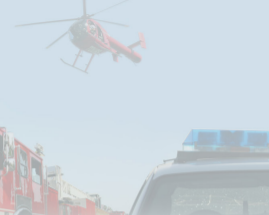
Traffic incident response is a collaborative effort engaging emergency medical services (EMS), law enforcement, fire and rescue, public works, towing and recovery, transportation, and other disciplines.
Every few seconds, a traffic incident responder puts his or her life on the line to aid crash victims. However, when responders use good Traffic Incident Management (TIM) practices at these incidents, the duration and impact of the incident is reduced, and the safety of motorists, crash victims, and responders is improved. The swift clearance of roadways after traffic incidents also reduces the frequency of secondary crashes.
TIM consists of a planned and coordinated, multi-disciplinary process to detect, respond to, and clear traffic incidents so that traffic flow may be restored as safely and quickly as possible.
Each year during the second full week in November, the Federal Highway Administration (FHWA) observes Crash Responder Safety Week (CRSW) to promote TIM among all traffic incident responders and road users, bring attention to traffic incident responder safety, and encourage responders to complete the National TIM Responder training.
CRSW 2024 will be observed during the week of November 18-22. This year’s theme is, “Responders Ahead! Reduce Your Speed As You Proceed.”
FHWA has provided a CRSW Outreach Toolkit for 2024 with day-of-week social media themes and messaging templates. The Toolkit can be used by all TIM community members, including national associations, state departments of transportation, departments of public safety, metropolitan planning organizations, local departments of public works, cities, and individual responders.
FHWA Office of Transportation Operations will host a National Kickoff Webinar for CRSW on Monday, Nov. 18 at 1 p.m. EDT. All traffic incident responders are invited to participate in the webinar. This event will honor responders and provide an overview of activities taking place across the country. During the webinar, the FHWA TIM Program Team will share information on:
- The coordinated approach and unique strategies in promoting CRSW.
- Technologies for saving the lives of responders and road users.
- Efforts to understand the responder struck-by problem.
- A refresh for the National TIM Responder training debuting this month.
Visit FHWA’s CRSW page or the National Operations Center of Excellence (NOCoE) CRSW page to learn more. Register for the Nov. 18 Kick-Off Webinar on Zoom.
(Sources: FHWA, NOCoE)
|
|
|
According to the Centers for Disease Control and Prevention (CDC), in the United States, an estimated 40% of emergency department (ED) visits involve patients who could be treated effectively in nonurgent care settings. Additionally, hypertension-related visits contribute significantly to the burden on EDs. A staggering 1.2 billion hypertension-related ED visits occur each year. Many of these patients could be receiving more effective primary and preventive care for their cardiovascular health needs.
Many states have turned to community paramedicine to ensure access to primary and preventive care and reduce emergency department use—and its financial impact on the health care system. Community paramedics—including emergency medical technicians (EMTs) and other emergency medical services (EMS) providers—provide nonurgent home visits, help patients with chronic disease management, and assess patients to connect them with more appropriate destinations than the ED.
The following resources were updated last month. These articles compile the latest research on how state and local governments are using EMS providers and the practice of community paramedicine to reduce the burden on emergency departments, increase access to healthcare, improve health outcomes, and increase EMS funding and resource allocation.
(Sources: CDC, NCSL)
Last month, the U.S. Secret Service’s (USSS’) National Threat Assessment Center released a guide designed to help state and local law enforcement develop programs to prevent targeted violence in the United States.
The guide, Behavioral Threat Assessment Units: A Guide for State and Local Law Enforcement to Prevent Targeted Violence, outlines how state and local law enforcement agencies can develop behavioral threat assessment units (BTAUs). These units are specifically designed to identify, assess, and intervene with individuals identified as posing a risk of violence.
The ultimate goal of behavioral threat assessment units should be prevention. A structured behavioral threat assessment process can empower agencies, within all existing legal and constitutional parameters, to prevent future tragedies and loss of life.
The guide lists six steps for creating and operating a BTAU. The steps in the guide describe how agencies can adopt the principles of the Secret Service model to proactively identify and intervene with those who intend to carry out acts of targeted violence in their communities. These steps are not intended to be prescriptive, but rather offer a scalable blueprint that can be implemented by agencies varying in size, structure, and resources.
Access the new guide at SecretService.gov.
(Source: USSS)
Weather and climate change can drastically impact how we prepare for and respond to environmental emergencies.
The State of Michigan’s Department of Environment, Great Lakes, and Energy (EGLE) is hosting a webinar on Wednesday, Nov. 20 at 1 p.m. EDT, The National Weather Service: An Important Partner in Emergency Preparedness, Response, and Recovery. This webinar is part of Michigan EGLE’s Environmental Emergency Preparedness and Response series.
This webinar will feature a presentation from Jim Maczko, a Warning Coordination Meteorologist with the National Weather Service, who will discuss:
- National Weather Service engagement with emergency management in preparedness/mitigation, response, and recovery.
- Weather versus climate and how changes in climate translate into outcomes that affect people.
- National Weather Service flood forecasts- from long-range outlooks to real-time emergency warnings.
Register for this webinar on Zoom.
(Source: State of Michigan)
|
|
Joint ODNI, FBI, and CISA statement on Russian election influence efforts
On Nov. 4, the Office of the Director of National Intelligence (ODNI), the Federal Bureau of Investigation (FBI), and the Cybersecurity and Infrastructure Security Agency (CISA) released the following statement:
“Since our statement on Friday, the IC has been observing foreign adversaries, particularly Russia, conducting additional influence operations intended to undermine public confidence in the integrity of U.S. elections and stoke divisions among Americans. The IC expects these activities will intensify through election day and in the coming weeks, and that foreign influence narratives will focus on swing states.
Russia is the most active threat. Influence actors linked to Russia in particular are manufacturing videos and creating fake articles to undermine the legitimacy of the election, instill fear in voters regarding the election process, and suggest Americans are using violence against each other due to political preferences, judging from information available to the IC.”
Read the full statement at ODNI.gov.
(Source: ODNI)
|
|
Foreign threat actor conducting large-scale spear-phishing campaign with RDP attachments
CISA has received multiple reports of a large-scale spear-phishing campaign targeting organizations in several sectors, including government and information technology (IT). The foreign threat actor, often posing as a trusted entity, is sending spear-phishing emails containing malicious remote desktop protocol (RDP) files to targeted organizations to connect to and access files stored on the target’s network. Once access has been gained, the threat actor may pursue additional activity, such as deploying malicious code to achieve persistent access to the target’s network.
CISA, government, and industry partners are coordinating, responding, and assessing the impact of this campaign. CISA urges organizations to take proactive measures outlined in its Oct. 31 Alert.
(Source: CISA)
FBI: Easy Access to Information for Conducting Fraudulent Emergency Data Requests Impacts US-Based Companies and Law Enforcement Agencies
On Nov. 4, the FBI released a Private Industry Notification (PIN), Easy Access to Information for Conducting Fraudulent Emergency Data Requests Impacts US-Based Companies and Law Enforcement Agencies.
This PIN highlights a trend of compromised US and foreign government email addresses used to conduct fraudulent emergency data requests to US-based companies, exposing personally identifying information (PII).
While the concept of fraudulent emergency data requests was previously used by other threat actors, such as Lapsus$, the increase in postings on criminal forums regarding the process of emergency data requests and sale of compromised credentials has led to an increase of their use.
The FBI encourages organizations to implement the recommendations in the Mitigations section to reduce the likelihood and impact from submission of fraudulent emergency data requests to attempt to gain unauthorized access to PII.
Read the full PIN on the FBI’s Internet Crime Complaint Center (IC3).
(Source: FBI IC3)
HHS settles 2 ransomware investigations as attacks rise
The HHS’ Office for Civil Rights (OCR) has settled two investigations into HIPAA violations following ransomware attacks on providers.
In one of the two investigations, HHS OCR found that Oklahoma-based Bryan County Ambulance Authority (BCAA) failed to conduct a risk analysis during an investigation into an attack reported in 2022 that compromised data from more than 14,000 patients. The emergency services provider will pay a $90,000 fine.
The BCAA settlement is HHS OCR’s first linked to an initiative that focuses investigations on compliance with HIPAA’s risk analysis provision. Under the law, covered entities are required to conduct a thorough assessment of the potential risks and vulnerabilities to the confidentiality and security of the organization’s protected health information.
(Source: Healthcare Dive)
|
|
The InfoGram is distributed weekly to provide members of the Emergency Services Sector with information concerning the protection of their critical infrastructures. |
|
|
Fair Use Notice:
This InfoGram may contain copyrighted material that was not specifically authorized by the copyright owner. The EMR-ISAC believes this constitutes “fair use” of copyrighted material as provided for in section 107 of the U.S. Copyright Law. If you wish to use copyrighted material contained within this document for your own purposes that go beyond “fair use,” you must obtain permission from the copyright owner.
Linking Policy and Disclaimer of Endorsement:
The appearance of external hyperlinks does not constitute endorsement of the linked websites, or the information, products or services contained therein. We provide these links and pointers solely for your information and convenience. When you select a link to an outside website, remember that you are subject to the privacy and security policies of the owners/sponsors of the outside website. To view information and resources on the policies that govern FEMA web content visit FEMA Website Information.
Section 504 Notice:
Section 504 of the Rehabilitation Act requires that FEMA grantees provide access to information for people with disabilities. If you need assistance accessing information or have any concerns about access, please contact FEMAWebTeam@fema.dhs.gov.
|
|
|
|
|