|
A recent, multipart article in a major Midwest news publication on
firefighter fatalities, specifically related to fireground events,
raised the serious question of,
"Why are so many fatalities resulting from situations in which previous
losses had identified lessons to prevent subsequent tragedies?"
The article asked why the previous lessons are not leading to a change
in operational behaviors and a reduction in fatalities. This is a valid
question, with answers provided most often under the veil of what
Harvard professor emeritus Chris Argyris would call “Model 1: Defensive
Reasoning.” (Source: Argyris, C. (1990). OVERCOMING ORGANIZATIONAL DEFENSES: FACILITATING ORGANIZATIONAL LEARNING. Upper Saddle River, NJ: Prentice-Hall.)
What is “defensive reasoning?”
Defensive reasoning is alive and well in many organizations, and in
particular within public emergency services. Defensive reasoning
behaviors are those that:
- Stifle contrary thought.
- Strive to regulate or discount any degree of inquiry.
- Look to protect self and perhaps the organization as a whole.
In
the case of fire and Emergency Medical Services, the application of
defensive reasoning crosses organizational boundaries and is often an
industry-wide behavior. That is to say, we as an industry will defend our
actions even in the face of contrary facts. We do not like anyone
asking questions about how or why we do certain things, particularly if
we feel it may result in a call for us to do something different, or
perhaps even stop doing something we have always done.
“Defensive reasoning” in action: An actual incident
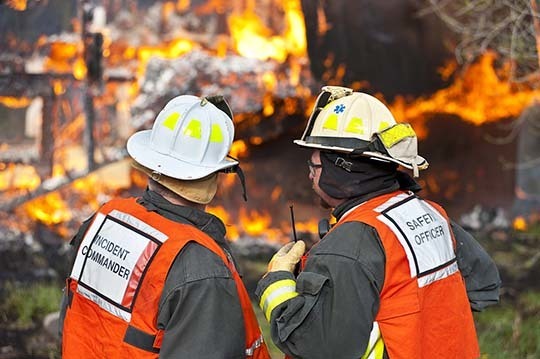
A midafternoon incident involving a double-wide manufactured home had
active fire and pressurized smoke coming out of every window and open
door. The potential of this being a survivable event was nonexistent,
yet an attempt was made to enter the structure. The attempt resulted in
minor burns to a firefighter.
When questioned about the action, a
myriad of comments from the the Incident Commander and the Company
Officer — all to rationalize actions taken — defied logic and science.
Of course, the firefighter’s status among peers elevated to hero for
having sustained injuries while fighting the fire. A defensive reasoning
mindset was clearly in place, and to dispute the actions taken was, in
essence, considered blasphemous. So while the majority praised and
smiled, those that critically inquired about the actions were quickly
discounted and deemed not to be real firefighters.
Leadership and “defensive reasoning”
To overcome defensive reasoning by those willing to exercise
leadership requires an attitude that leadership is not about being their
friend. It is about exercising leadership through processes
of critical inquiry. It is about challenging the rationalizations used
to defend behaviors that have no basis for defense. It is about
absorbing the anger directed at you for questioning the actions of
others.
The reality is that it is often very lonely at the top.
But, if your concern is about being their friend, then consider the
scenario that will eventually play out: making that dreadful knock on a
door to inform a loved one that their firefighter will not be coming
home. You see, it was more important to be a friend then to exercise the
tough love of leadership.
Exercise leadership, send everyone home
safely, and the friendship will follow. Exercise the lessons of past
tragedies and put an end to history repeating itself at the expense of
ourselves and others.
Action steps for learning more about fire service safety culture
Learn
more about how you can advocate for organizational change related to
safety by enrolling in the National Fire Academy’s on-/off-campus class,
Fire Service Safety Culture: Who Protects Firefighters from Firefighters?
Read the report National Safety Culture Change Initiative (PDF 896 KB). This
study reviews fire and emergency services cultural aspects that
contribute to occupational illnesses, injuries and fatalities.
|