|
OSEP Update
September 2026
|
|
A Newsletter for The Office of Special Education Programs Grantees and the Public |
|
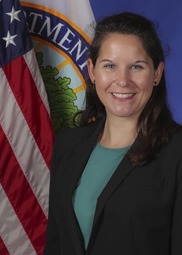
Message From the Office of Special Education Programs Deputy Director
Dear Colleagues,
September brings the start of a new school year, and I heard at the Office of Special Education Programs (OSEP) conference last month that pumpkin spice coffee was already available! During the OSEP conference, held on August 4-5 in Arlington, VA, I had the opportunity to meet many of you and learn about the remarkable work of service providers, educators, and leaders to improve the outcomes for infants, toddlers, children, and youth with disabilities and their families.
Over 1,200 individuals registered for the conference, representing all 50 States, Puerto Rico, Virgin Islands, Guam, Northern Mariana Islands, and American Samoa. The conference began with welcomes from the Secretary of Education Linda McMahon and the Office of Special Education and Rehabilitative Services’ (OSERS) Acting Assistant Secretary Kelly Rogers. In addition to exhibitors and technology demonstrations, we had over 30 sessions that covered a range of topics, including high-quality section 618 data, family engagement, registered apprenticeship programs, graduation and transition requirements, dispute resolution, fiscal planning, timely evaluation for early intervention services, and more.
On the second day of the conference, I participated in a panel with OSERS’ Acting Assistant Secretary Kelly Rogers, the Commissioner and Deputy Commissioner of the Administration on Disabilities at the U.S. Department of Health and Human Services (HHS), Dr. Rebecca Hines and Dr. Jennifer Johnson, and the Acting Commissioner of the Rehabilitation Service Administration, Christopher Pope. During this panel, we discussed opportunities to improve outcomes for individuals with disabilities through the interagency agreement with HHS signed in June 2026, such as increasing access to critical wraparound services and the use of research to inform early intervention and special education practices. Additionally, Acting Assistant Secretary Rogers and Commissioner Hines both reiterated that rights and protections established under the Individuals with Disabilities Education Act (IDEA) cannot and will not change through our partnership. This includes parental involvement in the development of individualized family service plans and individualized education programs and contains multiple procedural safeguards and due process procedures to ensure that children with disabilities have access to learning environments that meet their individual needs. The IDEA’s requirements that early intervention services be provided in natural environments to the maximum extent appropriate and a free appropriate public education be provided in the least restrictive environment remain, and these protections will continue to drive the education of children served under IDEA.
The annual OSEP Conference was an exciting opportunity for the OSEP team to meet with State leaders, parent center staff, technical assistance and professional development providers, faculty, and researchers from across the nation, and for them to meet and share with each other. We thank everyone who attended and look forward to continued collaboration!
Sincerely,
Erin
|
|
|
Photo Highlights from the OSEP Conference
|
|
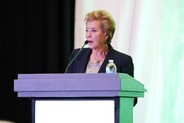 Secretary of Education Linda McMahon
|
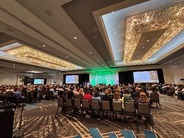 The OSEP Conference crowd of 1,200 attendees
|
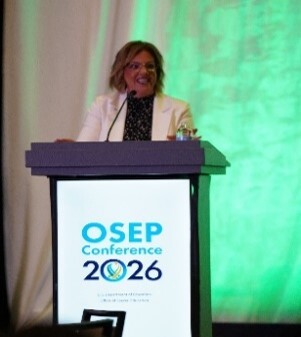 Kelly Rogers, Acting Assistant Secretary, OSERS
|
|
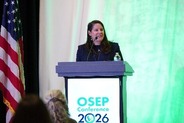 Erin McHugh, Deputy Director of OSEP
|
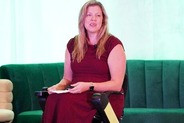 Rachel Barkely, Director of Able Americans Project, Keynote Speaker
|
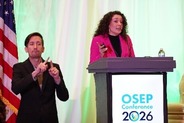 Juli Taylor, Conference emcee
|
|
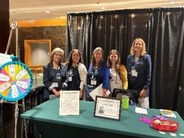 The OSEP Data Team
|
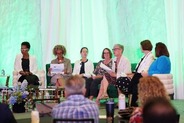 High Expectations panel
|
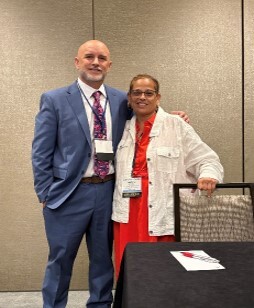 OSEP Staff Presenters
|
|
Announcing the NEW DMS Grantee Manual
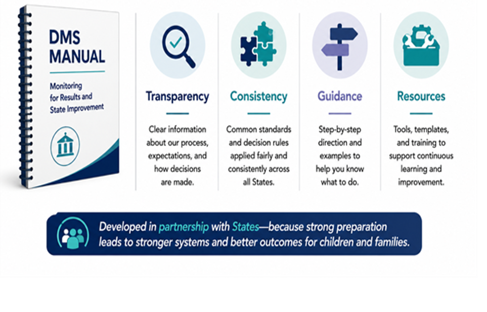
On August 4, 20206, OSEP announced the release of the new DMS Grantee Manual, which provides clear, transparent, and actionable guidance to support States as they prepare for OSEP’s monitoring activities. The manual outlines OSEP’s monitoring authority, monitoring cycle, phases, overall expectations, and required timelines. To learn more about DMS: DMS webpage and DMS Grantee Manual — August 2026 (PDF)
|
|
Collaborating Across Roles to Advance Postsecondary Transition
Kentucky is leveraging its State Personnel Development Grant (SPDG) to bring educators together and strengthen post-secondary transition systems for students with disabilities through data-driven tools, coaching, and cross-agency collaboration. Their Transition 360 Summer Institute is showing how targeted, statewide professional learning can elevate outcomes — and offers insights valuable to SPDG and IDEA-funded efforts nationwide. Click to learn how this model is driving meaningful systems change.
Accessibility Support for OSEP-Funded Centers
Did you know OSEP-funded Centers can connect with NCADEMI for individualized support to improve the accessibility of your digital products and services? We look forward to answering your questions about accessible websites, documents, PDFs, presentations, videos, emails, procurement, and more during our free weekly office hours. Learn more and schedule a consultation.
|
|
Get to Know Us Better!
Connect With the Office of Special Education Programs Online
OSEP assists States with implementing the IDEA. For the past 50 years the IDEA is the law that makes available a free appropriate public education to eligible children with disabilities throughout the nation and ensures special education, related services, and supplementary aids and services to eligible children. If you have questions or comments about the OSEP Update, send them to OSEPNewsletter@ed.gov.
|
|
SHARE AND CONNECT
Were you forwarded this email?
|
|
This newsletter contains resources that are provided for the reader’s convenience. The inclusion of these materials is not intended to reflect its importance, nor is it intended to endorse any views expressed, or products or services offered. These materials may contain the views and recommendations of various subject matter experts as well as hypertext links, contact addresses, and websites to information created and maintained by other public and private organizations. The opinions expressed in any of these materials do not necessarily reflect the positions or policies of the U.S. Department of Education. The U.S. Department of Education does not control or guarantee the accuracy, relevance, timeliness, or completeness of any outside information included in these materials. |
|
|
|
|