|
Making a Difference
Could a Handful of Prunes Help Prevent Osteoporosis?
Researchers funded by USDA’s National Institute of Food and Agriculture (NIFA) and the California Prune Board are exploring an unlikely hero in the fight against osteoporosis: prunes.
Penn State University and San Diego State University scientists are leading large-scale clinical trials to determine whether eating as few as three to four prunes a day can slow or prevent the significant bone loss women experience during the transition to menopause.
The studies were funded under the Commodity Board Co-funding Topics program area priority, which is part of NIFA’s Agriculture and Food Research Initiative (AFRI) This public-private partnership was introduced in the 2014 Farm Bill to enable national and state commodity boards to propose research topics that they are willing to co-fund alongside NIFA. Learn more about the research here.
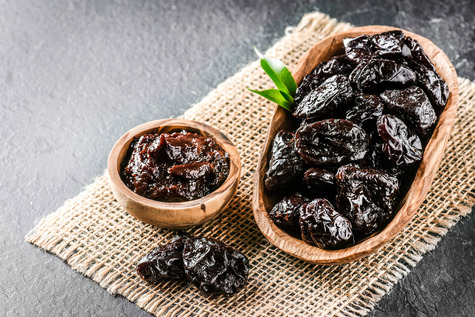
Small containers of prunes. Image courtesy of Adobe Stock.
|
|
|
Presidential AI Challenge Deadline Approaching Projects for the Presidential AI Challenge must be submitted by Jan. 20, 2026. Virtual office hours are being held throughout December and January. Learn more about the challenge and how to support youth participation.
Also, the Presidential AI Challenge is seeking volunteers -- AI programming or user experts; STEM professionals; or professionals with experience working with students or teachers. Judges will independently score each submission against a detailed rubric in late January. The expected time commitment to score the submissions is approximately four hours, plus a one-hour training session in mid-January. Those interested can register here.
|
|
Information about the program area priority—including program contacts, types of projects allowed, and more— will be found in Part I, C of the AFRI Foundational and Applied Science RFA. Letters of Intent (if applicable) and applications must be received at NIFA by 5 p.m. EST on the deadlines below. |
|
|
Dec. 11
- Agricultural Microbiomes in Plant Systems and Natural Resources
- Conventional Plant Breeding for Cultivar Development
- Food and Human Health
- Mitigating Antimicrobial Resistance Across the Food Chain
- Nanotechnology for Agricultural and Food Systems
- Environmental and Natural Resource Economics
- Pollinator Health: Research and Application
- Rural Economic Development
- Small and Medium-Sized Farms
- Social Implications of Food and Agricultural Technologies
.
|
|
Dec. 18
- Agricultural Biosecurity
- Animal Breeding, Genetics, and Genomics
- Animal Nutrition, Growth and Lactation
- Animal Reproduction
- Critical Agricultural Research and Extension
- Data Science for Food and Agricultural System
- Diseases of Agricultural Animals
- Pests and Beneficial Species in Agricultural Production Systems
- Welfare of Agricultural Animals
Accepted on a Continuous Basis continuing
- Rapid Response to Emerging and Re-emerging Pest and Disease Events Across Food and Agricultural Systems
- Rapid Response to Weather Events Across Food and Agricultural Systems
|
|
USDA ERS Reschedules Reports Affected by Lapse in Federal Funding
The USDA Economic Research Service (ERS) is rescheduling reports that were affected by the lapse in federal funding. Find the new release dates for several ERS reports here.
FSIS to Hold Public Meeting on Strategies to Reduce Salmonella in Poultry Products
USDA’s Food Safety and Inspection Service (FSIS) will host a hybrid public meeting on Jan. 14, 2026, to gather input on innovative, practical and science-based strategies to further reduce Salmonella illnesses associated with poultry products. FSIS is seeking ideas from all stakeholders, including consumers, industry and researchers on the use of data, performance standards and policy options that support public health and work for establishments of all sizes.
All attendees, whether attending in person or virtually, must register for the meeting by Jan. 7, 2026. Attendees planning to share public comments during the meeting must register by Jan. 5, 2026.
|
|
|
The National Institute of Food and Agriculture (NIFA) is committed to ensuring that its programs and services are accessible to all individuals, including individuals with disabilities and individuals with limited English proficiency. If you need a reasonable accommodation to participate in any NIFA event, please contact the appropriate Program staff no later than 10 days prior to the event. To find Program staff by event, please visit the NIFA Calendar of Events. NIFA Language access services, such as interpretation or translation of vital information, will be provided free of charge to limited English proficient individuals upon request.
If you need interpretation or translation services, please visit NIFA language services or contact Gabriel de Zayas, Equal Opportunity Specialist, at Gabriel.DeZayasrodriguez@usda.gov or (202) 655-7842 no later than 10 days prior to the event.
USDA NIFA invests in and advances high-impact agricultural research, education, and Extension to solve the Nation’s pressing challenges, grow U.S. agricultural innovation and competitiveness, fuel rural prosperity, and develop the future agricultural workforce. Keep informed about NIFA, USDA, our Land-grant and non-Land-grant university partners, and stakeholders with the NIFA Update. Read past issues online, sign up for email updates or follow us on X (formerly Twitter) @USDA_NIFA, #NIFAImpacts or LinkedIn @usda-nifa.
If you wish to submit a news item or information, send an email to NIFAUpdate.
USDA is an equal opportunity lender, provider, and employer.
|
|
|
|
|