|
Making a Difference
Scientists Uncover Genetic Mystery Behind Blackberry Thorns
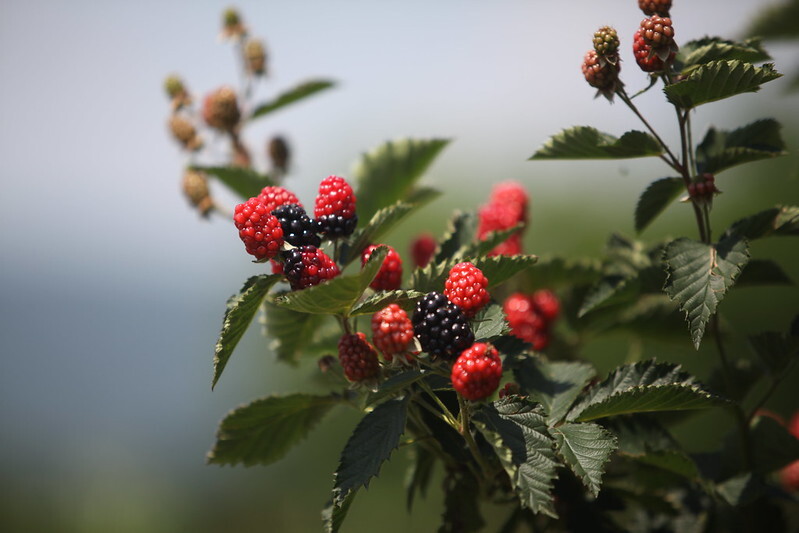
University of Arkansas scientists have uncovered the genetic mystery that dictates whether a blackberry cane bristles with thorns. The discovery enabled the team to develop rapid DNA tests that predict thornlessness in seedlings long before plants reach the field.
With support from NIFA through the Specialty Crop Research Initiative and the Agriculture and Food Research Initiative, scientists have pinpointed the location on a chromosome that carries the gene behind thornless blackberries.
A commercial breeding program might sow 10,000 seedlings a year, only to discard most once the canes mature and reveal their thorns. With the new test, those culls happen in a petri dish, freeing vast stretches of field space and cutting years off the timeline. Read more about the Arkansas research and how it will benefit commercial blackberry production.
Blackberries on the vine. Image courtesy of Ryan McGeeney, University of Arkansas System-- Division of Agriculture
|
|
Advancing AI Education for American Youth
USDA and NIFA will support the White House initiative to foster interest and expertise in artificial intelligence (AI) technology through education. The initiative will help empower the nation’s next generation of innovators. Agriculture Secretary Brooke L. Rollins serves as a member of the task force guiding the program. Learn more about the Executive Order creating the initiative and the companies who have pledged their support.
NIFA Director Attends NACAA
NIFA Director Dr. Jaye Hamby recently attended the 110th Annual Meeting of the National Association of County Agricultural Agents (NACAA) in Billings, MT. Dr. Hamby spoke at the NACAA Opening Assembly and the Administrative Leaders Luncheon, where he shared his vision and goals for NIFA and how Extension can contribute to achieving that vision.
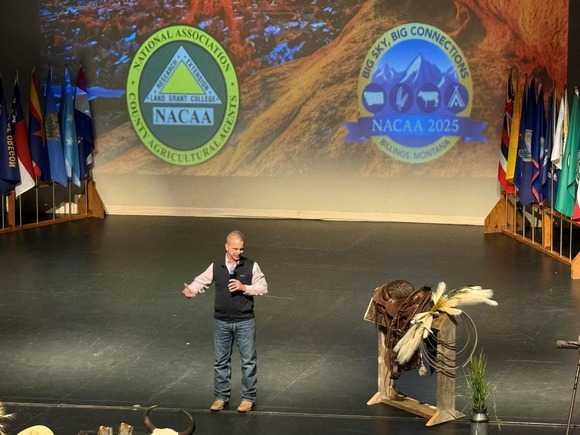 NIFA Director Dr. Jaye Hamby speaking at NACAA Opening Assembly. Photo courtesy of Jack Bazemore, Montana State University.
|
|
University of Nebraska Research Unlocks Secrets of Sorghum’s Defenses Against Fall Armyworm
Research at the University of Nebraska–Lincoln is revealing how sorghum’s natural defenses can strengthen its resistance to a major pest threat, the fall armyworm. Scientists discovered that sorghum plants with the gene Bmr112 can boost their production of certain hormones and flavonoids which causes increased disruption of fall armyworm growth and development. This NIFA-supported work opens the long-term potential for breeding or gene editing to create hybrids with stronger natural resistance to the pest. Read more about their work.
Sorghum leaves show feeding damage from fall armyworms. Image courtesy of Emma Saathoff, University of Nebraska-Lincoln.
|
|
|
Update on USDA Highly Pathogenic Avian Influenza Strategy
Agriculture Secretary Brooke L. Rollins provided an update recently on USDA’s five-pronged strategy to combat Highly Pathogenic Avian Influenza (HPAI). USDA received 417 proposals for the HPAI Poultry Innovation Grand Challenge Funding Opportunity. In total, applicants proposed a total of $793 million in funding. These projects focus on a range of innovations to support research into HPAI prevention, therapeutics, and potential vaccines. USDA expects the awards to be finalized by this fall. Read more about the update.
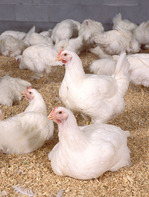
Close up of broiler chickens. USDA Agriculture Research Service photo by Stephen Ausmus.
|
|
|
Gain of Function Research Reporting
NIFA has posted on its website information for universities and other grant recipients to report Gain of Function Research in a timely and effective manner. USDA is asking grant recipients to self-identify any USDA-funded projects, inclusive of source(s) or type(s) of funding, including in-kind support, that is believed to meet or has the potential to meet the dangerous gain-of-function definition. Read more about how, what and when to report this information.
|
|
|
The National Institute of Food and Agriculture (NIFA) is committed to ensuring that its programs and services are accessible to all individuals, including individuals with disabilities and individuals with limited English proficiency. If you need a reasonable accommodation to participate in any NIFA event, please contact the appropriate Program staff no later than 10 days prior to the event. To find Program staff by event, please visit the NIFA Calendar of Events. NIFA Language access services, such as interpretation or translation of vital information, will be provided free of charge to limited English proficient individuals upon request. If you need interpretation or translation services please visit NIFA language services or contact Lois Tuttle, Equal Opportunity Specialist, at Lois.Tuttle@usda.gov or (443) 386-9488 no later than 10 days prior to the event.
NIFA’s mission is to invest in and advance agricultural research, education, and Extension that solves societal challenges. NIFA’s investments in transformative science directly support the long-term prosperity and global preeminence of U.S. agriculture. Keep informed about NIFA, USDA, our Land-grant and non-Land-grant university partners, and stakeholders with the NIFA Update. Read past issues online, sign up for email updates or follow us on X (formerly Twitter) @USDA_NIFA, #NIFAImpacts or LinkedIn @usda-nifa.
If you wish to submit a news item or information, send an email to NIFAUpdate.
USDA is an equal opportunity lender, provider, and employer.
|
|
|
|