|
Having trouble viewing this email? View it as a Web page.

|
|
|
Fresh from the Field is a weekly album showcasing transformative impacts made by partners supported by the National Institute of Food and Agriculture.
Fresh From the Field will be on hiatus until November 29th.
Editor: Falita Liles Nov.15, 2018
|
|
Success Stories
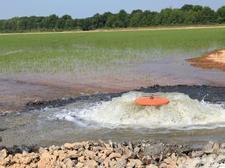 Irrigation Education in Arkansas
In Arkansas, irrigated soybeans yielded 33 percent higher than dryland beans, according to the National Agricultural Statistics Service, and the value of in-state irrigated cropland is $1,300 per acre more than non-irrigated. However, running pumps adds input costs and groundwater is a limited resource. A collaborative effort among the University of Arkansas System Division of Agriculture’s Cooperative Extension Service, Natural Resource Conservation Service, and the County Conservation Districts has increased educational efforts on Irrigation Water Management practices. These educational efforts made substantial economic impacts and led to long-term sustainability of aquifers and other natural resources. The efforts resulted in a 63 percent savings in energy, 50 percent reduction in water use, and $46.66 savings per acre of rice.
NIFA supports the Cooperative Extension Service.
Contact: Dianne Ashburn, University of Arkansas. Photo courtesy of USDA, NRCS.
|
News Coverage
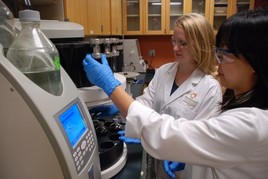 Adding Value to Used Railroad Ties and Utility Poles
Over 20 million new wooden railroad ties are installed every year in the United States. The University of Tennessee (UT) is helping the wood industry’s contribution to sustainability by helping them re-use or dispose of treated wood coming out of service. In addition, they are helping the nation cost effectively produce biofuels and bioproducts. UT researchers are developing an additional re-use option for railroad ties and utility poles through a two-step process where they thermally extract the preservative present in the ties for re-use in the treatment of new wood and add value to the newly preservative-free biomass for higher quality bio-oil.
NIFA supports this innovative research through the Agriculture and Food Research Initiative.
Contact: David White, University of Tennessee.Photo courtesy of University of Tennessee.
|
Library
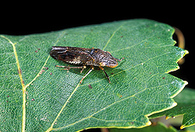 Quarantine Effective at Preventing Spread of the Glassy-Winged Sharpshooter
The Glassy-winged sharpshooter (Homalodisca vitripennis) feeds on plants and can spread the disease-causing bacterium Xylella fastidiosa to a variety of commercially sold plants. One lab has focused efforts on refining the existing standardized quarantine treatment protocols for shipping nursery material throughout the state so that all stages of the glassy-winged sharpshooters are eliminated from nursery stock. Currently, almost all of Southern California commercial nurseries that export product to the north are participating in this program. Since inception in 2010, long-term surveys show that the quarantine treatment program has been 100 percent effective in preventing the commercial spread of this insect. This work provides an example of how research leads to practices that help increase ecological sustainability of landscapes.
NIFA supports this research effort through the Hatch Act Funds.
Contact: Dr. Richard Redak, University of California, Riverside. Photo courtesy of USDA,ARS.
|
Tweet of the Week
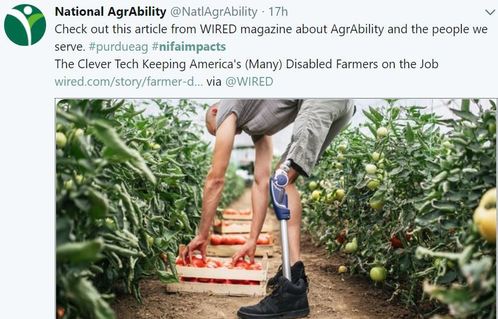
#NIFAIMPACTS
|
|

NIFA’s mission is to invest in and advance agricultural research, education, and extension that solve societal challenges. NIFA’s investments in transformative science directly support the long-term prosperity and global preeminence of U.S. agriculture. To learn more about NIFA’s impact on agricultural sciences, visit www.nifa.usda.gov/Impacts, sign up for email updates or follow us on Twitter @USDA_NIFA, #NIFAImpacts.
USDA is an equal opportunity lender, provider, and employer.
|
|



