|
Having trouble viewing this email? View it as a Web page.

|
|
|
Fresh from the Field is a weekly album showcasing transformative impacts made by partners supported by the National Institute of Food and Agriculture.
Editor: Falita Liles Oct.25, 2018
|
|
Success Stories
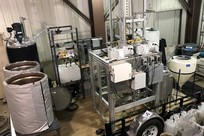 New Pilot System Turns Scum into Biodiesel
Scum, a dark, muddy substance produced during wastewater treatment, presents a significant waste disposal challenge, but also a potential energy source. Researchers at the Center for Biorefining at the University of Minnesota (UMN) developed a pilot system at the St. Paul wastewater treatment plant. The system found 68 percent of the dried and filtered scum at the plant could be converted to biodiesel. All of the scrum from the plant is equivalent to approximately 140,000 gallons of biodiesel and $500-$600 thousand in profit per year.
NIFA supports this research through the Hatch Act Funds.
Read the full story at UMN Impact. Photo credit: Shelly Gustafson/UMN.
|
News Coverage
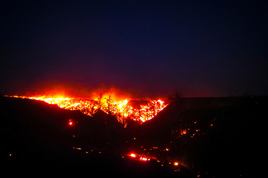 Wildfire Response in Oklahoma
In April 2018, wildfires scorched nearly 350,000 acres in northwest Oklahoma. It also claimed 1,600 head of cattle and compromised 2,100 miles of fencing. Damages exceeded $26 million. Oklahoma State University (OSU) Cooperative Extension provided agricultural related relief to affected areas and families. OSU matched producer needs with incoming donations, offered hands-on assistance, and provided science-based information to guide recovery efforts. Between April 13th and 31st, Extension crisis communication via Facebook and Twitter generated a reach of 1,860,142. Meanwhile, Oklahoma 4-H youth development members raised $55,000 for affected families and packed 1,225 sack lunches for hundreds of firefighters battling the blaze.
NIFA supports the Cooperative Extension Service.
Read the full story in STATE, the official magazine of OSU. Photo credit Todd Johnson/OSU.
|
Library
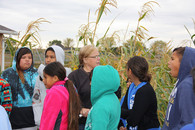 Agroecology Stewardship and Community Engagement in North Dakota
United Tribes Technical College increased community outreach through its children’s gardening project. The expanded children’s garden is now a community garden program with orchard crops and Haskap berry plants. It also included raised beds specifically for herb gardens and its design enabled mobility-impaired gardeners to raise a home garden without having to bend or dig. Traditional knowledge blends with Western science made this project helpful and successful in the Arikara Garden, the “Medicinal Wheel Garden,” and the continued rejuvenation of indigenous plants in the Dragonfly Garden plots.
NIFA supports the Tribal Extension Grant Program. Photo credit: NDSU Extension.
|
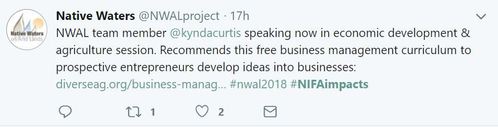
Tweet of the Week
#NIFAIMPACTS
|
|

NIFA’s mission is to invest in and advance agricultural research, education, and extension that solve societal challenges. NIFA’s investments in transformative science directly support the long-term prosperity and global preeminence of U.S. agriculture. To learn more about NIFA’s impact on agricultural sciences, visit www.nifa.usda.gov/Impacts, sign up for email updates or follow us on Twitter @USDA_NIFA, #NIFAImpacts.
USDA is an equal opportunity lender, provider, and employer.
|
|



