|
Having trouble viewing this email? View it as a Web page.
|
|
|
Fresh from the
Field is a weekly album showcasing transformative impacts made by
partners supported by the National Institute of Food and Agriculture.
Editor: Falita Liles Oct.11, 2018
|
|
Success Stories
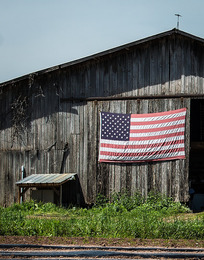
Rural Population Change in the United States
Rural areas comprise 72 percent
of the nation’s land area and 46 million of its people. Rural America includes
counties bordering suburbs, remote areas, agricultural regions, and areas that
depend on manufacturing or tourism. Today, these areas are changing rapidly.
The Great Recession
brought the collapse of the stock market, high foreclosure rates, falling
housing prices, rising unemployment, and dramatic shifts in rural population trends.
Land-grant university researchers and Extension are working with other universities,
USDA’s Economic Research Service, and the U.S. Census Bureau to create a
comprehensive picture of rural changes before, during, and after the Great
Recession. They are also teaching rural residents, community leaders,
government agencies, and non-profits how to access and use population data.
This collaborative
multistate effort produced multiple studies that examined
housing. Research showed subprime lending was more common in rural than urban
areas, with lenders targeting remote areas with high minority populations,
population loss, low housing values, and lower education levels. In Minnesota,
research findings helped address problems with foreclosure. In Nevada,
researchers taught the Reno Housing Authority about benefits and harms of
dispersed low-income housing.
In addition, the multistate efforts studies
showed that higher opioid abuse among rural adolescents is partly due to
greater reliance on emergency rooms, where opioids are more often prescribed.
NIFA supports this research through the Multistate Research Fund.
Read the complete Multistate Research Impacts statement. USDA Photo by Lance Cheung.
|
News Coverage
 Making Vitamin K More Affordable
An innovative study promises to reduce
production costs for the most potent form of Vitamin K — Menaquinone-7. Penn
State researchers have developed a novel method to enhance the fermentation
process that creates the supplement by agitated liquid fermentation in a
biofilm reactor.
The new process, assuming it can be
scaled up to industrial production, is important because recent studies
conducted by universities in the Netherlands and UCLA School of Medicine, among
others, show essential health benefits associated with large doses of Vitamin K
— especially the Menaquinone-7 form, known as MK-7. These benefits include
reducing risks of cardiovascular disease and strokes, osteoporosis, and even battling
cancer.
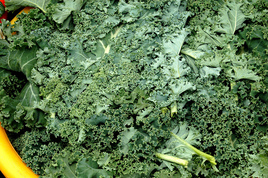
Foods that are rich in Vitamin K —
such as kale, red meat, and egg yolk — do not provide enough of the vitamin to
achieve high-dose therapies, which will require supplements.
NIFA
supports this research through the Hatch Act Funds.
Read the full story
at Penn State. USDA photo by Ken Hammond.
|
Library
 Combating Opioids in Rural Communities
Tackling the opioid crisis requires
education and action across various community sectors and by individuals,
professionals, and families. The North Central Regional Center for Rural
Development and Purdue Extension host a quarterly webinar series, Combating
Opioids, to share information, data, resources, and best practices or
evidence-based interventions that can be implemented at the local level to make
a difference in addressing opioid misuse and abuse, especially in rural
communities. There have been over 575 participants from across the country on 5
webinars and over 1,000 views to archived presentations and materials housed on
the project’s website. Photo by Falita Liles.
|
Tweet of the Week
#NIFAIMPACTS

|
|

NIFA’s mission is to invest in and advance agricultural research, education, and extension that solve societal challenges. NIFA’s investments in transformative science directly support the long-term prosperity and global preeminence of U.S. agriculture. To learn more about NIFA’s impact on agricultural sciences, visit www.nifa.usda.gov/Impacts, sign up for email updates or follow us on Twitter @USDA_NIFA, #NIFAImpacts.
USDA is an equal opportunity lender, provider, and employer.
|
|



