|
Having trouble viewing this email? View it as a Web page.

|
|
|
Fresh from the Field is a weekly album showcasing transformative impacts made by grantees supported by the National Institute of Food and Agriculture.
NIFA
invests in and advances agricultural research, education, and extension and
seeks to make transformative discoveries that solve societal challenges.
July 13, 2017
|
|
Success Stories of the Week
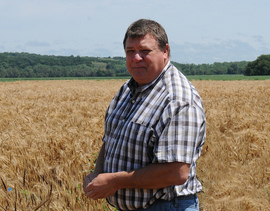 Wheat's 10 billion letter code
Kansas State University scientists are part of a breakthrough study in which an
international team of researchers has successfully deciphered all 10 billion
letters in the genetic code of a wild ancestor of wheat. The letters A, C, G and T. stand for
adenine, cytosine, guanine, and thymine, the four chemical building blocks of
the DNA molecule.
“The relative of wheat is
called wild emmer, which is one of the founding crops of human society,” said
Eduard Akhunov, professor of plant pathology and wheat genomics at Kansas
State University. “Wild emmer was one of the first crops that was
domesticated 10,000 years ago, which was a critical step in moving from hunting
and gathering to an agricultural society.”
By knowing the genetic code
of wild emmer, scientists can now compare its DNA to modern varieties to fully
understand how wheat has evolved over thousands of years. With that
information, they can better understand the genes that provide important traits
such as drought and heat tolerance, or resistance to various diseases and
pests.
This research was funded by NIFA's Agriculture and Food Research Initiative (AFRI).
Read about wild emmer. Image provided by Kansas State University.
|
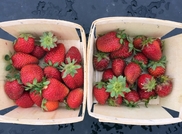 Berry Sweet Strawberries
Researchers
with the New Hampshire Agricultural Experiment
Station at the University of New Hampshire have
succeeded in quadrupling the length of the Granite State’s strawberry growing
season as part of a multi-year research project that aims to benefit both
growers and consumers.
New Hampshire’s strawberry season traditionally lasts
only four to six weeks. Last year, researchers working on the multi-state TunnelBerries project at
the Durham, New Hampshire Experiment Station
facility grew a day-neutral variety, which
produces fruit through the summer and fall. Researchers at the used low
tunnels, temporary structures made of wire hoops and plastic covers. They harvested strawberries for 19
consecutive weeks from mid-July through November. They
also found that the low tunnels significantly increased the percentage of
marketable fruit, from an average of about 70 percent to 83 percent.
The project is supported
by NIFA's Specialty
Crop Research Initiative.
Read
about
UNH's strawberries. Image provided by Kaitlyn Orde/UNH.
|
News Coverage
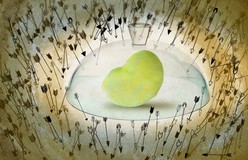 Full of beans
Farmers in Delaware grow
60 percent of the United States lima beans, which are used for canning and
freezing. These crops are threatened by downy mildew epidemics, caused by the
fungus-like microorganism Phytophthora phaseoli. This fast- evolving
microorganism has six documented races, A to F. Race F is predominant in
the Mid-Atlantic region, and researchers at the University of Delaware seek
to create marketable lima beans that are resistant
to Race F.
Researchers have developed
genetic markers to detect Race F resistance in lima beans. To validate the marker genes, the researchers
set up a diversity panel of 256 different lima bean genotypes, the first time
these methods have been used in lima bean breeding. The genotypes were sourced from around the
world, mostly from the lima bean’s center of origin in Central and South
America.
This research project was
supported by NIFA's Specialty Crop Research Initiative (SCRI).
Read more about lima beans. Illustration by Jeffrey Chase.
|
The Library
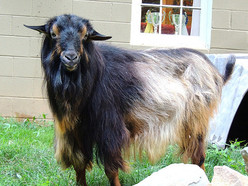 Goat milk?
More
and more, diet-conscious consumers are looking for reduced-fat dairy products
to maintain health and avoid diseases such as heart disease, stroke, and
obesity. This growing demand has spurred dairy goat researchers at Fort
Valley State University in Fort Valley, Ga., to conduct research on
reduced-fat goat milk products such as cheese, yogurt and ice cream, which may increase consumer demand and
boost the sustainability of the dairy goat industry.
The
research funded by the Evans-Allen and 1890 Capacity Building Grant Programs. In one investigation, they developed a reduced-fat Cheddar-like
goat cheese. They found that fat can be reduced to 19
percent with minimal impact on ripening and consistency characteristics.
The
team also studied different low-fat formulas of goat milk ice cream. They found no significant differences in flavor, body, and texture for the different
formulas during the zero to eight week frozen storage periods.
Learn
more about FVSU research on reduced-fat goat cheese
products. Image provided by USDA.
|
Video
 Summer food safety
July
is National Grilling Month, and outdoor dining can pose risks for food safety. Ground beef, leafy greens, flour, and water can be contaminated by Shiga
toxin-producing E. coli (STEC) through animals or animal feces. STEC is
the leading cause of acute kidney failure in children, and STEC-related
complications are a threat to children, seniors, and pregnant women. The University
of Nebraska-Lincoln, with funding from Agriculture and Food Research Initiative (AFRI) , conducted a Coordinated Agricultural Project on research, education and outreach to control STEC throughout the entire beef system. The team developed a consumer
education website with a video on tips for grilling and other food safety advice.
Watch the UNL video. Image provided by University of Nebraska-Lincoln.
|
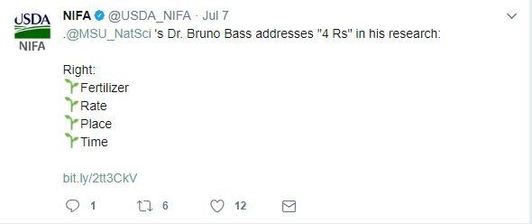
Tweet of the Week
#NIFAIMPACTS
|
|

For more NIFA Impacts, visit nifa.usda.gov/impacts or the Land-Grant University Impacts website. Send us your NIFA-funded impacts at impactstories@nifa.usda.gov or share them with USDA_NIFA on Twitter #NIFAImpacts.
NIFA invests in and advances agricultural research, education, and extension and promotes transformative discoveries that solve societal challenges.
Fresh from the Field is a weekly compendium of news and information that may be of interest to land-grant and non-land-grant universities, NIFA stakeholders, and other subscribers.
Editor: Falita Liles; Co Editor: Carlos Harris
|
|