New York FSA Updates - November 17, 2026
In This Issue:
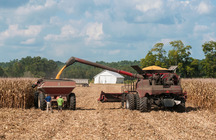
Agricultural producers can begin enrolling in the Agriculture Risk Coverage (ARC) and Price Loss Coverage (PLC) programs, which the U.S. Department of Agriculture (USDA) recently updated to include more than 30 million new base acres. This expansion, the first in 20 years, was made possible by the Working Families Tax Cuts Act and is part of USDA’s efforts to put Farmers First.
Now that the base allocation process is complete, producers can make elections and enroll for the 2026 crop year from Sept. 16 through Dec. 11, 2026, and for the 2027 crop year from Nov. 2, 2026, through March 15, 2027. Because eligible acres exceeded the nationwide 30-million-acre cap, USDA’s Farm Service Agency (FSA) is applying an across-the-board, prorated reduction of 3.69% to all newly allocated base acres.
Base Allocation Notifications
The opportunity for landowners to review their base allocation summaries and take necessary action ended Aug. 31, 2026. This included correcting inaccurate information, designating subsequent acres or opting out of adding base acres. Landowners did not lose base acres through the base allocation process.
If landowners did not notify FSA of changes, the base allocation summary is considered accurate and complete; however, an across-the-board factor will apply. FSA determined the base allocation percentage reduction using all acreage reported as eligible, and new base acres will automatically be allocated to farms after applying the 3.69% reduction.
Base allocation notifications will be available beginning Sept. 16, 2026. Landowners can access notifications online at fsa.usda.gov/arc-plc using a Login.gov account. Landowners who do not currently have a Login.gov account can contact their FSA county office to obtain their base allocation notification beginning Sept. 16, 2026.
Enrollment Period
Producers can now change their election and enroll in ARC-County (ARC-CO) or PLC, which both provide crop-by-crop protection, or ARC-Individual (ARC-IC), which protects the entire farm. Although election changes for 2026 are optional, producers must enroll through a signed contract each year. Existing multi-year contracts ended in 2025, but producers have the option to sign a new multi-year contract for 2026 through 2031. Producers who opt out of a multi-year contract can enroll for the 2027 crop year starting Nov. 2, 2026, through March 15, 2027.
If producers do not submit their 2026 election by Dec. 11, 2026, their election remains the same as their 2025 election for crops on the farm, and the farm is ineligible for payments for the 2026 program year. Landowners cannot enroll in either program unless they have a share interest in the farm.
Covered commodities include barley, canola, large and small chickpeas, corn, crambe, flaxseed, grain sorghum, lentils, mustard seed, oats, peanuts, dry peas, rapeseed, long grain rice, medium and short grain rice, safflower seed, seed cotton, sesame, soybeans, sunflower seed and wheat.
Some land grant universities offer web-based decision tools to help producers make informed election decisions using crop data specific to their respective farming operations.
Producers can make an appointment with their local FSA office to complete ARC and PLC elections and enrollment.
Crop Insurance Considerations
Producers are reminded that ARC and PLC election and enrollment can impact eligibility for some crop insurance products.
Producers can now add SCO coverage or the Enhanced Coverage Option (ECO) regardless of their ARC or PLC election. Previously, producers who elected ARC-CO or ARC-IC were ineligible to purchase the Supplemental Coverage Option (SCO) through their Approved Insurance Provider for the same acres, but The Working Families Tax Cuts Act removed this restriction.
Crop insurance information is available through USDA’s Risk Management Agency. For more information on ARC and PLC, visit the ARC and PLC webpage or contact your local FSA County Office.
|
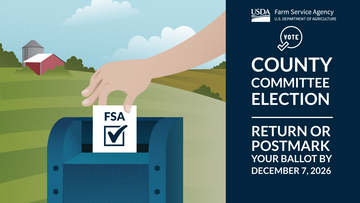
The U.S. Department of Agriculture (USDA) recently mailed Farm Service Agency (FSA) county committee election ballots to all eligible agricultural producers and private landowners across the country. Producers and landowners must return their completed ballots in person to their local FSA county office by close of business, or by mail and have them postmarked, by Dec. 7, 2026. Eligible voters who do not receive a ballot in the mail can request one from their local FSA county office.
Elections are occurring in certain Local Administrative Areas (LAA) for committee members. Producers can identify LAAs up for election through a geographic information system locator tool available at fsa.usda.gov/elections and can confirm their LAA by contacting their local FSA office.
Committee members make important decisions about how federal farm programs are administered locally, including delivery of FSA disaster recovery, conservation, commodity and price support programs, as well as county office employment and other agricultural issues.
To be eligible to vote in the county committee election, producers must participate or cooperate in a USDA program and reside in the LAA that is up for election this year. A cooperating producer is someone who has provided information about their farming or ranching operation to FSA, even if they have not applied or received program benefits.
For purposes of FSA county committee elections, every member of an American Indian tribe is considered an agricultural landowner if the land on which the tribal member’s voting eligibility is based is tribally owned or held in trust by the U.S. for the tribe, even if the individual does not personally produce a commodity on that land. Tribal agricultural landowners 18 years and older can contact their local FSA county office to register to vote.
Nationwide, more than 7,700 dedicated members of the agricultural community serve on FSA county committees. Each committee has three to 11 elected members who serve three-year terms, and at least one seat representing a LAA is up for election each year.
Newly elected committee members will take office on Jan. 1, 2027.
Visit fsa.usda.gov/elections for more information on county committee elections. To learn more about FSA programs, producers can contact their local USDA Service Center.
|
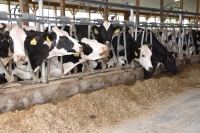
Dairy producers can now enroll for 2027 Dairy Margin Coverage (DMC), a voluntary risk management program that was recently strengthened by the Working Families Tax Cuts Act with greater risk protection for dairy producers. DMC enrollment for 2027 started Oct. 5 and runs through Dec. 18, 2026.
DMC provides financial protection when the difference between the national all-milk price and average feed cost falls below a producer-selected coverage level.
The Working Families Tax Cut Act reauthorized DMC through 2031 and strengthened the program to provide dairy producers with greater risk protection. These improvements took effect beginning with the 2026 program year and expanded the amount of production eligible for Tier 1 protection from five to six million pounds, updated production histories to better reflect current dairy operations, and provided producers with an opportunity to secure coverage through 2031 at a 25% reduced premium cost.
By protecting against periods of tighter margins, DMC provides an additional measure of financial stability and helps producers manage cash flow when milk prices, feed costs or a combination of the two put pressure on their operations. DMC payments trigger when the national dairy margin falls below a participating operation’s selected coverage level.
2027 Enrollment
Producers can select DMC coverage levels ranging from $4.00 to $9.50 per hundredweight. DMC includes a catastrophic level of coverage available at no premium cost, although an annual $100 administrative fee generally applies. Producers may also purchase higher levels of coverage to provide additional protection against declining margins.
Dairy producers should evaluate their operation’s risk management needs when selecting a coverage level. USDA provides an online dairy decision tool. Producers should contact their local FSA county office to enroll in DMC for the 2027 program year.
Producers who previously elected the multi-year DMC option for 2026 through 2031 are reminded that they must still certify to commercially market milk, sign a DMC contract, and pay the $100 administrative fee for each program year to maintain coverage. These producers will continue at the coverage level and percentage selected under their multi-year election and receive the 25% premium discount.
For more information about DMC, including current program information and DMC margins, dairy producers can visit fsa.usda.gov/dmc or contact their local FSA county office.
|

USDA Farm Service Agency (FSA) reminds producers of approaching application deadlines for purchasing risk coverage for some crops through the Noninsured Crop Disaster Assistance Program (NAP). NAP provides financial assistance to producers of non-insurable crops impacted by natural disasters that result in lower yields, crop losses, or prevented crop planting.
NAP covers losses from natural disasters on crops for which no permanent federal crop insurance program is available, including forage and grazing crops, fruits, vegetables, floriculture, ornamental nursery, aquaculture, turf grass and more.
Upcoming application deadlines for NAP coverage in New York for the 2027 production season include:
-
November 20: perennial fruits & nuts, strawberries, asparagus, ginger, horseradish, and rhubarb
-
December 31: Honey & Maple Sap
NAP basic coverage is available at 55% of the average market price for crop losses that exceed 50% of expected production. Buy-up coverage is available in some cases. NAP offers higher levels of coverage, ranging from 50% to 65% of expected production in 5% increments, at 100% of the average market price. Producers of organic crops and crops marketed directly to consumers also may exercise the “buy-up” option to obtain NAP coverage of 100% of the average market price at coverage levels ranging between 50% and 65% of expected production. Buy-up coverage is not available for crops intended for grazing.
For all coverage levels, the NAP service fee is the lesser of $325 per crop or $825 per producer per county, not to exceed a total of $1,950 for a producer with farming interests in multiple counties. Premiums apply for buy-up coverage.
If a producer has a Socially Disadvantaged, Limited Resource, Beginning and Veteran Farmer or Rancher Certification (form CCC-860) on file with FSA, it may serve as an application for basic coverage for all eligible crops. These producers will have all NAP-related service fees for basic coverage waived. These producers may also receive a 50% premium reduction if higher levels of coverage are elected on form CCC-471, prior to the application closing date for each crop.
To learn more about NAP visit fsa.usda.gov/nap or contact your local USDA Service Center.
|
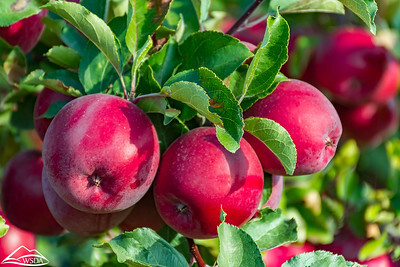
The U.S. Department of Agriculture’s (USDA) Risk Management Agency (RMA) announced that beginning with the 2027 crop year, New York apple growers will be able to insure their fresh apples as individual varieties on their insurance policy rather than the varietal groupings available in previous crop years. This change also allows growers to elect optional units for the individual varieties listed as types.
The individual varieties listed as types in New York include: Acey Mac/Spartan, Cortland, Empire, Envy/Scilate, EverCrisp, Fuji, Gala, Ginger Gold, Golden Delicious, Honeycrisp, Macoun, McIntosh, Paula Red, Pink Lady/Cripps Pink, Red Delicious, Rome, RubyFrost/NY2, SnapDragon/NY1, SweeTango/Minneiska and WildTwist/R10-45. An “All Other Varieties (Fresh)” type will be available for growers who produce any varieties not already included in this list. For growers who choose not to insure at the variety level, a general “Fresh” type remains an option.
RMA partnered with New York apple industry to identify varieties that could be added as individual types and with improved price elections.
New York growers looking to purchase coverage or update their current policy to reflect the new available varieties should contact a crop insurance agent before Nov. 20, 2026, the sales closing date for the 2027 crop year.
|
The USDA Farm Service Agency’s (FSA) Direct Farm Ownership loans can help farmers and ranchers become owner-operators of family farms, improve and expand current operations, increase agricultural productivity, and assist with land tenure to save farmland for future generations.
There are three types of Direct Farm Ownership Loans: regular, down payment and joint financing. FSA also offers a Direct Farm Ownership Microloan option for smaller financial needs up to $50,000.
Joint financing allows FSA to provide more farmers and ranchers with access to capital. FSA lends up to 50 percent of the total amount financed. A commercial lender, a state program or the seller of the property being purchased, provides the balance of loan funds, with or without an FSA guarantee. The maximum loan amount for a joint financing loan is $600,000, and the repayment period for the loan is up to 40 years.
The operation must be an eligible farm enterprise. Farm Ownership loan funds cannot be used to finance non-farm enterprises, and all applicants must be able to meet general eligibility requirements. Loan applicants are also required to have participated in the business operations of a farm or ranch for at least three years out of the 10 years prior to the date the application is submitted. The applicant must show documentation that their participation in the business operation of the farm or ranch was not solely as a laborer.
For more information about farm loans, contact your local USDA Service Center or visit fsa.usda.gov.
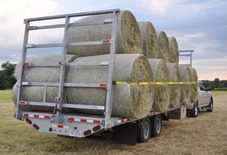
The Farm Service Agency’s (FSA) Farm Storage Facility Loan (FSFL) program provides low-interest financing to help you build or upgrade storage facilities and to purchase portable (new or used) structures, equipment and storage and handling trucks.
Eligible commodities include corn, grain sorghum, rice, soybeans, oats, peanuts, wheat, barley, minor oilseeds harvested as whole grain, pulse crops (lentils, chickpeas and dry peas), hay, honey, renewable biomass, fruits, nuts and vegetables for cold storage facilities, controlled atmosphere storage, floriculture, hops, malted small grains, maple sap, maple syrup, rye, milk, cheese, butter, yogurt, meat and poultry (unprocessed), eggs, and aquaculture (excluding systems that maintain live animals through uptake and discharge of water). Qualified facilities include grain bins, hay barns and cold storage facilities for eligible commodities.
Loans up to $50,000 can be secured by a promissory note/security agreement, loans between $50,000 and $100,000 may require additional security, and loans exceeding $100,000 require additional security.
You do not need to demonstrate the lack of commercial credit availability to apply. The loans are designed to assist a diverse range of farming operations, including small and mid-sized businesses, new farmers, operations supplying local food and farmers markets, non-traditional farm products, and underserved producers.
For more information, contact your local USDA Service Center or visit fsa.usda.gov/pricesupport.
|
The Farm Service Agency (FSA) makes loans to youth to establish and operate agricultural income-producing projects in connection with 4-H clubs, FFA, tribal organizations and other agricultural groups. Projects must be planned and operated with the help of the organization advisor, produce sufficient income to repay the loan and provide the youth with practical business and educational experience. The maximum loan amount is $10,000.
Youth Loan Eligibility Requirements:
- Be a citizen of the United States (which includes Puerto Rico, the Virgin Islands, Guam, American Samoa, the Commonwealth of the Northern Mariana Islands) or a legal resident alien
- Be 10 years to 20 years of age
- Comply with FSA’s general eligibility requirements
- Conduct a modest income-producing project in a supervised program of work as outlined above
- Demonstrate capability of planning, managing and operating the project under guidance and assistance from a project advisor. The project supervisor must recommend the youth loan applicant, along with providing adequate supervision.
For help preparing the application forms, contact your local USDA Service Center at or visit fsa.usda.gov.
|

Marketing Assistance Loans (MALs) and Loan Deficiency Payments (LDPs) provide financing and marketing assistance for wheat, feed grains, soybeans, and other oilseeds, pulse crops, wool and honey. MALs provide you with interim financing after harvest to help you meet cash flow needs without having to sell your commodities when market prices are typically at harvest-time lows. A producer who is eligible to obtain a loan, but agrees to forgo the loan, may obtain an LDP if such a payment is available.
FSA is now accepting requests for 2026 MALs and LDPs for all eligible commodities after harvest. Requests for loans and LDPs shall be made on or before the final availability date for the respective commodities.
Commodity certificates are available to loan holders who have outstanding nonrecourse loans for wheat, feed grains, pulse crops (dry peas, lentils, large and small chickpeas), wool, soybeans and designated minor oilseeds. These certificates can be purchased at the posted county price (or adjusted world price or national posted price) for the quantity of commodity under loan, and must be immediately exchanged for the collateral, satisfying the loan. MALs redeemed with commodity certificates are not subject to Adjusted Gross Income provisions.
To be considered eligible for an LDP, you must have form CCC-633EZ, Page 1 on file at your local FSA Office before losing beneficial interest in the crop. Pages 2, 3 or 4 of the form must be submitted when payment is requested.
Marketing loan gains (MLGs) and loan deficiency payments (LDPs) are no longer subject to payment limitations, actively engaged in farming and cash-rent tenant rules.
Adjusted Gross Income (AGI) provisions state that if your total applicable three-year average AGI exceeds $900,000, then you’re not eligible to receive an MLG or LDP. You must have a valid CCC-941 on file to earn a market gain of LDP. The AGI does not apply to MALs redeemed with commodity certificate exchange.
For more information and additional eligibility requirements, contact your local USDA Service Center or visit fsa.usda.gov.
|
Many Farm Service Agency (FSA) programs require all program participants, either individuals or legal entities, to be “actively engaged in farming.” This means participants must provide a significant contribution to the farming operation, whether it is capital, land, equipment, active personal labor and/or management. For entities, each partner, stockholder or member with an ownership interest, must contribute active personal labor and/or management to the operation on a regular basis that is identifiable and documentable as well as separate and distinct from contributions of any other member. Members of qualified pass-through entities must have a share of the profits or losses from the farming operation commensurate with the member’s contributions to the operation and must make contributions to the farming operation that are at risk for a loss, with the level of risk being commensurate with the member’s claimed share on the farming operation.
Qualified pass-through entities comprised of non-family members or partners, stockholders or persons with an ownership in the farming operation must meet additional payment eligibility provisions. Qualified pass-through entities comprised of family members are exempt from these additional requirements. For 2026 and subsequent crop years, non-family qualified pass-through entities can have one member that may use a significant contribution of active personal management exclusively to meet the requirements to be determined “actively engaged in farming.” The person or member will be defined as the farm manager for the purposes of administering these management provisions.
Non-family qualified pass-through entities may request to add up to two additional managers for their farming operation based on the size and/or complexity of the operation. If additional farm managers are requested and approved, all members who contribute management are required to complete form CCC-902MR, Management Activity Record. The farm manager should use the form to record management activities including capital, labor and agronomics, which includes crop selection, planting decisions, acquisition of inputs, crop management and marketing decisions. One form should be used for each month and the farm manager should enter the number of hours of time spent for each activity under the date of the month the actions were completed. The farm manager must also document if each management activity was completed on the farm or remotely.
The records and supporting business documentation must be maintained and timely made available for review by the appropriate FSA reviewing authority, if requested.
If the farm manager fails to meet these requirements, their contribution of active personal management to the farming operation for payment eligibility purposes will be disregarded and their payment eligibility status will be re-determined for the applicable program year.
In some instances, additional persons or members of a non-family qualified pass-through entity who meet the definition of farm manager may also be allowed to use such a contribution of active personal management to meet the eligibility requirements. However, under no circumstances may the number of farm managers in a non-family qualified pass-through entityexceed a total of three in any given crop and program year.
Top of page
Farm Service Agency
New York State Office
441 S. Salina St.
Syracuse, NY 13202
Ph: 315-477-6300
http://www.fsa.usda.gov/ny
Click to find your local FSA office.
|
|
State Executive Director
Clark Putman
clark.putman@usda.gov
|
|
New York FSA State Committee
Lawrence K. Eckhardt, Chair
Ryan Timothy Fessenden
Barbara J. Hanselman
Brenden L. Martin
Joseph P. Shultz
|
|
________________________________________________________
Deputy State Executive Director
Robert Gallinger
robert.gallinger@usda.gov
|
|
Farm Program Chief:
Jenifer Dean
jenifer.dean@usda.gov
|
Farm Loan Chief:
Christopher Wager
christopher.wager@usda.gov
|
|
________________________________________________________
|
|
Current Interest Rates
|
|
Farm Storage Facility Loans:
3 yr - 4.875%
5 yr - 5.000%
7 yr - 5.125%
10 yr - 5.125%
12 yr - 5.250%
Commodity Loans: 5.500%
|
Farm Loan Programs:
Farm Operating: 5.625%
Farm Ownership: 6.250%
Conservation Loans: 4.250%
Direct Down Payment: 2.250%
Joint Financing: 4.250%
Emergency Loan: 3.750%
|
|