New Jersey USDA Newsletter - November 2026
In this issue:
| November 16 |
Acreage Reporting Deadline for Fall Planted Small Grains |
| November 20 |
Noninsured Crop Disaster Assistance Program (NAP) coverage deadline for 2027 calendar year Apricots, Caneberries, Cherries, Grapes, Onions, Pears, Plums |
| December 11 |
Agriculture Risk Coverage (ARC) and Price Loss Coverage (PLC) program election and enrollment deadline for 2026. |
| December 18 |
Dairy Margin Coverage (DMC) Signup Deadline. |
| December 31 |
Noninsured Crop Disaster Assistance Program (NAP) coverage deadline for 2027 calendar year Honey, Asparagus, Beets, Broccoli, Cabbage, Carrots, Cauliflower, Greens, Herbs, Horseradish, Kohlrabi, Leeks, Lettuce, Parsnip, Peas, Radishes, Rhubarb, Turnips, Water Cress
|
| December 31 |
Organic Certification Cost Share Program (OCCSP) application deadline for program years 2025 & 2026.
|
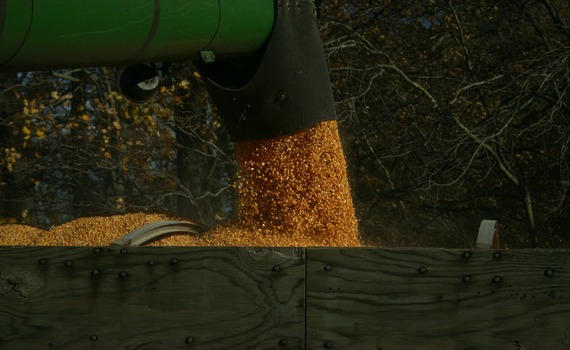 Agricultural producers have begun enrolling in theAgriculture Risk Coverage (ARC) and Price Loss Coverage (PLC) programs, which the U.S. Department of Agriculture (USDA) recently updated to include more than 30 million new base acres. This expansion, the first in 20 years, was made possible by the Working Families Tax Cuts Act and is part of USDA’s efforts to put Farmers First.
Producers can make elections and enroll for the 2026 crop year from Sept. 16 through Dec. 11, 2026, and for the 2027 crop year from Nov. 2, 2026, through March 15, 2027. Because eligible acres exceeded the nationwide 30-million-acre cap, USDA’s Farm Service Agency (FSA) is applying an across-the-board, prorated reduction of 3.69% to all newly allocated base acres.
Covered commodities include barley, canola, large and small chickpeas, corn, crambe, flaxseed, grain sorghum, lentils, mustard seed, oats, peanuts, dry peas, rapeseed, long grain rice, medium and short grain rice, safflower seed, seed cotton, sesame, soybeans, sunflower seed and wheat.
Some land grant universities offer web-based decision tools to help producers make informed election decisions using crop data specific to their respective farming operations.
Crop Insurance Considerations.
Producers can now add SCO coverage or the Enhanced Coverage Option (ECO) regardless of their ARC or PLC election. Previously, producers who elected ARC-CO or ARC-IC were ineligible to purchase the Supplemental Coverage Option (SCO) through their Approved Insurance Provider for the same acres, but The Working Families Tax Cuts Act removed this restriction.
Crop insurance information is available through USDA’s Risk Management Agency. For more information on ARC and PLC, visit the ARC and PLC webpage or contact your local FSA County Office.
Producers can make an appointment with their local FSA office to complete ARC and PLC elections and enrollment.
Top of page
After fall planting is complete, agricultural producers in New Jersey should make an appointment with their local Farm Service Agency (FSA) county office to complete crop acreage reports before the applicable deadline.
Acreage reports are the foundation of many FSA programs. Reporting your acreage on time helps ensure you meet program requirements and avoid fees or the need to provide additional documentation.
A crop acreage report documents a crop grown on a farm or ranch, its intended use and location. Producers should file an accurate crop acreage report for all crops and land uses, including failed acreage and prevented planted acreage before the applicable deadline.
The following acreage reporting dates remain in New Jersey for 2027:
-
November 15 - Fall Planted Small Grains for 2027
-
January 2 - Honey
-
January 15 - Apples, Blueberries, Cranberries, Peaches, Grapes, & Strawberries
-
June 2 - Subsequent Year Nursery Crops
-
June 16 - Planting Period 1 Cabbage (Atlantic Co Only)
-
July 15 - Soybeans, Corn and Other Spring Planted Feed Grains, Perennial Forage, CRP, Hemp & Most Other Crops, including fruits and vegetables
-
August 15 - Processing Beans
Acreage Reporting Details
The following exceptions apply to acreage reporting dates:
- If the crop has not been planted by the acreage reporting deadline, then the acreage must be reported no later than 15 calendar days after planting is completed.
- If a producer acquires additional acreage after the acreage reporting deadline, then the acreage must be reported no later than 30 calendar days after purchase or acquiring the lease. Appropriate documentation must be provided to the county office.
Noninsured Crop Disaster Assistance Program (NAP) policy holders should note that the acreage reporting date for NAP-covered crops is the acreage reporting date or 15 calendar days before grazing or crop harvesting begins, whichever is earlier. Contact FSA to confirm crop-specific deadlines for NAP-covered crops.
Producers with perennial forage crops should check with their local FSA office to see if their crops are eligible for continuous certification, which rolls the certified acreage forward each year until a change is made.
More Information
Producers should contact their local USDA Service Center for questions about acreage reporting.
Top of page
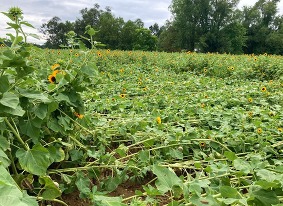
Farm Service Agency (FSA) reminds producers of approaching application deadlines for purchasing risk coverage for some crops through the Noninsured Crop Disaster Assistance Program (NAP). NAP provides financial assistance to producers of non-insurable crops impacted by natural disasters that result in lower yields, crop losses, or prevented crop planting.
NAP covers losses from natural disasters on crops for which no permanent federal crop insurance program is available, including forage and grazing crops, fruits, vegetables, floriculture, ornamental nursery, aquaculture, turf grass and more.
Upcoming application deadlines for NAP coverage for the 2027 production season include:
-
November 20, 2026 - Apricots, Grapes (fresh market), Caneberries, Cherries, Onions, Pears, Plums, and Scallions.
-
December 31, 2026 - Honey, Asparagus, Beets, Broccoli, Cabbage, Carrots, Cauliflower, Greens, Herbs, Horseradish, Kohlrabi, Leeks, Lettuce, Parsnip, Peas, Radishes, Rhubarb, Turnips, Water Cress.
NAP basic coverage is available at 55% of the average market price for crop losses that exceed 50% of expected production. Buy-up coverage is available in some cases. NAP offers higher levels of coverage, ranging from 50% to 65% of expected production in 5% increments, at 100% of the average market price. Producers of organic crops and crops marketed directly to consumers also may exercise the “buy-up” option to obtain NAP coverage of 100% of the average market price at coverage levels ranging between 50% and 65% of expected production. Buy-up coverage is not available for crops intended for grazing.
For all coverage levels, the NAP service fee is the lesser of $325 per crop or $825 per producer per county, not to exceed a total of $1,950 for a producer with farming interests in multiple counties. Premiums apply for buy-up coverage.
If a producer has a Socially Disadvantaged, Limited Resource, Beginning and Veteran Farmer or Rancher Certification (form CCC-860) on file with FSA, it may serve as an application for basic coverage for all eligible crops. These producers will have all NAP-related service fees for basic coverage waived. These producers may also receive a 50% premium reduction if higher levels of coverage are elected on form CCC-471, prior to the application closing date for each crop.
To learn more about NAP visit fsa.usda.gov/nap or contact the Freehold Service Center at 732-460-0075 ext. 2.
|
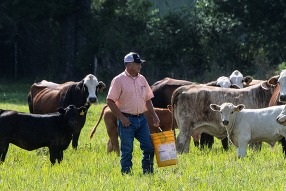
The U.S. Department of Agriculture (USDA) announced increased financial assistance for the Regenerative Pilot Program from $700 million to $1 billion in fiscal year 2027, providing more producers with the opportunity to adopt conservation systems that improve soil health, water quality, and long-term farm resilience. Producers can now apply for assistance with regenerative practices. |
|
 |
Top of page

The Farm Loan team in New Jersey is already working on operating loans for spring 2027 and asks potential borrowers to submit their requests early so they can be timely processed. The farm loan team can help determine which loan programs are best for applicants.
FSA offers a wide range of low-interest loans that can meet the financial needs of any farm operation for just about any purpose. Traditional farm operating loans can help large and small farm operations take advantage of early purchasing discounts for spring inputs as well expenses throughout the year.
Microloans are a simplified loan program that will provide up to $50,000 for both Farm Ownership and Operating Microloans to eligible applicants. These loans, targeted for smaller and non-traditional operations, can be used for operating expenses, starting a new operation, purchasing equipment, and other needs associated with a farming operation. Loans to beginning farmers and members of underserved groups are a priority.
Other types of loans available include:
Marketing Assistance Loans allow producers to use eligible commodities as loan collateral and obtain a 9-month loan while the crop is in storage. These loans provide cash flow to the producer and allow them to market the crop when prices may be more advantageous.
Farm Storage Facility Loans can be used to build permanent structures used to store eligible commodities, for storage and handling trucks, or portable or permanent handling equipment. A variety of structures are eligible under this loan, including bunker silos, grain bins, hay storage structures, and refrigerated structures for vegetables and fruit. A producer may borrow up to $500,000 per loan.
|
Top of page
With roots dating back to 1760, Hunter’s Farm & Market in New Jersey is investing in the soil that supports its future. The family-owned, 120-acre farm is improving soil health through the Regenerative Pilot Program.
Read more...
Photo: John Hunter, owner of Hunter’s Farm & Market, and Antonia "Gabi" Arcadi, NRCS-NJ natural resource specialist, hold up Regenerative Pilot Program temporary tattoos to celebrate the farm’s RPP contract signing.
|
|
 |
Top of page
 The U.S. Department of Agriculture’s Natural Resources Conservation Service (NRCS) is accepting applications in New Jersey for the Agricultural Conservation Easement Program (ACEP), which helps landowners, land trusts and other entities protect, restore, and enhance wetlands or protect working farms through conservation easements.
For fiscal year 2027, NRCS-New Jersey has $3 million in funding available for Wetland Reserve Easements and $2 million in funding available for Agricultural Land Easements.
While NRCS accepts ACEP applications year-round, New Jersey has established multiple batching/cutoff deadlines.
Producers and landowners should apply by November 30 and December 18 2026 to be considered for Wetland Reserve Easement funding. Land trusts, and other entities (such as state and local governments) should apply by November 30, December 31 2026, and January 31, 2027 to be considered for Agricultural Land Easement funding. Applications received after the application dates will automatically be considered during the next funding cycle. Funding is provided through a competitive process.
“This valuable program helps maintain the agricultural viability of the land for future generations,” said NRCS New Jersey State Conservationist, Julie Hawkins. “New Jersey’s farmlands are an essential part of the state’s identity and economic makeup. We must do all that we can to preserve them.”
ACEP protects the agricultural viability and related conservation values of eligible land by limiting non-agricultural uses which negatively affect agricultural uses and conservation values. ACEP protects grazing uses and related conservation values by restoring or conserving eligible grazing land, as well as protecting, restoring, and enhancing wetlands on eligible land.
ACEP enrollment options include:
-
Wetland Reserve Easements (WRE) help private landowners protect, restore, and enhance wetlands which have been previously degraded due to agricultural uses.
-
Agricultural Land Easements (ALE) help land trusts, and other entities (such as state and local governments) to protect croplands and grasslands on working farms and ranches by limiting non-agricultural uses of the land through conservation easements.
To learn more or apply, please visit your local NRCS New Jersey field office, or contact Katelyn Colon, easement coordinator, at Katelyn.Colon@usda.gov or (732) 537-6099.
Producers can also contact their local USDA Service Center.
Top of page
The USDA Farm Service Agency (FSA) in New Jersey is hiring a full-time, permanent Program Analyst (PA) in our Mount Olive, NJ office. The deadline to apply is Nov. 12, 2026.
Duties include general office activities supporting FSA programs administered at the field level. Successful applicants must be reliable, have a professional attitude and enjoy working with the public.
How to apply:
The application process starts by creating your profile at USAJOBS.gov
Apply for this role today!
https://www.usajobs.gov/job/890599900
Applications must be completed through USAJOBS no later than close of business on Nov. 12, 2026.
For more information or questions regarding this role, contact Doreen Beruck at (609) 438-3140 or doreen.beruck@usda.gov
If you know of someone who might be interested in this role, please share this information with them.
About FSA
FSA helps America’s farmers and ranchers invest in, improve, and expand their agricultural operations through disaster assistance, farm loans, price support, income support, and conservation programs.
USDA is an equal opportunity, provider, employer, and lender
|
Top of page
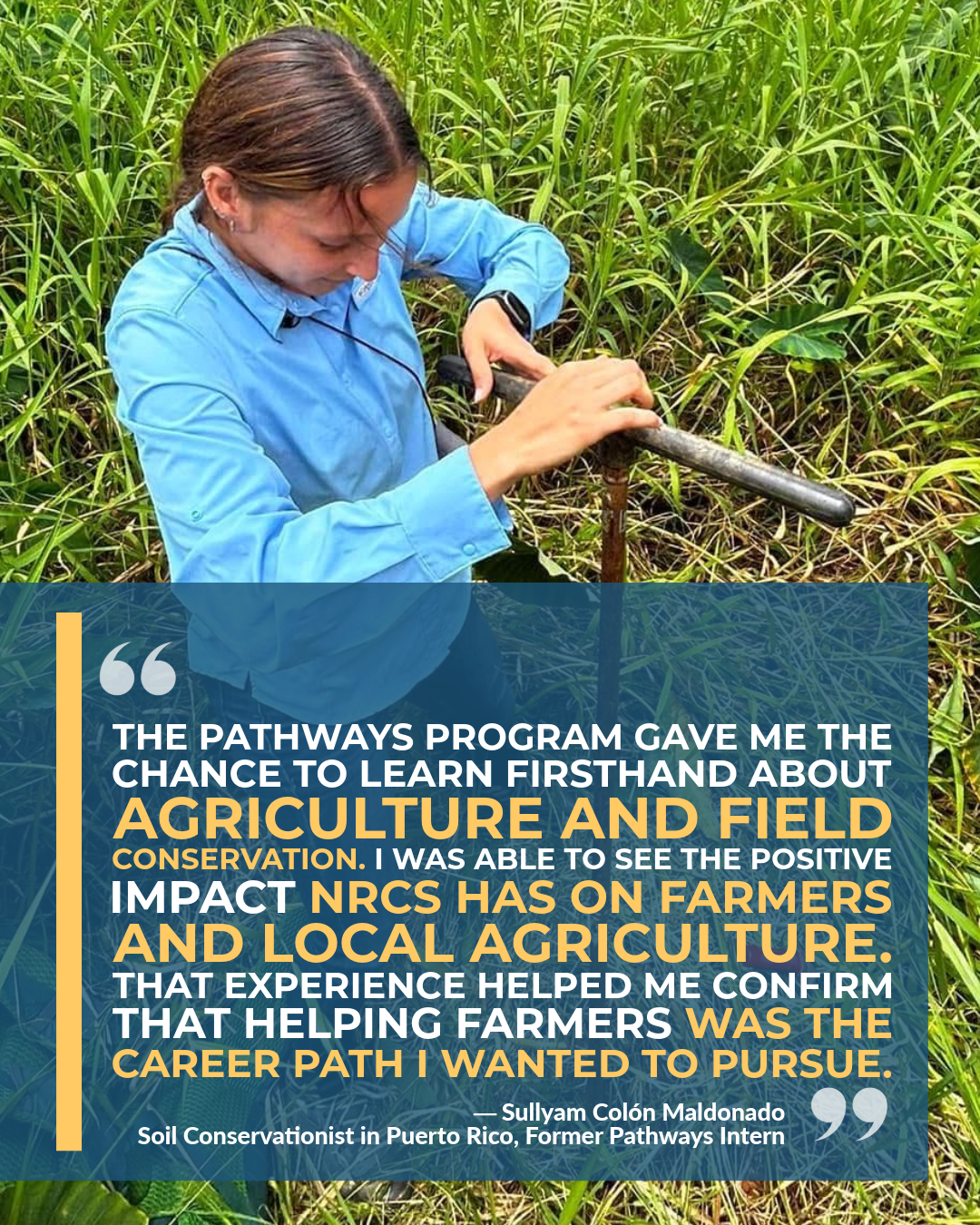 Do you want to work for a premier conservation agency whose mission is to "Keep Working Lands in Working Hands?" The Natural Resources Conservation Service (NRCS) is currently accepting applications for over 350 positions through its Pathways Internship program. This opportunity is for students 16 years and up looking for an internship with hands-on experience that can lead to a full-time job. Applications are being accepted now through Nov. 17, 2026, at USAjobs.
As part of the U.S. Department of Agriculture (USDA), NRCS works with farmers, ranchers, and forest managers to conserve natural resources on agricultural land.
NRCS Pathways Internships are available throughout the country in positions including soil conservation, biology, rangeland management, agronomy, soil science, forestry, and engineering. Internships are paid and flexible with students’ class schedules. Interns who complete 480 hours of work and meet additional requirements will have the opportunity to convert to full-time job with NRCS after graduation. NRCS has 3,000 office locations and covers every county in the U.S. They help stewards of agricultural lands and non-industrial private forest lands to plan and implement proven conservation systems through technical and financial assistance designed to enhance productivity, improve soil and water health, and restore wetlands and wildlife habitat. For more information about NRCS and to hear from former Pathways Interns who are now NRCS employees, visit the NRCS Student Experiences – My Path to NRCS website.
Find the current openings and apply at https://www.usajobs.gov/search/results/?k=Natural+Resources+Conservation+Service&p=1&hp=student.
Top of page
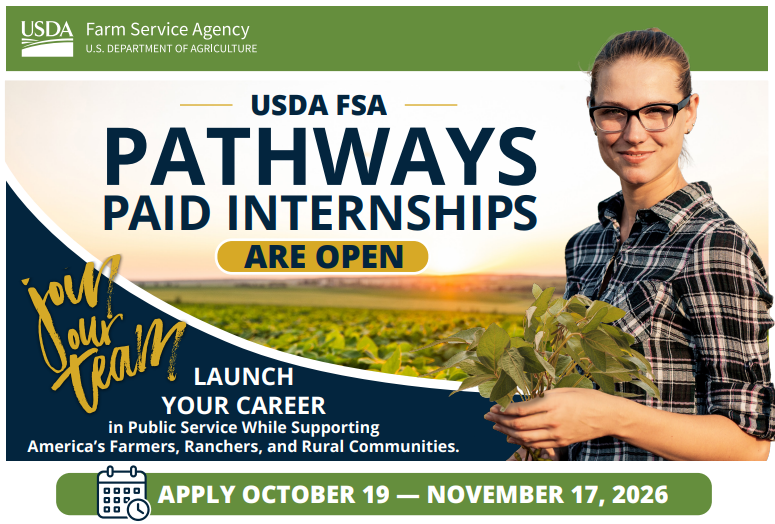 Interested in a career in agriculture or public service? USDA is accepting applications for paid Pathways Internship opportunities now through Nov. 17, 2026.
FSA Pathways internships give students hands on experience supporting America’s farmers, ranchers, and rural communities. Interns build professional skills, receive mentorship, and learn about programs involving farm loans, conservation, disaster assistance, and commodity support.
Explore Local Opportunities
FSA is hiring for the following positions in New Jersey/Northeast Region:
How to Apply
Visit USAjobs.gov and create an account. Search for “FSA” or “Pathways” under the Student and Recent Graduates hiring path. Look for positions with “Student Trainee” in the title. Review the qualifications and application requirements, upload the requested documents, and submit your application online.
Full applications must be submitted by Nov. 17, 2026.
About FSA
FSA helps America’s farmers and ranchers invest in, improve, and expand their agricultural operations through disaster assistance, farm loans, price support, income support, and conservation programs.
Top of page
Top of page
USDA is an equal opportunity provider, employer and lender. To file a complaint of discrimination, write: USDA, Office of the Assistant Secretary for Civil Rights, Office of Adjudication, 1400 Independence Ave., SW, Washington, DC 20250-9410 or call (866) 632-9992 (Toll-free Customer Service), (800) 877-8339 (Local or Federal relay), (866) 377-8642 (Relay voice users).
|