Joint Newsletter - September 2026
In This Issue:
The U.S. Department of Agriculture (USDA) Farm Service Agency (FSA) in Hawaii County is accepting applications for the Emergency Conservation Program (ECP) to address damages from Hurricane Lala that occurred August 13, 2026 through August 16, 2026. ECP provides cost-share and technical assistance to producers to restore farmland to pre-disaster conditions following a qualifying natural disaster. ECP signup begins on September 1, 2026, and ends on October 30, 2026.
The Farm Service Agency can help producers and landowners recover from natural disasters that impacted their operation. If you have an immediate need to clean up and restore your operation, please call our office to see if restoration practice approval is needed before you take any action.
Approved ECP applicants can receive up to 75% of the allowable cost of the approved restoration activity with a maximum cost share of $500,000 per natural disaster event.
Approved ECP practices include:
- Removing debris from farmland
- Grading, shaping and releveling
- Replacing or repairing permanent fence
- Restoring conservation structures
- Emergency soil erosion measures
Check with FSA before beginning other work such as:
- Repairing dams, ponds, irrigation field ditches, lined waterway or underground outlet
- Repairing grade stabilization structures, grassed waterways or terraces
ECP cost-share assistance can provide advance payments for up to 25% of the total allowable cost for all ECP practices before the restoration is carried out. The advance payment must be spent within 60 days.
Producers who lease federally owned or managed lands, including tribal trust land, as well as state land, are eligible to participate in ECP.
Conservation concerns present on the land prior to the qualifying natural disaster event are not eligible for ECP assistance.
Eligibility and Environmental Requirements
To allow producers to begin their recovery efforts sooner, FSA is offering flexibilities that apply to certain non-ground disturbing practices.
FSA is waiving the onsite inspection for certain ECP practices to remove surface debris and repair fencing. Additionally, FSA is waiving the requirement for producers to obtain prior approval to conduct surface debris removal and fence repair to support critical disaster recovery efforts.
FSA is streamlining environmental compliance reviews due to the impacts of this disaster event. However, FSA will continue to complete on-site environmental reviews for applicants who do not meet the required conditions.
More Information
To learn more about ECP, producers can contact the Hawaii County FSA Office at 808-933-8334 or visit farmers.gov/protection-recovery.
FSA helps America’s farmers, ranchers and forest landowners invest in, improve, protect and expand their agricultural operations through the delivery of agricultural programs for all Americans. FSA implements agricultural policy, administers credit and loan programs, and manages conservation, commodity, disaster recovery and marketing programs through a national network of state and county offices and locally elected county committees. For more information, visit fsa.usda.gov.
The U.S. Department of Agriculture (USDA) Farm Service Agency (FSA) has extended the application period for the Emergency Conservation Program (ECP) in Guam and the Commonwealth of the Northern Mariana Islands (CNMI) Counties for operations impacted by the Typhoon Bavi. ECP provides cost-share and technical assistance to producers to restore farm and ranch land to pre-disaster conditions following a qualifying natural disaster. ECP signup in Guam and CNMI began on July 15, 2026. With the extension, the deadline to apply for assistance is now November 10, 2026.
Approved ECP applicants can receive up to 75% of the allowable cost of the approved restoration activity, with a maximum cost share of $500,000 per natural disaster event.
More Information
To learn more about ECP as authorized for implementation in the listed counties, producers can contact their County FSA Office. Producers who want to apply for ECP are encouraged to call the Guam County FSA Office at (671) 472-7490 to schedule an appointment. To find contact information for your County FSA Office, visit farmers.gov/service-center-locator. FSA helps America’s farmers, ranchers and forest landowners invest in, improve, protect and expand their agricultural operations through the delivery of agricultural programs for all Americans. FSA implements agricultural policy, administers credit and loan programs, and manages conservation, commodity, disaster recovery and marketing programs through a national network of state and county offices and locally elected county committees. For more information, visit fsa.usda.gov.
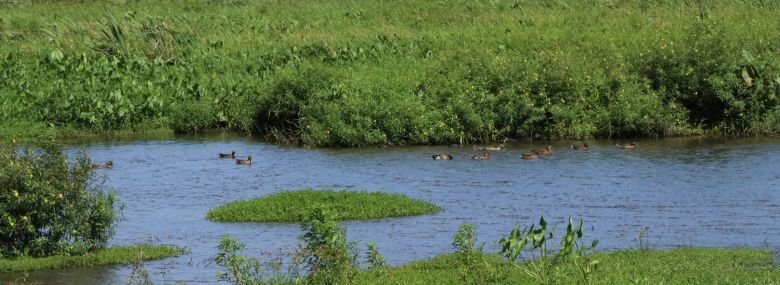
The U.S. Department of Agriculture (USDA) is putting farmers first and supporting government accountability by providing clear guidance around wetland determinations, which helps inform agricultural producers’ decisions for their operations. USDA’s Natural Resources Conservation Service (NRCS) published an interim final rule that ensures most determinations made since 1990 are considered certified, and producers can rely on the determinations to work farmland.
Producers rely on certified wetland determinations when making decisions about their agricultural operations, which impacts USDA program eligibility such as farm loans, conservation assistance, crop insurance and commodity programs.
Through this interim final rule, NRCS addressed inconsistencies in how wetland determinations have been certified and issued in the past. It aligns USDA policy with statutory requirements, protects producer reliance interests, and reduces unnecessary administrative burden by preventing the reinterpretation or replacement of previously certified determinations unless the producer asks for a review.
Specifically, the interim final rule ensures all wetland determinations issued after Nov. 28, 1990, are certified if:
-
the producer was notified of the determination; and
-
the producer was given appeal rights at the time.
Farmers can rely on the decision to install drainage, clear land, and conduct other land alternations without risking USDA program eligibility so long as the determination shows the area is not a wetland in accordance with the Wetland Conservation provisions of the Food Security Act of 1985.
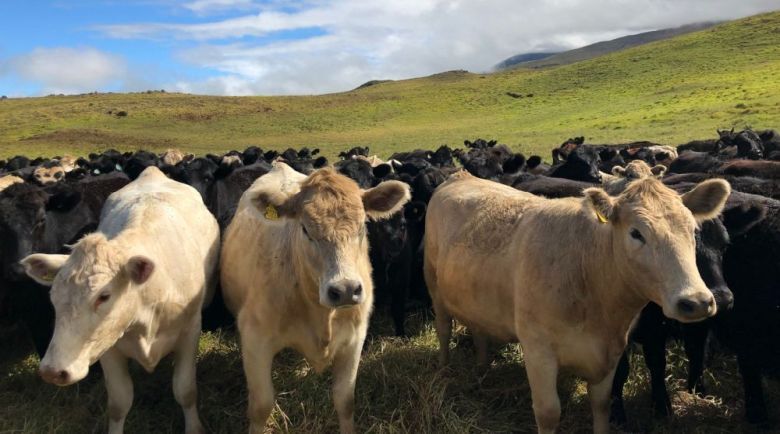
The U.S. Department of Agriculture (USDA) is putting farmers first and reaffirming this commitment by updating its strategic priorities, motto and mission and vision statements for the Natural Resources Conservation Service (NRCS). These updates complement NRCS’s historic role in providing practical, voluntary, and locally led conservation solutions for producers. The new NRCS motto and mission and vision statements are:
Motto: Keeping Working Lands in Working Hands Mission Statement: We deliver practical, voluntary, and locally led conservation solutions that help producers conserve natural resources, strengthen agricultural production, and keep working lands productive for generations to come. Vision Statement: An America where working lands remain productive, resilient, and in the hands of those who steward them.
NRCS is also updating its strategic priorities to guide agency operations, program delivery, stakeholder engagement and modernization efforts through fiscal year 2026 and beyond. NRCS’s seven priorities include:
-
Preserve and protect agricultural land;
-
Shift to outcome-based conservation and farmer empowerment;
-
Re-center field engagement and strengthen technical expertise;
-
Expand wildlife conservation and outdoor access;
-
Strengthen partnerships by streamlining processes and accountability;
-
Optimize mission delivery by strengthening workforce culture; and
-
Modernize NRCS infrastructure and technology.
The Honolulu County Farm Service Agency (FSA) Office is currently experiencing technical issues affecting the main telephone lines. As a result, callers may encounter difficulty connecting or may experience unexpected call disruptions.
Until this matter is resolved, please contact staff using their direct-dial telephone numbers.
|
Farm Programs
|
|
|
|
|
Program Analyst
|
Taylor "TK" McKenzie
|
808-466-3379
|
taylor.mckenzie@usda.gov
|
|
Farm Loan Programs
|
|
Farm Loan Manager
|
Michael Chock
|
808-466-3409
|
michael.chock@usda.gov
|
|
Farm Loan Officer Trainee
|
Guerin Earhart
|
808-466-3413
|
guerin.earhart@usda.gov
|
|
Farm Loan Officer Trainee
|
Michelle Chan
|
808-466-3399
|
michelle.chan@usda.gov
|
|
Program Technician
|
Rachel Bonen
|
808-466-3432
|
rachel.bonen@usda.gov
|
We appreciate your understanding and patience as we work diligently to restore full phone service.
| Program |
Interest Rates |
| Farm Operating - Direct |
5.250% |
| Farm Operating - Microloan |
5.250% |
| Farm Ownership - Direct |
6.000% |
| Farm Ownership - Microloan |
6.000% |
| Farm Ownership - Direct, Joint Financing |
4.000% |
| Farm Ownership - Down Payment |
2.000% |
| Emergency Loan - Amount of Actual Loss |
3.750% |
| Effective as of September 1, 2026 |
September 29, 2026 - Deadline to apply for Emergency Conservation Program in Honolulu County
September 30, 2026 - Deadline to apply for the Reimbursement Transportation Cost Payment Program
October 26, 2026 - Deadline to apply for Emergency Conservation Program Assistance for Guam & CNMI Counties for Typhoon Sinlaku Impacts
October 30, 2026 - Deadline to apply for the Emergency Conservation Program in Hawaii County for Hurricane Lala Damages
November 2, 2026 - Deadline to submit supporting documentation for the Reimbursement Transportation Cost Payment Program
November 10, 2026 - Deadline to apply for the Emergency Conservation Program in Guam and CNMI Counties for Typhoon Bavi Damages
December 31, 2026 - Deadline to apply for the Organic Certification Cost Share Program for program years 2025 & 2026
March 1, 2027 – Deadline to apply for 2026 Livestock Forage Losses for Hawaii and Maui County
USDA in Hawaii and Pacific Basin
Service Center Locator
State Executive Director - Arthur Keyes
Natural Resources Conservation Service
State Director - J.B. Martin
|
Top of page
|