Louisiana USDA-FSA Updates - September 2026
Table of Contents:
The U.S. Department of Agriculture (USDA) is improving access to credit for farmers and ranchers by making farm loan policy and technology improvements, reducing administrative burdens and strengthening financial security. These updates will increase efficiency by expediting the application process for direct loans, streamlining the process for certain guaranteed lenders who partner with USDA’s Farm Service Agency (FSA) and laying the groundwork for an electronic interface for guaranteed loans.
FSA makes direct and guaranteed loans to farmers and ranchers who are unable to obtain sufficient commercial credit at reasonable rates and terms. FSA farm loans can be used to purchase personal property or farmland, finance agricultural production expenses, or address day-to-day operational needs. The Consolidated Farm and Rural Development Act authorizes most farm loans including farm ownership, farm operating, and emergency loans.
Fast Tracking Direct Loan Applications
Following a successful pilot program, FSA is permanently implementing the Application Fast Track (AFT) process to expedite the loan application and approval process for low-risk direct loan applicants. AFT expedites the underwriting process for direct loan applicants who are least likely to default on their loans based on financial benchmarks and historical repayment data.
Since the pilot started in 2023, an average of 23% of direct loan customers qualified for the streamlined process, which decreased the application processing time by approximately eight calendar days. This resulted in improved access to credit for borrowers and increased efficiency for FSA staff.
AFT is currently available to all qualifying producers nationwide, and these changes simply transition AFT from a pilot program into a permanent part of FSA’s regulations and policies. In addition to AFT, FSA is also making several changes to the direct loan collateral valuation process, which will expedite loan closings.
Streamlining for Preferred Lenders
FSA partners with credit unions, commercial banks, and farm credit organizations to deliver Guaranteed Loans, which help borrowers who cannot secure credit without a federal guarantee. Through Guaranteed Loans, the financial institution makes the loan, but FSA guarantees the farm loan against possible financial loss, reducing the lender’s risk.
FSA is further streamlining the process for lenders in the Preferred Lender Program, which includes the most experienced and highest-performing lending institutions. These lenders will have delegated authority to certify that applicants meet FSA lending requirements for creditworthiness, financial feasibility, and adequacy of collateral in place of a more detailed agency review. This streamlined process reduces documentation requirements and expedites loan processing. Preferred lenders will receive more information and guidance on exercising delegated authority in the new electronic system before it goes live in early 2027. However, preferred lenders can begin exercising delegated authority through traditional loan narratives starting Oct. 1, 2026.
Guaranteed Loan Modernization
USDA is modernizing outdated technology systems with the goal of expediting loan delivery. This multi-year effort will begin with the guaranteed loan program and later extend to all loan types.
The new modernized system will allow guaranteed loan applications, lender notifications and supporting documents to be electronically submitted, replacing the agency’s largely paper-based process. Paper applications will still be accepted, and FSA will provide notifications consistent with the submission method.
FSA is making regulatory changes ahead of implementing the new modernized system and will provide more information and training for guaranteed lenders before transitioning to the electronic interface in early 2027.
Agricultural producers can soon begin enrolling in the Agriculture Risk Coverage (ARC) and Price Loss Coverage (PLC) programs, which the U.S. Department of Agriculture (USDA) recently updated to include more than 30 million new base acres. This expansion, the first in 20 years, was made possible by the Working Families Tax Cuts Act and is part of USDA’s efforts to put Farmers First.
Now that the base allocation process is complete, producers can make elections and enroll for the 2026 crop year from Sept. 16 through Dec. 11, 2026, and for the 2027 crop year from Nov. 2, 2026, through March 15, 2027. Because eligible acres exceeded the nationwide 30-million-acre cap, USDA’s Farm Service Agency (FSA) is applying an across-the-board, prorated reduction of 3.69% to all newly allocated base acres.
Base Allocation Notifications
The opportunity for landowners to review their base allocation summaries and take necessary action ended Aug. 31, 2026. This included correcting inaccurate information, designating subsequent acres or opting out of adding base acres. Landowners did not lose base acres through the base allocation process.
If landowners did not notify FSA of changes, the base allocation summary is considered accurate and complete; however, an across-the-board factor will apply. FSA determined the base allocation percentage reduction using all acreage reported as eligible, and new base acres will automatically be allocated to farms after applying the 3.69% reduction.
Base allocation notifications will be available beginning Sept. 16, 2026. Landowners can access notifications online at fsa.usda.gov/arc-plc using a Login.gov account. Landowners who do not currently have a Login.gov account can contact their FSA county office to obtain their base allocation notification beginning Sept. 16, 2026.
Producers can now change their election and enroll in ARC-County (ARC-CO) or PLC, which both provide crop-by-crop protection, or ARC-Individual (ARC-IC), which protects the entire farm. Although election changes for 2026 are optional, producers must enroll through a signed contract each year. Existing multi-year contracts ended in 2025, but producers have the option to sign a new multi-year contract for 2026 through 2031. Producers who opt out of a multi-year contract can enroll for the 2027 crop year starting Nov. 2, 2026, through March 15, 2027.
If producers do not submit their 2026 election by Dec. 11, 2026, their election remains the same as their 2025 election for crops on the farm, and the farm is ineligible for payments for the 2026 program year. Landowners cannot enroll in either program unless they have a share interest in the farm.
Covered commodities include barley, canola, large and small chickpeas, corn, crambe, flaxseed, grain sorghum, lentils, mustard seed, oats, peanuts, dry peas, rapeseed, long grain rice, medium and short grain rice, safflower seed, seed cotton, sesame, soybeans, sunflower seed and wheat.
Some land grant universities offer web-based decision tools to help producers make informed election decisions using crop data specific to their respective farming operations.
Producers can make an appointment with their local FSA office to complete ARC and PLC elections and enrollment.
Crop Insurance Considerations
Producers are reminded that ARC and PLC election and enrollment can impact eligibility for some crop insurance products.
Producers can now add SCO coverage or the Enhanced Coverage Option (ECO) regardless of their ARC or PLC election. Previously, producers who elected ARC-CO or ARC-IC were ineligible to purchase the Supplemental Coverage Option (SCO) through their Approved Insurance Provider for the same acres, but The Working Families Tax Cuts Act removed this restriction.
Upland cotton farmers who choose to enroll seed cotton base acres in ARC or PLC are ineligible for the Stacked Income Protection Plan (STAX) on their planted cotton acres for that farm.
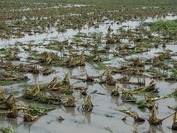
The U.S. Department of Agriculture (USDA) is extending the deadline for farmers to apply for Stages 1 and 2 of the Supplemental Disaster Relief Program (SDRP) to Sept. 30, 2026. Additionally, USDA’s Farm Service Agency (FSA) is providing greater flexibility for farmers who experienced quality losses on eligible crops.
Now, when applying for this key program, farmers who experienced quality-related discounts can use verifiable and reliable documentation to show quality losses due to natural disasters occurring 2023 and 2024. Farmers also now have the flexibility to use a quality loss percentage for crops having a final use that is different from their intended use.
SDRP provides more than $16 billion in disaster relief payments to producers who suffered revenue, quality or production losses to crops, trees, bushes, or vines due to qualifying disaster events in calendar years 2023 and 2024. These payments are authorized under the American Relief Act, 2025.
Producers with indemnified losses can apply through SDRP Stage 1, which leverages Federal Crop Insurance or Noninsured Crop Disaster Assistance Program (NAP) data as the basis for calculating payments. Producers with non-indemnified (including shallow losses), uncovered (uninsured), and quality losses can apply for Stage 2 assistance. Eligible producers can receive SDRP payments for both Stages 1 and 2, if applicable, and for one or both calendar years 2023 and 2024, depending on losses.
Required Documentation for SDRP Quality Losses
FSA is now allowing producers to use verifiable and reliable documentation to demonstrate quality-related discounts on production impacted by natural disasters.
For quality losses, producers are required to provide third-party verifiable documentation of the grading factors or nutrient tests and acceptable production records that illustrate eligible affected production. Verifiable documentation must be dated within 30 days of harvest. FSA county committees can consider grading factors or nutrient tests taken more than 30 days after harvest if the test or grading factor represents crop condition at the time of harvest.
Verifiable third-party documentation for one producer can be considered verifiable for all producers with similar documentation, providing flexibility for vertically integrated operations that serve as the buying point for multiple operations, including their own.
For producers with documentation that includes expected price, actual price received due to quality discounts, and quantity of affected production, FSA county committees have the flexibility to use knowledge of the disaster event and impact on other producers to determine documentation is reliable.
Flexibility for Quality-Related Discounts
To address quality-related economic impacts for SDRP Stage 1 and Stage 2 insured and NAP crops that were intended for fresh but sold as processed or could not be sold in a recognized market, FSA updated policy for crops with a final use different from the intended use (secondary use) and for crops not sold in a recognized market (salvage value). In these cases, producers will be required to provide acceptable production records documenting the actual production and price received.
Stage 1 Quality Loss Applications with Missing Production Data
For SDRP Stage 1 quality losses, some applications were not generated because the pre-quality adjusted production information used to calculate the Quality Loss Percentage was unavailable. Although this production information will not be available before the SDRP application deadline of Sept. 30, 2026, producers are still required to file an application by the deadline.
Once FSA receives missing production data, impacted producers will be notified and provided with adequate time to review and re-sign SDRP applications.
Online Quality Loss Calculator
For assistance determining quality loss percent, producers can use the quality loss calculators on the SDRP webpage.
For more information on SDRP, visit fsa.usda.gov/sdrp. Producers can request an application or make an appointment online with their FSA county office.
|
The U.S. Department of Agriculture (USDA) is making significant improvements to its disaster assistance and commodity loan programs as outlined in the Working Families Tax Cuts Act. As part of the commitment to put Farmers First, USDA’s Farm Service Agency (FSA) is strengthening disaster assistance support for livestock producers, orchardists and nursery tree growers, increasing Marketing Assistance Loan rates, and expanding Marketing Assistance Loans to better help cotton and sugar producers.
Cumulatively, the changes outlined in the Working Families Tax Cuts Act provide a significant investment in American agriculture. Last month, FSA announced expanded payment limitation and payment eligibility provisions and the opportunity to increase base acres on eligible farms. FSA also previously announced that producers will benefit from increased reference prices for major commodities starting this fall. Additional policy enhancements for FSA disaster and commodity loan programs are taking effect.
Disaster Assistance Programs
USDA is expanding disaster assistance coverage and increasing benefits to help producers recover from eligible losses.
-
Emergency Assistance for Livestock, Honeybees, and Farm-Raised Fish Program (ELAP): ELAP helps producers with losses due to disease, certain adverse weather events, and qualifying conditions that are not covered by other USDA disaster assistance programs. Retroactive to Jan. 1, 2026, ELAP is providing benefits to farm-raised fish losses due to birds that feed on fish and has established a payment rate of $600 per acre of farm raised fish. Also, effective for 2026 losses, FSA will use a normal mortality rate of 15% for eligible honeybee colony losses.
-
Livestock Forage Disaster Program (LFP): LFP provides financial assistance to livestock producers who suffer eligible grazing losses due to a qualifying drought or fire. Retroactive to Jan. 1, 2026, the threshold has been lowered for producers to qualify for a one-month payment with payments now triggering after four consecutive weeks of qualifying severe drought (D2 on the U.S. Drought Monitor) conditions instead of eight weeks. And producers may receive a two-month payment if D2 drought conditions continue for seven out of eight consecutive weeks during the normal grazing period.
-
Livestock Indemnity Program (LIP): LIP helps livestock owners and contract growers who suffer livestock losses beyond normal mortality levels due to eligible adverse events. Starting this year, retroactive to Jan. 1, 2026, LIP rates increase to 100% for predation from animals listed as endangered or protected (compared with 75% of market value), and producers have the option to document regional price premiums that exceed the national average market price for eligible livestock losses. Additionally, LIP will also cover unborn livestock losses that occurred on or after Jan. 1, 2024. In most cases, the payment will be automatic for 2024 and 2025 losses based on LIP data on file with FSA with no action required by the producer.
-
Tree Assistance Program (TAP): TAP helps orchardists and nursery tree growers replant or rehabilitate trees, bushes, and vines that were lost due to an eligible natural disaster. Retroactive to Jan. 1, 2026, FSA is removing the 15% mortality rate, increasing the reimbursement rate for activities like pruning and removal, and extending the implementation period to 24 months with an option to extend.
Marketing Assistance Loans
Marketing Assistance Loans (MALs) help producers manage cash flow needs and provide marketing flexibility until market prices improve. Producers who choose to forego an MAL can receive a Loan Deficiency Payment (LDP) that provides immediate financial support without taking out a loan. Both are reauthorized through crop year 2031 and, starting in 2026, loan rates will increase for all eligible commodities. FSA is improving MALs for cotton and sugar producers by:
- Increasing cotton storage credit cap starting with the 2026 crop.
- Updating prevailing world market price for upland cotton, using the three lowest-price growth quotes instead of five. This change is retroactive to July 4, 2025.
- Calculating a new prevailing world market price for extra-long staple cotton, which will be announced weekly, similar to upland cotton.
- Authorizing refunds of upland cotton loan redemptions when the Adjusted World Price (AWP) declines within 30 days of the loan repayment date. Producers who request an LDP may be eligible for an additional LDP disbursement if a lower AWP is announced. This change is retroactive to July 4, 2025.
- Extending sugar program through 2031 and increasing raw cane and refined beet sugar loan rates. Additionally, sugar marketing allotments will be adjusted for beet sugar processors.
For more information on these updates to FSA programs, visit the respective program webpage. Producers interested in applying for disaster assistance, Marketing Assistance Loans, or other FSA programs should contact their local FSA office.

bankFSA guaranteed loans allow lenders to provide agricultural credit to farmers who do not meet the lender's normal underwriting criteria. Farmers and ranchers apply for a guaranteed loan through a lender and the lender arranges for the guarantee. FSA can guarantee up to 95 percent of the loss of principal and interest on a loan. Guaranteed loans can be used for both farm ownership and operating purposes.
Guaranteed farm ownership loans can be used to purchase farmland, construct or repair buildings, develop farmland to promote soil and water conservation or to refinance debt.
Guaranteed operating loans can be used to purchase livestock, farm equipment, feed, seed, fuel, farm chemicals, insurance and other operating expenses.
FSA can guarantee farm ownership and operating loans up to $2,343,000. Repayment terms vary depending on the type of loan, collateral and the producer's ability to repay the loan. Generally, operating loans are set to a term between one and seven years and farm ownership loans between 20 and 40 years.
For more information on guaranteed loans, contact your local USDA Service Center or visit fsa.usda.gov.
|
USDA’s Debt Consolidation Tool allows agricultural producers to enter their farm operating debt and evaluate the potential savings that might be provided by obtaining a debt consolidation loan with USDA’s Farm Service Agency (FSA) or a local lender.
A debt consolidation loan is a new loan used to pay off other existing operating loans or lines of credit that might have higher rates and unfavorable terms. By combining multiple eligible debts into a single, larger loan, borrowers may obtain more favorable payment terms such as a lower interest rate or lower payments. Consolidating debt may also provide farmers and ranchers additional cash flow flexibilities.
The Debt Consolidation Tool is one of many significant additions to FSA’s suite of improvements designed to modernize its Farm Loan Programs. The tool enhances customer service and increases opportunities for farmers and ranchers to achieve financial viability by helping them identify potential savings that could be reinvested in their farming and ranching operation, retirement accounts, or college savings accounts.
Producers can access the Debt Consolidation Tool by visiting farmers.gov/debt-consolidation-tool. The tool is built to run on modern browsers including Chrome, Edge, Firefox, or the Safari browser. Producers do not need to create a farmers.gov account or access the authenticated customer portal to use the tool.
USDA encourages producers to reach out to their local FSA farm loan staff to ensure they fully understand the wide range of loan and servicing options available to assist with starting, expanding, or maintaining their agricultural operation. To conduct business with FSA, please contact your local FSA county office..
The U.S. Department of Agriculture (USDA) reminds agricultural producers that the final date to apply for or make changes to their existing crop insurance coverage is quickly approaching for fall planted crops. Sales closing dates vary by crop and location, but the next major sales closing date is Sept. 30.
Producers are encouraged to visit their crop insurance agent soon to learn specific details for the 2027 crop year. Crop insurance coverage decisions must be made on or before the applicable sales closing date. The USDA’s Risk Management Agency lists sales closing dates in the Actuarial Information Browser, under the “Dates” tab.
Producers can also access the RMA Map Viewer tool to visualize the insurance program date choices for acreage reporting, cancellation, contract change, earliest planting, end of insurance, end of late planting period, final planting, premium billing, production reporting, sales closing, and termination dates, when applicable, per commodity, insurance plan, type and practice. Additionally, producers can access the RMA Information Reporting System tool to specifically identify applicable dates for their operation, using the “Insurance Offer Reports” application.
Federal crop insurance is critical to the farm safety net. It helps producers and owners manage revenue risks and strengthens the rural economy. Producers may select from several coverage options, including yield coverage, revenue protection and area risk plans of insurance.
Crop insurance options include Whole-Farm Revenue Protection and Micro Farm. Whole-Farm Revenue Protection provides a risk management safety net for all commodities on the farm under one insurance policy and is available in all counties nationwide. Micro Farm aims to help direct market and small-scale producers that may sell locally, and this policy simplifies record keeping and covers post-production costs such as washing and value-added products.
Crop insurance is sold and delivered solely through private crop insurance agents. A list of crop insurance agents is available online at the RMA Agent Locator. Producers can learn more about crop insurance and the modern farm safety net at rma.usda.gov or by contacting their RMA Regional Office.

The U.S. Department of Agriculture (USDA) is putting farmers first and supporting government accountability by providing clear guidance around wetland determinations, which helps inform agricultural producers’ decisions for their operations. USDA’s Natural Resources Conservation Service (NRCS) published an interim final rule that ensures most determinations made since 1990 are considered certified, and producers can rely on the determinations to work farmland.
Producers rely on certified wetland determinations when making decisions about their agricultural operations, which impacts USDA program eligibility such as farm loans, conservation assistance, crop insurance and commodity programs.
Through this interim final rule, NRCS addressed inconsistencies in how wetland determinations have been certified and issued in the past. It aligns USDA policy with statutory requirements, protects producer reliance interests, and reduces unnecessary administrative burden by preventing the reinterpretation or replacement of previously certified determinations unless the producer asks for a review.
Specifically, the interim final rule ensures all wetland determinations issued after Nov. 28, 1990, are certified if:
- the producer was notified of the determination; and
- the producer was given appeal rights at the time.
Farmers can rely on the decision to install drainage, clear land, and conduct other land alternations without risking USDA program eligibility so long as the determination shows the area is not a wetland in accordance with the Wetland Conservation provisions of the Food Security Act of 1985.
|
The Farm Loan team in Louisiana is already working on operating loans for spring 2027 and asks potential borrowers to submit their requests early so they can be timely processed. The farm loan team can help determine which loan programs are best for applicants.
FSA offers a wide range of low-interest loans that can meet the financial needs of any farm operation for just about any purpose. Traditional farm operating loans can help large and small farm operations take advantage of early purchasing discounts for spring inputs as well expenses throughout the year.
Microloans are a simplified loan program that will provide up to $50,000 for both Farm Ownership and Operating Microloans to eligible applicants. These loans, targeted for smaller and non-traditional operations, can be used for operating expenses, starting a new operation, purchasing equipment, and other needs associated with a farming operation. Loans to beginning farmers and members of underserved groups are a priority.
Other types of loans available include:
Marketing Assistance Loans allow producers to use eligible commodities as loan collateral and obtain a 9-month loan while the crop is in storage. These loans provide cash flow to the producer and allow them to market the crop when prices may be more advantageous.
Farm Storage Facility Loans can be used to build permanent structures used to store eligible commodities, for storage and handling trucks, or portable or permanent handling equipment. A variety of structures are eligible under this loan, including bunker silos, grain bins, hay storage structures, and refrigerated structures for vegetables and fruit. A producer may borrow up to $500,000 per loan.
The U.S. Department of Agriculture (USDA) announced loan interest rates for September 2026, which are effective Sept. 1, 2026. USDA Farm Service Agency (FSA) loans provide important access to capital to help agricultural producers start or expand their farming operation, purchase equipment and storage structures or meet cash flow needs.
Operating, Ownership and Emergency Loans
FSA offers farm operating, ownership and emergency loans with favorable interest rates and terms to help eligible agricultural producers obtain financing needed to start, expand or maintain a family agricultural operation.
Interest rates for Operating and Ownership loans for September 2026 are as follows:
FSA also offers guaranteed loans through commercial lenders at rates set by those lenders. To access an interactive online, step-by-step guide through the farm loan process, visit the Loan Assistance Tool on farmers.gov.
Commodity and Storage Facility Loans
Additionally, FSA provides low-interest financing to producers to build or upgrade on-farm storage facilities and purchase handling equipment. Loans that provide interim financing are also available to help producers meet cash flow needs without having to sell their commodities when market prices are low. Funds for these loans are provided through the Commodity Credit Corporation (CCC) and are administered by FSA.
More Information
To learn more about FSA programs, producers can contact their local USDA Service Center. Additionally, producers can use online tools, such as the Loan Assistance Tool and Debt Consolidation Tool to explore loan options.
Sept. 30: Sales closing date for the Forage Production Revenue Protection insurance program in select areas, and deadline for fall-seeded crops
Sept. 30: Supplemental Disaster Relief Program (SDRP) extended application deadline
Dec. 31: Application deadline for the 2025 and 2026 Organic Certification Cost Share Program (OCCSP)
Mar. 1, 2027- Emergency Assistance for Livestock, Honeybees, and Farm Raised Fish (ELAP) Deadline
Mar. 1, 2027- Livestock Forage Disaster Program (LFP) Deadline
FSA now offers SMS texting; receive text message alerts on your cell phone regarding important deadlines, reporting requirements and updates. Call your local Service Center to schedule an appointment. You can find contact information at farmers.gov/service-locator.
Louisiana FSA State Office
3737 Government Street
Alexandria, LA 71302
Phone: 318-473-7721
Fax: 1-844-325-6942
|
|
Craig McCain
State Executive Director
Farm Service Agency
craig.mccain@usda.gov
Sarah Trichel
State Conservationist
Natural Resource Conservation Service
sarah.trichel@usda.gov
FSA-State Committee:
Julie Baker Richard, Chair
Dale Cambre, Member
Charles Vincent Cannatella, Member
Kristy Jones, Member
Donna Winters, Member
|
Dewanna Pitman
Deputy State Executive Director
Farm Service Agency
dewanna.pitman@usda.gov
Roddric Bell
Regional Director
Risk Management Agency/ Insurance Services
roddric.bell@usda.gov
|
|