
Joint Newsletter - August 2026
In This Issue:
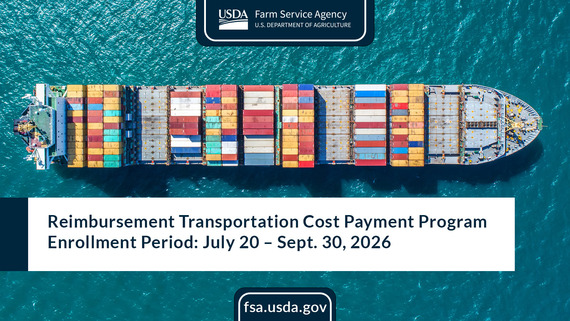
The U.S. Department of Agriculture (USDA) opened enrollment for the Reimbursement Transportation Cost Payment Program (RTCP) for fiscal year 2026. The enrollment period began July 20 and will run through Sept. 30. The deadline for producers to provide supporting documentation is Nov. 2, 2026.
RTCP helps U.S. farmers and ranchers offset a portion of the cost of transporting agricultural products over long distances.
The Continuing Appropriations, Agriculture, Legislative Branch, Military Construction and Veterans Affairs, and Extensions Act of 2026 authorized $3.5 million for RTCP and allows farmers and livestock producers in Alaska, Hawaii and insular areas including the Commonwealth of Puerto Rico, Guam, American Samoa, Commonwealth of Northern Mariana Islands, Virgin Islands of the United States, Federated States of Micronesia, Republic of the Marshall Islands and Republic of Palau, to recover costs to transport agricultural commodities or inputs used to produce an agricultural commodity.
FSA issued roughly $3.3 million to more than 1,200 producers, in all eligible areas combined, through RTCP in 2025.
RTCP payments are calculated based on the costs incurred for transportation of agricultural commodities or inputs during the applicable Fiscal Year, subject to a $8,000 per producer cap per fiscal year. A higher payment cap may be determined if claims for payments do not exceed available funding. Therefore, applicants are encouraged to submit all eligible receipts. If claims for payments exceed the funds available from the program for a fiscal year, payments will be reduced on a pro-rata basis.
The U.S. Department of Agriculture (USDA) Farm Service Agency (FSA) is extending the application period for the Emergency Conservation Program (ECP) in Honolulu County for operations impacted by the March Kona Low storms. ECP provides cost-share and technical assistance to agricultural producers to restore productive capacity on farm and ranch land following a qualifying natural disaster. ECP signup in Honolulu County began on April 1, 2026. With the extension, the deadline to apply for assistance is now Sept. 29, 2026.
A verifiable lease is the cornerstone of program eligibility. Producers should be prepared to provide a lease or proof of farmland ownership. Additional information, such as photos of the damage and, if available, a worklog of what kind of work has been completed, if work has already begun. If you previously inquired but have not submitted these items, please call the Honolulu County FSA Office to complete your application.
Approved ECP applicants can receive up to 75% of the allowable cost of the approved restoration activity, with a maximum cost share of $500,000 per natural disaster event.
More Information
To learn more or to apply for ECP, contact the Honolulu County FSA Office at 808-861-8538 to schedule an appointment.
The U.S. Department of Agriculture (USDA) is helping organic producers and handlers cover certification costs as part of the Department’s effort to put Farmers First and Make America Healthy Again. USDA’s Farm Service Agency (FSA) is accepting applications to help with organic certification costs for the 2025 and 2026 program years through the Organic Certification Cost Share Program (OCCSP), which covers up to 75% of eligible organic certification costs. Producers and handlers must apply by Dec. 31, 2026, for both program years.
Cost Share Assistance
OCCSP provides cost share assistance to producers and handlers for the costs of obtaining or maintaining organic certification under the National Organic Program, which is administered by USDA’s Agricultural Marketing Service. Producers and handlers are eligible to receive 75% of the costs, up to $750 for each of the following scopes: crops, wild crops, livestock, processing/handling and state organic program fees.
FSA will make payments as applications are received on a first-come, first-served basis until available funds are depleted.
Eligibility
To be eligible for OCCSP, a producer or handler must have their USDA organic certification for the applicable program year at the time of application and must have paid fees or expenses related to the initial certification or renewal from a certifying agent during the program year. For program year 2025, they must have possessed a USDA organic certification at any time during the program year.
There are four USDA organic regulation recognized scopes that must be individually inspected and certified: crops, livestock, wild crops, and handling. The scopes must be listed on the producer or handler’s organic certificate to be eligible for OCCSP. Eligible costs include:
- Application and administrative fees for USDA organic certification
- Inspection fees for USDA organic certification, including travel and per diem costs for organic inspectors
- USDA organic certification costs, including fees necessary to access international markets with which AMS has equivalency agreements or arrangements
- State organic program fees
- User and sale assessment fees for USDA organic certification
- Postage costs for materials related to obtaining or renewing USDA organic certification.
How to Apply
To apply, producers and handlers should contact their local FSA county office. As part of completing the OCCSP application, producers and handlers will need to provide documentation of their organic certification and eligible expenses.
More Information
For more information, producers and handlers can visit the OCCSP webpage or contact their local FSA county office.
The U.S. Department of Agriculture’s Farm Service Agency (FSA) is expanding payment limitation and payment eligibility provisions that affect program payments including allowing for the equitable treatment of business entities. Additionally, producers will benefit from an increased payment limitation for certain programs, and a broader definition of farming income that will result in more exceptions to income limitations.
Starting with the 2026 crop year, for payment eligibility purposes, FSA will treat applicable limited liability companies (LLCs) and S-Corporations (S-Corps), and other similar entities, as “pass through entities.” Each member of the qualified pass-through entity who meets actively engaged in farming criteria will help qualify the entity for expanded payments.
Previously, farm operations that were structured as an LLC or an S-Corp were limited to a single payment limitation, which varies by program. Now, partnerships, S-Corps, qualifying LLCs, and joint ventures or general partnerships will be treated the same.
For program year 2026 only, farm operations that are structured as LLCs or S-Corps or one of the new qualified pass-through entities must file updated farm operating plans with FSA for program year 2026 by Sept. 15, 2026. After program year 2026, FSA will continue to use June 1 as the date for determining ownership interest in an entity. Producers who have crop insurance or Noninsured Crop Disaster Assistance Program coverage should contact their crop insurance agent or local FSA office before restructuring their farm operation to ensure appropriate timing for restructuring without impacting current insurance coverage.
Members of qualified pass-through entities must provide contributions and be engaged in farming for the entity to be considered actively engaged in farming.
An additional change allows members of all entity types to receive compensation for labor and management contributions and use the same contribution to qualify as “actively engaged in farming.” This update provides consistent treatment of member contributions across all entity types.
Payment Limitation and Attribution
Payment limitation changes include an increased payment limit for the Agriculture Risk Coverage (ARC) and Price Loss Coverage (PLC) program. Starting with crop year 2025, the ARC and PLC payment limit will increase from $125,000 to $155,000. This payment limit will be adjusted going forward annually based on inflation.
Payment limitations are the maximum amount that a person or legal entity can receive for any crop year, directly or indirectly, through certain USDA programs. The same maximum payment limitation that applied to joint ventures and general partnerships will apply to qualified pass-through entities.
The policy change to payment limitation calculations takes effect beginning with program year 2026 for all qualified pass-through entities.
Average Adjusted Gross Income
The Working Families Tax Cuts Act broadened the definition of farming income to be more reflective of modern agricultural business practices. As a result, diversified producers will not be penalized under USDA’s requirements for average adjusted gross income (AGI).
Producers are exempt from the $900,000 AGI cap for conservation and disaster programs if at least 75% of their average gross income is from farming, ranching, or silviculture, which now includes agri-tourism, direct-to-consumer sales, and certain equipment sales.
Additionally, qualified pass-through entities are not required to certify compliance with the average AGI limitation at the entity level. However, members individually must meet average AGI requirements, which is the same requirement for joint operations.
Producers should contact their local FSA county office for more information or to update their farm operating plan by the Sept. 15, 2026, deadline for the 2026 program year.
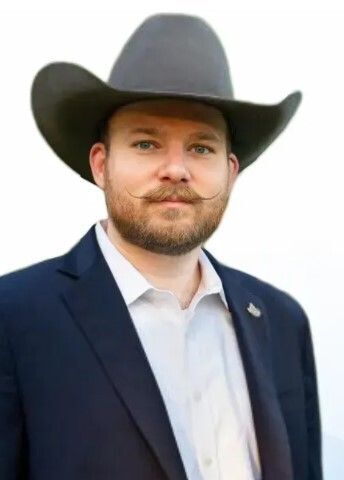
The U.S. Department of Agriculture announced the appointment of Colton L. Buckley as Chief of the Natural Resources Conservation Service (NRCS), the nation’s primary private lands conservation agency. Buckley, who currently serves as Associate Chief of NRCS, brings extensive leadership experience in conservation and agriculture policy to the role.
As Associate Chief, he has overseen the agency’s financial and technical assistance programs, management and strategy, science and technology, soil science and resource assessment deputy areas, and partnerships division. Previously, he served as Chief of Staff for NRCS and as Chief Executive Officer of the National Association of Resource Conservation and Development Councils.
Raised on his grandparents’ cattle ranch outside Gatesville, Texas, Buckley has deep roots in production agriculture, and advocacy for practical, producer-led conservation solutions. He holds a Bachelor of Science in Agricultural Services and Development from Tarleton State University and a Master of Arts in Communication from Liberty University. His career includes roles at national and local conservation organizations, rural economic development entities, and service on multiple advisory boards - including the Texas A&M University System Board of Regents, to which he was appointed by Governor Rick Perry.
|
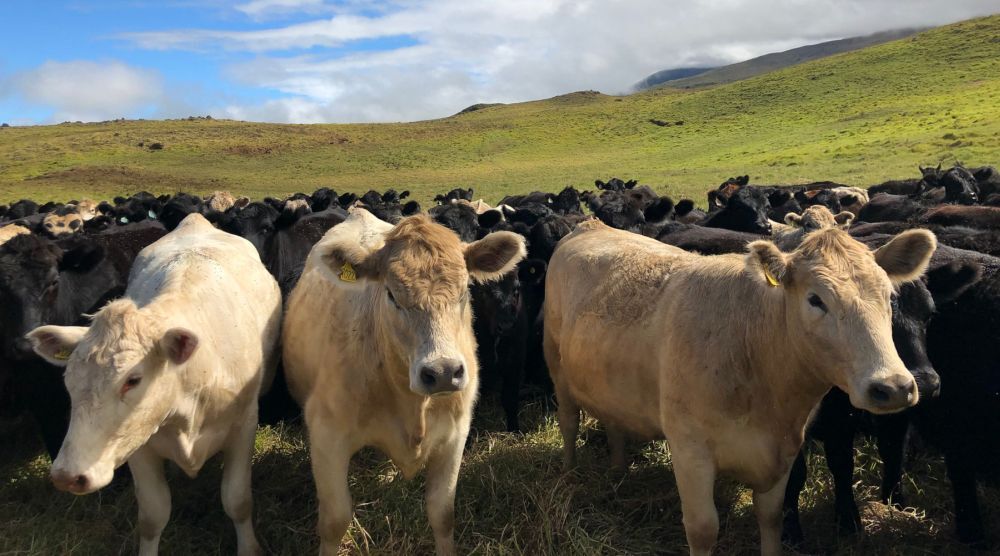
The U.S. Department of Agriculture (USDA) is putting farmers first and reaffirming this commitment by updating its strategic priorities, motto and mission and vision statements for the Natural Resources Conservation Service (NRCS). These updates complement NRCS’s historic role in providing practical, voluntary, and locally led conservation solutions for producers. The new NRCS motto and mission and vision statements are:
Motto: Keeping Working Lands in Working Hands Mission Statement: We deliver practical, voluntary, and locally led conservation solutions that help producers conserve natural resources, strengthen agricultural production, and keep working lands productive for generations to come. Vision Statement: An America where working lands remain productive, resilient, and in the hands of those who steward them.
NRCS is also updating its strategic priorities to guide agency operations, program delivery, stakeholder engagement and modernization efforts through fiscal year 2026 and beyond. NRCS’s seven priorities include:
-
Preserve and protect agricultural land;
-
Shift to outcome-based conservation and farmer empowerment;
-
Re-center field engagement and strengthen technical expertise;
-
Expand wildlife conservation and outdoor access;
-
Strengthen partnerships by streamlining processes and accountability;
-
Optimize mission delivery by strengthening workforce culture; and
-
Modernize NRCS infrastructure and technology.
| Farm Operating - Direct |
5.250% |
| Farm Operating - Microloan |
5.250% |
| Farm Ownership - Direct |
6.000% |
| Farm Ownership - Microloan |
6.000% |
| Farm Ownership - Direct, Joint Financing |
4.000% |
| Farm Ownership - Down Payment |
2.000% |
| Emergency Loan - Amount of Actual Loss |
3.750% |
Effective as of August 1, 2026
August 27, 2026 - Deadline to apply for Emergency Conservation Program in Guam and the Commonwealth of the Northern Marianas
September 15, 2026 - Limited liability companies (LLCs) and S-Corporations (S-Corps), and other similar entities update 2026 Farm Operating Plan - pass through entities
September 29, 2026 - Deadline to apply for Emergency Conservation Program in Honolulu County
September 30, 2026 - Deadline to apply for the Reimbursement Transportation Cost Payment Program
October 26, 2026 - Deadline to apply for Emergency Conservation Program Assistance for Guam & CNMI Counties for Typhoon Sinlaku Impacts
November 2, 2026 - Deadline to submit supporting documentation for the Reimbursement Transportation Cost Payment Program
December 31, 2026 - Deadline to apply for the Organic Certification Cost Share Program for program years 2025 & 2026
March 1, 2027 – Deadline to apply for 2026 Livestock Forage Losses for Hawaii and Maui County
USDA in Hawaii and Pacific Basin
Service Center Locator
State Executive Director - Arthur Keyes
Natural Resources Conservation Service
State Director - J.B. Martin
|
Top of page
|






