
Nebraska FSA and NRCS State Office
Electronic Newsletter - July 23, 2026
In This Issue:
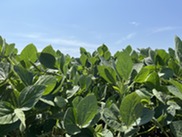
It’s county fair season, one of my favorite times of the year. I enjoy watching our local agriculture community come together for all the time-honored traditions that accompany the fair. County fairs serve an important role, fostering the development of our next generation of farmers and ranchers, while also celebrating the key contribution of agriculture to the local area. Best wishes to everyone for a successful fair season.
While you may be busy prepping for your local community events, please keep in mind that activities haven’t slowed at your local FSA office.
We recently announced the results of the 2026 Conservation Reserve Program (CRP) signups (Continuous, General and Grassland CRP). Nebraska was tops in the nation for the number of acres accepted, the bulk of which came through the Grassland CRP signup. This is a nod to the importance our farmers and ranchers place on stewardship of our grazing lands as Grassland CRP is a working lands CRP, allowing for ongoing grazing and a few other activities guided by a conservation plan. County FSA offices will be following up with landowners to complete next steps in the CRP contract process, so please pay attention to communications on this topic.
County FSA offices also wrapped up the spring acreage reporting period on July 15, although you may be experiencing some ongoing communication from us as we work to finalize everyone’s report. Thank you for your patience and cooperation with our local offices as they button up activities on this heavy workload item.
We are nearing the Aug. 3 deadline to turn in nomination forms for those interested in serving on your FSA county committee. County committee members are local farmers and ranchers elected by their peers to serve in a role that advises the activities of their county FSA office. It’s a great way to give back to your local agricultural community. If you are interested in learning more about requirements and the nomination process, call your county FSA office and ask for your county executive director.
In closing I want to note that we have several important program deadlines coming in August. Please take a moment to review the Dates to Remember section of this newsletter so you don’t miss a deadline that’s important to your operation.
Stay cool during these hot days.
--Hilary
|
July 31, 2026 – NRCS deadline for EQIP applications for wildfire assistance
Aug. 3, 2026 – FSA deadline for producers to file nomination form for FSA County Committee candidacy
Aug. 7, 2026 – FSA deadline for applications for the Assistance for Specialty Crop Farmers program
Aug. 12, 2026 – FSA deadline for applications to the Supplemental Disaster Relief Program, Stages 1 and 2
Aug. 25, 2026 – FSA deadline for applications for the Emergency Conservation Program (ECP) in several wildfire-impacted counties
Aug. 31, 2026 – FSA deadline for landowners to review their base acre update allocation summary
***Please note any above NAP calendar reference may not be inclusive for all NAP-covered crops; NAP participants should contact their County FSA Office to confirm important program deadlines.
The U.S. Department of Agriculture (USDA) Farm Service Agency (FSA) is now accepting nominations for county committee members and encourages all farmers, ranchers, and FSA program participants to take part in the County Committee nomination process. County committee members make important decisions about how Federal farm programs are administered locally. All nomination forms for the 2026 election must be postmarked or received in the local FSA office by Aug. 3, 2026.
Individuals interested in learning about FSA County Committee work, what it takes to be a candidate for election and the requirements to vote, are welcome to watch this brief video.
Elections for committee members occur in certain Local Administrative Areas (LAA). LAAs are elective areas for FSA committees in a single county or multi-county jurisdiction. Customers can identify which LAA they or their farming or ranching operation is in by using the tool available at fsa.usda.gov/coc. Contact your County FSA office to find out which LAA is up for election in 2026.
Agricultural producers who participate or cooperate in a USDA program and reside in the LAA that is up for election this year, can be nominated for candidacy for the county committee.
Read more about FSA county committee elections at this link.
USDA offers disaster assistance and low-interest loan programs to assist you in your recovery efforts during and following drought.
A few key programs that can assist producers include:
-
Livestock Forage Disaster Program (LFP) – provides compensation to eligible livestock producers who suffered grazing losses for covered livestock due to drought on privately owned or cash leased land.
-
Emergency Assistance for Livestock, Honeybees, and Farm-Raised Fish Program (ELAP) - provides emergency relief for losses due to feed or water shortages, disease, adverse weather, or other conditions, which are not adequately addressed by other disaster programs.
-
Emergency Loan Program – available to producers with agriculture operations located in a county under a primary or contiguous Secretarial Disaster designation. These low interest loans help producers recover from production and physical losses.
-
Emergency Conservation Program (ECP) - provides emergency funding for farmers and ranchers to implement emergency water conservation measures including water systems for livestock and existing irrigation systems for orchards and vineyards.
-
Tree Assistance Program (TAP) – provides assistance to eligible orchardists and nursery tree growers for qualifying tree, shrub and vine losses due to natural disasters including excessive wind and qualifying drought.
USDA’s Farm Service Agency (FSA) and Natural Resources Conservation Service (NRCS) in Nebraska shared information on drought assistance programs, including those listed above, as part of a webinar hosted by the University of Nebraska-Lincoln’s Center for Agricultural Profitability. View the recorded webinar at this link.
For more information on these and other programs, contact the County FSA office or visit fsa.usda.gov/disaster.
Agricultural producers impacted by drought can now request haying and grazing on Conservation Reserve Program (CRP) acres in certain Nebraska counties, while still receiving their full rental payment for the land.
Outside of the primary nesting season, emergency haying and grazing of CRP acres may be authorized to provide relief to livestock producers in areas affected by a severe drought or similar natural disaster. The primary nesting season for Nebraska ended July 15. Counties are approved for emergency haying and grazing due to drought conditions on a county-by-county basis when a county is designated as level “D2 Drought - Severe” according to the U.S. Drought Monitor. FSA provides a weekly, online update of eligible counties.
Producers can use the CRP acreage under the emergency grazing provisions for their livestock or may grant another livestock producer use of the CRP acreage.
Producers interested in emergency haying or grazing of CRP acres must notify and be approved by their FSA county office before starting any activities. This includes producers accessing CRP acres held by someone else. To maintain contract compliance, producers must have their conservation plan modified by USDA’s Natural Resources Conservation Service.
For additional detail on both Emergency and Non-Emergency Haying and Grazing of CRP, read more at this link.
Livestock Forage Disaster Program Provisions
If the Livestock Forage Disaster Program (LFP) triggers in a county for 2026 grazing losses due to drought, the provisions for CRP emergency haying and grazing change. There may be restrictions on grazing carrying capacity and which CRP practices can be hayed. Nebraska currently has many counties where LFP has triggered and where certain CRP emergency grazing and haying restrictions might apply.
Additional Drought Assistance
Other drought assistance programs are available for livestock producers. More information can be found at the Drought Webpage, Disaster Assistance Discovery Tool, Disaster-at-a-Glance fact sheet, and Loan Assistance Tool.
USDA’s Farm Service Agency (FSA) is accepting applications to help with organic certification costs for the 2025 and 2026 program years through the Organic Certification Cost Share Program (OCCSP), which covers up to 75% of eligible organic certification costs.
Producers and handlers must apply by Dec. 31, 2026, for both program years.
Significant enhancements to disaster assistance and commodity loan programs
The U.S. Department of Agriculture (USDA) is making significant improvements to its disaster assistance and commodity loan programs as outlined in the Working Families Tax Cuts Act. As part of the commitment to put Farmers First, USDA’s Farm Service Agency (FSA) is strengthening disaster assistance support for livestock producers, orchardists and nursery tree growers, increasing Marketing Assistance Loan rates, and expanding Marketing Assistance Loans to better help cotton and sugar producers.
The U.S. Department of Agriculture’s Farm Service Agency (FSA) is expanding payment limitation and payment eligibility provisions that affect program payments including allowing for the equitable treatment of business entities. Additionally, producers will benefit from an increased payment limitation for certain programs, and a broader definition of farming income that will result in more exceptions to income limitations.
Payment Eligibility
Starting with the 2026 crop year, for payment eligibility purposes, FSA will treat applicable limited liability companies (LLCs) and S-Corporations (S-Corps), and other similar entities, as “pass through entities.” Each member of the qualified pass-through entity who meets actively engaged in farming criteria will help qualify the entity for expanded payments.
Previously, farm operations that were structured as an LLC or an S-Corp were limited to a single payment limitation, which varies by program. Now, partnerships, S-Corps, qualifying LLCs, and joint ventures or general partnerships will be treated the same.
For program year 2026 only, changes to existing entities to become qualified pass-through entities must be completed by Sept. 15, 2026. After program year 2026, FSA will continue to use June 1 as the date for determining ownership interest in an entity. Producers who have crop insurance or Noninsured Crop Disaster Assistance Program coverage should contact their crop insurance agent or local FSA office before restructuring their farm operation to ensure appropriate timing for restructuring without impacting current insurance coverage.
Read the full news release here.
The Farm Service Agency (FSA) assists beginning farmers to finance agricultural enterprises. Under these designated farm loan programs, FSA can provide financing to eligible applicants through either direct or guaranteed loans. FSA defines a beginning farmer as a person who:
- Has operated a farm for not more than 10 years
- Will materially and substantially participate in the operation of the farm
- Agrees to participate in a loan assessment, borrower training and financial management program sponsored by FSA
- Does not own a farm in excess of 30 percent of the county’s average size farm.
For more information contact your County Farm Service Agency office or visit fsa.usda.gov. To find your nearest farm loan office, visit: FSA County Office Locator.
Farm Service Agency (FSA) farm loans are considered progression lending. Unlike loans from a commercial lender, FSA loans are intended to be temporary in nature. Our goal is to help you graduate to commercial credit, and our farm loan staff is available to help borrowers through training and credit counseling.
The FSA team will help borrowers identify their goals to ensure financial success. FSA staff will advise borrowers on developing strategies and a plan to meet your goals and graduate to commercial credit. FSA borrowers are responsible for the success of their farming operation, but FSA staff will help in an advisory role, providing the tools necessary to help you achieve your operational goals and manage your finances.
For more information contact your County Farm Service Agency office or visit fsa.usda.gov. To find your nearest farm loan office, visit: FSA County Office Locator.
OPERATING/OWNERSHIP
Farm Operating: 5.125%
Farm Ownership: 6%
Farm Ownership - Joint Financing: 4%
Farm Ownership - Down Payment: 2%
Emergency - Actual Loss: 3.75%
FARM STORAGE FACILITY LOANS
3-year term: 4.125%
5-year term: 4.250%
7-year term: 4.375%
10-year term: 4.5%
12-year term: 4.625%
MARKETING ASSISTANCE
Commodity Loan: 4.875%
The U.S. Department of Agriculture’s Natural Resources Conservation Service (NRCS) in Nebraska is offering critical assistance to Nebraska farmers, ranchers, and forest landowners affected by recent wildfires through the Environmental Quality Incentives Program (EQIP). This special EQIP sign‑up will close on July 31, 2026.
Nebraska NRCS is actively providing both technical and financial assistance to help landowners recover from wildfire damage and restore the health and productivity of their working lands. NRCS understands the value and the need to extend this emergency EQIP opportunity, eligible producers may receive support for a variety of conservation practices, including:
- Repairing or replacing damaged livestock grazing system infrastructure,
- Restoring and or replacing valuable forage resources essential for livestock needs.
Producers affected by the wildfires need to contact their local USDA Service Center as soon as possible to complete an application and early start waiver if necessary. NRCS staff are available to assess damage, develop conservation plans, and help determine which practices best support recovery efforts.
For more information about EQIP or to locate your nearest USDA Service Center, select this active link Nebraska NRCS EQIP.
|
Now accepting project proposals for RCPP through Aug. 24
USDA is now accepting project proposals for the Regional Conservation Partnership Program (RCPP). Up to $310 million will be invested to expand producer conservation activities across the nation.
Read more.
Top of page
Nebraska FSA and NRCS State Office
|
Farm Service Agency
1121 Lincoln Mall Suite 330
Lincoln, NE 68508
Phone: (402) 437-5581
Fax: (844) 930-0237
|
Natural Resources
Conservation Service
1121 Lincoln Mall Suite 360
Lincoln, NE 68508
Phone: (402) 437-5300
|
|
|
Hilary Maricle, FSA
State Executive Director
hilary.maricle@usda.gov
FSA State Office
Tim Divis, Deputy SED
Cathy Anderson, Product. & Compliance
Pat Lechner, Price Support & Conserv.
Mark Wilke, Farm Loans
Nick Elting, Administrative Officer
|
Robert Lawson, NRCS
State Conservationist
robert.lawson@usda.gov
FSA State Committee
Scott Spilker, Chair, Beatrice
Crystal Klug, Member, Columbus
Brent Robertson, Member, Elsie
Rylee Wagner, Member, Winnetoon
John Walvoord, Member, Waterloo
|
|
Find your local USDA Service Center at farmers.gov.
Visit the Nebraska FSA website at www.fsa.usda.gov/ne.
Visit the Nebraska NRCS website at www.nrcs.usda.gov/ne.
|
|






