Joint Newsletter - July 2026
In This Issue:
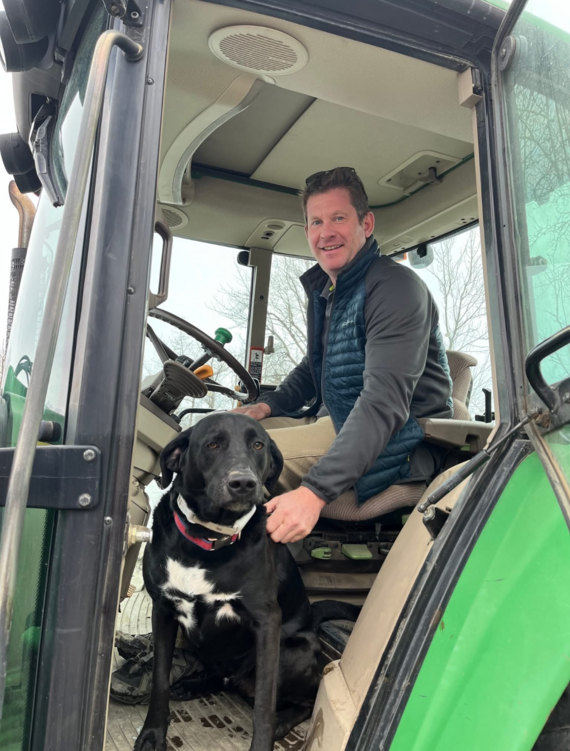 Aloha, Hafa Adai and Talofa,
Over the past several months, communities across Hawaiʻi and our sister islands in the Western Pacific have weathered a series of intense and deeply disruptive storms. As we move through July, the impacts of the Kona Low systems and earthquakes in Hawaii and the powerful typhoons that struck Guam, Rota, Saipan, and Tinian, continue to shape our recovery efforts. Our hearts are with you as you rebuild and recover.
In Hawaiʻi, many communities are still rebuilding from the March Kona Low that brought severe flooding, landslides, and high winds across multiple islands, with particularly heavy damage on Oʻahu’s North Shore and throughout Hawaiʻi Island’s agricultural districts. Compounding these challenges, a magnitude‑6 earthquake struck Kona in May. Our agricultural sector, which suffered millions in estimated losses, remains in full recovery mode.
While Hawaiʻi rebuilds, our Pacific neighbors have been facing their own crises. In early July, Super Typhoon Bavi, one of the strongest storms of the season, swept across Guam and the Northern Mariana Islands, striking Rota directly with winds over 180 miles per hour. The destruction across Rota, Saipan, Tinian, and Guam has been widespread: downed power lines, damaged water systems, flooded roads, battered homes, and prolonged outages of essential services. For some islands, this storm arrived on the heels of Super Typhoon Sinlaku, compounding the strain on local infrastructure and heightening the urgency of recovery efforts. Despite these challenges, communities across the region have demonstrated remarkable resilience, mobilizing emergency teams, repairing critical systems, and supporting neighbors through periods of limited access to power, water, and supplies.
In the coming weeks, our focus remains on ensuring that all eligible producers have access to the emergency loans, and federal programs available. We encourage you to stay engaged, share information, and continue building the collective resilience that defines the islands. Please contact your local FSA office for disaster recovery assistance and to report your losses from the recent storms.
County Committee (COC) elections are an important opportunity for producers to shape local program delivery and ensure your communities are well represented. We encourage eligible producers to participate by submitting a nomination form. Your involvement strengthens the decision-making process and helps us better serve the agricultural community. The deadline to return nomination forms is August 3, 2026, and we appreciate your engagement in this vital part of FSA’s local leadership.
Mahalo for your continued perseverance and commitment. Together, we will navigate these challenges and emerge stronger, just as we have so many times before.
Until next time,
Arthur Keyes
FSA Acting State Executive Director, Hawaii
arthur.keyes@usda.gov
(808)600-2927
Nominations are now being accepted for farmers and ranchers to serve on local U.S. Department of Agriculture (USDA) Farm Service Agency (FSA) county committees. These committees make important decisions about how federal farm programs are administered locally. All nomination forms for the 2026 election must be postmarked or received in the local FSA office by Aug. 3, 2026.
Elections for committee members will occur in certain Local Administrative Areas (LAA). LAAs are FSA committee elective areas in a single county or multi-county jurisdiction and may include LAAs that are focused on an urban or suburban area.
Producers interested in serving on the FSA county committee can locate their LAA at fsa.usda.gov/coc and determine if their LAA is up for election by contacting their local FSA office.
Agricultural producers may be nominated for candidacy for the county committee if they:
- Participate or cooperate in a USDA program.
- Reside in the LAA that is up for election this year.
A cooperating producer is someone who has provided information about their farming or ranching operation to FSA, even if they have not applied or received program benefits.
Individuals may nominate themselves or others and qualifying organizations may also nominate candidates. USDA encourages all eligible producers to nominate, vote and hold office.
Nationwide, more than 7,700 dedicated members of the agriculture community serve on FSA county committees. The committees are made up of three to 11 members who serve three-year terms.
Committee members play a key role in how FSA delivers disaster recovery, conservation, commodity and price support programs, as well as making decisions on county office employment and other agricultural issues.
Producers should contact their local FSA office today to learn more about their county’s election. To be considered, a producer must sign an FSA-669A nomination form. This form and other information about FSA county committee elections are available at fsa.usda.gov/coc.
All nomination forms for the 2026 election must be postmarked or received in the local USDA Service Center by the Aug. 3, 2026, deadline. Election ballots will be mailed to eligible voters in November 2026.
The U.S. Department of Agriculture (USDA) Farm Service Agency (FSA) in Guam and the Commonwealth of the Northern Mariana Islands (CNMI) is accepting applications for the Emergency Conservation Program (ECP) to address damages from the Typhoon Bavi that occurred July 5, 2026 through July 7, 2026. ECP provides cost-share and technical assistance to producers to restore farmland to pre-disaster conditions following a qualifying natural disaster. ECP signup begins on July 15, 2026, and ends on September 14, 2026. Approved ECP applicants can receive up to 75% of the cost of the approved restoration activity with a maximum cost share of $500,000 per natural disaster event.
Approved ECP practices include:
- Removing debris from farmland
- Grading, shaping and releveling
- Replacing or repairing permanent fence
- Restoring conservation structures
Check with FSA before beginning work to ensure required compliance measures are complete to be eligible for cost share payment. ECP cost-share assistance can provide advance payments for up to 25% of the total allowable cost for all ECP practices before the restoration is carried out. The advance payment must be spent within 60 days.
Producers who lease federally owned or managed lands, including tribal trust land, as well as state land, are eligible to participate in ECP.
Conservation concerns present on the land prior to the qualifying natural disaster event are not eligible for ECP assistance.
More Information
To learn more about ECP, producers can contact your Farm Service Agency County Office using the contact information below or visit farmers.gov/protection-recovery.
Guam & CNMI (671) 300-8550
Rota, Saipan, Tinian and the Northern Islands of Guam County were declared a primary disaster due to Super Typhoon Sinlaku. Under this designation, if you have operations in any primary or contiguous county, you are eligible to apply for low interest emergency loans.
Emergency loans help you recover from production and physical losses due to drought, flooding and other natural disasters or quarantine.
You have eight months from the date of the declaration to apply for emergency loan assistance. FSA will consider each loan application on its own merits, taking into account the extent of losses, security available and repayment ability. You can borrow up to 100 percent of actual production or physical losses, to a maximum amount of $500,000.
For more information about emergency loans, contact your Guam County USDA Service Center at 671-300-8552 or visit fsa.usda.gov.
The U.S. Department of Agriculture (USDA) Farm Service Agency (FSA) in Hawaii and Honolulu Counties is accepting applications for the Emergency Forest Restoration Program (EFRP) to address damages from severe storm that occurred March 10, 2026 through March 24, 2026. EFRP provides financial cost-share and technical assistance to restore nonindustrial private forestland (NIPF) damaged by a qualifying natural disaster. EFRP signup began on July 1, 2026, and ends on July 30, 2026.
The Farm Service Agency can help producers and landowners recover from natural disasters that impacted their operation. If you have an immediate need to clean up and restore your operation, please call the Farm Service Agency in your county before beginning any restoration activities in order to determine program eligibility and to request restoration practice approval before taking any action.
EFRP assists forest landowners with completing restoration that is necessary to address damage caused by a natural disaster that, if not treated, would impair natural resources, and affect forest health and the future use of the forestland. EFRP cost-share is reimbursed to the landowner at 75% of the lesser of the actual costs incurred or allowable cost after an approved restoration activity is complete. EFRP has a maximum cost share of $500,000 per natural disaster event. Assistance for EFRP is not provided upfront.
Approved EFRP participants must:
-
Complete approved restoration activities according to the forest restoration plan.
-
Document and keep records of all costs incurred to complete the restoration activities, including costs associated with personal labor.
EFRP activities include:
To meet eligibility requirements, NIPF land must have existing tree cover or had tree cover immediately before the natural disaster occurred and be sustainable for growing trees. The land must also be owned or leased by a nonindustrial private individual, group, association, corporation or other private legal entity that has definitive decision-making authority over the land.
Eligibility and Environmental Requirements
Producers with damage from qualifying natural disaster events must apply for EFRP assistance before beginning reconstructive work. FSA’s environmental compliance review process is required to be completed before any actions are taken. A waiver can be requested for necessary activities that are taken as emergency action to prevent further loss. Producers who apply after reconstructive work has been completed are at risk of not qualifying for EFRP.
FSA county committees will evaluate applications based on an on-site inspection of the damaged land, taking into consideration the type and extent of the damage. An on-site inspection does not guarantee that cost-share funding will be provided.
More Information
To learn more about EFRP, producers can contact the Hawaii and Honolulu County FSA Offices at the numbers below or visit farmers.gov/protection-recovery.
Hawaii County 808-933-8334 or email keadin.fujii@usda.gov
Honolulu County 808-861-8538 or email sofia.blackwelder@usda.gov
All Hawaii Counties were declared a primary disaster due to Kona Lows. Under this designation, if you have operations in any primary or contiguous county, you are eligible to apply for low interest emergency loans.
Emergency loans help you recover from production and physical losses due to drought, flooding and other natural disasters or quarantine.
You have eight months from the date of the declaration to apply for emergency loan assistance. FSA will consider each loan application on its own merits, taking into account the extent of losses, security available and repayment ability. You can borrow up to 100 percent of actual production or physical losses, to a maximum amount of $500,000.
For more information about emergency loans, contact your local Farm Service Agency USDA Service Center or visit fsa.usda.gov.
Farm Operating - Direct 5.125%
Farm Operating - Microloan 5.125%
Farm Ownership - Direct 6.000%
Farm Ownership - Microloan 6.000%
Farm Ownership - Direct, Joint Financing 4.000%
Farm Ownership - Down Payment 2.000%
Emergency Loan - Amount of Actual Loss 3.750%
Effective as of July 1, 2026
July 31, 2026 - Deadline to apply for Emergency Conservation Program in the State of Hawaii
July 31, 2026 - Deadline to apply for the Emergency Forest Restoration Assistance for Hawaii & Honolulu Counties
August 27,2026 - Deadline to apply for Emergency Conservation Program in Guam and the Commonwealth of the Northern Marianas
March 1, 2027 – Deadline to apply for 2026 Livestock Forage Losses for Hawaii and Maui County
USDA in Hawaii and Pacific Basin
Service Center Locator
Acting State Executive Director - Arthur Keyes
Natural Resources Conservation Service
State Director - J.B. Martin
|
Top of page
|